Some movie stars dominate by taking over the room. The more interesting ones can haunt it from the corner, make the loudest person look ridiculous, or turn one quiet reaction into the part everyone remembers. That is the lane Michelle Pfeiffer kept finding again and again, even when the films around her were packed with dangerous men, strict social codes, cartoon villains, gangsters, or full Hollywood mythology.
Her best work has glamour, sure, but glamour is never the whole meal. There is intelligence under it, hurt under it, sometimes fury, sometimes boredom, sometimes a private sadness the movie refuses to overexplain, and more. That is why these five films have lasted. Scroll down to find out.
Advertisement
5
‘Dangerous Liaisons’ (1988)
Image via Warner Bros.
In a movie where seduction gets treated like war strategy, Madame de Tourvel (Michelle Pfeiffer) is the one person whose sincerity makes the game feel cruel instead of clever. Valmont (John Malkovich) targets her as part of a poisonous social contest, and the danger comes from watching a decent woman enter a world where decency has no protection. In Dangerous Liaisons, Tourvel has faith, restraint, desire, shame, and fear without making her look foolish for believing in goodness.
The tragedy cuts deeper since Tourvel’s collapse is emotional, spiritual, and physical at once. She is not built for the kind of casual destruction Valmont and Merteuil (Glenn Close) enjoy. When she starts breaking, the film stops feeling like a stylish duel and starts showing the human cost of aristocratic amusement. Pfeiffer lets the character’s longing stay pure even after it becomes unbearable. Valmont may think he is winning a game, yet Tourvel exposes the rot behind every move.
Advertisement
4
‘The Fabulous Baker Boys’ (1989)
Jack (Jeff Bridges), Susie (Michelle Pfeiffer), and Frank (Beau Bridges) are lying on one another, looking directly into the camera lens.Image via 20th Century Studios
In The Fabulous Baker Boys, Susie Diamond (Michelle Pfeiffer) walks into the Baker brothers’ tired lounge act and immediately changes the air. Jack Baker (Jeff Bridges) and Frank Baker (Beau Bridges) have the routine down, the piano parts polished, the bookings familiar, and the disappointment baked into their faces. Susie has no patience for their stale professionalism. She can sing, tease, fight, flirt, and call out the deadness in the act before either brother wants to admit it.
Pfeiffer’s performance has that rare nightclub electricity where the glamour feels earned by survival. Her “Makin’ Whoopee” number on the piano is famous for obvious reasons, but the real heat comes from Susie understanding exactly how people look at her and deciding how much access they deserve. With Jack, the attraction has bite because both of them know talent can curdle into bitterness when life gets too small. The film becomes more than a smoky romance about music. It is about people who know they are good enough for something better and hate how long they have tolerated less.
Advertisement
3
‘The Age of Innocence’ (1993)
Newland Archer (Daniel Day Lewis) looking at Countess Olenska (Michelle Pfeiffer) in The Age of InnocenceImage via Columbia Pictures
New York high society in The Age of Innocence is terrifying precisely due to how polite everyone sounds while ruining lives. And mind you, this is a Martin Scorsese film and he turns manners, flowers, dinner invitations, seating arrangements, and whispered judgments into instruments of control. Countess Ellen Olenska (Michelle Pfeiffer) returns from Europe after leaving a disastrous marriage, and her presence threatens a world that survives by pretending desire can be managed through rules.
Ellen is intelligent enough to understand the trap and lonely enough to still hope for air inside it. Her connection with Newland Archer (Daniel Day-Lewis) has romance, yes, but also frustration. He wants her partly because she represents freedom, while she has already paid for freedoms he only imagines. That imbalance makes the love story ache. Ellen is not the fantasy escape from his respectable life. She plays a woman carrying scandal, taste, pain, and clarity in a society that knows how to punish all four. The final memory of her feels less like lost romance than a whole life Newland never had the nerve to choose.
Advertisement
Collider Exclusive · Oscar Best Picture Quiz Which Oscar Best Picture Is Your Perfect Movie? Parasite · Everything Everywhere · Oppenheimer · Birdman · No Country
Advertisement
Five Oscar Best Picture winners. Five completely different visions of what cinema can be — and what it can do to you. One of them is the film that was made for the way your mind works. Ten questions will figure out which one.
🪜Parasite
🌀Everything Everywhere
☢️Oppenheimer
🐦Birdman
Advertisement
🪙No Country for Old Men
Advertisement
01
What kind of film experience do you actually want? The best movies don’t just entertain — they leave something behind.
Advertisement
02
Which idea grabs you most in a film? Great films are driven by a central obsession. What’s yours?
Advertisement
03
How do you like your story told? Form is content. The way a story is shaped changes what it means.
Advertisement
04
What makes a truly great antagonist? The opposition defines the protagonist. What kind of opposition fascinates you?
Advertisement
05
What do you want from a film’s ending? The final note is the one that lingers. What do you want it to sound like?
Advertisement
06
Which setting pulls you in most? Where a film takes place shapes everything — mood, stakes, what’s even possible.
Advertisement
07
What cinematic craft impresses you most? Every great film has a signature — a technical or artistic element that makes it unmistakable.
Advertisement
08
What kind of main character do you root for? The protagonist is the lens. Who you choose to follow says something about you.
Advertisement
09
How do you feel about a film that takes its time? Pace is a choice. Some films sprint; others let tension accumulate slowly, deliberately.
Advertisement
10
What do you want to feel walking out of the cinema? The best films leave a mark. What kind of mark do you want?
Advertisement
The Academy Has Decided Your Perfect Film Is…
Your answers have pointed to one Oscar Best Picture winner above all others. This is the film that was made for the way your mind works.
Advertisement
Parasite
You are drawn to films that operate on multiple levels simultaneously — that begin in one genre and quietly, brilliantly migrate into another. Bong Joon-ho’s Parasite is a film about class, desire, and the architecture of inequality that manages to be darkly funny, deeply suspenseful, and genuinely shocking across a single extraordinary running time. Your instinct is for cinema that hides its true intentions until the moment it’s ready to reveal them. Parasite is exactly that — a film that rewards close attention and punishes assumptions, right up to its devastating final image.
Advertisement
Everything Everywhere All at Once
You want it all — and this film gives you all of it. The Daniels’ Everything Everywhere All at Once is one of the most maximalist films ever made: action comedy, multiverse sci-fi, family drama, existential crisis, and a genuinely earned emotional core that sneaks up on you amid the chaos. You are someone who responds to ambition, who doesn’t want cinema to choose between being entertaining and being meaningful. This film refuses that choice entirely. It is overwhelming by design, and its overwhelming nature is precisely the point — because the feeling of being crushed by infinite possibility is exactly what it’s about.
Advertisement
Oppenheimer
You are drawn to cinema on a grand scale — films that understand history not as a backdrop but as a force, and that place their characters inside that force and watch what happens. Christopher Nolan’s Oppenheimer is a film about the terrifying gap between what we can do and what we should do, told with the full weight of one of the most consequential moments in human history behind it. You want your films to feel important without feeling self-important — to earn their ambition through sheer craft and the gravity of their subject. Oppenheimer does exactly that. It is enormous, complicated, and refuses easy comfort.
Advertisement
Birdman
You are drawn to films that foreground their own construction — that make the how of the filmmaking part of the what it’s about. Alejandro González Iñárritu’s Birdman, shot to appear as a single continuous take, is cinema examining itself through the cracked mirror of a fading actor’s ego. You respond to formal daring, to the feeling that a film is doing something that probably shouldn’t be possible. Michael Keaton’s performance and Emmanuel Lubezki’s restless camera create something genuinely unlike anything else — a film that is simultaneously about creativity, relevance, self-destruction, and the impossibility of ever truly knowing if your work means anything at all.
Advertisement
No Country for Old Men
You are drawn to cinema that trusts silence, that refuses to explain itself, and that treats dread as a form of meaning. The Coen Brothers’ No Country for Old Men is a film about the arrival of a new kind of evil — implacable, arbitrary, and utterly indifferent to the moral frameworks we use to make sense of the world. It is one of the most formally controlled films ever made, and its controlled restraint is what makes it so terrifying. You want your films to haunt you, not comfort you. You are not interested in resolution if resolution would be dishonest. No Country for Old Men is honest in a way that most cinema never dares to be.
Advertisement
2
‘Batman Returns’ (1992)
Michelle Pfeiffer as Catwoman lying on a bed and looking at the camera in Batman ReturnsImage via Warner Bros.
Advertisement
Selina Kyle (Michelle Pfeiffer) begins Batman Returns as someone the city has trained itself to ignore. She works for Max Shreck (Christopher Walken), gets talked over, pushed aside, and treated like an office inconvenience until the violence done to her turns into something wild. Tim Burton’s Gotham already looks diseased, but Selina’s rebirth gives the movie its sharpest charge. Catwoman is not a clean empowerment fantasy. She is rage, trauma, sexuality, comedy, revenge, and self-invention stitched together in black vinyl.
Pfeiffer is unreal here. Every version of Selina has its own rhythm. The nervous secretary, the shattered woman trashing her apartment, the prowling Catwoman, the wounded romantic with Bruce Wayne (Michael Keaton), the furious avenger circling Shreck. The performance keeps changing shape without losing the person underneath. She’s probably the best catwoman out there, to this date.
1
‘Scarface’ (1983)
Image via Universal Pictures
Advertisement
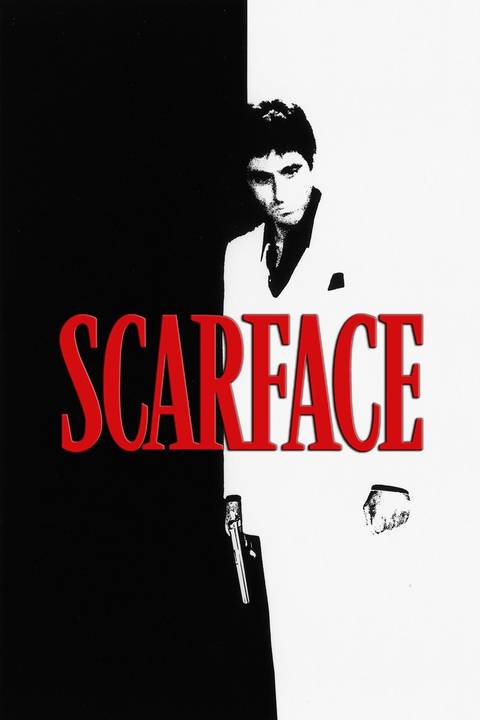
Scarface is a classic. Everybody loves this film. And Elvira Hancock (Michelle Pfeiffer) is surrounded by men who mistake possession for love here. Frank Lopez (Robert Loggia) treats her like part of the luxury package. Tony Montana (Al Pacino) sees her as proof that he has climbed high enough to take what the powerful men had before him. The mansion, the clothes, the cocaine, the parties, the money, the whole rotten dream keeps getting bigger around her, and Michelle Pfeiffer lets Elvira look more empty the richer the world becomes.
That emptiness is the point. Elvira is glamorous in a way that almost feels ghostly. She has learned how to survive rooms full of appetite by staying bored, sharp, and unreachable. Tony wants her fire, then hates her disgust when she sees him clearly. Their dinner fight is brutal because she finally says what the empire looks like from inside the cage. Scarface is remembered for excess, violence, quotes, and Pacino’s volcanic Tony, but Elvira gives the dream its aftertaste. She is the beautiful prize who knows the prize is worthless.





You must be logged in to post a comment Login