Entertainment
5 Most Fun Sci-Fi Books of All Time, Ranked

The best sci-fi books entice readers with an experience they’ll never forget. Whether it’s a highly sought-after planet, a dystopian treasure hunt, or an existential journey to discover the meaning of life, the genre is at its most entertaining when its imagination runs wild.
From the spice-covered deserts of Arrakis to a dystopian treasure hunt built around classic video games, these stories turn their wildest ideas into genuinely exhilarating adventures. If you’re looking for sci-fi that embraces the thrill of the journey without sacrificing imagination, here are five of the most entertaining books in the genre.
5
‘Project Hail Mary’ (2021)

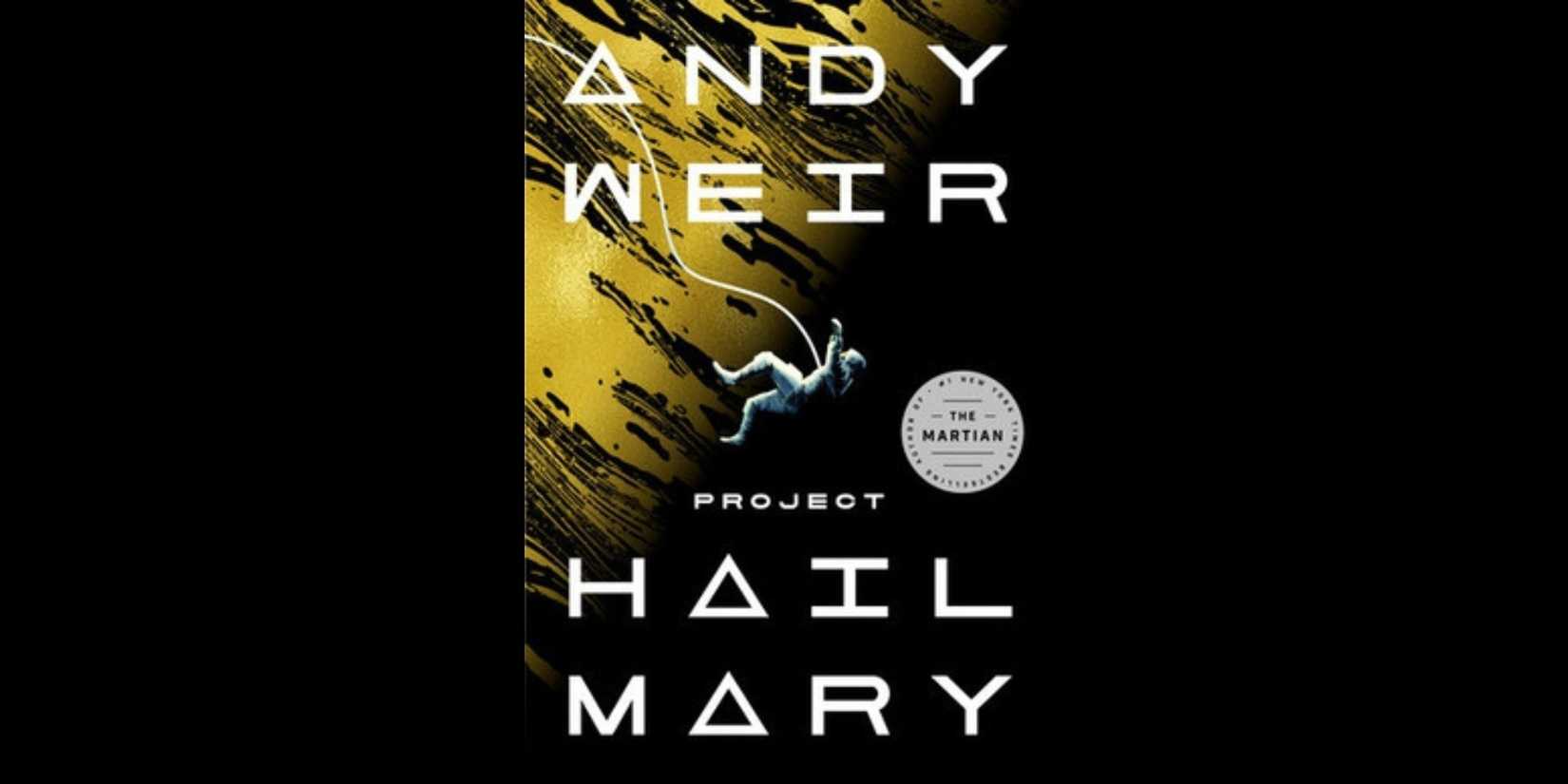
Though many know it from its hit 2026 adaptation, Project Hail Mary is originally a sci-fi novel that tells the same story through Andy Weir‘s words. Right from the get-go, readers are whisked away into an unknown adventure through the eyes of Ryland Grace, who wakes up inside a distant spacecraft. He doesn’t remember his name, his mission, or the events leading up to his rocket launch. But soon enough, he discovers that he’s the missing puzzle piece in a desperate mission to save Earth from a Sun-consuming organism that threatens to end the world as people know it.
The apocalyptic appeal sends major Armageddon vibes, but the real excitement comes from Ryland’s adventure itself. A scientist by profession, Ryland must draw on his extensive but previously belittled knowledge of the organism to test his way out of lethal situations using actual scientific methods, without overwhelming readers with complicated technical details. At a moment when humanity is on the brink of extinction, connection is most needed. Even when he’s the only human in space, he finds the most genuine connection with a creature he least expects, providing the novel with its much-needed emotional anchor and giving all the more reason to root for Ryland.
4
‘Ready Player One’ (2011)


Ready Player One is set in a poverty-stricken 2040s. Humanity escapes a world ravaged by energy shortages, pollution, and economic stagnation through the OASIS, a virtual universe created by billionaire James Halliday. Upon his death, Halliday leaves behind a challenge: whoever finds three hidden keys and unlocks his Easter egg will inherit his fortune and control of the OASIS. Five years later, 18-year-old Wade Watts, a gunter living in Oklahoma City’s trailer stacks, discovers the first key through his knowledge of Halliday’s beloved 1980s pop culture. As he races against rival hunters and a corporation seeking to seize the OASIS, Wade’s quest transforms into a fight for humanity’s last refuge.
It’s the ultimate treasure hunt in Ready Player One. On top of the satisfaction of solving puzzles, readers can’t help but feel like they’re part of a video game themselves. What makes the quest unique is how the knowledge needed to solve its puzzles contrasts with its futuristic setting. If you’re a fan of classic arcade games, geek culture, Dungeons & Dragons, and the like, your expertise will come in handy. Ready Player One is ultimately a celebration of geek culture. One moment, Wade might be playing an arcade game; the next, he’s piloting a spaceship or exploring a fantasy world. It’s a nostalgic adventure for geeks everywhere.
3
‘Dune’ (1965)

The Oscar-winning sci-fi hit Dune is a tumultuous tale of prophecy and fulfilling one’s destiny. When Duke Leto Atreides is ordered to take control of Arrakis, the galaxy’s most valuable desert planet, he knows something isn’t right. Arrakis is the only source of spice, a powerful substance that extends life and makes interstellar travel possible, making the planet a prime target for anyone seeking power. Along with his partner, Lady Jessica, and their son, Paul, Leto soon finds himself caught in a dangerous political game involving the Emperor and their longtime enemies, House Harkonnen. But little does Paul realize that his prophetic dreams are key to saving the kingdom.
More than half a century later, Dune still holds up thanks to the sheer scale and imagination of its worldbuilding. It doesn’t take long for author Frank Herbert to throw readers into the middle of the conflict. Similar to the medieval disputes akin to Game of Thrones, readers are caught between warring noble families, desert politics, and the occasional giant sandworm. Arrakis itself is a character of its own, and the book describes the universe surrounding the planet, from the ancient Fremen culture to the politics that dictate the spice trade. It’s dense and loaded, but it’s the kind of packed that immerses you so deeply that you’ll feel like you’re in Arrakis yourself.
2
‘Ender’s Game’ (1985)

Ender’s Game is essential sci-fi reading. With Earth threatened by an insect-like alien race known as the Buggers, the International Fleet turns to gifted children to prepare for another invasion. Andrew “Ender” Wiggin is recruited into Battle School after proving he can outsmart his bullies. Despite being isolated and pushed to his limits by Colonel Graff, Ender becomes one of the school’s best commanders, mastering zero-gravity war games with unconventional tactics. Promoted to Command School, Ender trains under war hero Mazer Rackham.
Ender’s Game is essentially a battle playbook. But instead of focusing on the theatrics of entering battle, it gives readers the lowdown on all the mental preparation required before stepping onto the field. It takes more than brawn and weapons to defeat your enemies; true battle comes down to strategy, knowing your enemy, and choosing the most efficient methods to achieve the greatest success with minimal casualties. Ender may have started weak and vulnerable, but watching him grow through his loyalty to his troops, his willingness to study the craft, and his ability to adapt makes the book a fun read in itself. With the guidance — and sometimes the pressure — of Battle School, Ender gradually learns that winning a fight is about understanding how to use every advantage at his disposal.
1
‘The Hitchhiker’s Guide to the Galaxy’ (1979)

Audiences who want a sci-fi adventure that doesn’t take itself too seriously don’t have to look any further than The Hitchhiker’s Guide to the Galaxy. Author Douglas Adams introduces the seemingly ordinary Englishman Arthur Dent to an absurd space adventure after Earth is destroyed by the Vogons to make way for a hyperspace bypass. From there, Arthur travels across the galaxy with his alien friend Ford Prefect, the eccentric Zaphod Beeblebrox, the depressed robot Marvin, and Trillian, another human survivor. But Arthur has no time to dwell on his confusion, as his adventures lead him to uncover Earth’s true purpose, which, fittingly enough, is orchestrated by a supercomputer.
There is no telling where The Hitchhiker’s Guide to the Galaxy is about to go. It’s obvious that the author has every intention of making each page funny, and there’s an unexplained absurdity to everything that constantly throws readers off as they try to figure out why certain things are happening. There’s no particular explanation for why a hyperspace bypass requires destroying Earth’s population or why two-headed presidents exist, which is exactly the point of the novel. Humanity is so fixated on finding the meaning of life, but the book stresses that life and the universe itself could barely care less about the answer. And when it finally provides its infamous answer, it’s so unbelievably underwhelming that it’s hilarious.


- Release Date
-
January 5, 1981
Cast
-

-
-
Sandra Dickinson
Trillian
-
Mark Wing-Davey
Zaphod Beeblebrox

You must be logged in to post a comment Login