The art of adapting a book is genuinely difficult. Follow it too closely, and you risk doing nothing differently, failing to properly translate the literary language into the cinematic form. Conversely, if you change too much, you risk altering the very fabric of the story, not only alienating the fans of the source material but perhaps even offending them. It’s no surprise that so many movie adaptations fail these days: they either fail to respect the source material enough or they don’t do enough to stand out, merely settling for being “meh” rather than “wow.”
We’re here to discuss the ones that actually pull it off, the rare movies that take the source material and not only respect it but, more importantly, understand and elevate it. They take everything that worked on the page and successfully translate it into the cinematic language we all know and love. A few make significant changes to the text, but they still maintain the story’s essence, delivering something that might seem different but is the same at its core. These movies are true masterclasses in how to adapt a book for the big screen, the standard that many screenwriters and directors should follow.
Advertisement
‘The Wizard of Oz’ (1939)
The Wizard of OzImage via Warner Bros.
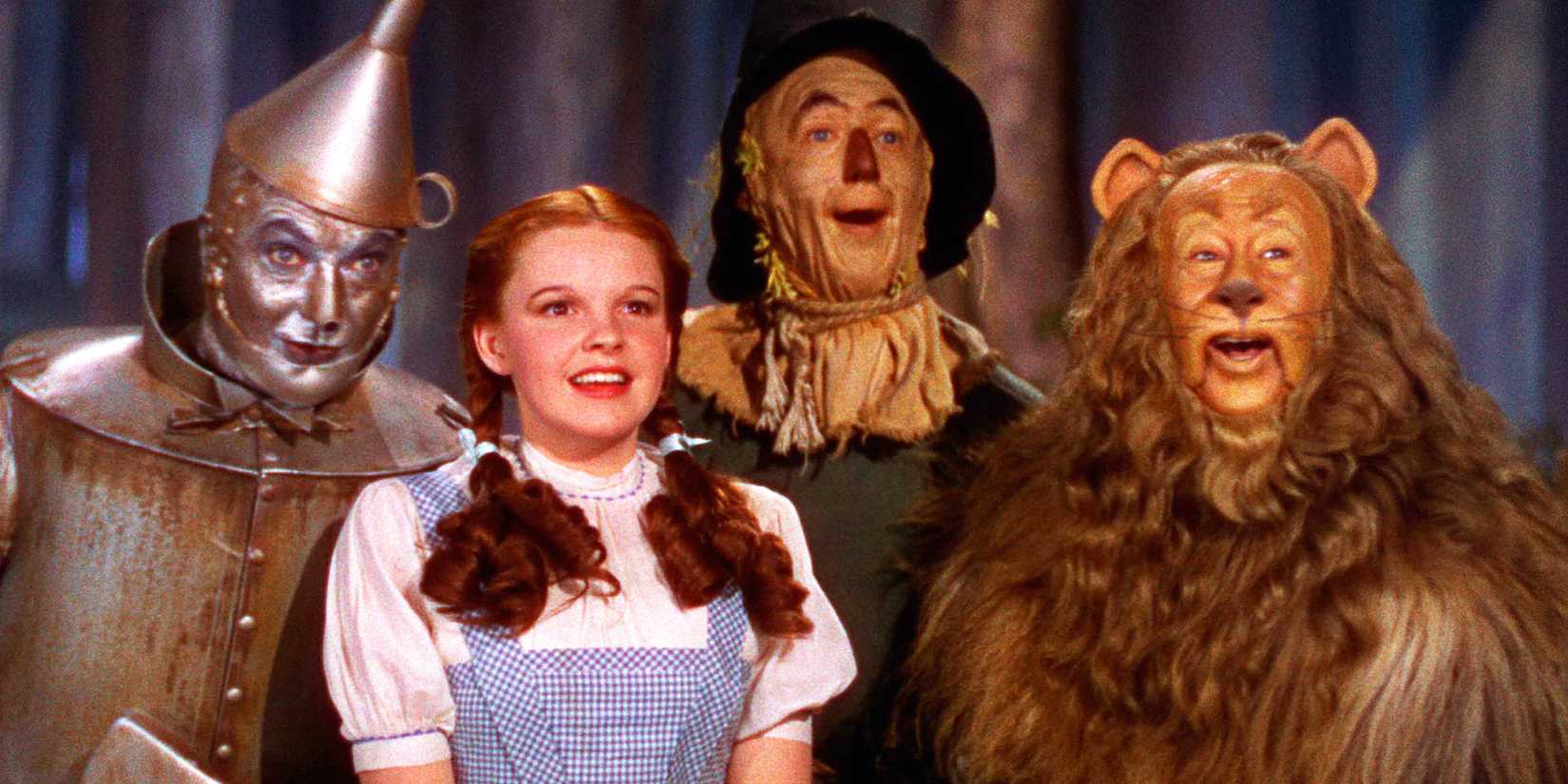
Adapting a book for the big screen doesn’t always mean doing a one-on-one version—in fact, it rarely means that. The best movie adaptations can make significant alterations to the source material yet still keep the vibe of the story, the core themes, the nature of the characters, and the basic tone. A truly masterful movie, however, finds a way to enhance everything that worked on the page in an inherently cinematic language. In the case of The Wizard of Oz, it was through the use of color and song.
Now, there are a ton of differences between The Wizard of Oz and its source material, Frank L. Baum‘s book series. Yet, the movie is so whimsical, so heartfelt and purely enjoyable that you not only forgive them but actually get fully on board with them. By the time Dorothy leaves the sepia of Kansas to enter the Technicolor world of Oz, you are fully immersed in the movie, and there’s no going back. The use of Technicolor was key in turning The Wizard of Oz into the pinnacle of fantasy, and important changes, like having Judy Garland wear a red wig in pigtails and changing the slippers from silver to ruby, gave the movie an identity. Indeed, the iconography has become part of cinema’s very fabric. The songs, written by Harold Arden and E.Y. “Yip” Harburg, added further charm and expanded on the emotional themes of the story, especially the sorrowful theme “Over the Rainbow.”
Advertisement
‘The Godfather’ (1972)
Marlon Brando as Vito Corleone in The GodfatherImage via Paramount Pictures
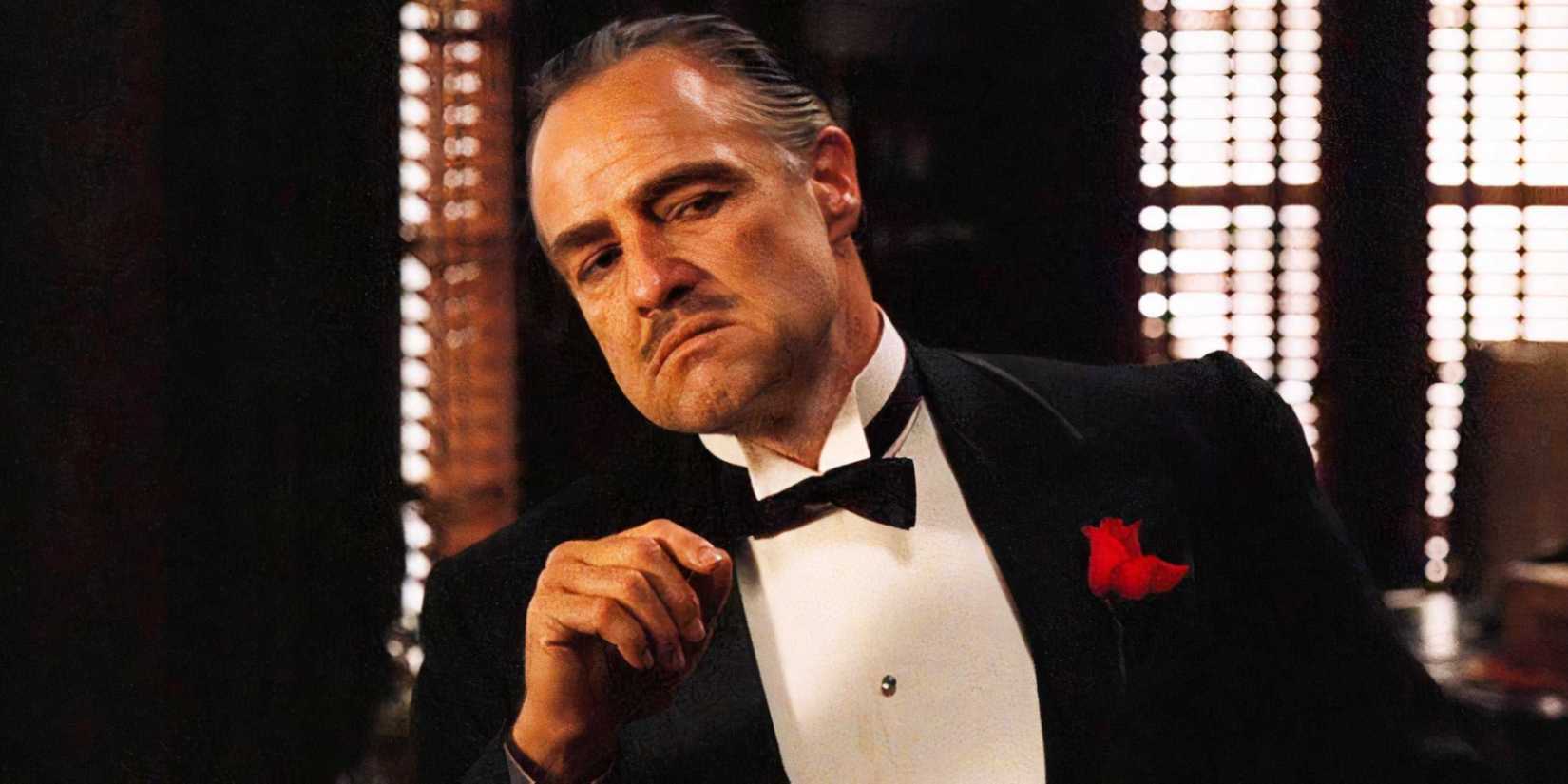
The movie adaptations that greatly surpass their source material, to the point where they become the standard of their respective franchise, can be counted with one hand. In a way, they begin and end with The Godfather, Francis Ford Coppola‘s big-screen adaptation of the gangster novel by Mario Puzo. Both the movie and the book tell the story of the Corleone Family, headed by Don Vito Corleone, whose son, Michael, begins to take over as a series of conflicts threaten the clan’s dominance.
The difference between the book and the movie is quite significant here. The former is highly regarded indeed, but its adaptation is arguably the best American movie of all time. It’s to both Coppola and Puzo’s credit, as the screenwriters, that they took the book’s sprawling and at times messy narrative and turned it into a streamlined family tragedy. Subplots were outright removed, and storylines were sharpened. The themes of ambition, generational baggage, crime, and the allure and corruptive force of power are intact, but by focusing on a tight-knit group of characters and how their influence poisons those around them, the movie is much more powerful. The Godfather is widely attributed with shaping our modern perception of the mafia; the book introduced this new idea of the mob, and the movie perfected it.
Advertisement
Collider Exclusive · Oscar Best Picture Quiz Which Oscar Best Picture Is Your Perfect Movie? Parasite · Everything Everywhere · Oppenheimer · Birdman · No Country
Advertisement
Five Oscar Best Picture winners. Five completely different visions of what cinema can be — and what it can do to you. One of them is the film that was made for the way your mind works. Ten questions will figure out which one.
🪜Parasite
🌀Everything Everywhere
☢️Oppenheimer
🐦Birdman
Advertisement
🪙No Country for Old Men
Advertisement
01
What kind of film experience do you actually want? The best movies don’t just entertain — they leave something behind.
Advertisement
02
Which idea grabs you most in a film? Great films are driven by a central obsession. What’s yours?
Advertisement
03
How do you like your story told? Form is content. The way a story is shaped changes what it means.
Advertisement
04
What makes a truly great antagonist? The opposition defines the protagonist. What kind of opposition fascinates you?
Advertisement
05
What do you want from a film’s ending? The final note is the one that lingers. What do you want it to sound like?
Advertisement
06
Which setting pulls you in most? Where a film takes place shapes everything — mood, stakes, what’s even possible.
Advertisement
07
What cinematic craft impresses you most? Every great film has a signature — a technical or artistic element that makes it unmistakable.
Advertisement
08
What kind of main character do you root for? The protagonist is the lens. Who you choose to follow says something about you.
Advertisement
09
How do you feel about a film that takes its time? Pace is a choice. Some films sprint; others let tension accumulate slowly, deliberately.
Advertisement
10
What do you want to feel walking out of the cinema? The best films leave a mark. What kind of mark do you want?
Advertisement
The Academy Has Decided Your Perfect Film Is…
Your answers have pointed to one Oscar Best Picture winner above all others. This is the film that was made for the way your mind works.
Advertisement
Parasite
You are drawn to films that operate on multiple levels simultaneously — that begin in one genre and quietly, brilliantly migrate into another. Bong Joon-ho’s Parasite is a film about class, desire, and the architecture of inequality that manages to be darkly funny, deeply suspenseful, and genuinely shocking across a single extraordinary running time. Your instinct is for cinema that hides its true intentions until the moment it’s ready to reveal them. Parasite is exactly that — a film that rewards close attention and punishes assumptions, right up to its devastating final image.
Advertisement
Everything Everywhere All at Once
You want it all — and this film gives you all of it. The Daniels’ Everything Everywhere All at Once is one of the most maximalist films ever made: action comedy, multiverse sci-fi, family drama, existential crisis, and a genuinely earned emotional core that sneaks up on you amid the chaos. You are someone who responds to ambition, who doesn’t want cinema to choose between being entertaining and being meaningful. This film refuses that choice entirely. It is overwhelming by design, and its overwhelming nature is precisely the point — because the feeling of being crushed by infinite possibility is exactly what it’s about.
Advertisement
Oppenheimer
You are drawn to cinema on a grand scale — films that understand history not as a backdrop but as a force, and that place their characters inside that force and watch what happens. Christopher Nolan’s Oppenheimer is a film about the terrifying gap between what we can do and what we should do, told with the full weight of one of the most consequential moments in human history behind it. You want your films to feel important without feeling self-important — to earn their ambition through sheer craft and the gravity of their subject. Oppenheimer does exactly that. It is enormous, complicated, and refuses easy comfort.
Advertisement
Birdman
You are drawn to films that foreground their own construction — that make the how of the filmmaking part of the what it’s about. Alejandro González Iñárritu’s Birdman, shot to appear as a single continuous take, is cinema examining itself through the cracked mirror of a fading actor’s ego. You respond to formal daring, to the feeling that a film is doing something that probably shouldn’t be possible. Michael Keaton’s performance and Emmanuel Lubezki’s restless camera create something genuinely unlike anything else — a film that is simultaneously about creativity, relevance, self-destruction, and the impossibility of ever truly knowing if your work means anything at all.
Advertisement
No Country for Old Men
You are drawn to cinema that trusts silence, that refuses to explain itself, and that treats dread as a form of meaning. The Coen Brothers’ No Country for Old Men is a film about the arrival of a new kind of evil — implacable, arbitrary, and utterly indifferent to the moral frameworks we use to make sense of the world. It is one of the most formally controlled films ever made, and its controlled restraint is what makes it so terrifying. You want your films to haunt you, not comfort you. You are not interested in resolution if resolution would be dishonest. No Country for Old Men is honest in a way that most cinema never dares to be.
Advertisement
‘The Princess Bride’ (1987)
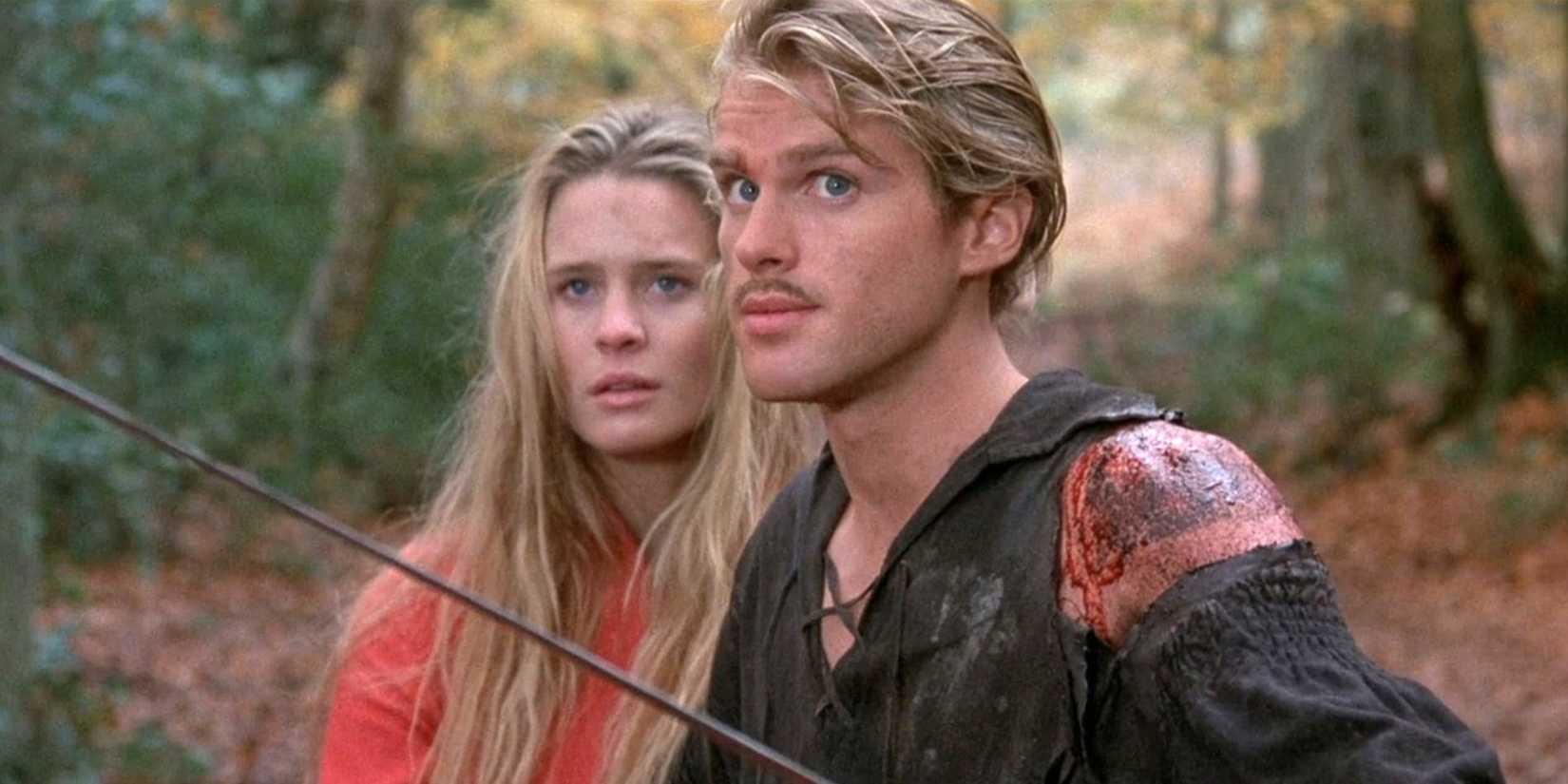
Westley with a wounded shoulder stands on guard with his sword while Buttercup stands behind him in The Princess BrideImage via 20th Century Studios
Advertisement
The Princess Bride: S. Morgenstern’s Classic Tale of True Love and High Adventure, The “Good Parts” Version is the seminal fantasy romance written by William Goldman in 1973. Highly humorous, ironic, and self-referential, the book is a masterpiece of metafiction where the author presents an abridged version of another tale, providing constant commentary on the side. It is widely celebrated as a wholly original and delightful work, a singular fantasy that worked perfectly in its original form. How to adapt such a tale?
As it turns out, only Goldman could do it. The film adaptation of The Princess Bride is just as charming and imaginative, and possibly funnier. Goldman’s genius begins with how he replicates the metaphictional quality of his book: rather than using the same trope, the movie frames the story of farmhand Westley (Cary Elwes) and his love, Buttercup (Robin Wright), as a fairy tale being told by a grandfather (Peter Falk) to his sick grandson (Fred Savage). From there, the movie stays just as fresh, fast-paced, quick-witted, and outright irresistible as the book. The legacy of both works has only gotten better with time—the movie is perhaps better known, though. However, Goldman’s adaptation remains the gold standard for how to take a truly singular work and replicate it in a new form while still respecting everything that makes it unique.
‘The Remains of the Day’ (1993)
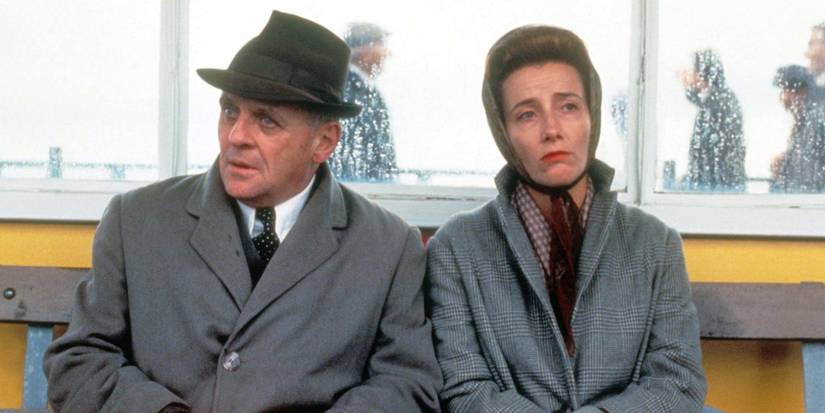
Anthony Hopkins and Emma Thompson on a bench in The Remains of the DayImage via Columbia Pictures
Advertisement
Few writers are as prominent or highly regarded as the mighty Kazuo Ishiguro. The Nobel Prize winner is behind multiple modern classics, but his magnum opus is undeniably The Remains of the Day, a tale of the conflict that arises between duty and the pursuit of personal fulfillment. The plot chronicles the life of devoted butler Stevens, whose blind loyalty to his master, Lord Darlington, slowly shapes his life, even as changes around the world and his own bond with the housekeeper, Miss Kenton, introduce conflict to his otherwise rigorous existence.
Ruth Prawer Jhabvala and an uncredited Harold Pinter translated Ishiguro’s sorrowful, poignant tale into the big screen, and the result was nothing short of masterful. The 1993 movie version of The Remains of the Day is a perfect adaptation, capturing the book’s profound, somber, and deeply introspective tone and complementing it with lush visuals, elegant camera movements, and two outstanding and quietly powerful performances by Sir Anthony Hopkins and Dame Emma Thompson. Both works are melancholy, though Ishiguro’s book is perhaps more hopeful in its conclusion. The true genius of the movie is how it takes a book that relies entirely on a character’s private and fiercely guarded thoughts and translates it into a movie that is pulled back yet no less cinematic.
‘The Lord of the Rings’ (2001-2003)
Ian McKellen as Gandalf in The Lord of the Rings: Return of the King.Image via New Line/courtesy Everett Collection
Advertisement
Adapting a book is challenging enough, but when the book in question has legions of devoted fans, a comprehensive world that ranks among the most detailed and complex ever created, and a larger-than-life story on a truly sweeping scale, then the task becomes borderline impossible. Such was the challenge that Peter Jackson faced while adapting J. R. R. Tolkien‘s seminal work, The Lord of the Rings. As is well known, the plot centers on the young Hobbit Frodo Baggins (Elijah Wood), who must carry the One Ring to the fires of Mount Doom. Aided by the Fellowship of the Ring, Frodo faces the Ring’s corruption as the Dark Lord Sauron amasses an army to take over Middle-earth.
It wouldn’t be an overstatement to call the Lord of the Rings movies the very apex of the fantasy genre. The work that Jackson and fellow screenwriters Philippa Boyens, Fran Walsh, and Stephen Sinclair did is truly impressive in how economically it translates the main events of the books into the big screen. From the get-go, they establish Middle-earth as a place of whimsy and danger, populated by fascinating creatures and haunted by ancient evils while still making it feel tactile and lived-in. Much of the worldbuilding comes organically through dialogue, but exposition is still used effectively. The movies arguably surpass the books when it comes to the massive, jaw-dropping battle sequences; indeed, the action in the trilogy is unlike anything we’ve seen before or since. Tolkien’s lore is deep and mesmerizing, with the author allowing himself the freedom to expand upon it at length. The screenwriters streamline the story while still delving into Middle-earth’s story, making for a saga that is the epitome of what epic fantasy should be.




You must be logged in to post a comment Login