Entertainment
5 Sci-Fi Franchises That Are Officially Better Than Star Wars

Few science-fiction franchises have had the cultural impact of Star Wars. Since the original film was released in 1977, it has become one of the most recognizable franchises in popular culture. It influences everything from filmmaking and CGI technology to toys and merchandising. The franchise grew even larger after Disney acquired Lucasfilm and opened the floodgates to more Star Wars stories. But cultural impact and sheer popularity do not automatically make something the best, especially if you look at the franchise as a whole.
Here, we take a look at the select franchises that are better than Star Wars. It may sound impossible, but these franchises excel in areas where Star Wars has sometimes struggled, from storytelling expansion to tackling more sophisticated ideas. What’s interesting about these franchises is that there are some mutual names involved, and they either created these franchises or energized them for the new generation. Star Wars may remain the king of sci-fi, but these are the franchises that can legitimately challenge its throne.
1
‘Blade Runner’ (1982–Present)

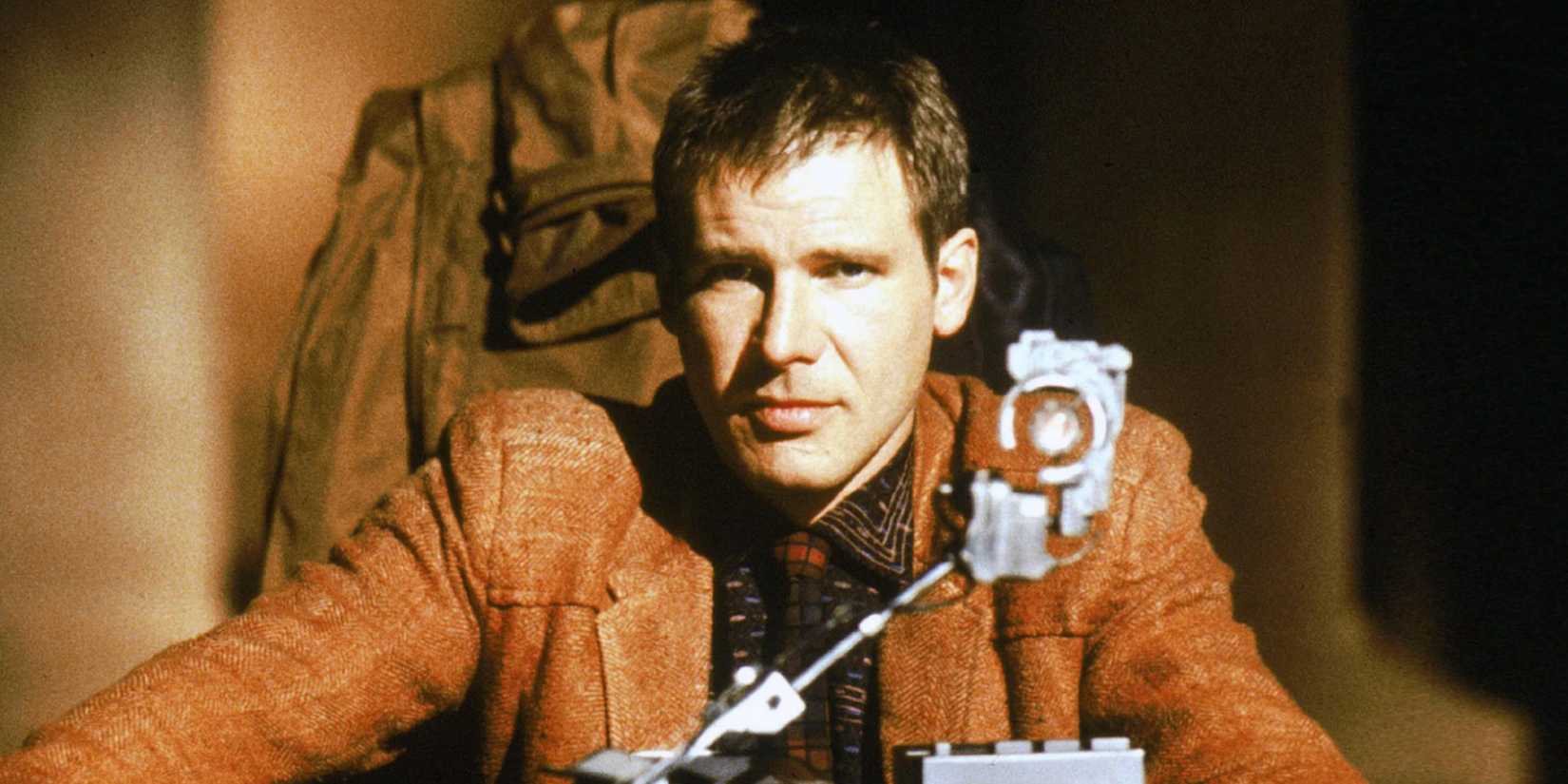
Directed by Ridley Scott, Blade Runner follows Rick Deckard (Harrison Ford), a weary blade runner tasked with hunting down escaped replicants in a dystopian future. Denis Villeneuve followed it up decades later with Blade Runner 2049. The sequel expands that universe, now following replicant officer K (Ryan Gosling) as he uncovers a secret that could change the relationship between humans and artificial beings.
Across both films, the franchise has built one of science fiction’s richest visions of the future, and also one of the most influential. The Blade Runner franchise may be small compared with Star Wars, but what it lacks in quantity it more than makes up for in ambition and consistency. It combines noir detective fiction, breathtaking production design, and deeply philosophical storytelling. Blade Runner 2049 is particularly impressive because it manages to expand the mythology while preserving the mood and intellectual seriousness of the original, something Star Wars has struggled to maintain across its increasingly sprawling canon, especially after Disney’s acquisition. The true test of the franchise will be its first series, Blade Runner 2099, led by Hunter Schafer.
2
‘Avatar’ (2009–Present)


James Cameron‘s Avatar franchise began in 2009 with Jake Sully (Sam Worthington), a former Marine who travels to Pandora and operates an artificially grown Na’vi body as part of a scientific expedition. Also working to gather intelligence for a corporation seeking Pandora’s resources, Jake gradually becomes immersed in Na’vi society and falls in love with Neytiri (Zoe Saldana). He becomes a key figure in the tribe and has a big family, as seen in the sequels.
Star Wars was revolutionary for its technological advancements. However, those advancements seemed to slow down after the prequel series. The franchise adopted a retro look to replicate the original trilogy that became a standard for the subsequent entries. Avatar, however, is simply breathtaking in its world-building and pioneering new tech, such as motion capture and CGI. Cameron created an ecosystem in which the geography, animals, plants, and cultures of Pandora all feel interconnected. The films also use their spectacular visuals to reinforce their themes of environmental exploitation, colonialism, and humanity’s relationship with nature. Cameron’s commitment to pushing visual-effects technology has also allowed the franchise to repeatedly redefine what audiences consider possible in blockbuster filmmaking.
3
‘Alien’ (1979–Present)

The Alien franchise began as a horror film in which the crew of the spaceship fights for survival as a deadly alien is loose aboard their vessel. The sequel amps up the action while still focusing on Ripley (Sigourney Weaver). The recent films vary from horror space-adventure to survival horror, with the most recent one, Alien: Romulus, taking on a smaller-scale approach but still delivering the usual thrills of the franchise.
Alien is almost as old as Star Wars, but the fact that this franchise can reinvent itself without losing its identity edges out the franchise set in a galaxy far, far away. Alien, Aliens, and even Alien 3 are radically different films, yet all feel unmistakably part of the same universe. Prometheus injects a new thematic core to the franchise. While the result may be mixed, it is a brave step. Its first series, Alien: Earth, expands the franchise’s storytelling scope. At its best, the franchise combines groundbreaking creature design, atmosphere, practical effects, memorable characters, and genuinely mature science-fiction ideas.
4
‘The Matrix’ (1999–2021)

The Matrix follows Thomas Anderson (Keanu Reeves), a computer programmer and hacker known as Neo, who discovers that the world he knows is actually a simulated reality created by machines that have enslaved humanity. Guided by Morpheus (Laurence Fishburne) and Trinity (Carrie-Anne Moss), Neo joins the resistance and fulfills the prophecy as The One. The Matrix Resurrections revisits Neo’s story but also subverts expectations by delivering a critique of nostalgia.
In some respects, The Matrix is an obvious franchise on this list to argue that it is better than Star Wars. Its central concept remains extraordinarily focused, and it’s always pushing the limits of filmmaking. Its central premise is undeniably ambitious and cerebral, questioning reality, identity, and control. The original film, in particular, is almost perfectly constructed as a blockbuster, and the sequels go even bigger. Even the animated spin-off, The Animatrix, is a respectable entry that captures the spirit and themes of the movies. Its influence on popular culture and action filmmaking is simply enormous. Star Wars may have the larger universe and greater longevity, but The Matrix arguably has the stronger philosophical foundation and themes.
5
‘Dune’ (2021–Present)

Frank Herbert‘s Dune has always been one of science fiction’s most ambitious stories. The book is a dense, sprawling story of politics, religion, and power. After several ambitious adaptations, Denis Villeneuve‘s Dune films finally demonstrated what the material could accomplish. The story follows Paul Atreides (Timothee Chalamet), whose family is given control of the desert planet Arrakis. After the family’s downfall, he follows the path laid for him as Lisan Al-Gaib.
It is no secret now that Star Wars borrows heavily from Dune. It’s just unfortunate that Dune wasn’t adapted first into a film. While David Lynch’s version has its supporters, Villeneuve’s films have put the title back on the map. The film’s success has won new devoted viewers. The films are huge in scale, and they are also ambitious in their storytelling. Star Wars remains more accessible and arguably more fun, but Dune offers a more sophisticated look at power and heroism. With its star-studded cast, the films are simply unmissable and have even spurred a respectable spin-off series, Dune: Prophecy. The end of the saga, Dune: Part Three, will arrive this December.

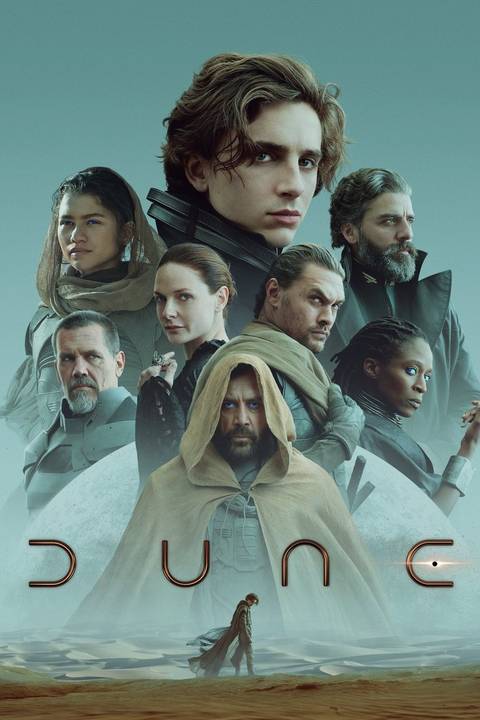
Dune
- Release Date
-
September 15, 2021
- Runtime
-
155 minutes
- Director
-
Denis Villeneuve
- Writers
-
Denis Villeneuve, Eric Roth, Jon Spaihts, Frank Herbert
You must be logged in to post a comment Login