Entertainment
6 Best Animated Movies Released Since 2010, Ranked

There has been a renaissance of animated films in the 21st century, mostly because it has become more common for them to receive their just respect. Animation is a painstaking task that requires meticulous detail and effort; even though it is less common to see laborious 2D work, any form of animation requires a significant number of hours put out by dedicated artists to ensure that everything is poised in the perfect way. Unlike live-action, there is no existing material that can be shot as coverage or used in the background; everything that viewers see on the big screen is something that had to be designed. It shouldn’t come as a shock that, as a result, studios tend to be very exacting in choosing which of their animated projects are worthy of investment, even if some of them end up being massive blockbusters.
There has been a significant change within the industry post-2010 when it comes to the market for animation. Although Pixar was once thought of as being insurmountable, the studio began to face diminishing returns with some films that simply did not work, even if they also have plenty of successes. Dreamworks and Sony Animation had some misses, but they were also willing to take bold chances on riskier films that paid off; there’s also been a growing cult audience for the films of smaller, niche studios like Laika and Aardman, as well as an influx of international titles that receive domestic release. Although the end of this year brings several highly-anticipated titles, including Brad Bird’s Netflix space opera Ray Gunn and Laika’s ambitious top-motion fantasy epic Wildwood, there are certainly a number of options out there for animation fans to watch.
6
‘Guillermo del Toro’s Pinocchio’ (2022)

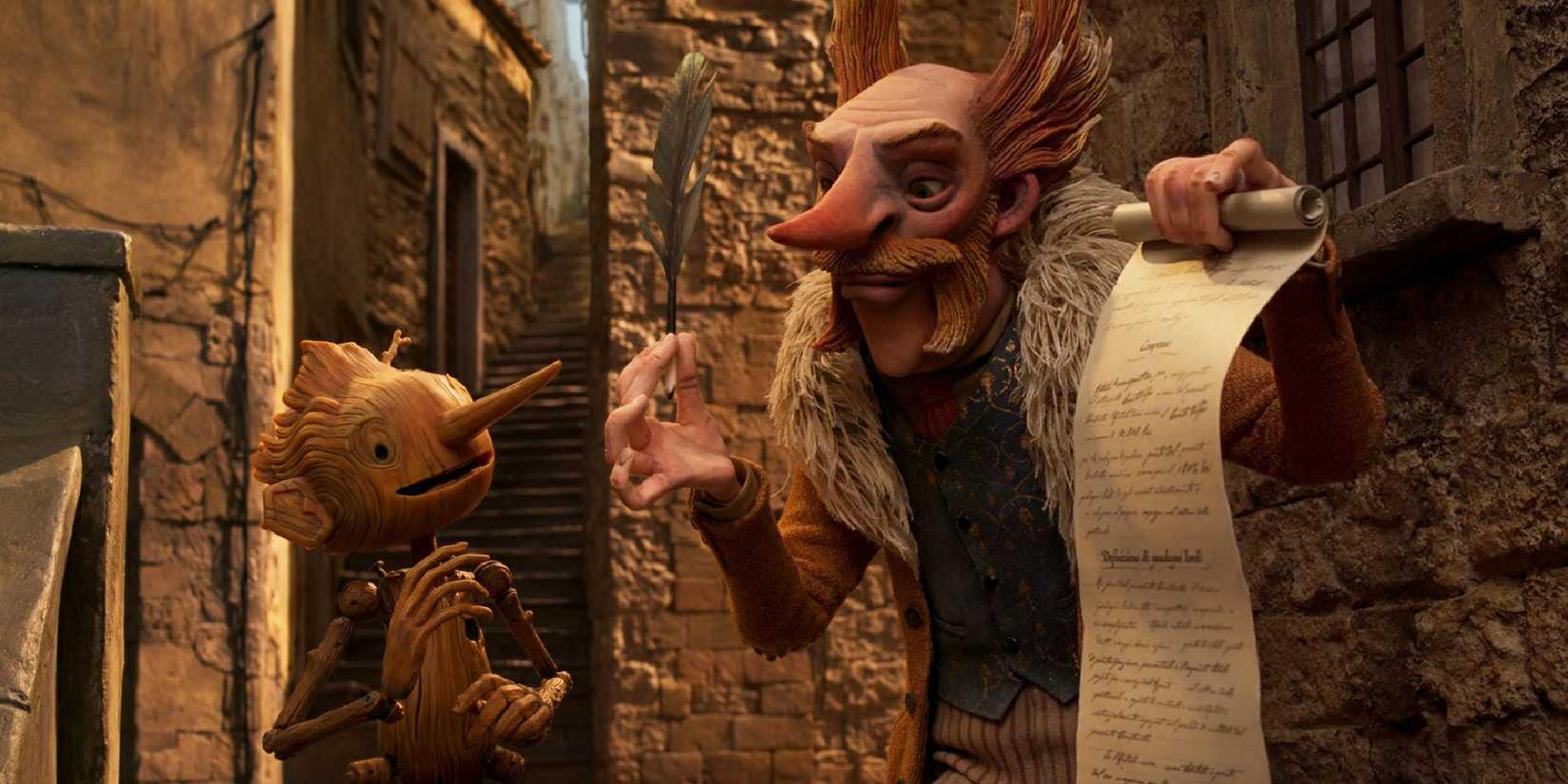
Guillermo del Toro’s Pinocchio is the definitive version of the classic fairy tale, surpassing even the Disney animated classic from 1940. It makes sense that a story about a mechanical character trying to become human would have such a handcrafted quality to it, and there aren’t many directors out there who use practical effects, makeup, and stop-motion in the same way that Guillermo del Toro does. It helps that he takes a slightly more mature take on the material that acknowledges the darkness of the original text and the political complications that it involved.
Guillermo del Toro’s Pinocchio is the perfect companion piece to the director’s entire body-of-work, as he has frequently told stories about mistreated outsiders who are labeled as “monsters.” Although there are clear parallels between the story of Pinocchio and that of del Toro’s Frankenstein, the notion of exploring the evils of fascism through the eyes of a child was something that he had developed with Pan’s Labyrinth.
5
‘The LEGO Movie’ (2014)


The LEGO Movie is perhaps the biggest surprise animation hit of the last 15 years because it wasn’t what anyone had expected. It would have been easy for Warner Bros. to thrust all of its properties into a film that existed only to sell merchandise, but Phil Lord and Chris Miller instead took the LEGO themes of creative ingenuity and leadership, using them to craft a genuinely hilarious satire about the “hero’s journey” and complications of “play.” The LEGO Movie emulates the actual fun involved in creating a LEGO set, but it also shows that following the instructions isn’t the only way to create something that will last.
The LEGO Movie took an interesting twist that involved live-action elements with Will Ferrell, and it ended up making the story far more heartfelt and moving than it would have been otherwise. The inventive way that The LEGO Movie tied in components from various Warner Bros. franchises was also quite inventive, and not the cynical cash grab that it could have been; it most notably debuted Will Arnett as Batman, leading to another highly underrated animated gem with The LEGO Batman Movie.
4
‘Zootopia’ (2016)

Zootopia has aged gracefully as one of the best films of its year, and showed that Disney animation was capable of making the sort of original stories that Pixar would have done a decade prior. Disney had spent a tremendous amount of time revamping and retooling the princess adventure story into different stories, but Zootopia offered a clever new spin on anthropomorphic animals that did something inventive with the concept for the first time in the 3D era. Although on the surface Zootopia is a fairly straightforward film about tolerance and diversity, it has even more loaded themes about classism, police brutality, political corruption, scapegoating, and gentrification, all within a film that works for kids.
Zootopia is one of the most impressive visual achievements of the last 15 years because of how immersive worldbuilding is, as there was clearly an intention to do more than just create a few gags. Despite the fact that Zootopia confronts some very important issues that have grown even more relevant in the decade since it was released, it also happens to be genuinely hilarious, with more than a few great animal puns.
3
‘Flow’ (2024)

Flow is one of the most surprising success stories out of any realm of cinema in the 2020s because it was a true passion project for Latvian filmmaker Gints Zilbalodis, who created the ambitious film with the free and open-sourced software Blender. That such a rich and textured film was made so efficiently, despite the enormous amount of money studios often dump into animated films, just shows how significantly the medium has changed and the different opportunities that are present for contemporary filmmakers. The “little movie that could” proved to be a breakout, word-of-mouth success that won the Academy Award for Best Animated Feature in a surprise victory over bigger commercial hits like Inside Out 2 and The Wild Robot, and managed to be one of the few animated films nominated for Best International Feature.
Flow is a simple, but deeply affecting story about the power of nature to cause societies to form and collapse, offering only hints at what the civilization in place looked like before a catastrophic event. Although it can be read as being a film about climate change, the changing of the world in Flow happens as the result of a natural process, which accounts for its magnificent beauty.
2
‘Inside Out’ (2015)
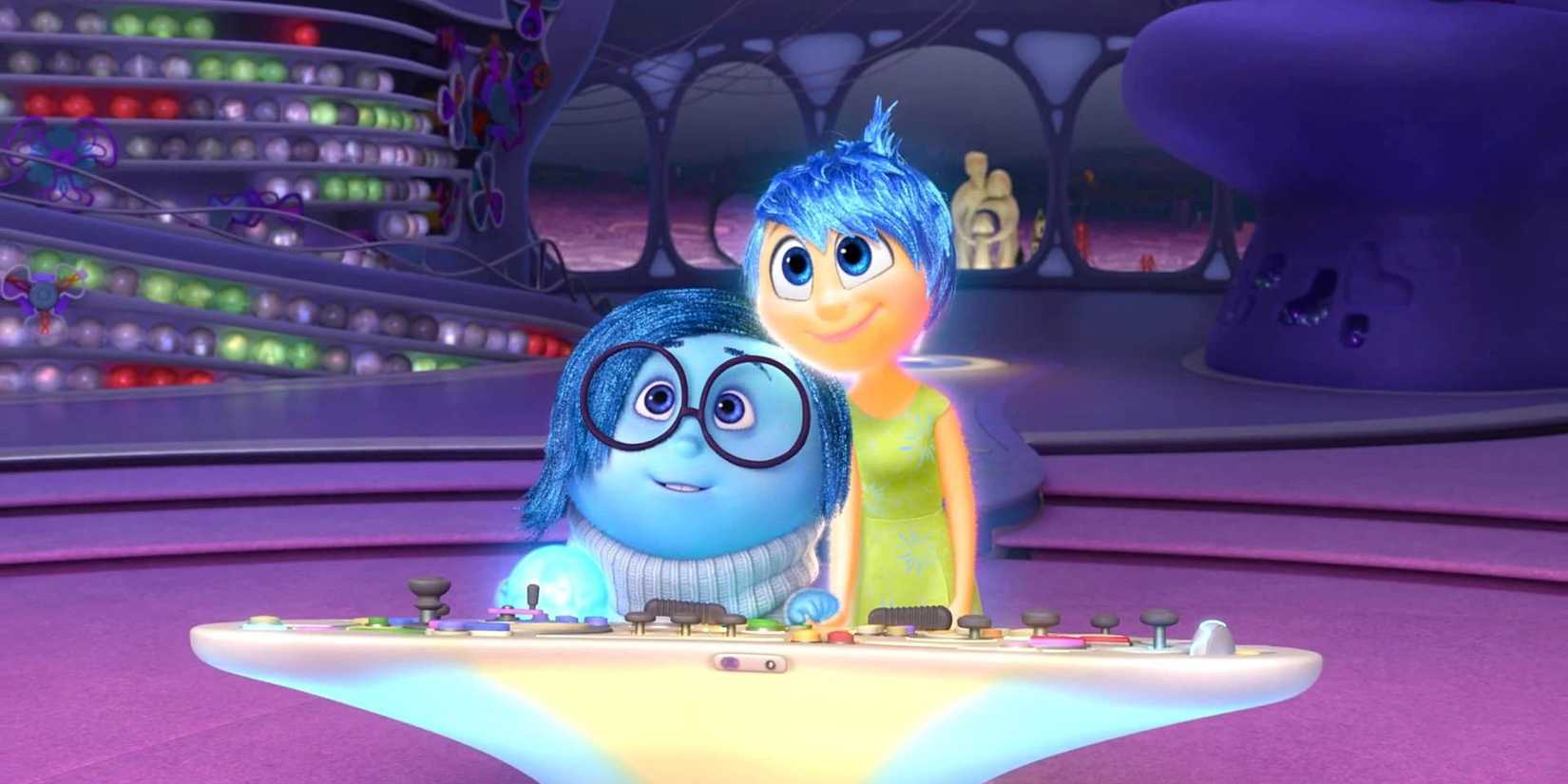
Inside Out is one of the last truly great Pixar films, and it’s also one of the most dense and psychologically interrogative works of cinema within the entire century. Pixar has made a habit of making surprisingly mature, thought-provoking films that cause the adults in the audience to have existential crises, but Inside Out takes that notion farther than usual by examining the literal way that developing minds work. It’s a film about the loss of childhood and path of adolescence that examines the declining of imagination, development of mixed emotions, and uncomfortable ways that memories can be recolored and reinterpreted. That Inside Out is such a probing work of analysis doesn’t prevent it from being a wildly imaginative and exciting, colorful adventure with some of the most impressive 3D visuals that Pixar has ever pulled off.
Inside Out is an important film for children to see because it is able to talk about depression and anxiety without saying it outright; while the primary focus is on Riley, the young protagonist, Inside Out also makes a point of showing what goes on in her parents’ minds, with sadness controlling her mother and anger controlling her father. While the sequel, Inside Out 2, was a massive financial success that reaffirmed Pixar’s monopoly on animation, it didn’t have quite the same original ingenuity as its predecessor.
1
‘The Wind Rises’ (2013)

The Wind Rises is the film that Hayao Miyazaki had been waiting his entire career to complete because it confronts the tension that has been underneath his body of work. There is an inherent conflict for Miyazaki, a staunch anti-capitalist, of making art that can be consumed by the masses and controlled by institutions that he does not agree with. This ties into his own family history intertwined with World War II, as The Wind Rises shows the story of a genius airplane designer who struggles when his creations are used as tools of war. The question of whether artists are responsible for the way that their work is used is a fascinating one that invites discussion.
The Wind Rises isn’t the first time Miyazaki has approached the subject of war, as he covered similar themes in his underrated classic Porco Rosso, but it’s one of his most low-key and atmospheric projects ever. Although most of Miyazaki’s films can still be enjoyed by kids (with some like My Neighbor Totoro and Spirited Away directly aimed at them), The Wind Rises is a historical biopic that just happens to use animation as a medium. It’s the perfect companion piece to Miyazaki’s most recent (and potentially final) film The Boy and the Heron, which was inspired by his own experiences as a young man.
You must be logged in to post a comment Login