Entertainment
6 Best Movies Released Since 2015

A decade is long enough for hype to die. That helps. Movies arrive with festival standing ovations, awards campaigns, box-office records, and declarations of instant greatness. Then people live with them. Scenes get revisited. Performances deepen. Weaknesses become harder to ignore. The truly great ones somehow keep gaining weight despite all that. The Godfather is a great example of that.
And the six films on this list have already survived that first test. They represent radically different ideas of modern cinema, from historical epic and social horror to queer romance, intimate character study, class satire, and full-throttle action. Every one feels complete enough to define a career and ambitious enough to represent its era. Ranking them hurts. But this is a good problem to have. Let’s get started.
6
‘Oppenheimer’ (2023)


Christopher Nolan built Oppenheimer around J. Robert Oppenheimer (Cillian Murphy), the theoretical physicist who led the Los Alamos laboratory during the Manhattan Project and later faced political humiliation as his security clearance came under attack. That gives the movie an enormous historical canvas, but the actual drama lives inside one man’s relationship with knowledge. Oppenheimer wants to understand the universe, wants recognition for understanding it, and eventually has to live in a world permanently altered by what that brilliance helped create. The Trinity test is only one part of the story. Power after the bomb becomes just as important as the bomb itself.
Three hours move with the nervous momentum of something half the length. Ludwig Göransson’s music score rarely lets the mind settle. Not to mention the fragmented chronology turns hearings, conversations, scientific breakthroughs, and political grudges into pieces of one accumulating psychological portrait. Cillian Murphy sits at the center of an absurdly deep ensemble, and Lewis Strauss (Robert Downey Jr.) gives the political material real venom. Seven Academy Awards followed for this film, including Best Picture. Fair enough. Oppenheimer is massive filmmaking about the terrifying possibility that intelligence can outrun wisdom.
5
‘Get Out’ (2017)
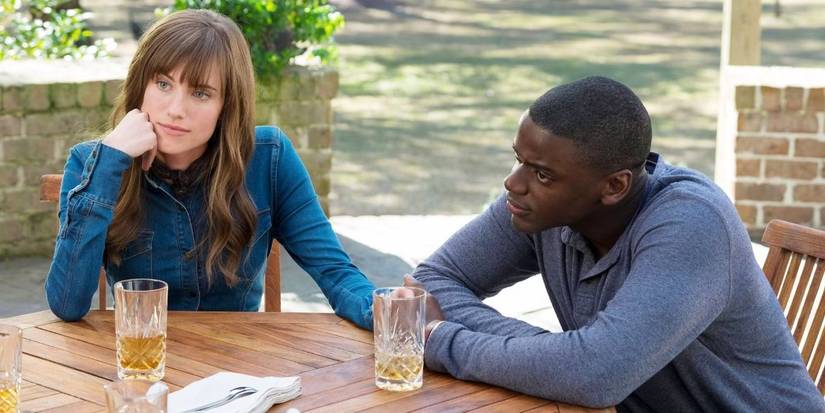
At first, Get Out is about Chris Washington (Daniel Kaluuya) spending a weekend with the wealthy white family of his girlfriend, Rose Armitage (Allison Williams). He is already uneasy about whether she told them he is Black. Her parents respond with excessive friendliness, strange compliments, and the kind of racial reassurance that somehow makes everything less reassuring. Then Chris notices the Black employees around the property behaving in ways he cannot explain. One awkward family visit begins sliding toward something far more calculated.
This was also Jordan Peele’s first feature as director and it turned social discomfort into horror mechanics with almost frightening precision. The Sunken Place became an instant cultural image because it captures helplessness without needing a monster costume. The teacup, the camera flash, the garden party, and the casual fetishization of Chris all work because the danger grows from recognizable behavior before the movie pushes it somewhere extreme. Daniel Kaluuya’s face can carry entire stretches of the film with tiny changes in fear and disbelief. Peele won the Oscar for Original Screenplay. The film effortlessly remains entertaining while dissecting race, liberal self-image, ownership, and desire.
4
‘Portrait of a Lady on Fire’ (2019)

Portrait of a Lady on Fire takes place on an isolated island in eighteenth-century Brittany, where painter Marianne (Noémie Merlant) has been hired to create a wedding portrait of Héloïse (Adèle Haenel) without Héloïse knowing she is being painted. Marianne therefore studies her during walks and reconstructs those details in secret. Observation slowly becomes intimacy. The entire premise is built around looking at another person, then discovering the difference between seeing someone and merely recording their appearance.
Marianne notices Héloïse because her work requires attention. Héloïse begins noticing the ways Marianne sees her. Their conversations gradually change who controls the gaze, and the portrait itself becomes part of the argument about memory, ownership, and how women are represented. Both the characters spend long stretches communicating through pauses and glances that would collapse in a less precise film. Music is used sparingly enough that its arrival feels almost physical. Romance this control should feel cold. Somehow it burns. Portrait of a Lady on Fire is the movie to choose when you want longing treated as something intelligent. It’s like the films in Before Trilogy but the two people involved are an artist and her subject.
3
‘Moonlight’ (2016)

Chiron (Alex Hibbert, Ashton Sanders, and Trevante Rhodes) grows up in Miami across three chapters of Moonlight, first as a bullied child called Little, then as a guarded teenager, and finally as an adult who has rebuilt himself into someone almost unrecognizable from the boy we met. His mother struggles with addiction. His sexuality leaves him vulnerable in an environment obsessed with masculine performance. Juan (Mahershala Ali), a local drug dealer, offers him tenderness and guidance while carrying an uncomfortable connection to the conditions hurting Chiron at home. Nothing about this life fits into an easy coming-of-age shape.
Barry Jenkins adapted Tarell Alvin McCraney’s In Moonlight Black Boys Look Blue into a film where identity develops through accumulated moments rather than explanatory speeches. Water, touch, food, music, silence, and the way people address Chiron all become part of his emotional history. Three different actors portray him at different ages, yet the same watchfulness somehow survives across all three bodies. Mahershala Ali won an Oscar for Juan despite appearing only in the first chapter, which tells you how deeply that relationship lands. Moonlight eventually won Best Picture, but trophies barely explain its power. This is one of those films that makes gentleness feel enormous. Give it quiet. It gives plenty back.
2
‘Parasite’ (2019)

The Kim family lives in a cramped semi-basement in Seoul, folding pizza boxes for money and searching for usable Wi-Fi wherever they can find it. Then Ki-woo (Choi Woo-shik) gets an opportunity to tutor the daughter of the wealthy Park family. His family recognizes an opening. One by one, they find ways into the Park household under fabricated identities, creating an ingenious little ecosystem where the rich family believes it has hired several unrelated professionals. Parasite could already survive as a brilliant con movie. It has much more loaded underneath.
Bong Joon Ho turns architecture into class analysis without ever making the movie feel like homework. The Parks live high above the street behind walls and glass. The Kims are constantly climbing upward to reach them and descending when they return home. Smell becomes a class marker more brutal than money because it cannot be convincingly performed away. Comedy keeps the film loose, suspense gradually tightens the space, and every genre shift exposes another part of the same economic structure. Parasite won the Palme d’Or and later became the first non-English-language film to win the Academy Award for Best Picture. Those milestones are historic. The movie itself is simply electric.
1
‘Mad Max: Fury Road’ (2015)
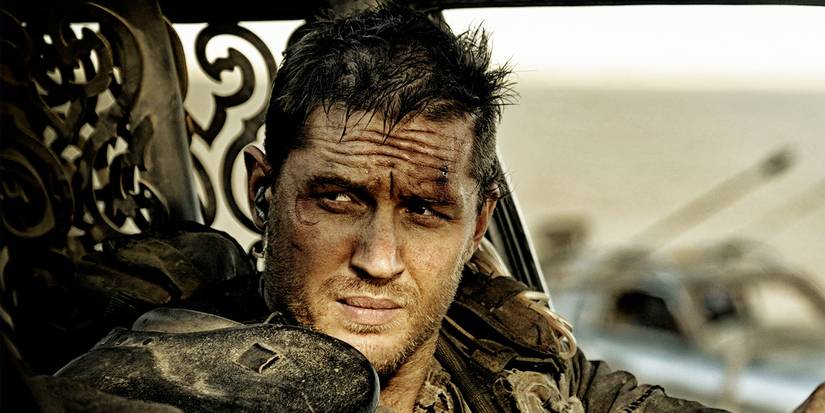
Talking about electric, this film is the king of adrenaline that never drops. Mad Max: Fury Road has one of the cleanest premises imaginable. Imperator Furiosa (Charlize Theron) steals a war rig from tyrant Immortan Joe (Hugh Keays-Byrne) and escapes across the desert with the women he has kept as reproductive property. Max Rockatansky (Tom Hardy) becomes attached to the convoy almost by accident. Joe sends his War Boys after them. Most of the movie is movement. Yet inside that movement sits an entire civilization built around water, fuel, fertility, mythology, disability, worship, and control.
George Miller returned to Mad Max after three decades and somehow revived it in the most physically exhilarating blockbuster of the modern era. The vehicles were built. Stunt performers actually swung from poles. The geography stays readable even when dozens of machines are tearing across the frame. Charlize Theron’s Furiosa has enough history in a few looks to carry another movie entirely (and the character did have that later) while Max gradually learns that helping other people may be more useful than simply surviving them. It is angry, beautiful, ridiculous, sincere, and almost indecently entertaining. Witness it again.

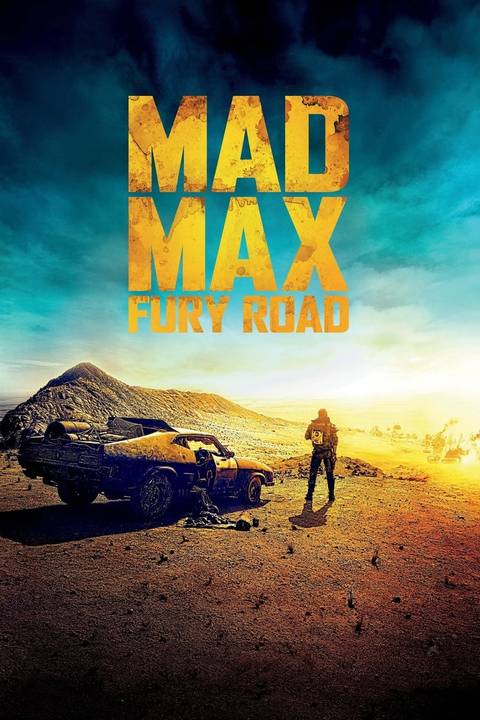
Mad Max: Fury Road
- Release Date
-
May 15, 2015
- Runtime
-
121 minutes
- Director
-
George Miller
- Writers
-
Brendan McCarthy, George Miller, Nico Lathouris
You must be logged in to post a comment Login