Entertainment
6 Crime Shows That Are Better Written Than ‘Breaking Bad’

Few shows have managed to take television by storm the way Breaking Bad did. Vince Gilligan’s neo-Western crime drama gave the world one of the most iconic antiheroes of all time and constantly raised the bar with each season. For all its strengths, though, Breaking Bad is also a very specific kind of show. It often leans into the spectacle of violence, carefully engineered payoffs, and a central character arc that takes over the narrative most of the time.
There’s no denying that the show is as gripping as it gets, but it’s not the only way to tell a great crime story. Here is a list of six crime shows that take a less spectacle-esque approach to the genre, with writing that feels much more layered than Breaking Bad.
1
‘Bosch’ (2014–2021)


Crime dramas love to promise realism, but very few of them actually deliver it. Bosch is definitely the latter, and in doing so, it set a standard that very few series in the genre have managed to reach. The show, based on Michael Connelly’s iconic novels, follows homicide detective Harry Bosch (Titus Welliver) as he takes on impossible cases. Each episode follows a simple crime-of-the-week formula, but underneath that, the narrative is constantly building up to something bigger. Bosch is a masterclass in storytelling and builds a world that genuinely feels lived-in and real.
The show never rushes toward twists and does a great job of weaving Bosch’s personal arcs with the cases that he is juggling. The protagonist isn’t written as the perfect hero either. However, he is presented as someone who is unwilling to compromise on justice, even if he has to challenge the very system he is trying to protect. Bosch is a show that trusts its writing and rewards the audience for their patience. It’s not really trying to reinvent the genre, but instead, it attempts to refine it to a point where nothing feels unintentional.
2
‘Happy Valley (2014–2023)

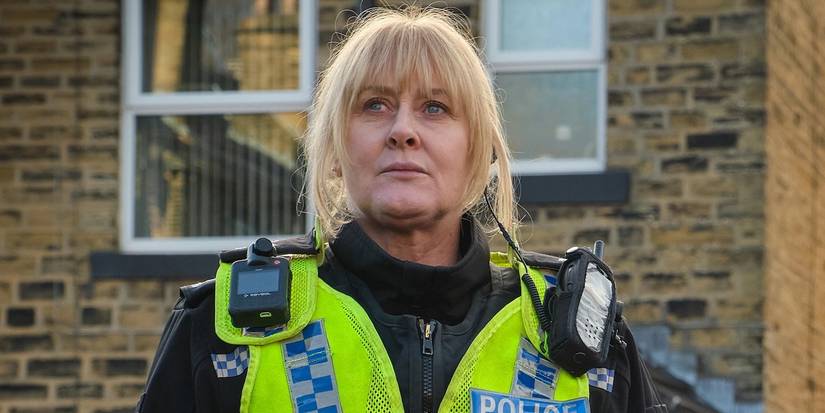
Happy Valley is easily one of the most underrated crime thrillers of modern times. The show is set in a small English town and wastes no time in establishing its extremely high stakes. The series follows police sergeant Catherine Cawood (Sarah Lancashire) as she grieves her daughter’s suicide, raises her grandson, and is ultimately forced to confront the man responsible for destroying her family. Things begin with a kidnapping case that quickly spirals into something personal, with every investigation pulling Catherine deeper into the chaos.
The show doesn’t treat crime as some puzzle to be solved but as a vehicle that exposes the emotional fallout beneath it all. Catherine and Tommy Lee Royce’s (James Norton) tense dynamic is the fuel of the story, and this central conflict only gets more intense with time. Happy Valley isn’t an easy show to watch, and the characters are pushed to their limits in ways that feel uncomfortably real. However, that is what gives the show its integrity. This is a crime drama that refuses to rely on constant escalation and lets the character arcs take center stage.
3
‘Broadchurch’ (2013–2017)

Broadchurch begins with a fairly simple premise when the body of 11-year-old Danny Latimer is found on the beach in a small coastal town. However, that kicks off an intense investigation led by Alec Hardy (David Tennant) and Ellie Miller (Olivia Colman). From there, the show evolves from a simple murder mystery to a haunting exploration of grief and how crimes like these can poison an entire community. Broadchurch stays closely tied to Danny’s family, especially his mother Beth, played by the brilliant Jodie Whittaker.
Every episode builds on the central mystery, and the viewers slowly uncover long-buried secrets beneath the town’s perfect exterior. The narrative expands beyond just finding the killer as friends and family members turn on each other, people’s private lives become fodder for the media, and even the detectives find themselves entangled in all the drama. The storytelling feels layered and immersive, even when the show moves beyond Danny’s case. Broadchurch understands that the mystery is only part of the story, and what truly stays with the audience is the aftermath.
4
‘Gomorrah’ (2014–2021)

Gomorrah is an Italian crime drama that drops the viewers right into the Neapolitan underworld. The series follows Ciro Di Marzio (Marco D’Amore), a loyal member of the Savastano crime clan led by Pietro Savastano (Fortunato Cerlino). At first, it’s clear that Pietro’s son, Gennaro (Salvatore Esposito), is being groomed to take over. However, that power structure collapses when Pietro is arrested, and Ciro and Gennaro find themselves on opposite sides of a full-blown civil war. Gomorrah feels brutally authentic in its portrayal of this kind of violence. No character in the show is black-and-white, and the audience has to sit with that discomfort.
The show lets every little beat unfold with extreme precision as relationships fracture and reform over time instead of relying on quick and constant action. Even secondary characters are given enough depth that their rise or fall feels important to the overall story. At the same time, though, none of them come with any kind of plot armor, which adds to the show’s constant sense of unpredictability. The series is one of the most grounded takes on the genre. It’s unpredictable and honest about the consequences of power, which is why it resonates in a way most crime dramas don’t even attempt.
5
‘The Sopranos’ (1999–2007)

Everyone can agree that The Sopranos changed crime television forever. The HBO series pushed boundaries and laid the groundwork for the kind of character-driven storytelling that shows like Breaking Bad would take inspiration from. The show follows New Jersey crime boss Tony Soprano (James Gandolfini), as he balances the demands of his criminal empire with his responsibilities as a husband and father. Now, that premise is immediately complicated because the story begins with Tony seeking therapy with Dr. Jennifer Melfi (Lorraine Bracco) to deal with his panic attacks and the constant pressure he is under. That allows the story to move between Tony’s mob operations and his internal conflicts.
As the show progresses, the narrative expands beyond just that and explores power shifts within the crime family, tensions between crews, and the protagonist’s increasingly blurred professional and personal lives. The Sopranos doesn’t just follow all this — it also examines the cost of the life Tony has chosen to live. The writing isn’t always easy to understand, but the audience has to pay attention to the subtext and gray areas. The Sopranos never aims to shock its audience or stay ten steps ahead of them. The show takes a restrained, thoughtful approach to storytelling that remains unmatched to this day.
6
‘The Wire’ (2002–2008)

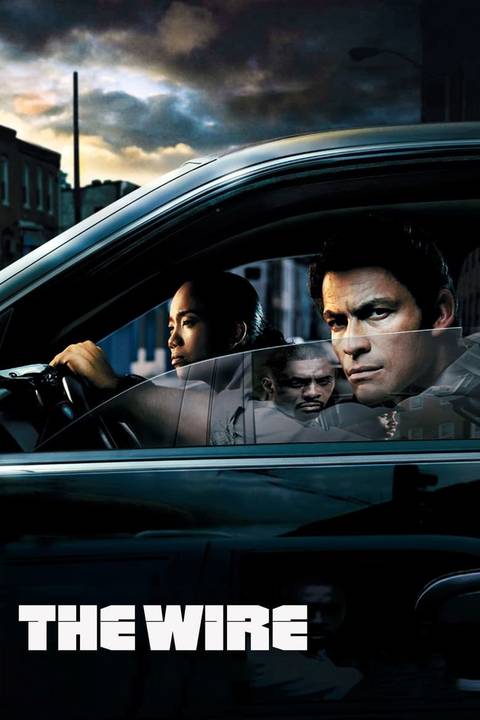
The Wire is yet another genre-defining crime drama and one of the most realistic stories ever told on television. The show is set in Baltimore and begins with Detective Jimmy McNulty (Dominic West) leading a police investigation into the city’s drug trade. However, The Wire is way more than the typical cop-versus-dealers story where the good guys take the bad guys down. Instead, the narrative paints a larger picture of how the city’s drug trade isn’t an isolated problem because of how different political systems and institutions shape and sustain this cycle.
Each season expands this ecosystem and shifts focus to a new part of the city while still tying everything back to the same idea: systemic failure is the catalyst for just about everything. The approach is effective because of how deliberately the writing leans into bureaucratic constraints that the detectives have to work against. The police work is constantly slowed down by paperwork, personal grudges derail investigations, and people are forced to compromise just to survive. The show layers these small details over time until the larger problem becomes impossible to ignore. This kind of nuance is exactly what has helped The Wire stand the test of time.

The Wire
- Release Date
-
2002 – 2008-00-00
- Network
-
HBO
- Directors
-
Ernest R. Dickerson, Ed Bianchi, Steve Shill, Clark Johnson, Daniel Attias, Agnieszka Holland, Tim Van Patten, Alex Zakrzewski, Anthony Hemingway, Brad Anderson, Clement Virgo, Elodie Keene, Peter Medak, Rob Bailey, Seith Mann, Christine Moore, David Platt, Dominic West, Gloria Muzio, Jim McKay, Leslie Libman, Milcho Manchevski, Robert F. Colesberry, Thomas J. Wright
You must be logged in to post a comment Login