Entertainment
6 Fantasy Books That Are 10/10 Masterpieces

Fantasy stories are best experienced on the page. Sure, there are plenty of TV series and movies that are considered defining works in the genre, but there is always a limit to what can actually be shown on screen. Books don’t have that problem. An author can invent entire continents, histories, languages, religions, and systems of magic without ever worrying about a production budget or whether something looks convincing on the screen.
The only real limit is the reader’s imagination. That freedom of worldbuilding and creating high-stakes conflict makes fantasy literature feel alive with little to no visuals. The six books on this list are 10/10 masterpieces that show what happens when authors push that freedom — and their imaginations — as far as they can go.
1
‘The Lord of the Rings: The Fellowship of the Ring’ (1954)


The Fellowship of the Ring is the first volume of J.R.R. Tolkien’s The Lord of the Rings trilogy and one of the defining works of fantasy literature. The book begins in the peaceful Shire, where Frodo Baggins inherits a seemingly ordinary ring from his uncle Bilbo. Gandalf eventually discovers that it is actually the One Ring, created by the Dark Lord Sauron to dominate the other Rings of Power. This leads Frodo on a grand hero’s journey as he leaves home with Sam, Merry, and Pippin to destroy the Ring and stop Sauron from returning to full power. Together, Frodo, Sam, Merry, Pippin, Gandalf, Aragorn, Boromir, Legolas, and Gimli form the Fellowship — a group of people carrying what might be the fate of Middle-earth with them.
Now, Tolkien doesn’t treat Middle-earth as a simple backdrop for this plot. The author intentionally creates this world where every forest, ruin, language, and forgotten kingdom feels lived-in. This level of detail means that The Fellowship of the Ring unfolds slowly, especially during the early chapters in the Shire, but setting that context is essential to the larger story. The character drama and mythology go hand-in-hand, and it never feels like one is being sacrificed for the other. The book perfectly sets up the events of the next two installments in the series and creates a fantasy epic that would become the standard almost everything after it had to measure itself against.
2
‘The Fifth Season’ (2015)
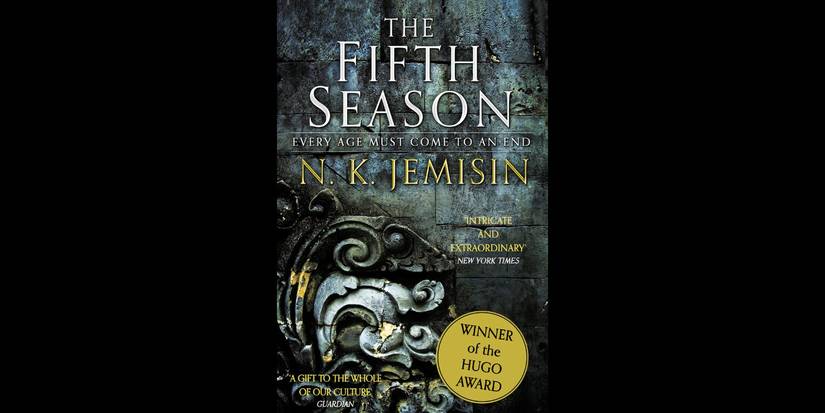
The Fifth Season by N.K. Jemisin breathes new life into the fantasy genre. The story takes place on the Stillness, a continent constantly threatened by earthquakes, volcanic eruptions, and civilization-ending disasters known as Seasons. Here, certain people called orogenes are born with the ability to manipulate the earth and control seismic activity. However, instead of being valued, they are feared and treated as less than human. The story begins with Essun, an orogene living secretly in a small community, who discovers that her husband has murdered their young son after learning about his abilities and has disappeared with their daughter. At the same time, an enormous geological catastrophe tears across the continent and signals the beginning of another potentially devastating Season. From there, Jemisin tells the story through three women, namely Essun, a young orogene named Damaya who is taken away to be trained at the Fulcrum, and Syenite, a more experienced orogene sent on a mission with the immensely powerful Alabaster.
At first, these narratives can feel disconnected, but the way Jemisin eventually brings them together completely changes the reader’s understanding of everything that came before. Even the unusual second-person narration used for Essun’s chapters starts making sense as the story progresses. The Fifth Season is dense and demands the reader’s full attention, but nothing about the story is coincidental. Jemisin takes familiar ideas about magic, chosen people, and world-ending threats and rebuilds them around something much harsher and more human, which is what makes it a fantasy masterpiece.
3
‘Circe’ (2018)
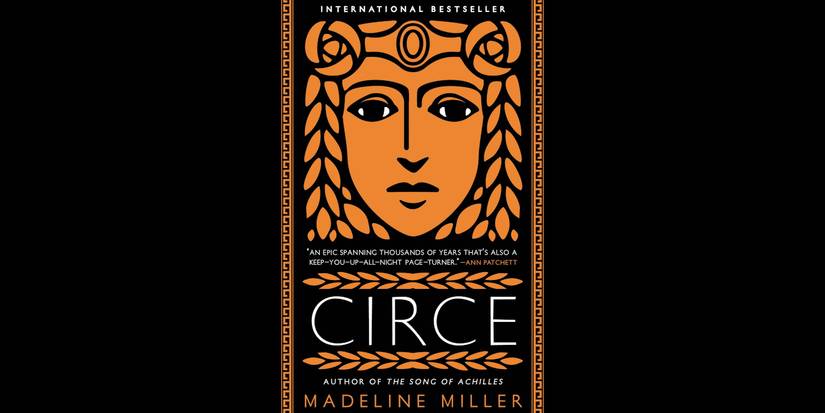
Madeline Miller’s Circe follows a character who barely gets room to exist in classical mythology. The story reimagines Circe, daughter of the sun god Helios, as an awkward and underestimated immortal who grows up surrounded by gods far more powerful and cruel than she is. When Circe discovers that she possesses witchcraft, her abilities frighten the people around her to the point that Zeus eventually has her exiled to the island of Aiaia. However, in isolation, Circe realizes that for the first time, she has control. Here, she begins to develop her magic, encounters figures including Hermes, Daedalus, and, eventually, Odysseus, while major events from Greek mythology unfold in the background.
The most interesting thing about Circe is the intimate scale of the narrative. The primary story always belongs to Circe as she spends centuries being dismissed, feared, and punished. Even her famous transformation of men into pigs feels completely different once the reader understands everything that led her there. The novel does not simply retell Greek mythology with flowery prose, but takes someone remembered largely as an obstacle in Odysseus’s journey and gives her an entire emotional history that perfectly complements the original myth.
4
‘Babel, or the Necessity of Violence’ (2022)

Babel is R.F. Kuang’s fantasy masterpiece set in an alternate version of 19th-century Oxford, where the British Empire’s power is built partly on silver bars engraved with words in different languages. The magic in this world works through the meaning lost in translation between those words. This allows silver to produce effects that have transformed transportation, industry, and warfare. At the center of the story is orphan Robin Swift, who is brought to England by the mysterious Professor Lovell and raised specifically to become a student at Oxford’s prestigious Royal Institute of Translation, also known as Babel. At first, Babel seems like everything Robin has been taught to want. He studies languages alongside Ramy, Victoire, and Letty, gains access to knowledge few people ever see, and becomes part of an institution that presents itself as the intellectual center of the world.
However, he gradually understands that all of that scholarship is serving an empire that exploits the very cultures producing the knowledge it depends on. That contradiction becomes impossible for Robin to ignore once he is introduced to the Hermes Society, an underground organization working against Babel and the empire it supports. The premise of the book is definitely complex, and it only gets more complicated as the story goes on. The idea of translation becomes the foundation of the magic system in Babel, and Kuang uses it to explore who gets to control language and who actually profits from knowledge. There’s no denying that the novel can be incredibly academic at times, with footnotes, linguistic explanations, and long discussions about etymology, but that is a huge part of its personality. Babel forces its readers to think about the machinery behind empire rather than simply bear witness to some grand war. The story is angry, ambitious, and even painful at times, but that’s exactly what makes it a modern classic.
5
‘A Game of Thrones’ (1996)

A Game of Thrones is another defining work in the fantasy genre. The first novel in George R.R. Martin’s A Song of Ice and Fire series serves as the perfect introduction to an epic story that remains a huge part of pop culture to this day. The story begins when King Robert Baratheon travels north to Winterfell and asks his old friend Ned Stark to become the new Hand of the King. Ned reluctantly accepts and heads south to King’s Landing, where he quickly realizes that the royal court is hiding secrets, grudges, and people who are far more dangerous than they initially appear. At the same time, Ned’s children are pulled into their own crises, while across the Narrow Sea, the exiled Daenerys Targaryen is married to Dothraki warlord Khal Drogo as part of her brother’s plan to reclaim the Iron Throne. The book has all of these moving parts, but every little thread ties together in one way or another. Martin takes his time explaining the story’s politics to make sure that the readers know how much alliances, marriages, and betrayals matter in this world.
The story is told through multiple points of view, which means the reader is constantly seeing the same world through people with completely different loyalties and assumptions. That structure makes Westeros feel messy and alive because almost nobody thinks of themselves as the villain. Even characters who make terrible decisions usually believe they are protecting their family and doing what they have to. The author establishes the rules of a traditional fantasy story and then repeatedly breaks them. Not even fan-favorite characters are safe, because Martin wants to show how real the consequences in Westeros really are. That unpredictability gives Game of Thrones a constant sense of tension, while dragons, ancient threats, and supernatural forces beyond the Wall contribute to the narrative’s delicious fantastical lore.
6
‘The Name of the Wind’ (2007)
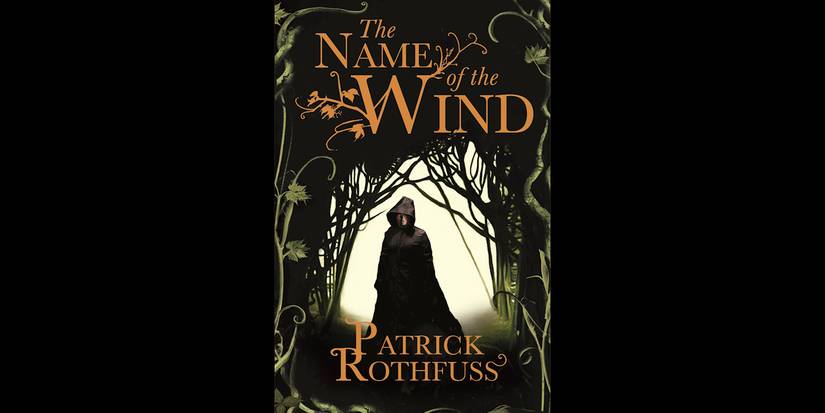
The Name of the Wind is the first book in Patrick Rothfuss’s The Kingkiller Chronicle. The story follows Kvothe, a legendary musician, magician, adventurer, and alleged killer who has disappeared from the world and is now living quietly as an innkeeper named Kote. When a traveling scribe known as Chronicler finally tracks him down, Kvothe agrees to tell the true story of his life over three days. The first book covers his childhood with a troupe of traveling performers, the tragedy that destroys his family, his years surviving alone on the streets of Tarbean, and eventually his admission to the University, where he begins studying magic and searching for answers about the mysterious Chandrian.
The setup is fascinating because the reader knows the myth behind Kvothe before knowing him as a person. However, his own version of the story is the exact opposite of the larger-than-life figure stories have transformed him into. The novel’s magic system is also one of its greatest strengths. Sympathy is treated almost like a branch of physics, and music is just as important to Kvothe as magic. The prose in The Name of the Wind is lyrical without ever losing momentum, and the world feels enormous without ever needing explicit exposition. The novel is a treat for anyone who wants to experience the fantasy genre in its truest, most magical form.


- Release Date
-
December 19, 2001
- Runtime
-
178 Minutes
- Writers
-
Fran Walsh, Philippa Boyens, Peter Jackson, J.R.R. Tolkien
- Producers
-
Barrie M. Osborne, Bob Weinstein, Harvey Weinstein, Mark Ordesky, Robert Shaye, Tim Sanders
You must be logged in to post a comment Login