Supernatural horror gets weaker the moment the ghost becomes the whole point. The perfect supernatural horror, however, knows that. It knows the haunting is usually tied to something people were already carrying: grief, guilt, family damage, buried crime, childhood fear, national trauma, or the terrible need to know what really happened.
The six films on this list stay frightening because their ghosts do not feel random. They have history. They have emotional logic. They turn houses, videotapes, children’s rooms, abandoned buildings, family stories, and old photographs into places where the past refuses to stay polite. Each one is controlled from the first uneasy sign to the last emotional consequence. And that’s how these films remain perfect from start to finish.
Advertisement
6
‘The Changeling’ (1980)
Image via Pan-Canadian Film Distributors
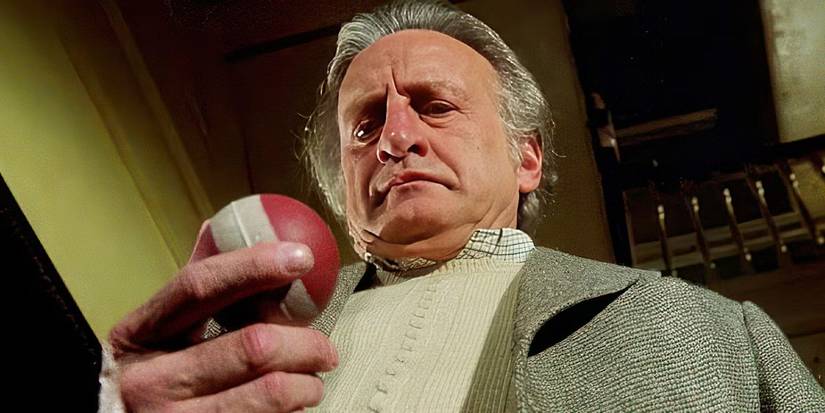
Grief gives The Changelingits first chill before the house does anything. John Russell (George C. Scott) loses his wife and daughter in a car accident, then moves into a large old mansion in Seattle to continue his work as a composer. He carries a quiet heaviness that makes the silence around him feel personal. He is not a thrill-seeker. He is not chasing a mystery for fun. He is a broken man trying to live in rooms that keep answering him back.
The genius of the film is its patience. A bouncing ball, a locked attic, a child’s wheelchair, a séance, a hidden room, and a decades-old crime slowly turn the mansion into a place where grief and injustice speak the same language. The horror never feels cheap because John’s loneliness gives every sound weight. The film also understands that a ghost story becomes more powerful when the dead are not the only guilty ones. Political respectability, family secrets, and stolen identity make the haunting feel earned rather than decorative.
Advertisement
5
‘The Devil’s Backbone’ (2001)
Image via Sony Pictures Classics
Guillermo del Toro’s orphanage is frightening before Santi (Junio Valverde) ever appears in The Devil’s Backbone. The film follows the Spanish Civil War and sits around the boys like an adult disaster they inherited without permission, and the unexploded bomb in the courtyard tells you exactly what kind of world they are living in. Carlos (Fernando Tielve), a new boy at the orphanage, has to learn its rules, its cruelties, its rivalries, and its hidden grief while the ghost of a murdered child keeps pulling him toward the truth.
The supernatural material hurts because the living are already dangerous. Jacinto (Eduardo Noriega)’s resentment, Carmen (Marisa Paredes)’s compromised authority, Dr. Casares (Federico Luppi)’ tenderness, Jaime (Íñigo Garcés)’s fear, and the boys’ fragile alliances give the story a human tension that would work even without the ghost. Santi’s presence is tragic rather than flashy. He is not there to perform scares on schedule. He is a child who was betrayed, abandoned, and left to become part of a building full of other abandoned children. The film is perfect because the ghost story, war story, and coming-of-age story all wound each other in the same place.
Advertisement
4
‘Noroi: The Curse’ (2005)
Image via Cathay-Keris Films.
Noroi: The Curse is a found-footage horror and while most found-footage horror films want you to believe the camera caught something scary. Noroi makes you feel like the footage itself should never have been organized in the first place. The film follows paranormal researcher Masafumi Kobayashi (Jin Muraki) through interviews, TV clips, home videos, missing-person material, strange rituals, dead pigeons, psychic disturbances, and the name Kagutaba, which keeps gaining force the more the pieces connect.
The terror comes from accumulation. A woman hears impossible baby sounds. A child behaves as if something has already touched her life. A foil-hat psychic seems ridiculous until the movie makes his panic feel horribly rational. The editing style looks dry and investigative, which only makes the supernatural pattern more disturbing. Nothing in Noroi rushes to comfort the viewer with clean answers. It lets dread build through repetition, distance, and the awful sense that every clue has been waiting for the others. The ending is terrifying because the movie has trained you to fear context itself. Once enough information is gathered, ignorance starts looking safer.
Advertisement
3
‘The Orphanage’ (2007)
Belen Rueda and Fernando Cayo as Laura and Carlos sitting next to each other on a loveseat in “The Orphanage” (2007)Image via Warner Bros. Pictures
This is one of the rare ghost stories where the emotional devastation is as strong as the scares. The Orphanage circles Laura (Belén Rueda) returning to the orphanage where she grew up, hoping to reopen it as a home for children with disabilities. Her son Simón (Roger Príncep) begins talking about invisible friends, and what first seems like childhood imagination slowly becomes tied to the building’s past, Laura’s memories, and a mystery that punishes every delay.
The film is terrifying because Laura’s love keeps pushing her further into fear. She gives the performance a desperation that never feels exaggerated. She is a mother trying to solve something no one else can fully believe with her. The game of knocking on walls, the sack-masked child, the seaside cave, the old woman, the medium’s visit, and the reopening of childhood wounds all carry a sadness that makes the horror sharper. The film never treats motherhood as a simple virtue shield. Laura’s love is powerful, but it is also frantic, mistaken, stubborn, and late to understand the truth. That complexity is why the film stays lodged in the chest.
Advertisement
Collider Exclusive · Horror Survival Quiz Which Horror Villain Do You Have the Best Chance of Surviving? Jason Voorhees · Michael Myers · Freddy Krueger · Pennywise · Chucky
Advertisement
Five killers. Five completely different ways to die — if you’re not smart enough, fast enough, or self-aware enough to avoid it. Only one of them is the villain your particular set of instincts gives you a fighting chance against. Eight questions will figure out which one.
🏕️Jason
🔪Michael
💤Freddy
🎈Pennywise
Advertisement
🪆Chucky
Advertisement
01
Something feels wrong. You can’t explain it — you just know. What do you do? First instincts are the difference between the survivor and the first act casualty.
Advertisement
02
Where are you most likely to find yourself when things go wrong? Setting is everything in horror. Where you are determines which rules apply.
Advertisement
03
What is your most reliable survival asset? Every survivor has a quality the villain didn’t account for. What’s yours?
Advertisement
04
What kind of fear is hardest for you to fight through? Knowing your weakness is the first step to not dying because of it.
Advertisement
05
You’re with a group when things start going wrong. What’s your role? Horror movies are brutally clear about who survives group situations and who doesn’t.
Advertisement
06
What’s the horror movie mistake you’re most likely to make? Honest self-assessment is a survival skill. Denial is not.
Advertisement
07
What’s your best weapon against something that can’t be stopped by conventional means? Every horror villain has a weakness. The survivors are always the ones who find it.
Advertisement
08
It’s the final scene. You’re the last one standing. How did you make it? The final survivor always has a reason. What’s yours?
Advertisement
Your Survival Odds Have Been Calculated Your Best Chance Is Against…
Your instincts, your strengths, and your particular way of thinking under pressure point to one villain you actually have a fighting chance against. Everyone else — good luck.
Advertisement
Camp Crystal Lake · Friday the 13th
Jason Voorhees
Jason is relentless, but he is also predictable — and that is the gap you would exploit.
He moves in straight lines toward his target. He doesn’t strategise, doesn’t adapt, doesn’t outsmart. He simply pursues.
Your ability to keep moving, use the environment, and resist the panic that freezes most victims gives you a genuine edge.
The Crystal Lake survivors were always the ones who stopped running in circles and started thinking about terrain, water, and distance.
You think like that. Which means Jason, for all his indestructibility, would face someone who simply refused to be where he expected.
Advertisement
Haddonfield, Illinois · Halloween
Michael Myers
Michael watches before he moves. He is patient, methodical, and almost impossible to detect — until it’s too late for anyone who isn’t paying close enough attention.
But you are paying attention. You notice the shape in the window, the car parked slightly wrong, the silence where there should be sound.
Michael’s power lies in the invisibility of ordinary suburbia — the fact that nothing ever looks wrong until it already is.
Your spatial awareness and instinct to map every room, every exit, and every shadow before you need them is precisely the quality Laurie Strode had.
You are not a victim waiting to happen. You are someone who already suspects something is wrong — and acts on it.
Advertisement
Elm Street · A Nightmare on Elm Street
Freddy Krueger
Freddy wins by getting inside your head — using your own fears, your own memories, your own subconscious as weapons against you. That strategy requires a target who can be destabilised.
You are harder to destabilise than most. You’ve faced uncomfortable truths about yourself and you haven’t looked away.
The survivors on Elm Street were always the ones who understood what was happening and chose to face it rather than flee from it.
Freddy’s greatest weakness is that his power evaporates in the presence of someone who refuses to give him the fear he feeds on.
Your psychological resilience — the ability to stay grounded when reality itself becomes unreliable — is exactly the quality that keeps you alive here.
Advertisement
Derry, Maine · It
Pennywise
Pennywise is ancient, shapeshifting, and feeds on terror — but it has one critical vulnerability: it cannot function against someone who genuinely stops being afraid of it.
The Losers Club didn’t survive because they were braver than everyone else. They survived because they faced their fears together, and faced them honestly.
You ask the questions others avoid. You look directly at what frightens you rather than turning away.
That directness — the refusal to let fear fester in the dark — is Pennywise’s worst nightmare.
It chose the wrong target when it chose you. You are exactly the kind of person whose fear tastes like nothing at all.
Advertisement
Chicago · Child’s Play
Chucky
Chucky’s greatest advantage is that nobody takes him seriously until it’s already too late. He exploits the gap between how something looks and what it actually is.
You don’t have that gap. You take threats seriously regardless of how they present — and you never make the mistake of underestimating something because of its size or appearance.
Chucky relies on surprise, on the delay between recognition and response. You close that delay faster than almost anyone.
Your instinct to treat every unfamiliar thing with appropriate scepticism — rather than dismissing it because it seems absurd — is the exact quality that keeps you breathing.
Against Chucky, not laughing is already winning. You are very good at not laughing.
Advertisement
2
‘A Tale of Two Sisters’ (2003)
Image via Cineclick Asia Big Blue Film
Advertisement
A Tale of Two Sisters feels delicate until you realize how much pain is hiding inside every room. Su-mi (Im Soo-jung) comes home from a psychiatric hospital with her younger sister Su-yeon (Moon Geun-young), and the house immediately feels hostile: their stepmother Eun-joo (Yum Jung-ah) is cold and theatrical, their father is withdrawn, and the domestic space seems organized around something nobody wants to say clearly. The supernatural signs are disturbing, but the family tension is worse because it has already shaped how everyone breathes around each other.
Kim Jee-woon turns the house into a place of memory, denial, and punishment without losing the emotional thread. Su-mi’s protectiveness, Su-yeon’s vulnerability, Eun-joo’s cruelty, and the father’s silence keep shifting meaning as the truth becomes harder to avoid. The wardrobe, the dinner scene, the bedroom terror, the stepmother’s behavior, and the sisters’ bond all gain new pain once the film reveals what the family has been circling. The scares are beautifully staged, yet the real damage is psychological and familial. It is a ghost story where grief has rearranged the entire home.
Advertisement
1
‘Lake Mungo’ (2008)
Image via Arclight Films
No film on this list understands the loneliness of a family after death more precisely than Lake Mungo. Sixteen-year-old Alice Palmer (Talia Zucker) drowns, and the documentary-style structure follows her parents and brother as they try to understand what remains of her. Photographs, home videos, interviews, alleged sightings, and family secrets build a portrait of a girl who becomes more unknowable after death, not less.
That is what makes the film so upsetting. The Palmers are not simply asking whether Alice’s ghost is real. They are confronting how little they may have known her while she was alive. The supernatural evidence feels eerie, but the emotional fear is worse: a dead child can leave behind mysteries no parent gets to solve cleanly. The phone footage at Lake Mungo is one of modern horror’s most devastating moments because it combines dread with an unbearable sense of recognition. The film never uses the afterlife as a cheap answer. It turns haunting into grief, grief into investigation, and investigation into the awful knowledge that love does not guarantee understanding.





You must be logged in to post a comment Login