Entertainment
6 Game-Changing Sitcoms That Totally Rewrite Genre Rules

Whether it’s allowing its characters to break the fourth wall to give the audience a glimpse into their thoughts or getting rid of the infamous laugh tracks, some sitcoms do a lot more in their condensed, 30-minute time slot, as they also aim to completely change the entire sitcom landscape. For those who don’t know, the word sitcom is truncated for “situation comedy,” shows that deal with issues in a comedic fashion, and can, oftentimes, wrap up situations within their 30-minute time slot. However, sitcoms have come a long, long way from the days of the famous living room couch and the canned laughter that this genre was once known for.
Starting with the iconic I Love Lucy, sitcoms began to bend and change the structure of the genre, which, in turn, redefined how modern shows tell their stories. The following innovative shows didn’t just follow the same-old blueprint; they set that blueprint on fire, then went on to draw up another blueprint that has helped evolve a genre that could have easily become stale and predictable. These shows challenged the narrative structure, pushed the boundaries of dark comedy, changed the way sitcoms dealt with serious social issues, and rewrote the rules for how television showcased diverse families. So, without further ado, let’s take a look at the game-changing sitcoms that completely rewrote the rules of the genre.
6
‘I Love Lucy’ (1951–1957)

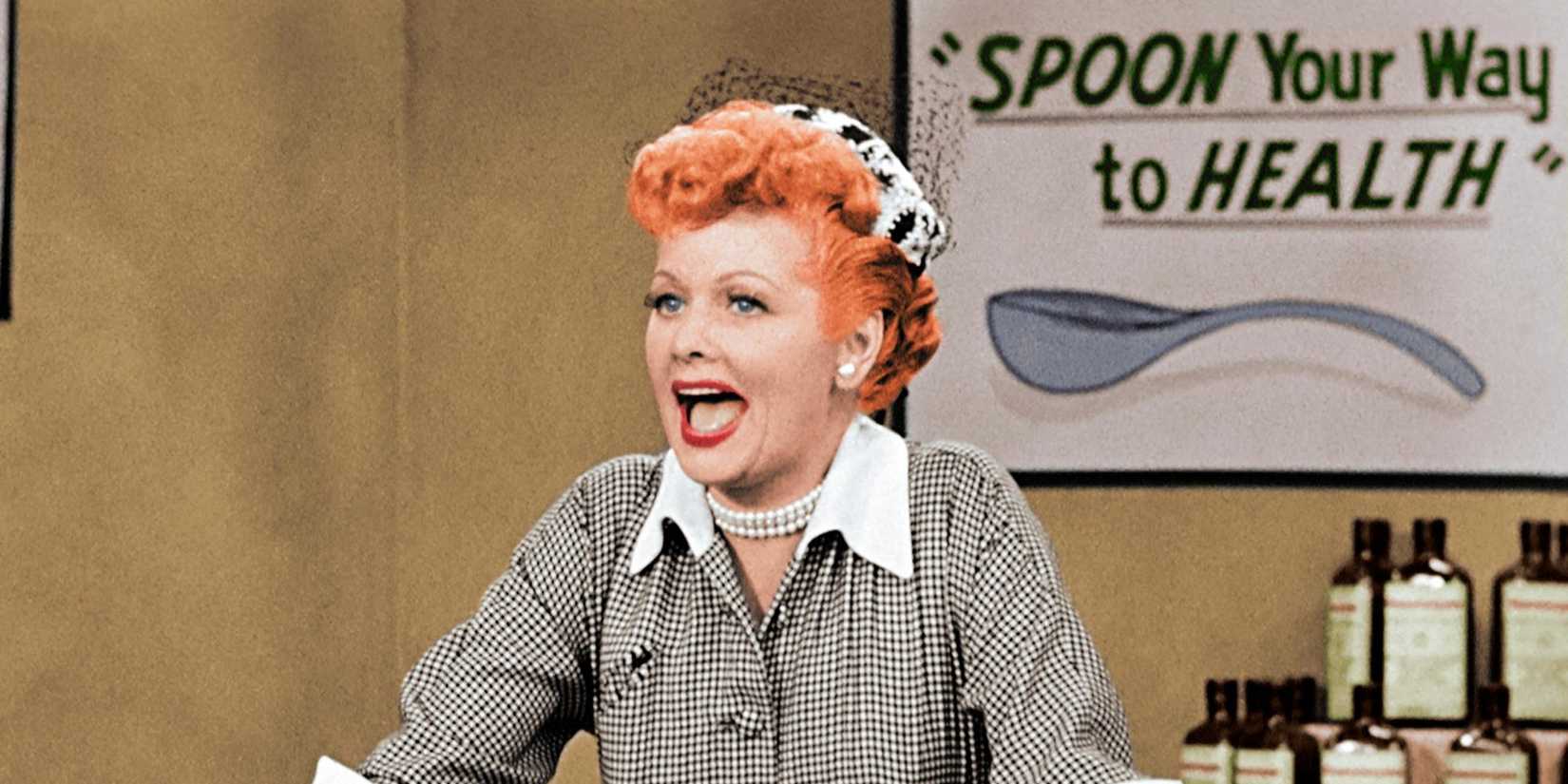
When I Love Lucy premiered on CBS in October 1951, it didn’t just become a huge hit overnight, but it rewrote the DNA for how a show is produced and filmed. Starring Lucille Ball and Desi Arnaz, I Love Lucy follows the daily life of Lucy Ricardo (Ball), an ambitious homemaker who often lands in trouble by trying to make it big in show business. Before I Love Lucy hit the airwaves, TV shows were treated as “radio with pictures,” as at the time, television was still a new medium on television. But this sitcom upped the game in production value, inventing the multi-camera setup that allowed the show to be filmed continuously and capture multiple angles, a setup that became the vanguard of sitcom shows in years to come.
Not only did I Love Lucy change how sitcoms were produced, but the show also did something different when it came to filming. In the early ’50s, TV shows were often filmed in New York City, with series airing on the West Coast via “Kinescope.” This resulted in terrible quality, which is something I Love Lucy corrected as the show was filmed on 35mm film. By using film, this allowed the sitcom to be shown at a higher quality, and, as a bonus, the show could be re-aired without losing its quality. This birthed the “rerun,” and it changed the television landscape forever, along with filming each episode in front of a live studio audience, which allowed the actors to react in real-time to the laughter of the audience.
5
‘Kevin Can F**k Himself’ (2021–2022)


Most people look at AMC’s Kevin Can F**k Himself as a brilliant parody of the sitcom genre, and that is a fair assessment for this series. However, this underrated sitcom not just parodied the genre, but it basically did an autopsy on the traditional sitcom. Kevin Can F**k Himself follows the life of Allison McRoberts (Annie Murphy), a woman who is struggling to redefine her life within an unhappy marriage. To frame the contrasting perspectives of the storyline, the series uses two distinct ways to describe Allison’s plight. When she’s with her narcissistic husband (Eric Petersen), the show is shot in a typical sitcom format, complete with a multi-camera setup and audience.
But when Kevin (Allison’s husband) isn’t on the screen, the show shifts into a single-camera setup that is mostly used in dramas. This is basically a “weaponization” of how television genres are filmed, with the muiti-camera format used to show how Kevin’s man-child “hijinks” serve as a punchline when they’re actually ruining his wife’s life, and the single-camera format is used to show the reality of Allison’s life when Kevin isn’t in the room, where his narcissism and man-child antics towards his wife borders on domestic abuse. By using this unique camera setup, Kevin Can F**k Himself forces the viewer to look at the “beloved sitcom wives” of previous sitcoms through a different lens, in which the wives are often seen as “killjoys” for trying to get their man-child husbands to deal with real-world consequences.
4
‘It’s Always Sunny in Philadelphia’ (2005–Present)
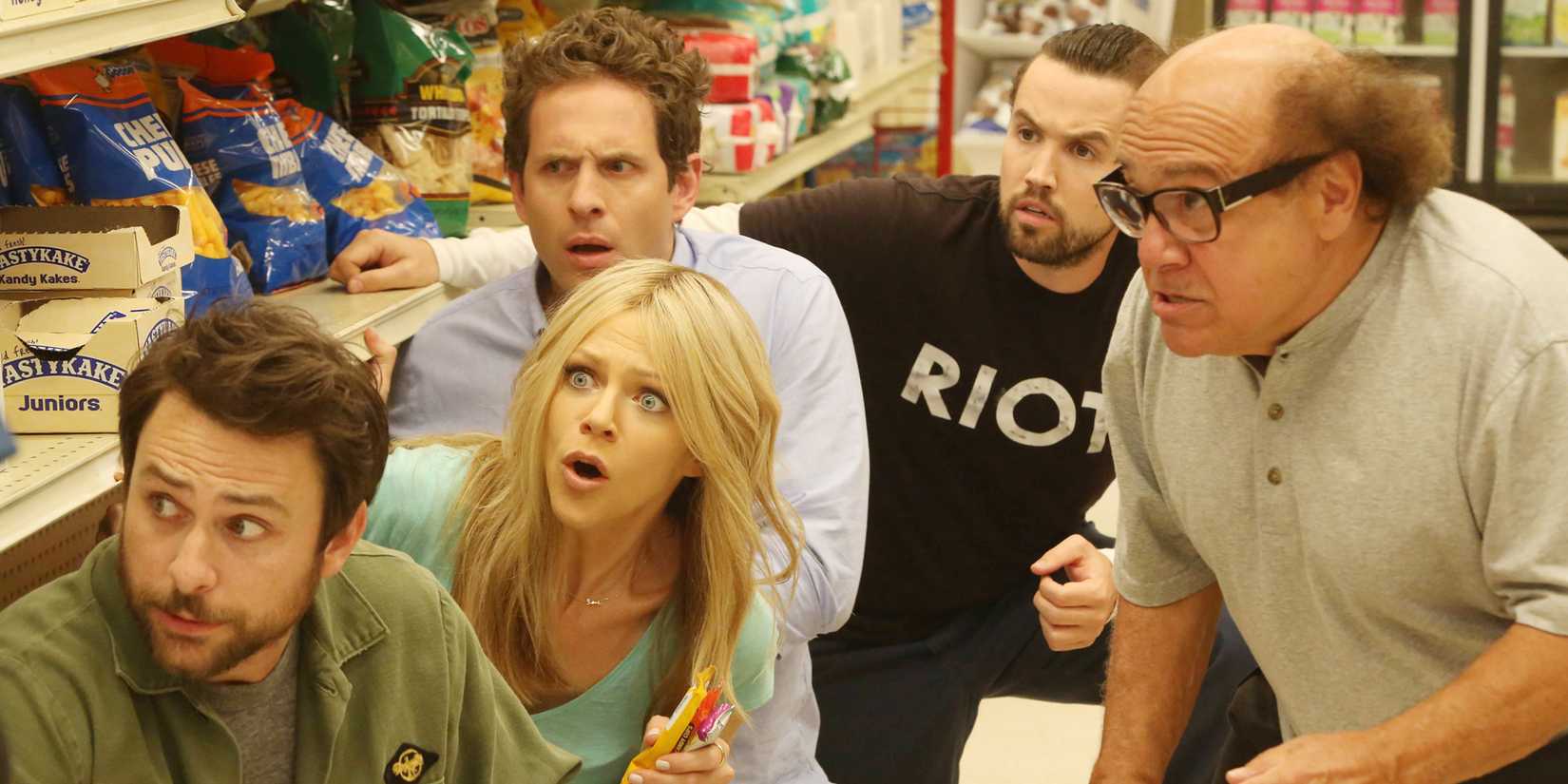
In the early 2000s, the sitcom landscape was changing, but they still opted to play it safe, with multi-camera shows still dominating the genre and being careful not to offend anyone. That all changed in 2005, when a pilot shot for only $200 managed to get picked by FX and go on to become the longest-running live-action sitcom in television history. That show is It’s Always Sunny in Philadelphia, created by Rob Mac and follows a group of self-centered, narcissistic misfits who run an Irish dive bar in South Philadelphia. When Always Sunny premiered, the sitcom genre was entering the “prestige” era, which was defined by mockumentary shows such as NBC’s The Office. But while the genre was just beginning to slightly nudge the limits of how far a sitcom can go, Always Sunny shoved it against the line.
The series took the “no learning, no growing” trope, which was popularized by Seinfeld, to the extreme. There isn’t a moment of human connection within the series, and by the end of each episode, a time when most sitcom characters would be better off or have learned their lesson, the gang in Sunny were always worse off morally or physically than they were when the episode started. This severe lack of self-awareness is the beauty of It’s Always Sunny in Philadelphia‘s relentless dark comedy. There is no moral center within “The Gang,” no saccharine moments where the characters learn their lesson or produce “teachable moments” for the audience. This is a high-octane sitcom in which every character is delightfully terrible, and the show has proven that fans would stay loyal to horrible characters if the chemistry and comedic timing are always on point, which they often are.
3
‘The Simpsons’ (1989–Present)

At the end of the 1980s, the sitcom landscape was dominated by cozy, live-action sitcoms featuring families that were lovable and always taught the audience a lesson at the end of their 30-minute runtimes. Then, in 1989, The Simpsons premiered on the then-upstart Fox network, and the animated series not only invaded the cozy suburbs where family sitcoms lived, but it bulldozed them and built a metropolis built on satire. Before The Simpsons premiered, the typical TV sitcom was based on the “Moral of the Story” format. You’ll have conflict, then a mistake will be made, and then a heartfelt conversation over a saccharine piano track that wrapped everything up in a neat, tidy bow in just 30 minutes. The Simpsons looked at this format and said, “hell no,” and went in a much different direction, and the rest of the sitcom landscape followed.
The Simpsons ditched the “Moral of the Story” format for a “Status Quo” plotline, in that the main character didn’t learn their lesson after each episode. This made the sitcom more cynical, and, ironically, more tied to reality than the homey family sitcoms of the ‘80s. This was all possible thanks to The Simpsons‘ high-speed comedy, with each episode being “layered,” one on top being slapstick for the kids, the middle introducing a touch of sophistication for adults, and the last layer, a background pun for “obsessive” fans. With its quick joke delivery and dense storylines, The Simpsons set the standard for other adult animated sitcoms that would come after it, and it was a breakthrough for the animated sitcom, as it proved that you didn’t need a live studio audience, nor portray actual living humans, to have a hit, primetime sitcom.
2
‘All in the Family’ (1971–1979)
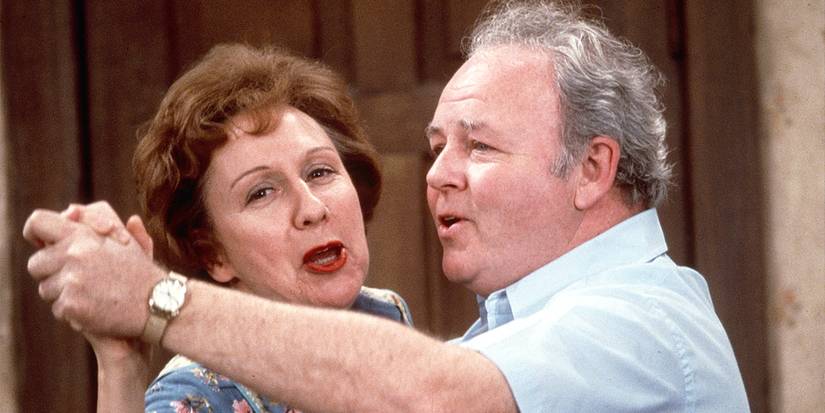
In the first two decades of the sitcom’s golden age, shows within the genre carefully constructed the tropes that would become the pillars of the genre. Situations were often solved within an episode, and the show was so safe that kids could easily watch and enjoy these sitcoms with their parents. But by the 1970s, society was changing rapidly, stripping away the “plastic sheen” of American life. The rapid change in American society and the struggle of the older generation to adapt to it were perfectly captured in the iconic CBS sitcom All in the Family. Created by Norman Lear, this socially-conscious sitcom followed the Bunker family of Queens, led by the family patriarch, Archie Bunker (Carroll O’Connor), the so-called “lovable bigot” who bemoaned America’s societal change.
All in the Family represented the death of escapism in the sitcom genre. Before the show premiered in 1971, sitcoms normally avoided the “Three Ts”: Taboos, Topicality, and Tension. This is how sitcoms kept their shows free from controversy and safe for the family. Then, All in the Family came in and broke all of those norms, using its characters to highlight social issues such as racism, feminism, and antisemitism. The success of the show rewrote the rules to show that sitcoms could tackle serious issues while still being funny. Granted, the sitcom was not your typical “family-friendly” show, but we wouldn’t have serious topics discussed in sitcoms if it weren’t for the success of All in the Family.
1
‘The Cosby Show’ (1984–1992)
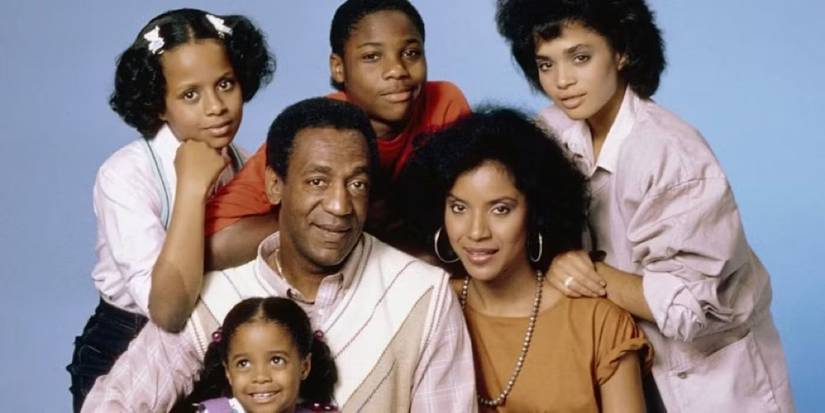
In the 1970s, Black families on television were always depicted as struggling with poverty and dealing with social injustice. But in the 1980s, Bill Cosby set out to showcase that not all Black families were underprivileged, but were just as upwardly mobile as white families were. So, in 1984, NBC debuted The Cosby Show, which not only shone a different light on the African American family but also single-handedly revived the sitcom genre. While sitcoms were still on television, they were being drastically overshadowed by single-camera dramas like Dallas and Dynasty, to the point where the genre was basically on life support. The Cosby Show gave the sitcom a huge jolt and formally kick-started the family sitcom boom that the decade would be known for.
The Cosby Show was not only an overnight ratings success and savior of the sitcom genre, but it also completely rewrote the rules of how minority families were portrayed on television. The parents, Cliff (Cosby) and Clair (Phylicia Rashad), were professionals, with Cliff as an obstetrician and Clair a law firm partner, and the sitcom took a universal approach to themes such as parenting and education, showing that just because the family was Black, it didn’t mean that it had the same issues as white families. The Cosby Show re-wrote the rules for the family sitcom, showing that the “bumbling dad” could still be authoritative, and that the mother was just the “dotting wife” and was an equal to her husband. The sitcom paved the way for telling more diverse stories on television, and while the show was tarnished by Cosby’s fractured legacy, it should still be considered a sitcom that changed the game in television.


- Release Date
-
1984 – 1992
- Directors
-
Jay Sandrich, Chuck Vinson, Malcolm-Jamal Warner, Oz Scott, Alan Smithee
- Writers
-
Bill Cosby, John Markus, Gary Kott, Janet Leahy, Mark St. Germain, Ehrich Van Lowe, Adriana Trigiani, Ed. Weinberger, Lisa Albert, Michael J. Leeson, Oliver Hailey, Thad Mumford