Entertainment
6 Great HBO Shows With Glaring Plot Holes

Plot holes are kind of impossible to avoid in storytelling, and honestly, at times, the audience is willing to play along. If the story is good enough, a few logical leaps here and there don’t really matter. However, things get messy when writers push that limit a little too far. HBO, for all its prestige and reputation, is no exception. In fact, some of the network’s most iconic series are also the biggest offenders when it comes to obvious inconsistencies and unresolved arcs.
That doesn’t necessarily make them bad, though. If anything, it makes their success all the more fascinating. After all, it takes a truly great story to keep the viewers hooked even when the cracks in the plot are right there in plain sight. Here is a list of successful HBO shows that serve as perfect examples of that.
6
‘Westworld’ (2016–2022)


Westworld started as one of HBO’s most ambitious shows with a premise that instantly hooked the audience. The sci-fi series, created by Jonathan Nolan and Lisa Joy, is about a hyperrealistic Wild West theme park populated by android hosts, where wealthy guests can indulge in their darkest fantasies without consequence. The show was meant to be a philosophical exploration of free will, consciousness, and what it truly means to be human. Now, Westworld Season 1 perfectly set up this concept with a gripping and layered central mystery. However, as the show expands its world, it begins to lose the plot big time. The storytelling begins increasingly convoluted, and timelines start blurring into each other to the point where the rules of the show’s own universe start feeling inconsistent.
Characters are repeatedly killed and revived without clear stakes, major arcs are unresolved, and key plots like the fate of the Outliers never receive a satisfying payoff. The thing about Westworld is that it isn’t necessarily a bad show, but its tendency to constantly reinvent itself comes at the expense of the story and characters. Each season turns the status quo upside down and makes the audience feel that the show is more interested in escalating its complexity than in actually following through on already-established ideas.
5
‘Euphoria’ (2019–2026)

Image via HBO Max
Euphoria has been one of the most talked-about shows of the last decade. The controversial teen drama, created by Sam Levinson, stars Zendaya as Rue Bennett, a high-schooler battling addiction along with a group of her friends and classmates, all navigating their own struggles with identity and trauma. The series takes place in a hyper-stylized world that instantly became its signature and mirrored the chaos that its characters live in. The show has been widely praised for its performances, cinematography, and raw depiction of teenage life. However, for all its strength, the drama has also faced consistent criticism for gaps in its storytelling. Euphoria Season 2 in particular feels messy, inconsistent, and clearly prioritizes shock value over any semblance of character arcs.
Some of these issues include Nate’s (Jacob Elordi) sudden fixation on Cassie despite hating her throughout Euphoria Season 1. Entire character arcs are dropped, like Kat’s (Barbie Ferriera) being reduced to a side character or McKay (Algee Smith) being written out with no explanation. However, Rue’s storyline with Laurie (Martha Kelly) and the fact that she escapes that dangerous situation without any consequence is easily one of the biggest plot holes in the series. Some might argue that all of these loose ends will be solved by Season 3. That doesn’t take away from the fact that the show struggles with its own stakes. Euphoria thrives on how it makes the audience feel in the moment, but once they step back, the cracks in the narrative are impossible to ignore.
4
‘Game of Thrones’ (2011–2019)

Game of Thrones has practically defined prestige television for the better part of the last two decades. The series, based on George R. R. Martin’s A Song of Ice and Fire novel series, takes place in an expansive, fantastical world and centers on the intense power struggle between the seven kingdoms for the Iron Throne. There’s no denying that the show has already gone down in pop culture history for its meticulous storytelling and unmatched worldbuilding. However, as the series moved beyond its source material, logic took a backseat to the spectacle, and that proved to be a major mistake. The later seasons destroyed the legacy that the show had spent around eight years constructing.
Entire storylines felt rushed or abandoned, including Cersei’s (Lena Headey) pregnancy and the prophecy of “The Prince That Was Promised.” Even major narrative arcs like Jon Snow’s (Kit Harrington) true lineage and Daenerys’ (Emilia Clarke) descent into madness ultimately had little impact on the outcome of the story. By the end, it felt like the show was just leaning on convenience to wrap things up, and in doing so, it set up many ideas that were never fully explored. The notorious ending of Game of Thrones raised more questions than answers and is widely considered one of the worst series finales of all time. Despite a rushed finish, though, Game of Thrones is still an undeniable landmark in TV history, with two spinoffs already airing and several others in the works.
3
‘The Leftovers’ (2014–2017)

The Leftovers is a show that fully embraces ambiguity, but that is no excuse for all the plot holes it has left behind. The series, created by Damon Lindelof and Tom Perrotta, begins with two percent of the world’s population suddenly vanishing without explanation. However, the show isn’t about where they went, but it focuses on the people left behind as they grapple with grief and faith in the wake of a phenomenon that just can’t be explained. The show’s deliberate refusal to provide easy answers gives it its emotional weight, but also tends to get frustrating at times. The Leftovers often sets up certain storylines only to abandon them in the middle. For example, Kevin Garvey’s (Justin Theroux) repeated resurrections are never grounded in any clear logic.
Not to mention the entire situation with the Guilty Remnant feels like one of the show’s most interesting elements until the viewer realizes that their larger purpose is never actually explored. Even broader world-building elements like the earthquakes or the surreal hotel world are introduced with weight but never really explained in relation to the overall narrative. Sure, some of this is intentional, but there is a fine line between leaving things to the audience’s interpretation and careless storytelling. Despite all that, though, there’s no denying that The Leftovers is one of HBO’s most emotionally complex stories.
2
‘True Detective’ (2014–Present)

True Detective Season 1 is peak TV, but unfortunately, it goes downhill from there. The HBO crime anthology begins with Matthew McConaughey and Woody Harrelson as two detectives trying to solve a disturbing ritualistic murder case. Each subsequent season has introduced a new cast and case, with the most recent one being True Detective: Night Country starring Jodie Foster and Kali Reis. For all its ambition, though, the one thing the show has struggled with is consistency.
True Detective Season 2, in particular, is often criticized for being overly convoluted and weighed down by too many characters and subplots that ultimately go nowhere. It often feels like the show is focusing more on mood and character rather than telling a believable story. Its best moments have always come from the dynamic between its detectives and philosophical dialogue, but even then, the show’s glaring plot holes are hard to miss. Even at its messiest, though, True Detective is undeniably a great watch.
1
‘The Last of Us’ (2023–Present)

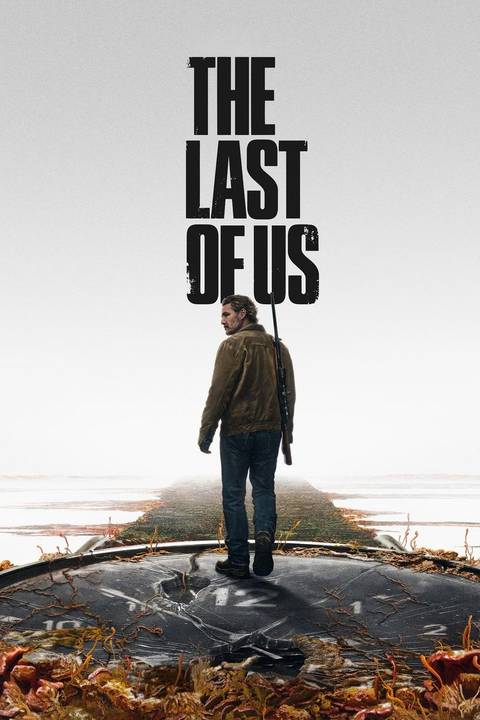
The Last of Us quickly established itself as one of HBO’s biggest hits and set the gold standard for video game adaptations. The post-apocalyptic drama follows Joel (Pedro Pascal), who is tasked with escorting Ellie (Bella Ramsey) across a post-apocalyptic United States to a revolutionary group known as the Fireflies. Now, what raises the stakes is that this teenage girl may hold the key to curing a fungal infection that is slowly taking over humanity. The drama series is far from a typical zombie show, though, because it leans heavily into character-driven storytelling.
However, for a show that attempts to remain grounded in realism, there are plenty of moments where its internal logic starts to crack. Plenty of Joel’s decisions make little sense from a practical point of view. Even the broader stakes, such as the Fireflies’ plan to immediately operate on Ellie without exploring any other alternatives, feel rushed and oddly underdeveloped. A lot of moments in the show rely entirely on convenience or shock value. One can overlook these gaps thanks to the cast’s brilliant performances and the emotional payoff of it all, but they do make it harder to fully buy into the world at times.

The Last of Us
- Release Date
-
January 15, 2023
- Network
-
HBO
- Showrunner
-
Craig Mazin
- Directors
-
Craig Mazin, Peter Hoar, Jeremy Webb, Ali Abbasi, Mark Mylod, Stephen Williams, Jasmila Žbanić, Liza Johnson, Nina Lopez-Corrado
You must be logged in to post a comment Login