Entertainment
6 Most Important Thriller Shows That Define the Genre

The thriller genre has come a long way from simply making the audience question what comes next. There’s no denying that suspense and shocking twists are still important to a great thriller story, but tension alone isn’t enough. Modern thrillers are striking a chord with the audience because they aren’t afraid to explore the depths of fear, obsession, morality, and the darker sides of human nature.
Of course, this evolution didn’t happen overnight. Over the years, a handful of groundbreaking series pushed the genre into new territory and reinvented it through layered, character-driven storytelling. Here is a list of six such shows that have helped shape the thriller genre into what it is today.
1
‘Twin Peaks’ (1990–1991)

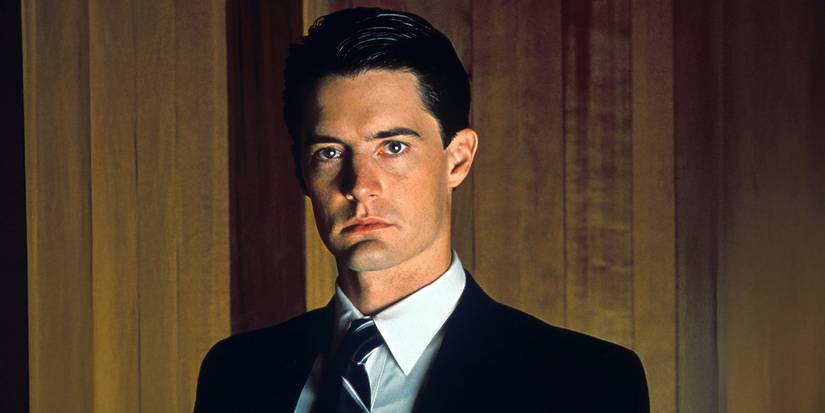
Without Twin Peaks, thriller television would probably look very different today. Before the show set an entirely new benchmark for the genre, thriller shows were generally pretty straightforward, where the audience would follow investigators as they gathered clues to solve a crime, and every episode ended with a clear resolution. However, David Lynch and Mark Frost completely disrupted that formula. Twin Peaks begins with the murder of homecoming queen Laura Palmer (Sheryl Lee), which leads FBI Special Agent Dale Cooper (Kyle MacLachlan) to the small town of Twin Peaks. The murder investigation immediately takes a turn as Cooper uncovers secrets hidden beneath the town’s seemingly peaceful surface. Almost every resident here has something to hide, and each new revelation only deepens the mystery surrounding Laura’s death.
The show constantly shifts between crime drama, psychological thriller, dark comedy, soap opera, and supernatural horror without ever feeling disjointed. This kind of tonal blending was almost unheard of on television at the time and constantly kept the audience on the edge of their seats. Instead of just focusing on who killed Laura, Twin Peaks explores the slow unraveling of a community built on lies. The narrative introduces strange dreams, cryptic clues, unsettling visions, and forces that are beyond explanation. It practically forces the audience to follow along without ever fully receiving any definitive answers. In fact, Twin Peaks is still influencing thriller TV to embrace ambiguity and long-running mysteries. Few series have had a greater impact on the evolution of the thriller genre, which is why Twin Peaks remains essential viewing even over three decades later.
2
‘Mindhunter’ (2017–2019)
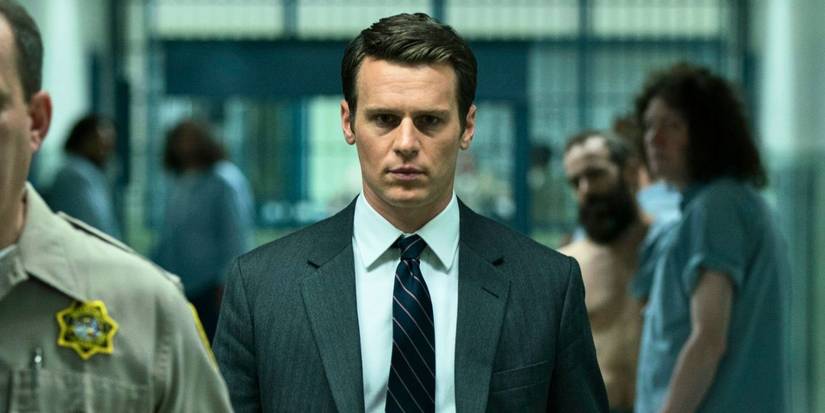
Mindhunter is far from the average crime thriller because the show actually focuses on understanding criminals, rather than just catching them. The series is set in the late 1970s and follows FBI agents Holden Ford (Jonathan Groff) and Bill Tench (Holt McCallany) alongside psychologist Wendy Carr (Anna Torv), as they begin interviewing imprisoned serial killers in an attempt to figure out how these offenders think and why they commit such horrific acts. In many ways, Mindhunter serves as the origin story of criminal profiling and shows how the FBI’s Behavioral Science Unit developed techniques that would eventually transform modern homicide investigations forever.
Holden, Bill, and Wendy travel across the country speaking to notorious killers, based on real-life criminals including Edmund Kemper, Jerry Brudos, and Charles Manson. These conversations give the show its sense of tension because every meeting feels like a psychological chess match, with the agents trying to extract information without being manipulated in return. Mindhunter transformed the seemingly simple process of interviewing people into one of the most suspenseful premises ever aired on TV. The series proved that getting to know a killer could be just as gripping as hunting one down. The show’s emotional depth and commitment to realism redefined what thriller television could be.
3
‘Breaking Bad’ (2008–2013)
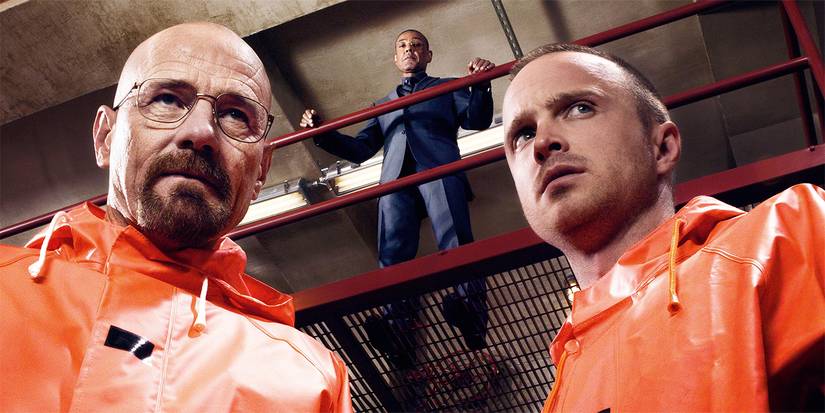
Breaking Bad is one of the clearest examples of how to keep audiences hooked for years without ever losing momentum. The series follows high school chemistry teacher Walter White (Bryan Cranston), who learns he has terminal cancer. In a desperate attempt to secure his family’s financial future, Walter teams up with his former student Jesse Pinkman (Aaron Paul) to produce and sell methamphetamine. The plan is initially only supposed to be temporary, but soon enough, Walter finds himself pulled deeper into the criminal underworld. The show’s five seasons follow Walter dealing with ruthless drug dealers, violent cartels, and increasingly dangerous situations.
All of this pushes Walter further from the man he used to be until he becomes one of the most feared figures in the drug trade. Every choice Walter makes brings him closer to the power and control he secretly craves. This transformation is the reason Breaking Bad became such a compelling thriller. Rather than relying on mysteries or twists alone, the show built suspense around character decisions and consequences. The show turned its main character’s moral decline into the source of its tension and set a standard for long-form storytelling that hasn’t been matched to this day.
4
‘Broadchurch’ (2013–2017)

Broadchurch is a no-frills thriller that strips the genre to its essentials. The show opens with the body of an 11-year-old boy being discovered on a beach in the small coastal town of Broadchurch. Detectives Alec Hardy (David Tennant) and Ellie Miller (Olivia Colman) are assigned to investigate the case. However, instead of a straightforward murder investigation, they discover secrets hidden throughout the community that place almost every resident under suspicion. As the detectives follow new leads, friendships begin to fracture, and families turn against one another.
Through this premise, Broadchurch explores the emotional fallout of a crime like this and gives as much weight to the victim’s family as it does to the investigation. Every episode peels away another layer of the mystery and forces both the detectives and the audience to reconsider what came before. Broadchurch builds suspense through constant uncertainty, and this approach is exactly why the show became so influential. The series combines a gripping whodunit premise with an extremely realistic portrayal of grief, and in doing so, it became a blueprint for many prestige thriller shows that followed.
5
‘24’ (2001–2010)

24 completely changed television in general by introducing a concept that felt revolutionary at the time. Each season of the show follows counterterrorism agent Jack Bauer (Kiefer Sutherland) over the course of a single day, with every episode representing one hour in real time. This pacing gave the show a level of urgency that few thrillers had ever achieved back then. Jack is constantly forced to make impossible decisions as he deals with terrorist attacks, political conspiracies, assassinations, hostage situations, and more, with almost no time to think.
Every hour raises the stakes, and this relentless escalation became one of the show’s defining strengths. Not just that, but 24 also popularized the serialized thriller format that dominates TV today. The show premiered when most network dramas were still largely episodic. Its continuous, high-stakes storytelling demanded that the viewers keep watching and created a level of weekly suspense that turned every episode into an event of its own. Many other shows have tried to replicate 24’s intensity, but almost none have managed to do justice to it.
6
‘Lost’ (2004–2010)

Lost not only redefined thriller TV but also became a cultural phenomenon thanks to its immersive storytelling. The series begins after Oceanic Flight 815 crashes on a mysterious island and dozens of survivors are left stranded. Initially, the narrative unfolds like a typical survival story as the passengers search for food, shelter, and a way to escape. However, it quickly becomes clear that the island is hiding secrets of its own. Soon enough, the characters start spotting strange creatures roaming the jungle, discover mysterious hatches buried underground, and encounter a group known as the Others, who seem to know far more about the island than anyone else. The mystery only expands as the seasons progress.
The show uses flashbacks and flash-forwards to reveal how nearly every survivor on the island was connected way before the crash. At the same time, though, every discovery raises several more questions to deliver a compelling narrative that kept evolving in new ways for the show’s entire run. Lost combines a nail-biting mystery with a character drama about the people it follows, and somehow manages to keep expanding its mythology without ever feeling inaccessible. However, what makes the show so important is the way it transformed television into a communal experience. Every new clue, theory, and revelation sparked endless discussion between episodes. The show turned viewers into active participants who would analyze every clue and theory online while waiting for the next episode to air. Given all this, it’s evident that modern prestige TV owes a lot to Lost.


Lost
- Release Date
-
2004 – 2010-00-00
- Showrunner
-
Damon Lindelof, Carlton Cuse
- Directors
-
Jack Bender, Paul A. Edwards, Tucker Gates, Eric Laneuville, Bobby Roth, Greg Yaitanes, Daniel Attias, J.J. Abrams, Karen Gaviola, Kevin Hooks, Rod Holcomb, Stephen Semel, Adam Davidson, Alan Taylor, David Grossman, Deran Sarafian, Fred Toye, Mario Van Peebles, Marita Grabiak, Mark Goldman, Matt Earl Beesley, Michael Zinberg, Paris Barclay, Robert Mandel
You must be logged in to post a comment Login