Entertainment
6 Most Perfect Western Movies Released Since 2000

Movie lovers have always had a fascination with Westerns. In the glory days of the genre, they provided an exciting look at a golden age of cowboys and adventures set against a sprawling backdrop of deserts and mountains. As time has gone by, the genre has evolved, inviting neo-Westerns into the conversation while holding true to its ideals.
Since 2000, Westerns have experienced an extraordinary boom. Throughout the past 26 years, there have been some masterpieces, but the six that made this list are the most perfect of them all. From classic themes, remakes of iconic titles, and newfound thrillers that reignited a passion for the Wild West, these six movies are the most perfect. While there are certainly other movies that came oh so close, these six are why the West continues to win.
1
‘3:10 to Yuma’ (2007)


Sometimes a modern eye and newfound cinematic technology can take an already solid story and elevate it into something incredible. Such was the case for the 2007 remake of 3:10 to Yuma. Adapted from Elmore Leonard’s short story, the film follows an impoverished, debt-ridden rancher named Dan Evans (Christian Bale) who agrees to safely escort a notorious, captured outlaw named Ben Wade (Russell Crowe) to a 3:10 train heading to Yuma prison in exchange for money to save his family’s land. Along the way, Wade’s violent gang tracks them relentlessly, while Wade and Dan engage in a tense psychological duel and develop an unexpected mutual respect. An enthralling Western whose action is as gripping as the psychological duel, 3:10 to Yuma elevates a simple escort mission into a tense, character-driven study of morality, duty, and mutual respect.
3:10 to Yuma proudly stands on its own as a masterclass of Western filmmaking. Director James Mangold uses the story to propel a dynamite character-driven drama that could easily be a stage play. The movie explores deep themes of fatherhood, personal redemption, and what it truly means for a broken man to earn back his self-respect in the eyes of his son. Bale and Crowe have extraordinary chemistry as rivals. Bale portrays raw, grounded desperation and quiet honor, while Crowe plays a villain with dangerous charm, intelligence, and an unpredictable moral code. The true unhinged villain performance comes from Ben Foster as Wade’s ruthless, psychopathic right-hand man, Charlie Prince. The film shifts away from the standard good-versus-evil Western narrative, in exchange for how the captive outlaw slowly influences and respects his captor. The film builds tension as the clock ticks toward that departure, keeping the audience on edge.
2
‘Brokeback Mountain’ (2005)
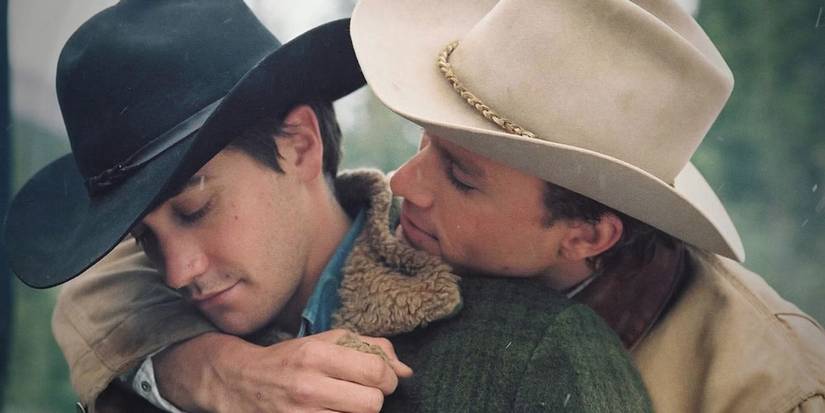
The Western genre may be about cowboys and the love for the job, but in Ang Lee’s beautiful romance Brokeback Mountain, love runs deeper. The film takes Annie Proulx’s short story and expands it into a groundbreaking masterpiece. The story follows the complex, secret love affair between two cowboys, Ennis Del Mar (Heath Ledger) and Jack Twist (Jake Gyllenhaal), spanning from 1963 to 1983 in the American West. Isolated from the rest of the world, Ennis and Jack form a deep emotional and physical bond that changes their lives forever. After the summer ends, they separate and both marry women—Ennis marries Alma (Michelle Williams), and Jack marries Lureen (Anne Hathaway). However, they continue to meet up over the course of twenty years for sporadic, hidden fishing trips. Brokeback Mountain tackles forbidden love as it explores how hard it was to express same-sex love in rural America during a time when it was heavily judged, rejected, and unsafe. Brokeback Mountain is more than that “gay cowboy movie.” It’s a transcendent journey through regret, lost time, and the persistence of love.
Brokeback Mountain has all the makings of a Western, but then subverts it into a sensationally unique tale of true love and the struggle to keep it. The cowboy myth is reshaped as the ultimate symbol of rugged, hypermasculine American patriarchy and exposes how rigidly enforced social codes destroy the people who cannot fit inside them. The story highlights the high emotional cost of unfulfilled desires and living a divided life. And love is at the center of that battle. The film brilliantly blends a deeply moving, universal love story with a powerful deconstruction of traditional American masculinity. Lee directs with immense empathy and quiet precision, avoiding melodrama to let small gestures, glances, and long silences carry the emotional weight. Rodrigo Prieto’s breathtaking cinematography uses the vast Wyoming wilderness as a temporary sanctuary for freedom, which starkly contrasts with the claustrophobic, hostile towns where the men are forced to live their separate, conventional lives. Brokeback Mountain pushed commercial and cultural barriers, proving that an LGBTQ-led narrative could achieve high artistic merit and deeply move mainstream audiences worldwide.
3
‘Django Unchained’ (2012)


There’s not a genre that Quentin Tarantino can’t handle. In 2012, he took a shot at spaghetti Westerns with Django Unchained. The film tells the tale of Django Freeman (Jamie Foxx), an enslaved man in Texas who is freed after being purchased by a German bounty hunter named Dr. King Schultz (Christoph Waltz) for his ability to identify his next targets, the murderous Brittle brothers (M. C. Gainey, Cooper Huckabee, and Doc Duhame). Together, they hunt criminals and travel deep into the American South to rescue Django’s wife, Broomhilda (Kerry Washington), from a brutal, sadistic plantation owner, “Monsieur” Calvin J. Candie (Leonardo DiCaprio). Blending the high-energy style of a spaghetti Western with a powerful revenge story, Django Unchained forces viewers to face the true horrors of American slavery while giving its hero a rare, deeply satisfying victory.
Tarantino uses the style of old exploitation and Western films to tell a story of real justice. It trades the usual tragic ending of slave dramas for a powerful, explosive moment of payback. All with the visceral signature Tarantino style. By using the real-world historical horrors of American slavery, such as brutal whippings, forced dog attacks, and mandingo fights, some scenes feel as terrifying and visceral as a horror movie. So, yes, there is lots and lots of blood. The film is filled with top-notch performances, especially from Foxx, Waltz, and DiCaprio. Foxx brings a quiet strength that counters the charm and a warm heart to his role as a mentor. DiCaprio defies type by leaning into a cruel villain with terrifying ease. Other strong turns come from Samuel L. Jackson as a complex and bitterly hateful house servant, Stephen, and Walton Goggins as the sadistic overseer and enforcer, Billy Crash. Django Unchained is not the easiest film to watch, and yet, it’s extraordinarily entertaining.
4
‘No Country for Old Men’ (2007)

It’s easy for us to toss around terms like magnum opus, but when it comes to Joel and Ethan Coen, their magnum opus truly is No Country for Old Men. Based on Cormac McCarthy‘s 2005 novel, No Country for Old Men follows three individuals. Set in West Texas in 1980, a hunter named Llewelyn Moss (Josh Brolin) finds a drug deal gone wrong and a case with 2 million dollars. He takes the money, which starts a deadly chase. Anton Chigurh (Javier Bardem) is a terrifying and calm hitman sent to find the money. He tracks Moss using a hidden electronic device and kills anyone in his way. Sheriff Ed Tom Bell (Tommy Lee Jones) tries to save Moss and stop Chigurh, but feels old and helpless in a changing, violent world. The neo-Western thriller subverts traditional cinematic expectations through minimalist storytelling, terrifying realism, and profound thematic depth.
No Country for Old Men is not a happy Hollywood Western. In fact, its bleakness makes it more authentic and raw. The movie is full of suspense and keeps you on the edge of your seat from start to finish. The imagery is quite profound. What tends to be a beautiful, vast landscape is reconfigured to capture the dry, empty splendor of the West Texas desert. The film uses very little background music and sparse dialogue, relying on pure atmosphere. With Bardem playing one of the greatest and most terrifying antagonists, the mood was grim. Taking on the remorseless, coin-flipping monster tracking down a stash of cash makes the journey harrowing. The film was widely praised, winning four Academy Awards, including Best Picture and Best Director for the Coen brothers.
5
‘There Will Be Blood’ (2007)
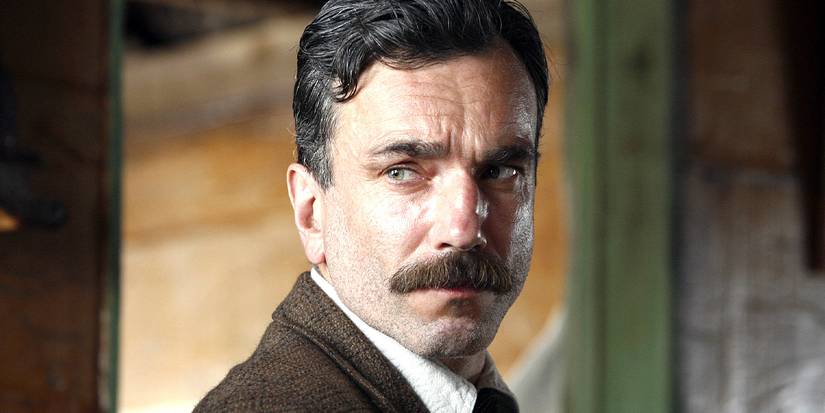
Loosely based on the 1927 novel Oil! by Upton Sinclair, writer and director Paul Thomas Anderson crafted a brilliant period epic that became grander than its source material. There Will Be Blood follows Daniel Plainview (Daniel Day-Lewis), a ruthless silver miner turned oil tycoon, as he builds his fortune in early 20th-century California, using his adopted son H.W. (Dillon Freasier) to project the image of a family man while manipulating landowners into selling their property. Plainview clashes with a charismatic local preacher named Eli Sunday (Paul Dano), leading to a bitter, destructive conflict over wealth, faith, and power that leaves Plainview morally bankrupt and isolated. Anderson brilliantly challenges traditional cinematic expectations through minimalist storytelling, terrifying realism, and profound thematic depth. There Will Be Blood succeeds as a premier modern Western by subverting traditional frontier myths, replacing cowboys and gunfights with the brutal clash of corporate capitalism and religious zealotry during the California oil boom.
There Will Be Blood tells a dark story about greed, capitalism, and the loss of human soul through a brilliant visual and auditory scope. Anderson shoots the bleak landscapes of early California with deep, quiet power. Alongside cinematographer Robert Elswit, the film uses natural light and vast, empty horizons to show how small and empty the characters’ souls are. Jonny Greenwood from Radiohead created a score filled with screeching violins and heavy, pounding dread, operating like a loving, breathing character that builds upon the panic and unease. There Will Be Blood showcases the foundational work of modern American wealth that was built on exploiting the earth, manipulating people, and destroying human connection. The film evokes a psychological horror as Plainview is like a classic movie monster. He starts his journey with cold, calculating ambition and an absolute lack of empathy, turning him into an inhumane force. It’s all part of Day-Lewis’ legendary performance. He does not need many words to show his inner madness. His sharp voice, heavy breathing, and fierce eyes create innate fear. The Western myth of a noble frontier hero is traded away for a misanthropic, hyper-capitalist antihero, making the film a worthy watch.
6
‘True Grit’ (2010)

The original True Grit was an extraordinary classic. But sometimes it takes the right creative team, perfect timing, and faithfulness to the source material to execute the ultimate adaptation. The 2010 iteration of Charles Portis’ novel is simply perfect. Directed by Joel and Ethan Coen, True Grit is the epitome of a classic Western. The story follows 14-year-old Mattie Ross (Hailee Steinfeld), who hires a one-eyed, drunken U.S. marshal named Rooster Cogburn (Jeff Bridges) to track down Tom Chaney (Josh Brolin), the hired hand who murdered her father. They are joined by a Texas Ranger named LaBoeuf (Matt Damon), who is also hunting Chaney for a separate crime. A spellbinding journey into the wilderness, their grit and resolve are tested by harsh weather, shootouts, and violent outlaws hiding out in the territory. True Grit captures the stark, poetic tone of Portis’ original novel, offering a grounded, unromanticized, yet visually stunning look at the American frontier.
The Coens opted to tell the story through Mattie’s eyes; a decision that proved worthwhile. She serves as the emotional anchor of the story. Steinfeld, in a breakthrough role, is treated as a young teenager with fierce agency, with complete seriousness rather than as a cute gimmick. She holds up strongly to the Hollywood legends surrounding her on screen. True Grit presents a moral conundrum for many of the characters. When violence erupts, it is sudden, brief, and brutal, emphasizing the messy and rapid consequences of frontier survival. The Coen brothers approach the classic Western tropes with complete sincerity, creating a timeless myth rather than cynically mocking or deconstructing the genre. Cinematographer Roger Deakins frames the West as a cold, majestic, and indifferent landscape that mirrors the harshness of the journey. True Grit is a razor-sharp Western that honors the classics while setting the blueprint for the 21st century.


True Grit
- Release Date
-
December 22, 2010
- Runtime
-
110 minutes
- Director
-
Joel Coen, Ethan Coen
- Writers
-
Joel Coen, Ethan Coen, Charles Portis
You must be logged in to post a comment Login