Entertainment
6 Most Universally Loved Romance Movies Based on Books, Ranked

Long before audiences fell in love with love stories on screen, most of the time, readers were already captivated by their wit, chemistry, heartbreak, and happily-ever-afters found on the page of a beloved novel. Of course, adapting a cherished book is never easy, especially when fans have spent years imagining the story for themselves. Yet, the very best romance adaptations manage to capture the spirit of the source material, while also bringing something fresh to the table.
And on the rare occasion, there are some that have somehow achieved the unthinkable: earned near-universal admiration from critics and audiences alike—many of whom love to nitpick on the nitty-gritty details. It’s difficult to express how impressive a feat like this is. As such, we felt it was important to highlight these films that have not only remained faithful to the emotional heart of their literary counterparts, but stand confidently as exceptional movies in their own right.
6
‘Crazy Rich Asians’ (2018)


When economic professor Rachel Chu (Constance Wu) accompanies her longtime boyfriend Nick Young (Henry Golding) to Singapore for his best friend’s wedding, she goes on the trip simply expecting to finally meet his family. Instead, she’s left completely blindsided by the revelation that Nick hails from one of Asia’s wealthiest dynasties. Suddenly thrust into a world of staggering luxury, family expectations, and relentless social scrutiny, Rachel finds herself not only fighting for her relationship but also her place within Nick’s complicated family.
Kevin Kwan‘s bestselling novel was already beloved, but the film adaptation of Crazy Rich Asians elevated it into a modern romantic classic (and everyone’s favorite airplane watch). Of course, while the extravagant wedding, lavish parties, and jaw-dropping displays of wealth are undeniably entertaining, the emotional core lies in Rachel’s relationship with Nick—and particularly her clashes with Eleanor Young (Michelle Yeoh), Nick’s extremely disapproving mother. Wu and Golding make for an irresistible leading pair, alongside Yeoh, who delivers one of the genre’s most nuanced “antagonists”, turning what could’ve been a simple culture-clash romance into a thoughtful story about identity, sacrifice, and family. It’s crazy that we’re still waiting for that sequel.
5
‘Stardust’ (2007)


When a young man named Tristan Thorn (Charlie Cox) promises to retrieve a fallen star for the woman he believes he loves, he crosses the wall separating his sleepy English village from the magical kingdom of Stormhold. There, he discovers the “star” is a woman named Yvaine (Claire Danes), who is also being hunted not only by ruthless princes, but by a trio of witches who seek her heart to restore their youth.
Based on Neil Gaiman‘s beloved novel, Stardust captures the sense of wonder that defines the very best fantasy romances. Matthew Vaughn perfectly balances fairytale adventure, swashbuckling action, and heartfelt emotion without ever losing the story’s whimsical charm. Better still, Cox and Danes share an effortlessly sweet chemistry, while an all-star supporting cast—including the likes of Michelle Pfeiffer, Robert De Niro, and Mark Strong—add humor and unforgettable personality. Equal parts romance and fantasy epic, Stardust remains one of the most charming (and underrated) literary adaptations of the 21st century.
4
‘The Notebook’ (2004)

After a passionate summer romance, Noah Calhoun (Ryan Gosling) and Allie Hamilton (Rachel McAdams) are forcefully separated due to societal pressure. Years later, Noah never forgets the woman he loves, while Allie comes back engaged to another man from her own social circle. But when fate brings them back together, the pair are forced to confront lingering feelings and decide whether their love is powerful enough to overcome time, distance, and the expectations placed upon them.
Few romantic films have become as culturally iconic as The Notebook. Adapted from Nicholas Sparks‘ bestselling novel, it embraces sweeping emotion without apology, delivering grand romantic gestures that have become instantly recognizable to generations of movie-goers. Gosling and McAdams bring remarkable sincerity to Noah and Allie’s relationship, making every reconciliation and heartbreak feel earned. And let’s not forget the other subplot that sees them in the future. That itself completes the film as a tale all about enduring love, memory, and devotion. What a tearjerker.
3
‘Bridget Jones’s Diary’ (2001)

Thirty-something Londoner Bridget Jones (Renée Zellweger) resolves to take control of her chaotic life by keeping a brutally honest diary documenting her career, insecurities, and romantic misadventures. But when she’s suddenly caught between charming rogue Daniel Cleaver (Hugh Grant) and seemingly reserved barrister Mark Darcy (Colin Firth), Bridget must stumble through awkward encounters and embarrassing mistakes—all the while searching for happiness on her own terms.
Loosely inspired by another literary classic, Helen Fielding‘s novel became one of the most beloved romantic comedies of its era, and the film adaptation loses none of its charm. Zellweger’s performance is endlessly relatable, allowing Bridget’s flaws to become her greatest strength rather than something to overcome. Better still, Grant and Firth make the perfect romantic foils, letting each of their moments with Bridget have their own special quirks. And yet, there’s no doubt that Bridget carries the rest of the film with her warm, resilience, and self-deprecating humor. Funny, heartfelt, and refreshingly honest about modern relationships, Bridget Jones’ Diary is a timeless rom-com that’s perfect just the way they are.
2
‘The Princess Bride’ (1987)

In a story read by a caring grandfather, a young farmhand named Westley (Cary Elwes) is presumed killed at sea, forcing his beloved Buttercup (Robin Wright) to begrudgingly agree to marry the cruel Prince Humperdinck (Chris Sarandon). Little does she know, Westley is actually alive and has since become a swashbuckling man in a mask. And when Buttercup is suddenly kidnapped by a trio of bandits before her wedding day, Westley goes on an adventure to rescue her.
William Goldman‘s adaptation of his own novel has truly stood the test of time, regardless of a viewer’s age or genre preferences. Yes, the epic romance between Westley and Buttercup provides the emotional foundation, and yet The Princess Bride succeeds because every supporting character—from Inigo Montoya (Mandy Patinkin) to Vizzini (Wallace Shawn) and Fezzik (André the Giant)—is equally memorable. Its endlessly quotable dialogue, playful storytelling, and complete sincerity have made it a timeless favorite, proving that happily-ever-afters don’t have to take themselves too seriously. Easily one of Rob Reiner‘s best films of all time.
1
‘Pride & Prejudice’ (2005)

When spirated Elizabeth Bennet (Keira Knightley) meets the wealthy but seemingly arrogant Mr. Darcy (Matthew MacFadyen), their first impressions of one another could hardly be worse. But as misunderstandings, family pressures, and rigid social expectations threaten to keep them apart, Elizabeth gradually discovers that there is far more to Darcy than his exterior suggests, forcing both of them to confront their true feelings.
It’s no surprise that Jane Austen‘s novel has been adapted countless times, and yet Joe Wright‘s film remains one of the most beloved interpretations. Knightley and MacFadyen bring extraordinary emotional nuance to the iconic romance, capturing the slow transformation from mutual irritation to profound admiration with remarkable chemistry. Where the sweeping cinematography and gorgeous score offer a breathtaking sense of romantic yearning, the screenplay carefully preserves Austen’s wit about class and society. More than two centuries after Pride & Prejudice‘s publication, Elizabeth and Darcy’s love story remains every bit as captivating—and this adaptation is a major reason why.

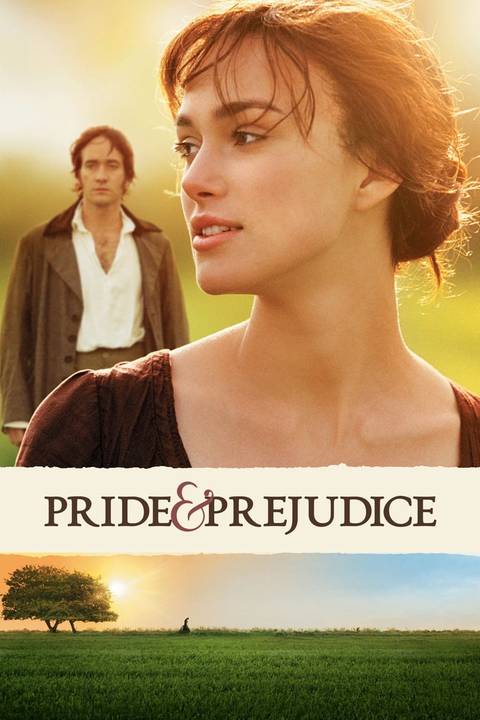
Pride & Prejudice
- Release Date
-
November 23, 2005
- Runtime
-
127 minutes
- Director
-
Joe Wright
- Writers
-
Deborah Moggach
You must be logged in to post a comment Login