Entertainment
6 Movie Trilogies That Are Really Bad From Start to Finish

If you think about the best movie trilogies, The Godfather or The Lord of the Rings may immediately come to mind. It’s easy to see why they come in threes. The first movie is so good, they have to make another. Or, they have to finish an arc that has been established in the first film. In doing so, they have become so beloved by audiences everywhere. However, there are also movie trilogies that make you question their existence.
From misguided adaptations and painfully repetitive romances to low-budget movies made on a dream and not a dime, the trilogies on this list demonstrate how difficult and miraculous it can be to sustain a story across three movies. These are the movies that make us question: How did they make one, let alone three of these?
6
‘Fifty Shades Trilogy’ (2015-2018)


The Fifty Shades trilogy follows Anastasia Steele (Dakota Johnson), a young literature student who enters into a “complicated” relationship with billionaire businessman Christian Grey (Jamie Dornan). Fifty Shades of Grey introduces how they meet and Christian’s unconventional sexual preferences. The sequels, Fifty Shades Darker and Fifty Shades Freed expand their story as they get married and face conflict with other people.
Despite its enormous popularity, the trilogy is remarkably weak as the story barely moves forward. The first film ends as the drama gets exciting, yet the second and third films do not really explore it further. For all the themes about BDSM, the film is, for lack of a better word, very vanilla. Based on a Twilight fan fiction, the characters themselves have the potential to be more memorable, yet the plot of the films only gets even more formulaic as it goes. The dialogue is very stiff, and both Johnson and Dornan try so hard to sell their characters. It’s not a good sign when, in one of the movies, the most interesting part is when Anastasia manages to parallel park flawlessly.
5
‘The Kissing Booth Trilogy’ (2018-2021)

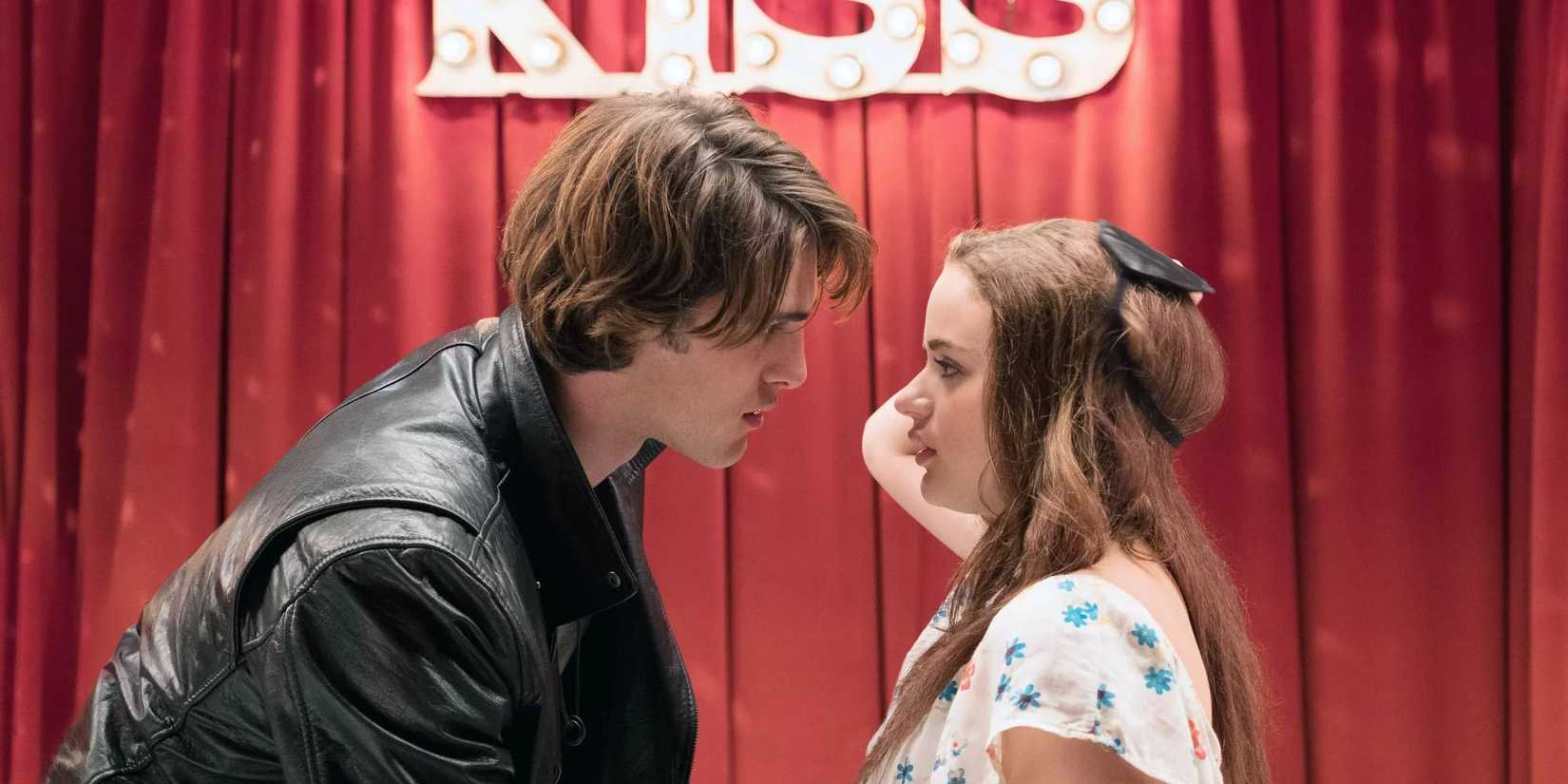
The Kissing Booth trilogy follows Elle Evans (Joey King), a high-school student whose romantic life becomes increasingly complicated after she kisses her best friend’s older brother, Noah Flynn (Jacob Elordi), at a school kissing booth. The subsequent films follow them as they go to college and find new romantic interests in each of their lives.
The premise is undeniably cute for a teen film, but the films become increasingly frustrating because its central conflicts are repeatedly manufactured by characters refusing to communicate like functioning human beings. Elle’s relationship with Noah is frequently presented as passionate despite being riddled with jealousy, possessiveness, and unhealthy behavior, while her friendship with Lee (Joel Courtney) is dependent on a weird list of rules that should have disappeared years earlier. The sequels barely justify their existence, but are still incredibly popular on Netflix. Fortunately, both Jacob Elordi and Joey King have moved on to better projects these days.
4
‘My Fault Trilogy’ (2023-2025)

Based on Mercedes Ron‘s Wattpad stories, My Fault trilogy follows Noah (Nicole Wallace) and Nick (Gabriel Guevara), who meet after she moves in with her mother’s new husband. Despite being step-siblings who clash with each other all the time, the two develop an intense attraction, especially after Noah beats Nick in racing. The sequels continue their story as their relationship goes further even though their parents disapprove.
The Kissing Booth and this are evidence that the most popular Wattpad stories do not always translate to compelling movies. These stories are truly out of the box and irrational, no matter how entertaining they are as text. Throughout three films, the films just go through the same cycle with very little development. The lavish setting is fun to see but that can only take the audiences to a certain distance before they get bored. Nevertheless, the films are constantly on Prime Video’s most watched films and it even has an English-language remake titled My Fault: London, with its own set of trilogy. Ultimately, maybe it’s just our fault for tuning in to these movies.
3
‘Atlas Shrugged Trilogy’ (2011-2014)

The Atlas Shrugged Trilogy is an ambitious attempt to bring Ayn Rand‘s novel to the screen. The story follows Dagny Taggart, played by pre-Orange is the New Black Taylor Schilling in the first film, a determined railroad executive trying to keep her company from collapsing as a mysterious man named John Gait is dismantling the system. All three films bombed at the box office, leading the production to recast new actors and hire new directors for each film.
It’s simply baffling to split the novel into three films without a guarantee or confidence that they would be good films. Rand’s novel is filled with strong philosophical ideas yet the films never fully translate them for the screen. No matter the audience’s political beliefs, the films would confuse those who aren’t familiar with Rand’s principles and alienate those who are familiar, making this a trilogy for no one. It shows in the box office take, as they keep dwindling for each film, with the last one barely reaching the $1 million mark. The first film might be the most competent of them all, with stars like Schilling and Edi Gathegi starring. The second and third films seem to exist solely for the producers’ completionist mindset.
2
‘In the Name of the King Trilogy’ (2007-2014)

Loosely inspired by a video game series, the first film, In the Name of the King: A Dungeon Siege Tale, follows Farmer (Jason Statham) who embarks on a quest to rescue his kidnapped wife and avenge his murdered son while becoming involved in a war between kingdoms and an army of magical creatures. The second and third films shift gears and follow modern-day soldiers, played by Dolph Lundgren and Dominic Purcell respectively, who are transported to the medieval world.
The director of this trilogy is the notorious Uwe Boll, often dubbed the worst working director today. The first film at least has the ingredients of a potential fantasy blockbuster but Boll’s direction turns them into a muddled and lifeless imitation of The Lord of the Rings. After a catastrophic failure at the box office, it is a miracle that the sequels are made. Both sequels abandon almost everything from the first film. The consistent things these films have are poor effects, stilted dialogue, and paper-thin characters. If it’s any consolation, the first film is one of the few Uwe Boll films that are somewhat coherent.
1
‘365 Days Trilogy’ (2020-2022)

The 365 Days films follow Laura (Anna-Maria Sieklucka), a Polish woman, who is kidnapped by Massimo (Michele Morrone), the head of a Sicilian crime family. As she fulfills Massimo’s sexual desire, she is given 365 days to fall in love with him. The second film brings a new lover to create jealousy between them, while the third film reveals that Massimo has a twin.
To say that 365 Days movies are practically porn films disguised as proper films is a disservice to porn. 365 Days aim to shock and lure viewers with its steamy sex scenes but there is simply not enough plot to fill the films’ runtime. The closest comparison is 50 Shades of Grey, but that film has an extended sequence where Anastasia and Christian discuss limits and boundaries. 365 Days does not, making these films guilty of assault and coercion. The characters are simply there to sleep with each other and be pretty and cool. Released during the pandemic in 2020, the first film found runaway success on Netflix. It appeared on the top 10 lists in numerous countries, and still holds its position until today in a few countries. The ultra-bland sequels are, of course, inevitable after that kind of achievement.


365 Days
- Release Date
-
February 7, 2020
- Runtime
-
114 minutes
- Director
-
Barbara Bialowas
- Writers
-
Barbara Bialowas, Tomasz Klimala, Blanka Lipinska, Tomasz Mandes



You must be logged in to post a comment Login