Entertainment
6 Movie Trilogies Where Only The Middle Chapter Is a Masterpiece

When the first movie is the great one, you can at least say the series began at its peak. When the last movie is the great one, you can argue the whole thing was building toward payoff. But when only the middle chapter becomes the masterpiece, it usually means the trilogy hit a level of confidence, emotional precision, and narrative intensity that the other two films never fully reached before or after. That middle film becomes the one time the machine is running at exact temperature.
And that does not always mean the other two are bad. Sometimes the first film is strong. Sometimes the finale is respectable, ambitious, or even moving in places. But the middle one is where character, stakes, conflict, and craft suddenly stop feeling like pieces of a franchise and start feeling inevitable. The middle-films I’ve listed below pass that test with excellent marks.
6
‘X2: X-Men United’ (2003)


I have affection for the first X-Men, and I think The Last Stand has fragments of a much better movie trapped inside it, but X2: X-Men United is the one time that original trilogy truly feels complete. The reason is simple: it stops acting like the mutants are just a superhero team and starts treating them like a political, emotional, and biological crisis from every angle at once. The school attack alone tells you the movie has leveled up. Wolverine (Hugh Jackman) is not just the cool outsider anymore. He is suddenly in a position where the kids need him, and the mansion feels less like a comic-book base than a fragile refuge being violated.
The other reason why X2: X-Men United is extremely special is how well it spreads dramatic pressure across the whole cast. William Stryker (Brian Cox) being power-hungry, Magneto (Ian McKellen) gets to be dangerous, charismatic, and perversely right about how far humans will go, Mystique (Rebecca Romijn) becoming more than attitude and blue makeup, all of it is spot on. Then Jean Grey (Famke Janssen), Scott Summers (James Marsden), Storm (Halle Berry), Nightcrawler (Alan Cumming), Rogue (Anna Paquin), Pyro (Aaron Stanford), and Iceman (Shawn Ashmore) all feel like they belong to the same morally loaded story instead of separate subplots jostling for space. And then the film’s act with the uneasy alliance between Professor Xavier (Patrick Stewart)’s team and Magneto’s side is where X2: X-Men United really earns masterpiece status.
5
‘Dawn of the Planet of the Apes’ (2014)

I like Rise. I admire War. But Dawn of the Planet of the Apes is the masterpiece because it is the one that fully understands tragedy as a social process. It is not just a sequel about apes and humans clashing. It is a movie about trust being built slowly and then destroyed by fear, pride, grief, and opportunism. That is much richer material, and the movie handles it beautifully. What makes Dawn of the Planet of the Apes so devastating is Caesar (Andy Serkis). By this point, he is no longer simply the emotionally intelligent center of a franchise reboot but a leader carrying history in his body.
He remembers captivity. He remembers revolt. He has built a world for his people in the forest, a world with family, rules, and dignity. So when the humans arrive needing access to the dam, the whole movie immediately gains pressure because coexistence is possible, but only barely. That barely is where the film lives, and it is why every exchange matters. Malcolm (Jason Clarke) reaches for peace in good faith. Ellie (Keri Russell) sees the apes as beings, not obstacles. Dreyfus (Gary Oldman) wants survival badly enough that fear keeps turning into hardline logic. Koba (Toby Kebbell), most importantly, carries trauma like acid. And Koba is why Dawn of the Planet of the Apes becomes a masterpiece. He is the embodiment of what happens when memory of abuse never stops organizing your worldview.
4
‘Before Sunset’ (2004)

This one may be the quietest entry here, but emotionally it might be the most lethal. Before Sunrise is beautiful. Before Midnight is fearless and bruising. But Before Sunset is the masterpiece because it is the one that turns romantic possibility into emotional reckoning with almost unbearable precision. Nine years have passed, and Richard Linklater understands the most important thing about that gap: it is not just time. It is accumulated life. Failed relationships, compromises, self-invention, regret, the stories people tell themselves about why they didn’t choose differently, all of that is in the room before Jesse (Ethan Hawke) and Céline (Julie Delpy) even properly reconnect.
That is why Before Sunset is realistic. It runs on conversation, but the conversation is not casual. It is excavation. Every smile has history under it. Every joke is covering pain or testing intimacy. Jesse arrives with a novel that has obviously kept this one night alive inside him for almost a decade. Céline arrives with anger, intellect, charm, and that very particular kind of adult self-protection where someone can sound breezy while actually trying not to reopen a wound. Hawke and Delpy are so good here. The film lets attraction and disappointment coexist in every scene. It is not “do they still like each other?” Of course they do. The real question is whether recognition came too late to matter. At each stage they get less able to lie cleanly. The Paris sunlight almost makes the movie feel easy at first, which is cruel, because by the time Céline talks about the environmental work she throws herself into and Jesse starts revealing how dead his marriage feels, you understand what this movie is actually doing: measuring the damage of one missed chance.
3
‘The Empire Strikes Back’ (1980)

This is one of the clearest examples of the middle chapter outgrowing the trilogy around it. I love Star Wars. I think Return of the Jedi has real emotional payoff. But The Empire Strikes Back is the masterpiece because it takes everything the first film made mythic and then subjects it to difficulty, failure, and emotional complication without losing one ounce of adventure power. The brilliance starts immediately with Hoth. The rebellion is not triumphant and mobile anymore. It is freezing, cornered, improvising under pressure.
Luke Skywalker (Mark Hamill) gets pulled further into the Force, but the movie is careful not to make that growth clean or easy. Yoda (Frank Oz)’s training is not there to hand him cool powers. It is there to reveal impatience, fear, and incompleteness in him. Han Solo (Harrison Ford) and Leia Organa (Carrie Fisher), meanwhile, are getting one of the best romance-through-friction arcs ever put into a blockbuster. And then there is Darth Vader (David Prowse). This is the movie where he stops being a great villain design and becomes something much worse and better: a personal catastrophe. The film ends on pain, uncertainty, and separation. That is why The Empire Strikes Back remains untouchable.
2
‘The Dark Knight’ (2008)
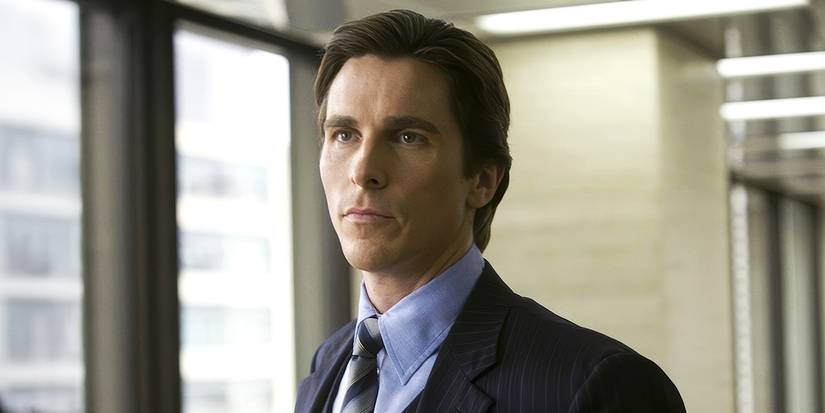
The reason The Dark Knight towers over the trilogy is that it is the one chapter where the franchise stops being primarily about Batman and becomes about what Batman does to the moral chemistry of Gotham. Batman Begins is strong because it builds Bruce, fear, and the city. The Dark Knight Rises has ambition, but it buckles under the weight of its own ending. The Dark Knight is the one that feels like a total statement. Nothing in it is merely setup or cleanup. Everything is active pressure.
Batman (Christian Bale)’s existence has produced a new class of criminal response. Harvey Dent (Aaron Eckhart) is introduced not as a replacement hero in a simplistic sense, but as the legitimate public face Gotham desperately needs so Batman can imagine becoming unnecessary. Rachel Dawes (Maggie Gyllenhaal) sits in the middle of Bruce and Harvey not just as romance, but as a measure of which version of Gotham still feels possible. Then the Joker (Heath Ledger) comes in and does not simply threaten lives. He attacks the terms by which the city understands order, heroism, and moral choice. That is why the major sequences all matter beyond spectacle. The bank robbery, fundraiser, interrogation scene, and then Batman taking the blame at the end is the final proof that this chapter understood sacrifice at the level of myth and politics at once.
1
‘The Good, the Bad and the Ugly’ (1966)
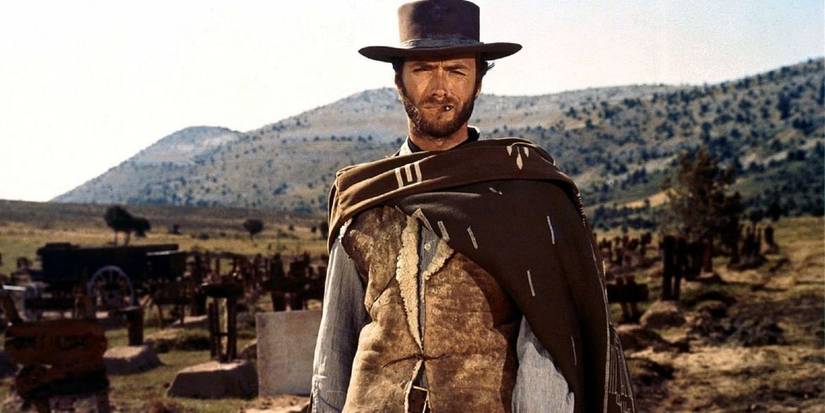
This is #1 because it does something very few middle chapters ever do: it becomes so monumental that it practically rewrites the scale of the trilogy around it. A Fistful of Dollars is great. For a Few Dollars More is excellent. But The Good, the Bad and the Ugly is the masterpiece because Sergio Leone stops making just westerns and starts making a world. Bigger, dirtier, more ironic, more tragic, more expansive, more musically mythic. It feels like the trilogy suddenly realizing how enormous it can be. The thing people undersell is how well The Good, the Bad and the Ugly is written. Blondie (Clint Eastwood), Tuco (Eli Wallach), and Angel Eyes (Lee Van Cleef) are not just types.
Their motives are incredibly clean, and the movie keeps tightening the lines between them until the whole treasure hunt becomes a study in greed, dependency, humiliation, and tactical patience. Tuco is a huge part of why the film clears the others. Wallach gives him so much hunger, resentment, cunning, and wounded pride that the movie stops being a cool-guy western whenever he is on screen. He makes it human and ugly in the right way. Blondie is brilliant too — someone always slightly withholding moral clarity, which keeps the film from becoming simple hero mythology. And Angel Eyes is one of the great western villains. Then the Civil War material enters and The Good, the Bad and the Ugly becomes even richer. Not to mention that it had a perfect ending too.
You must be logged in to post a comment Login