Fantasy can get away with hand-waving how the magic works, but sci-fi usually can’t. So, once a series sets up a rule about physics or technology, breaking that rule later just to save a character is cheating. That constraint actually makes good sci-fi lore harder to build than fantasy lore, since every made-up law of the universe has to sound like it could theoretically work.
These six, however, built entire universes around one or two core ideas, then followed the logic of those ideas all the way out to their most extreme, uncomfortable conclusions instead of chickening out halfway through. But that’s not the entire reason for their success. The character arcs, world building, zero loopholes, stitching of the entire storyline, and the thrill factor, everything contributed to why these six are the best.
Advertisement
6
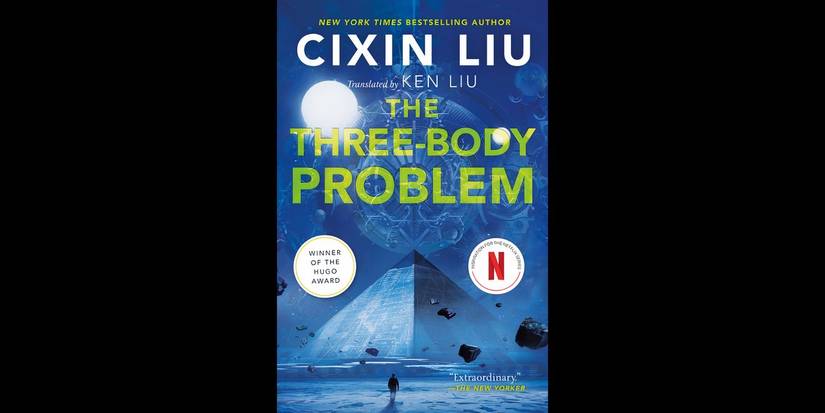
‘The Remembrance of Earth’s Past’
Image via Tor Books
During the Cultural Revolution, a Chinese astrophysicist named Ye Wenjie gets the chance to send a message out into space, and she tells the aliens who receive it exactly how disappointed she is in her own species. That one decision at the start of The Remembrance of Earth’s Past changes basically everything that happens across all three books.
Liu Cixin builds the whole trilogy around a disturbing idea called the dark forest theory, that every civilization in the universe stays silent on purpose, because reaching out to another species is more likely to get you destroyed than to make a friend. The Trisolarans, fleeing a dying three-sun system, try to stop human scientific progress using proton-sized supercomputers that can see and manipulate matter at will.
Advertisement
5
‘The Expanse’
Image via Orbit Books
An alien substance called the protomolecule gets discovered frozen on a moon out past Saturn, and once it reaches a large asteroid full of people, it starts turning everyone infected into something that isn’t quite humanand isn’t quite anything else either. In the book, it is just the beginning of a much bigger political mess between Earth, Mars, and the Belters, people born and raised in the asteroid belt who’ve physically adapted to low gravity over generations.
James S. A. Corey is actually a pen name for two separate writers, Daniel Abraham and Ty Franck, and together they built out an entire believable culture for the Belters, complete with their own slang and their own grudges against the inner planets that feels genuinely real by book three or four. Then the protomolecule opens a network of gates leading to a thousand new solar systems, and never for once the story is scrambling to catch up with its own ambition.
Advertisement
4
‘Foundation’
Image via HarperVoyager / Apple TV+
Hari Seldon invents a kind of math that can predict the behavior of massive populations centuries in advance, even though it can’t predict what any single person will do, and he uses it to figure out that the vast Galactic Empire is about to collapse into thirty thousand years of chaos. Foundation follows the plan he sets up to shrink that dark age down to just one thousand years instead, using a colony of scientists positioned at the edge of the galaxy.
Isaac Asimov is the writer who structures the whole series around what he calls Seldon Crises, moments where history seems to be falling apart until it turns out Seldon predicted the exact solution centuries earlier and left instructions for it. Then a character called the Mule shows up, a mutant nobody could have possibly predicted, and the entire foundation of the plan, math and all, nearly falls apart because of one variable nobody accounted for.
Advertisement
3
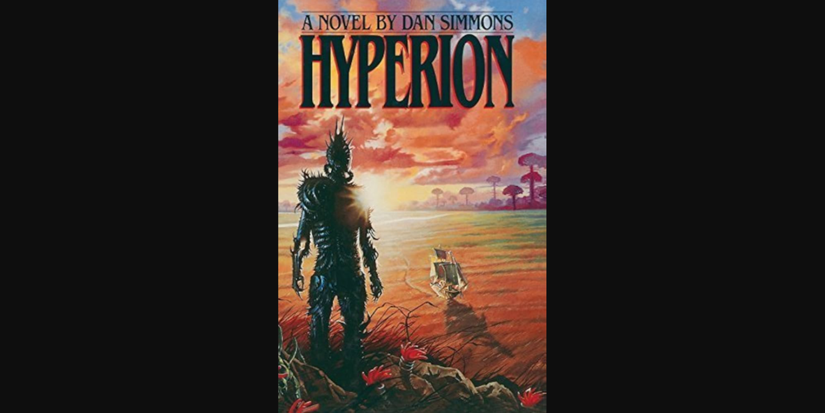
‘Hyperion Cantos’
Image via Doubleday
Seven strangers travel together to a planet called Hyperion to meet a creature known as the Shrike, something covered in blades that seems to move backward through time and kills almost everyone who gets near it, and each of them has a personal reason for making a trip that’s basically a death sentence. Hyperion structures itself like a version of the Canterbury Tales, with each pilgrim telling their own full story along the way, and every single one of those stories could work as a standalone piece of science fiction.
Dan Simmons builds a hidden collective of artificial intelligence, TechnoCore, that secretly runs most of human technology and has its own private plans nobody in the actual government knows about. Between the farcaster network letting people step between planets instantly and the constant question of whether the Shrike is a monster or some kind of judgment, the whole series manages to feel both meticulously planned and properlymysterious book after book.
Advertisement
2
‘The Culture’
The cover of ‘Consider Phlebas’ by Iain M. Banks.Image via Macmillan
Nobody in this society wants for anything, food, medicine, art, all of it exists in unlimited abundance, and the actual government running things isn’t made up of people at all, it’s a collection of hyper-intelligent AI Minds who pilot enormous, sentient starships and give themselves names like Grey Area or So Much for Subtlety.
Iain M. Banks wrote each book in The Culture as its own mostly standalone story instead of one continuous plot, which means you can start almost anywhere in the series without getting lost. Special Circumstances, the Culture’s shadowy division for interfering in less advanced societies when doing nothing would be worse, gives Banks a way to explore some properly uncomfortable questions about whether a utopia hasany right meddling in everyone else’s business.
Advertisement
1
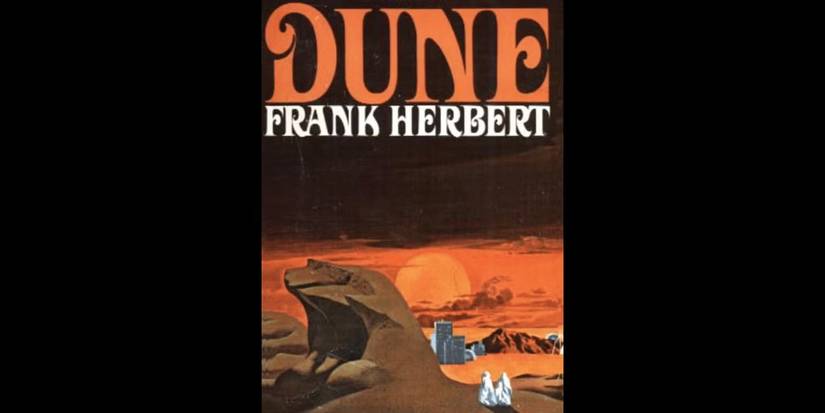
‘Dune’
Image via Chilton Books
A desert planet controls the entire galaxy’s economy because it’s the only place a specific spice exists, a substance that extends life, enables faster than light navigation, and gives certain people the ability to see fragments of the future, and every major power in the universe is willing to go towar over it. Dune follows Paul Atreides after his family gets handed control of that planet as a political trap they don’t fully realize until it’s already sprung.
Frank Herbert built the Fremen, the planet’s native desert people, with their own language, religion, and water-conservation culture so detailed that the appendices at the back of the book read almost like an actual anthropology text. The ecological message underneath all of it, about resource scarcity and what happens when outside powers exploit a fragile environment for profit, was unusually ahead of itstime for a book published back in 1965.
Advertisement
Collider Exclusive · Sci-Fi Survival Quiz Which Sci-Fi World Would You Survive? The Matrix · Mad Max · Blade Runner · Dune · Star Wars
Advertisement
Five universes. Five completely different ways the future went wrong — or sideways, or up in flames. Only one of them is the world your instincts were built for. Eight questions will figure out which dystopia, galaxy, or desert wasteland you’d actually make it out of alive.
💊The Matrix
🔥Mad Max
🌧️Blade Runner
🏜️Dune
Advertisement
🚀Star Wars
Advertisement
01
You sense something is deeply wrong with the world around you. What do you do? The first instinct is often the truest one.
Advertisement
02
In a world of scarcity, what resource do you guard most fiercely? What we protect reveals what we believe survival actually requires.
Advertisement
03
What kind of threat keeps you up at night? Fear is useful data — if you’re honest about what you’re actually afraid of.
Advertisement
04
How do you deal with authority you don’t trust? Every dystopia has a power structure. Your approach to it determines everything.
Advertisement
05
Which environment could you actually endure long-term? Survival isn’t just tactical — it’s physical, psychological, and very much about where you are.
Advertisement
06
Who do you want in your corner when things fall apart? The company you keep is the clearest signal of who you actually are.
Advertisement
07
Where do you draw the line — if you draw one at all? Every survivor eventually faces a moment that tests what they’re actually made of.
Advertisement
08
What would actually make survival worth it? Staying alive is one thing. Having a reason to is another.
Advertisement
Your Fate Has Been Calculated You’d Survive In…
Your answers point to the world your instincts were built for. This is the universe your temperament, your survival instincts, and your particular brand of stubbornness were made for.
Advertisement
The Resistance, Zion
The Matrix
You took the red pill a long time ago — probably before anyone offered it to you. You’re a systems thinker who can’t help but notice the seams in things.
You’re drawn to understanding how the system works before figuring out how to break it.
You’d find the Resistance, or it would find you — your instinct for spotting constructed realities is the machines’ worst nightmare.
You function best when you have access to information and the freedom to act on it.
The Matrix built an airtight prison. You’d be the one probing the walls for the door.
Advertisement
The Wasteland
Mad Max
The wasteland doesn’t reward the clever or the well-connected — it rewards those who are hard to kill and harder to break. That’s you.
You don’t need comfort, community, or a cause larger than the next horizon.
You need a vehicle, a clear threat, and enough fuel to outrun it — and you’re good at all three.
You are unsentimental enough to survive that world, and decent enough — just barely — to be something more than another raider.
In the wasteland, that distinction is everything.
Advertisement
Los Angeles, 2049
Blade Runner
You’d survive here because you know how to exist in moral grey areas without losing yourself completely.
You read people accurately, keep your circle small, and ask the questions others prefer not to answer.
In a city where humanity is a legal designation rather than a feeling, you hold onto something that keeps you functional.
You’re not a hero. But you’re not lost, either.
In Blade Runner’s world, that distinction is everything.
Advertisement
Arrakis
Dune
Arrakis is the most hostile environment in the known universe — and you are precisely the kind of person it rewards.
Patience, discipline, and political awareness are your core strengths — and on Arrakis, they’re survival tools.
You understand that the long game matters more than any single victory.
Others come to Dune and are consumed by it. You’d learn its logic and earn its respect.
In time, you wouldn’t just survive Arrakis — you’d begin to reshape it.
Advertisement
A Galaxy Far, Far Away
Star Wars
The galaxy far, far away is vast, loud, and in a constant state of violent political upheaval — and you wouldn’t have it any other way.
You find meaning in being part of something larger than yourself — a cause, a crew, a rebellion.
You’d gravitate toward the Rebellion, or the fringes, or whatever pocket of the galaxy still believes the Empire’s grip can be broken.
You fight — not because you have to, but because standing aside isn’t something you’re capable of.
In Star Wars, that willingness is what makes all the difference.





You must be logged in to post a comment Login