Entertainment
60 Years Later, This Sci-Fi Quote Is Still the Best of All Time

Even if you’ve never seen a popular sci-fi film or TV series, certain genre quotes have gained such omnipresent prominence within the cultural lexicon that there’s a good chance you’ve heard them and recognize their origins. Look no further than the plethora of options provided by Star Wars or Dune, for instance. Where television is concerned, there’s no saga more preeminent than the grandfather of them all, Star Trek, and no shortage of famous words within its 60-year history, either.
Despite facing decent competition, between his philosophical insights, his sneaky repartees, and the fan-traumatizing rite of passage that is Star Trek II: The Wrath of Khan‘s “You have been and always shall be my friend,” Spock’s (Leonard Nimoy) quote collection reigns supreme. Arguably the franchise’s most defining and recognizable character, no Spock phrase from Star Trek: The Original Series is more recognizable to the general culture or more defining to Star Trek‘s enduring ideals than “live long and prosper” — four words coined by writer Theodore Sturgeon in his screenplay for the Season 2 episode “Amok Time.”
“Live Long and Prosper” Embodies ‘Star Trek’s Core Values
A deservedly iconic highlight of The Original Series, “Amok Time” houses several Trek firsts beyond originating “live long and prosper.” The Enterprise visits the planet Vulcan for the first time, dives into their cultural conventions and biology (that pesky pon farr mating drive), and provides the first glimpse at Spock’s private life through his fiancée, T’Pring (Arlene Martel). “Live long and prosper,” usually paired with the Vulcan salute, doubles as a benediction and a traditional Vulcan greeting or farewell.
Spock speaks the words before he returns to the ship near the episode’s conclusion. After giving his well-wishes to T’Pau (Celia Lovsky), the Vulcan official overseeing his failed wedding, and receiving hers in return, Spock solemnly states, “I shall do neither. I have killed my captain and my friend.” It’s an unexpectedly heartfelt moment for a character known for his cool-headed stoicism, stripping away Spock’s cerebral mystique and replacing it with vulnerability. He’s spent “Amok Time” alternatively embarrassed, delirious, and resigned to his fate, which already subverts expectations. Once his senses return, he believes he murdered Captain Kirk (William Shatner) during their ceremonial combat. Unlike the rest of the episode or his rare outbursts throughout Season 1, Spock’s visible regret isn’t a side effect of either pon farr or outside manipulation. His response to T’Pau’s “live long and prosper” reflects the depth of his capacity to feel grief, loyalty, and affection.
Following “Amok Time,” the phrase and the Vulcan salute were formally integrated into the species’ society and sprinkled throughout the spin-off movies and series. Outside the screen, the combination adopted a life of its own, transforming into a signature catchphrase and a greeting that fans exchange. An easy shorthand for fan enthusiasm, “live long and prosper” also resonates once it’s applied to a wider context. It speaks to Trek‘s optimism, compassion, and acceptance, a galaxy where celebrating differences is a form of empowerment. “Amok Time” doesn’t assign that framework to its most famous four words, but the relevance being retrofitted doesn’t deprive the words of their deeper sentiment.
Leonard Nimoy’s Input and Experience Expanded Spock’s Character
As for Spock, for all his credentials and the admiration bestowed upon him by his fellow officers, he’s a permanent outsider. His parents’ marriage bridges two worlds, neither of which he can fully fit within. Even among the Enterprise‘s interspecies crew, he either symbolizes professional balance or alien oddity, depending on the officer’s perspective and prejudice. Spock’s inner conflict takes decades to align into a balance between his human heart and his Vulcan head. “Live long and prosper” reverberates on a deeper level when coming from a wise, dignified, deeply feeling individual of mixed heritage.
Besides being the main speaker and keeper of those words, Nimoy applied his own sense of alienation to the role through his performance and by improvising the Vulcan salute. He based the sign on the Jewish Priestly Blessing, a benediction performed by the Kohanim upon their congregation. “[Director Joe Pevney] had me approach T’Pau and I felt a greeting gesture was called for,” Nimoy reflected in a 2012 guest blog post for Star Trek.com. “So I suggested it to Joe, who accepted it immediately.”
After Nimoy’s parents, both Ukrainian Jews, immigrated to Boston, Massachusetts, the household spoke fluent Yiddish and actively attended Orthodox synagogues. In the same blog post, Nimoy shared how strongly the blessing ceremony affected him once he witnessed it as a child:
“I still have a vivid memory of the first time I saw the use of the split-fingered hands being extended to the congregation in blessing. […] I was entranced. I learned to do it simply because it seemed so magical. It was probably 25 years later that I introduced that gesture as a Vulcan greeting in Star Trek and it has resonated with fans around the world ever since. It gives me great pleasure since it is, after all, a blessing.”
The only Trek actor nominated for an Emmy Award and in many ways the keeper of the franchise (a leading aspirational image, at least), Nimoy naturally integrated a cherished cultural and religious practice into a series that’s become an empowering balm for those who experience ostracism. Those four excellent words, paired with an intentional but incidental moment, did what fiction does best: coalesced into something greater. There’s no better legacy for Trek‘s iconic phrase and its most famous face to embody.

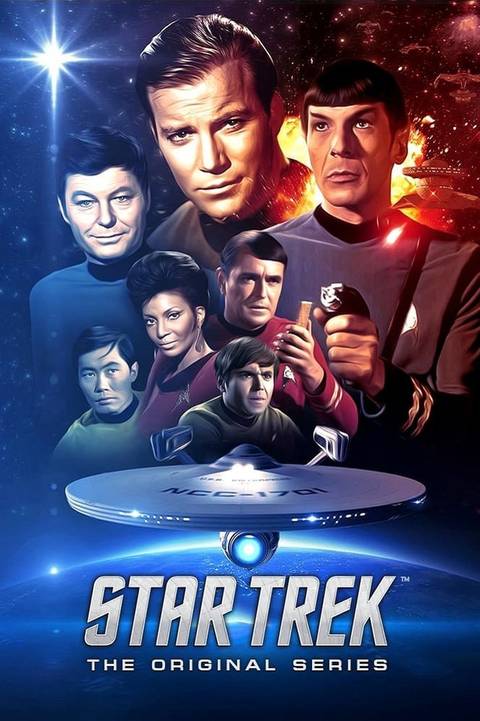
Star Trek: The Original Series
- Release Date
-
1966 – 1969-00-00
- Showrunner
-
Gene Roddenberry
- Directors
-
Marc Daniels, Joseph Pevney, Ralph Senensky, Vincent McEveety, Herb Wallerstein, Jud Taylor, Marvin J. Chomsky, David Alexander, Gerd Oswald, Herschel Daugherty, James Goldstone, Robert Butler, Anton Leader, Gene Nelson, Harvey Hart, Herbert Kenwith, James Komack, John Erman, John Newland, Joseph Sargent, Lawrence Dobkin, Leo Penn, Michael O’Herlihy, Murray Golden
You must be logged in to post a comment Login