Entertainment
7 Book Authors Without Many Movie or TV Adaptations

Movies don’t become books nearly as often as books become movies (there are novelizations out there, of course, and also 2001: A Space Odyssey, where the movie came out before the book was published). So, obviously, for books that have become movies, there are endless examples. Certain authors have proven particularly easy (or tempting) to adapt, to the point where it’s easier to find books of theirs that have been adapted than books that haven’t (see Stephen King, for example).
But then you’ve got authors whose work hasn’t really been represented in forms outside the written page. It would be easy to highlight authors who weren’t hugely prolific and still haven’t had much by way of adaptations (like John Kennedy Toole and A Confederacy of Dunces or J.D. Salinger and The Catcher in the Rye), so instead, here are some decently prolific authors who haven’t had many books of theirs adapted into movies or TV shows. That could always change, as time goes on, but at the time of writing, you do have to read (or listen to audiobooks) if you want to experience most of what these authors have put out into the world.
7
Milan Kundera


While Milan Kundera himself wouldn’t agree with this statement, the author’s The Unbearable Lightness of Being was made into a pretty great movie in 1988. The original novel was published several years earlier, and was about a womanizing doctor who only occasionally found genuine emotional engagement with people. And then that original novel was also about lots of other things, with philosophical ideas drifted toward pretty often on Kundera’s part. That was kind of his style in other works of his, too.
But Milan Kundera was not a fan of The Unbearable Lightness of Being (1988), and so if that led to no more adaptations of his work… well, there you go. Not that Kundera’s novels and short stories are easily translatable to the big (or small) screen, but a streamlining was done for The Unbearable Lightness of Being in a way that’s worked for some people. No, not the author, but some others. An earlier novel of his, The Joke, also got a movie adaptation almost 20 years before The Unbearable Lightness of Being, but otherwise, most of his works have remained unadapted.
6
James Ellroy


James Ellroy has co-written a couple of screenplays that weren’t technically adaptations of any prior works of his, like Street Kings and Dark Blue. As for his books, the one that’s had easily the most recognizable film adaptation is L.A. Confidential, which is another The Unbearable Lightness of Being-type situation where the film was well-received, but the author himself wasn’t super enthusiastic about how things turned out.
There’s also all the books in the Underworld U.S.A. trilogy, the material there feeling appropriate for a TV series, maybe, if you had someone who really knew what they were doing/adapting, but nothing yet, at the time of writing.
Since L.A. Confidential, The Black Dahlia has also been adapted, and that one didn’t come out nearly as successfully, so the other two books in Ellroy’s L.A. Quartet remain unadapted. There’s also all the books in the Underworld U.S.A. trilogy, the material there feeling appropriate for a TV series, maybe, if you had someone who really knew what they were doing/adapting, but nothing yet, at the time of writing. Ellroy certainly writes cinematic and drama-heavy books, but only those two previously-mentioned ones and a couple of other early novels of his (Blood on the Moon, which became Cop, and Brown’s Requiem) have been turned into films. Like, not as many as you’d expect, all up.
5
Larry Niven

Larry Niven likes writing hard science fiction, and that science fiction also seems to be hard-to-adapt. Sometimes. There are stories of his that feel like they could make the jump to the big or small screen, especially something like Ringworld, which is Niven’s most famous novel. It’s also not a particularly long one, but nothing’s come to fruition.
You can find an article from 2000 that says “Ringworld Movie Around the Corner,” which is kind of funny or sad, depending on your outlook. Traditional rings don’t have corners, after all, so it’s all a bit ironic. Anyway, the novel of Larry Niven’s that might most deserve an adaptation is Lucifer’s Hammer, which is a very compelling post-apocalyptic book he co-wrote with Jerry Pournelle. They collaborated pretty often, so consider this an honorable mention for Pournelle, too, since his work has largely remained on the page.
4
Don DeLillo
There are Don DeLillo books that can be read in very short amounts of time, and one of them, Cosmopolis, did get made into a movie, in 2012. And movies, you know, can also usually be watched in one sitting, so maybe you’d expect a few more Don DeLillo books to have been made into movies, but the only other one is White Noise, which came out exactly one decade on from Cosmopolis.
In both cases, the books were better. When taking that into account, maybe that makes it understandable why he’s not been adapted a lot. Still, Libra could make for a great movie (again, as always, in the right hands), and there’s been talk of Underworld becoming either a movie or series. That one in particular gets a lot of acclaim, yet might well be the most challenging DeLillo book to make into something coherent on screen, since it’s easily the author’s longest work, at over 800 pages in length.
3
Brandon Sanderson

Including Brandon Sanderson here might well age poorly, because he’s built up an immense amount of popularity over the past decade or so, as a fantasy author, and it’s not difficult to find news about works from his Cosmere universe getting adaptations. Mistborn: The Final Empire feels like the logical starting point, since that one doesn’t get too out of control with ambition, and it reads very cinematically while having the kind of structure that would translate well into a movie.
Then there’s also The Stormlight Archive, which is a bigger series than Mistborn, and it feels like television would be the better medium there. Like, barring any disasters, you’ll probably see the original Mistborn trilogy or The Stormlight Archive make their way onto some kind of screen soon. And even if there’s one disaster, you’ll still probably see the other. Brandon Sanderson, at the time of writing, can only be read, but it’s unlikely you’ll be able to say that about his body of work for much longer.
2
Robert McCammon

Some of his books have “Robert R. McCammon” on the cover, while at other times, he’s credited as just Robert McCammon, but neither name will you find in many movie or TV credits, be they opening or closing. He is not an author whose work has been adapted much, for reasons that aren’t all that clear. The one major novel of his that has had an adaptation of sorts is only recent, with a series called Teacup being based on McCammon’s Stinger (1988).
If you go digging, though, there’s an embarrassment of riches within his body of work. McCammon isn’t the greatest author in the world in a literary sense or whatever, but his books are heavy on horror and thrills – all the while generally being well-paced – in ways that make them feel like they’d be no-brainers for either movie or TV adaptations. Swan Song is a great post-apocalyptic novel, Boy’s Life feels like it would make for a great coming-of-age film, and then The Wolf’s Hour is a World War II spy story with almost excessive action and a main character who can turn into a werewolf. In what world do people not want to watch a World War II werewolf/spy movie? It’s The Dirty Dozen or Inglourious Basterds, but with werewolves. Come on, Hollywood!
1
Thomas Pynchon

To the credit of Paul Thomas Anderson, he seems able to adapt Thomas Pynchon. Actually, he’s the only person to have done it so far, on one occasion, or maybe twice, or maybe 1.5 times. Like, Anderson’s Inherent Vice (2014) is definitely an adaptation of Pynchon’s Inherent Vice (2009). The same beats are hit, though the book is a bit more complicated, even though the movie was singled out for being complicated and difficult to follow itself.
The other time, or that other half time, was Vineland (1990) serving as the inspiration for One Battle After Another (2025). That was a much looser adaptation, but the Oscar Paul Thomas Anderson won for writing it was Best Adapted Screenplay, so it counts as an adaptation in the Academy’s eyes. Otherwise, Pynchon’s novels remain novels only. There are seven others (plus a short story collection), and they’re sometimes considered among the best books of their time (especially Gravity’s Rainbow and Mason & Dixon), but there are so many ways adaptations could go wrong. That there are even two (or one and a half) Thomas Pynchon adaptations is kind of remarkable, to be honest.

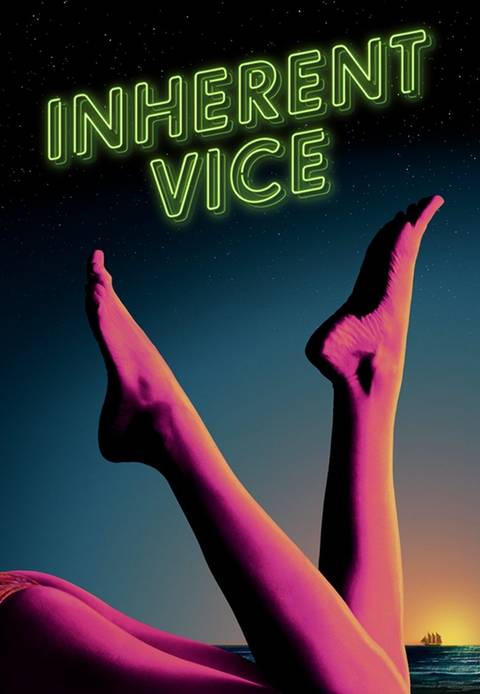
Inherent Vice
- Release Date
-
January 9, 2015
- Runtime
-
149 minutes
- Director
-
Paul Thomas Anderson
- Writers
-
Paul Thomas Anderson, Thomas Pynchon
You must be logged in to post a comment Login