Entertainment
7 Books Every Film Noir Fan Needs To Read

During the 1930s, Hollywood took notice of the public’s rising interest in crime fiction and hardboiled detective novels that would later serve as the groundwork for the classic film noir genre. Long before detectives stalked rain-soaked streets and femme fatales entered smoky clubs on the silver screen, writers such as Raymond Chandler, Dashiell Hammett, and James M. Cain were creating fatalistic worlds in corrupt cities populated by cynical private eyes and desperate criminals, essentially defining the visual language and style of film noir.
For anyone who is fascinated by classic noir films, reading the novels and stories like Farewell, My Lovely and Double Indemnity that inspired and shaped the genre offers both a deeper appreciation of what makes noir so enduring and reveals the literary DNA behind some of cinema’s most unforgettable classic noir movies. From Badge of Evil, written by Whit Mackinson, to The Maltese Falcon, these are books that every film noir movie fan should read!
‘Badge of Evil’ (1956)


Whit Masterson’s 1956 novel, Badge of Evil, inspired Orson Welles‘ Touch of Evil, which many consider one of the best and last movies of the genre’s classic era. Although Welles made several significant changes from Masterson’s original work, there’s still much to discover in the pages of this notable crime thriller, making it a must-read for any fan of the film noir genre. The novel stands out for its razor-sharp dialogue, unsettling tone, and brutal exploration of obsession, moral compromise, and the abuse of power, which are all central themes of classic noir.
While the movie is famous for Welles’ visual style and atmosphere, the book offers a more direct look at what genuinely makes the story’s characters tick and adds more detail to the cynical world they inhabit. Despite not being a direct page-to-screen adaptation, reading Badge of Evil alongside Touch of Evil also makes for a fascinating comparison between hard-boiled crime fiction and the cinematic language of film noir.
‘L.A. Confidential’ (1990)

James Ellroy‘s L.A. Confidential is a gritty neo-noir novel that marks the third installment in the author’s L.A. Quartet series and is an essential read for any bona fide noir fan. Set in 1950s Los Angeles, the novel follows three very different police officers whose lives become entangled in a web of murder, scandal, police corruption, and Hollywood intrigue. In 1997, L.A. Confidential was adapted for the big screen and went on to win two Academy Awards for Best Supporting Actress for Kim Basinger and Best Adapted Screenplay.
Ellroy’s brutal prose and deeply flawed characters create a world where justice is rarely straightforward, and everyone has something to hide, while also exposing the more nefarious side of Hollywood. The novel’s intricate plotting, morally complicated characters, and relentless atmosphere make it a powerful example of modern crime fiction. For noir fans, L.A. Confidential is especially rewarding because it combines the hard-boiled tradition with a richly detailed portrait of Los Angeles, making the city itself feel like one of the novel’s darkest characters.
‘Double Indemnity’ (1943)

Double Indemnity is a defining work of hard-boiled crime fiction written by James M. Cain that provided the directing foundation for one of the most important noir films ever made, Billy Wilder‘s Double Indemnity. The novella contains many of the elements that would become synonymous with film noir: a seductive and dangerous woman, a seemingly ordinary man drawn into murder, greed, deception, betrayal, and the feeling that once a character crosses a moral line, there may be no way back.
Cain’s stripped-down, cynical style moves the story quickly, with little sentimentality, while the narration draws the reader into the mind of a man who convinces himself that he can control a criminal scheme that is ultimately far more dangerous than he realizes. The characters are driven by desire and self-interest rather than traditional heroism, giving the story the moral ambiguity that defines noir. For film noir fans, comparing the two reveals how much of the movie’s dark, fatalistic spirit was already present in Cain’s original work and ultimately heightens the overall experience of Wilder’s noir masterpiece.
‘Farewell, My Lovely’ (1940)

Farewell, My Lovely was Raymond Chandler’s second novel to feature his famous private eye, Philip Marlowe, and follows the gumshoe as he realizes a dead-end missing-person case is connected to the recent murder of a wealthy client. One of the book’s greatest strengths is Chandler’s distinctive writing style. His sharp, cynical dialogue and vivid descriptions create the kind of dark, rain-soaked world that noir audiences recognize immediately. Marlowe is also the quintessential noir detective: tough and sarcastic, but guided by a personal code of honor in a world where almost everyone else is willing to compromise.
Farewell, My Lovely is particularly important for film noir fans because it demonstrates how much the genre owes to hard-boiled detective fiction. The novel was adapted for the screen more than once, most famously in 1944 as Murder, My Sweet, starring Dick Powell as Marlowe, marking the big-screen debut of Chandler’s famous private eye. Reading the novel alongside the film offers an intriguing look at how Chandler’s language, characters, and atmosphere delivered the essential ingredients for the film noir genre.
‘Laura’ (1943)

Vera Caspary‘s Laura is a must-read for any film noir fan because it combines murder, deception, and psychological suspense with the sophisticated world that makes classic noir so compelling. The novel centers on the investigation into the brutal murder of Laura Hunt, a successful advertising executive whose death fascinates and increasingly obsesses the people who knew her. Rather than telling the story from a single point of view, Caspary provides several different perspectives on the case, which allows each character to reveal their own perceptions, prejudices, and secrets, creating a sense of uncertainty where the reader, like the characters, is never completely sure whom to trust.
In 1944, Otto Preminger transformed Caspary’s psychological mystery into one of the defining films of the noir era, Laura, starring Dana Andrews, Gene Tierney, and Vincent Price, with its elegant cinematography, memorable characters, haunting score, and atmosphere of obsession. Ultimately, Laura is a shining example of how noir is not only about detectives and criminals but can also be about obsession, identity, desire, and the unreliable stories people create about one another. Its combination of mystery and psychological complexity makes it an essential book for anyone who wants to understand the literary side of film noir.
‘The Big Sleep’ (1939)

Raymond Chandler’s 1939 crime novel, The Big Sleep, marked the grand debut of Chandler’s private detective, Philip Marlowe, and follows the gumshoe as his investigation into a wealthy Los Angeles family’s blackmail problems quickly becomes tangled in murder, corruption, gambling, and deception. The Big Sleep stands out for Chandler’s witty dialogue, cynical observations, vivid descriptions, and hard-boiled metaphors that helped establish the voice that audiences now associate with noir.
Howard Hawks‘ 1946 adaptation of The Big Sleep starring Humphrey Bogart and Lauren Bacall is recognized as a trademark entry in the film noir genre and essentially assisted in setting the standard for detective noir films. Considering the plot of the movie is complex and slightly confusing at times, Chandler’s original work helps readers fill in the blanks that give them the full picture of Chandler’s story and his eccentric characters. The Big Sleep is a worthwhile read that provides the literary blueprint for so much of what makes film noir unforgettable, cementing it as a must-read for anyone who calls themselves a fan of film noir.
‘The Maltese Falcon’ (1929)


Dashiell Hammett’s The Maltese Falcon is a vital, hard-boiled mystery that established many of the characters, themes, and storytelling conventions that would become central to classic noir, making it an essential for anyone who loves film noir. The 1930 novel introduces private detective Sam Spade, who finds himself caught in a dangerous hunt with several questionable characters for a priceless jewel-encrusted statue known as the Maltese Falcon. Unlike traditional detective stories that often focus primarily on solving a puzzle, The Maltese Falcon immerses the reader in a world where nearly everyone has an ulterior motive, and Spade must constantly decide how far he is willing to go to uncover the truth.
While the novel was originally adapted for the first time in 1931, John Huston‘s 1941 version, starring Humphrey Bogart, Sydney Greenstreet, Peter Lorre, and Mary Astor, is cited as one of the greatest and most influential film noir movies ever made. The movie not only elevated both Bogie’s and Huston’s careers but also earned several Academy Award nominations, including Best Picture, Best Supporting Actor for Greenstreet, and Best Adapted Screenplay for Huston. With its cynical private eye, dangerous femme fatale, shifting alliances, and iconic ending, The Maltese Falcon demonstrates why Hammett’s work had such a lasting influence on both crime fiction and Hollywood film noir and should be added to any noir fan’s reading list.

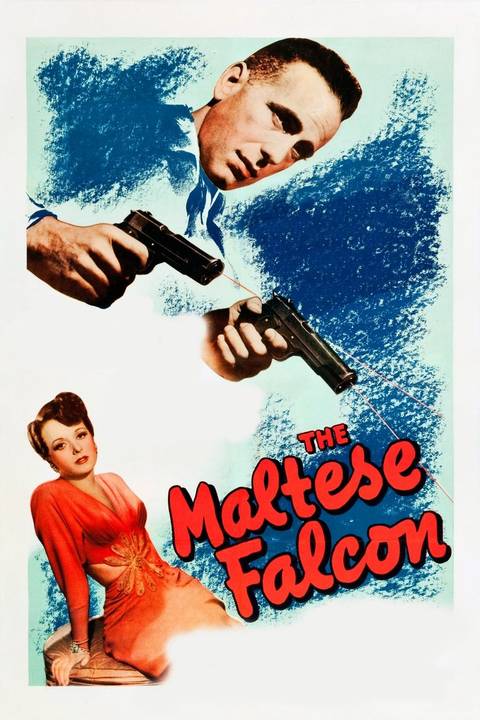
The Maltese Falcon
- Release Date
-
October 18, 1941
- Runtime
-
100 minutes
- Writers
-
John Huston
-

Humphrey Bogart
Samuel Spade
-
Mary Astor
Brigid O’Shaughnessy

You must be logged in to post a comment Login