Entertainment
7 Essential Stephen King Books You Must Read at Least Once

With a total of 67 novels and novellas, not including his nonfiction works and roughly 200 short stories, Stephen King can be an intimidating author to approach. Yet many of his stories offer some of the most grounded and realistic portrayals of humanity’s moral decay. Time and again, King shows that the simplest—and often hardest—qualities, like kindness, empathy, and basic human decency, are what truly stand against evil.
While he’s best known as the man behind many of today’s biggest on-screen works, King’s writing is far more versatile than that. From psychological thrillers and sci-fi epics to coming-of-age dramas and post-apocalyptic tales, his work spans a wide range of genres. If you’re looking for the perfect place to start, here are the essential Stephen King books everyone should read at least once.
‘Salem’s Lot’ (1975)

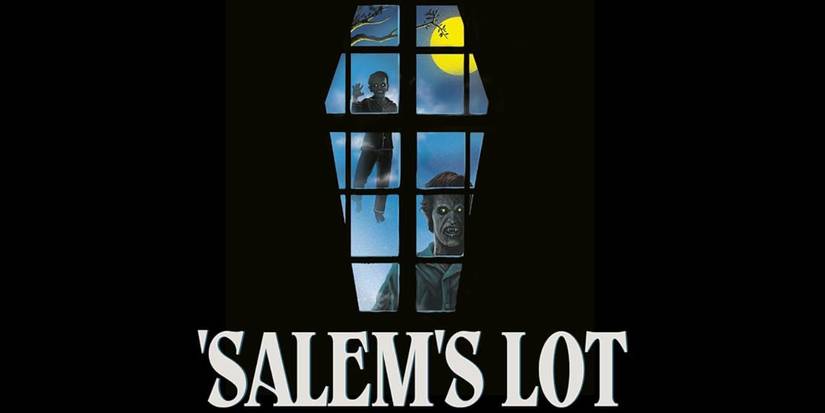
Salem’s Lot follows writer Ben Mears, who returns to Jerusalem’s Lot to write a novel about the long-abandoned Marsten House. This wasn’t his first visit to the town—25 years earlier, he spent part of his childhood there and experienced a terrifying incident that continues to haunt him into adulthood. As he reconnects with familiar faces, Ben discovers an evil force slowly transforming the town’s residents into vampires.
While the bloodthirsty creatures are the story’s obvious villains, one of King’s trademark strengths is revealing that the true evil has always existed within ordinary people. The supernatural horrors simply expose the town’s deepest sins, showing that moral decay had taken root long before the vampires arrived. From marital infidelity to financial corruption, Jerusalem’s Lot is already rotting from within. King also subverts classic vampire conventions by showing that even the town’s holiest man is powerless against the darkness, proving that religious status alone does not make someone a hero.
‘Carrie’ (1974)
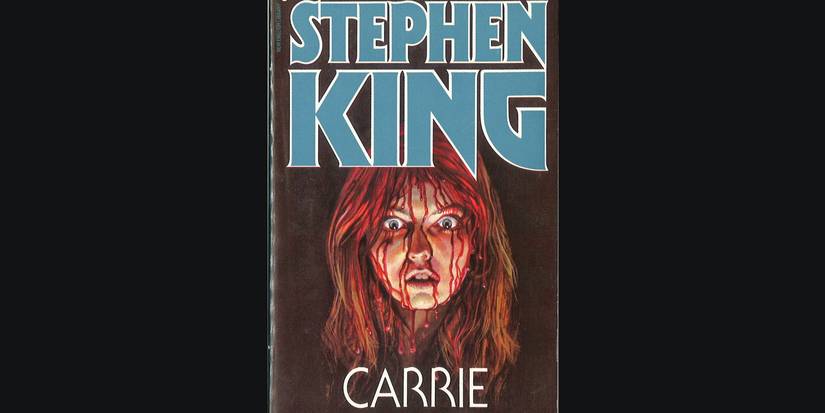
Every Stephen King fan should read his published horror debut, Carrie. Shy and socially isolated teenager Carrie White has spent her entire life under the strict control of her fanatically religious mother. School offers no escape, as she’s relentlessly bullied by her classmates. Everything changes when Carrie discovers she has telekinetic abilities, powers that grow stronger as the abuse from both her mother and peers pushes her closer to the edge.
Carrie is an excellent entry point for readers new to King’s work because its themes are so universal. Almost everyone knows what it feels like to be excluded, and those wounds often cut deepest during youth. While Carrie’s actions at prom are undeniably horrific, it’s difficult not to understand the rage that drives her after years of cruelty—including being publicly humiliated for getting her first period, something her mother had never prepared her for. It becomes the ultimate victim-turned-avenger story, tapping into the revenge fantasy many people have secretly imagined against their own childhood bullies.
‘Under the Dome’ (2009)


Besides horror, King also knows how to pull a sci-fi thriller like Under the Dome out of his sleeve. At 11:44 a.m., the small town of Chester’s Mill, Maine, is suddenly sealed beneath an invisible dome. Everyone is trapped inside, including former Army captain Dale “Barbie” Barbara. As panic spreads and corrupt selectman Big Jim Rennie seizes control, Barbie does everything he can to uncover the force behind the Dome and find a way out before the town tears itself apart.
Under the Dome is for alien fans, but with a King twist. Instead of invading Earth, the aliens trap the townspeople in a cruel biological experiment, watching them slowly die from a lack of resources or turn against each other like animals for their own amusement. And that’s exactly what happens, because even in an apocalyptic situation like this, human nature still finds a way to make everything about power and self-interest, all while jeopardizing the survival of the entire town.
‘The Dead Zone’ (1979)

Premonitions are both a gift and a curse in The Dead Zone. After waking from a five-year coma caused by a car accident, high school teacher Johnny Smith discovers he has developed psychic abilities. With a simple touch, he can see a person’s past and possible future. Although Johnny tries to keep his powers under the radar, he can’t ignore them when a string of murders rocks his small town.
Unlike King’s more supernatural stories, The Dead Zone is much more grounded, with Johnny constantly wrestling with the ethical consequences of knowing the future. As word of his abilities spreads, people see him as someone who can help rather than someone to fear. But the stakes soon grow far beyond solving murders, forcing Johnny into the world of politics. He must decide whether to use his gift to stop a dangerous future or stay silent, even if it means innocent lives could be lost.
‘The Shining’ (1977)
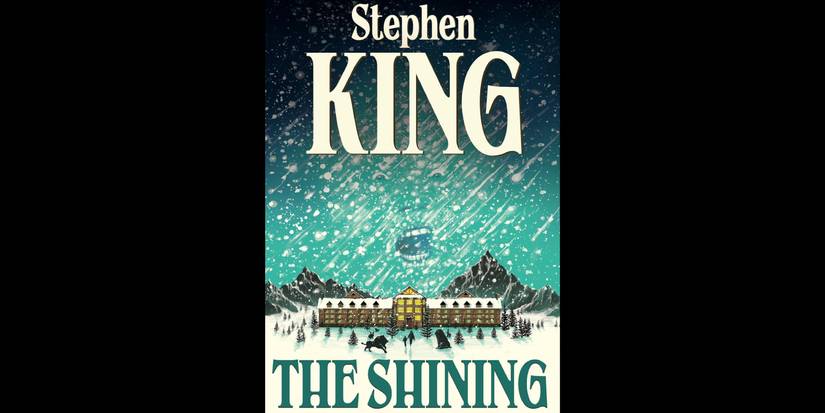
The Shining follows aspiring writer Jack Torrance, who takes a job as the winter caretaker of the isolated Overlook Hotel. But his young son Danny, gifted with psychic abilities known as the “shining,” senses that something isn’t right within the hotel’s ghostly halls. As the Overlook’s dark history and remaining spirits prey on Jack’s already fragile mind, it becomes a race against time for Wendy and Danny to escape before Jack gets to them.
The Shining is one of King’s best-known novels to explore psychic powers, a concept that would become a recurring theme throughout his work. But beyond turning the Overlook into a menacing character in its own right, the novel shows that the worst demons are often the ones we carry inside ourselves. Jack isn’t an evil man from the start, but his guilt, addiction, and personal baggage become exactly what the hotel’s spirits feed on. More than anything, The Shining is a tragedy about a broken man slowly being destroyed by his own inner demons.
‘The Stand’ (1978)

The Stand might have accidentally predicted COVID-19. After a deadly military-engineered influenza virus escapes a secret government facility, more than 99% of the world’s population is wiped out, leaving survivors scattered and searching for remnants of American society. Drawn together by mysterious dreams of the elderly Mother Abigail, a demon-like supernatural force by the name of Randall Flagg intrudes on their quest to rebuild society.
The Stand is arguably King’s most ambitious apocalyptic novel. Besides following a virus that wipes out 99.4% of the world’s population, it also chronicles the slow collapse of society in the weeks after the outbreak as entire nations fall apart. The Stand introduces one of King’s signature recurring antagonists. While Randall is supernaturally hellish by nature, he’s also a manifestation of the darkness that thrives whenever the world is thrown into chaos, feeding on humanity’s fear and violence.
‘It’ (1986)

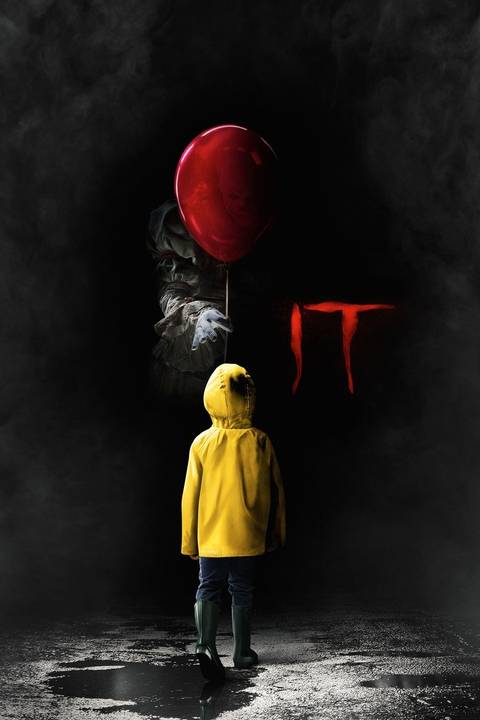
Before there was Stranger Things, there was It. After six-year-old Georgie Denbrough disappears following an encounter with Pennywise the Dancing Clown, his older brother Bill joins six other outcasts, known as the Losers Club, to investigate the growing number of missing children in Derry, Maine. As they dig deeper into the town’s dark history and confront an evil force that awakens every 27 years, the friends discover that some childhood promises can never be forgotten.
It is arguably King’s magnum opus. The brilliance of mixing supernatural horror with a coming-of-age story is watching these children grow up under the most unimaginable circumstances. As they confront the greatest evil haunting their town, they’re also forced to face the painful loss of their innocence as death creeps ever closer. And no King villain is more iconic than Pennywise, who shapeshifts into each child’s greatest fear, reminding us that the only way to overcome our deepest fears is, as cliché as it sounds, through the power of friendship.

It
- Release Date
-
September 8, 2017
- Runtime
-
135 minutes
- Writers
-
Cary Joji Fukunaga, Gary Dauberman, Chase Palmer
You must be logged in to post a comment Login