Entertainment
7 Forgotten Sci-Fi Shows That Have Aged Like Fine Wine

Everyone can agree that the sci-fi genre has always been unpredictable. It thrives on big ideas and expansive worlds. All that ambition comes at a price, though, because all of these concepts are only as strong as their execution. When a sci-fi story fails, it’s almost always because the scale overwhelms the storytelling. However, sometimes, the exact opposite happens.
Some shows in the genre are simply ahead of their time and experiment in ways that the audience just isn’t ready for. It’s only years later that people realize how far-sighted they were, when fiction starts feeling a little too close to reality. Here is a list of such forgotten sci-fi shows that have stood the test of time and aged like fine wine.
‘Fringe’ (2008–2013)


Fringe is one of the very rare sci-fi shows that has something new to offer on every rewatch. The series, created by J. J. Abrams, follows FBI agent Olivia Dunham (Anna Torv), scientist Walter Bishop (John Noble), and his son Peter Bishop (Joshua Jackson) as they investigate bizarre cases tied to what they refer to as fringe science. The show begins as a classic mystery-of-the-week procedural, but as the story progresses, it reveals a much larger narrative involving complex biological experiments, parallel universes, and alternate timelines. Fringe holds up so well today thanks to its commitment to character and plot development.
Viewers have consistently pointed out how the smallest of details pay off eventually, which gives the series a sense of purpose that becomes clearer with time. Its wild sci-fi concepts are grounded by the relatable, messy dynamic between Walter, Olivia, and Peter. Ultimately, Fringe isn’t a show about strange phenomena. Instead, it explores what happens when people react when they are dealing with the impossible. The science hooks the viewer in, but it’s the emotional depth that keeps them invested, and that’s a bar most modern series struggle to reach.
’12 Monkeys’ (2015–2018)
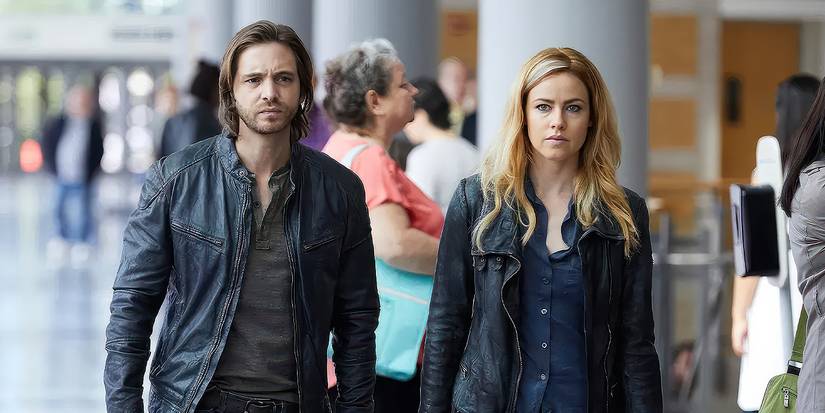
12 Monkeys, based on the 1995 film of the same name, follows James Cole (Aaron Stanford), a man sent back in time from a post-apocalyptic future to stop a deadly plague before it wipes out most of humanity. His virologist, Dr. Cassandra Railly (Amanda Schull), accompanies him on this deadly mission, and the two work against a ticking clock to track down the origins of the virus. The catch here is that even the smallest of missteps can result in entire timeline shifts that threaten the protagonists’ very existence.
From there, the narrative spirals out into a sense web of time-travel mechanics and paradoxes. By its later seasons, 12 Monkeys is juggling multiple versions of its characters and asking larger philosophical questions about fate and free will. Every twist somehow reframes the events that came before, but none of it is unintentional. 12 Monkeys is definitely ambitious, but it manages to make it all work by striking the perfect balance between highbrow sci-fi and a story that feels extremely human.
‘Almost Human’ (2013–2014)
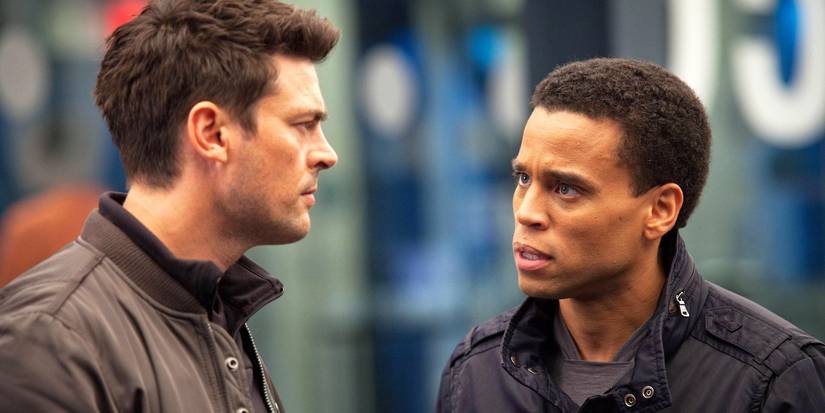
It’s unfair how short-lived Almost Human was, especially since the show blended elements of sci-fi and cyberpunk with a traditional police procedural. The series takes place in the year 2048 and imagines a world where technological advancement has led to crime rates increasing by 400 percent. To fix this, every human has been forcibly paired with a lifelike android partner. The story follows Detective John Kennex (Karl Urban), who survives a devastating ambush and a 17-month coma, and returns to duty with a prosthetic leg and a deep mistrust of robots. This trauma leads to him developing an extremely hostile behavior toward his android, Dorian (Michael Ealy), a discontinued android designed with emotional capacity. However, what he doesn’t know is that Dorian might just be more human than anyone else around him.
The show follows an episodic structure where John and Dorian deal with cases including black-market organ trafficking and illegal synthetic skin trade. At the same time, there are serialized threads like the details of John’s ambush, the mysterious inSyndicate gang, and deeper conspiracies within the system that contribute to an overarching narrative. Overall, Almost Human definitely leans on some predictable beats, but the show’s sharp writing, strong performances, and distinct visual style have turned it into an absolute cult favorite over the years.
‘Colony’ (2016–2018)

Colony takes place in a near-future Los Angeles where people live under alien occupation, and that’s already a hook that reels most people in. The story follows former FBI agent Will Bowman (Josh Holloway), who is forced to work for the traitorous regime to protect his family, while his wife Katie Bowman (Sarah Wayne Callies) is secretly involved in the Resistance. That setup alone gives the show an immediate tension, because the conflict isn’t just outside, it’s also within Will and Katie’s household. Unlike many other dystopian shows, Colony grounds its horrors in logic that feels a little too real. The aliens mostly remain a mystery throughout the story. Instead, their presence manifests in checkpoints, rationing, surveillance, propaganda, mysterious disappearances, and the slow normalization of this life.
In fact, at times, the show feels like a political drama, with the sci-fi elements serving only as a backdrop. That’s not a bad thing at all, though, because this allows the characters and their choices to take center stage. Will is never presented as the perfect hero. He is always forced to choose between complicity and survival, while Katie has to live an entirely secret life. This dynamic is what makes the show so compelling, especially as the occupation grows harsher and stronger. Colony is the perfect example of intelligent sci-fi because it understands that a dystopia doesn’t have to be flashy to be absolutely horrifying.
‘Sense8’ (2015–2018)
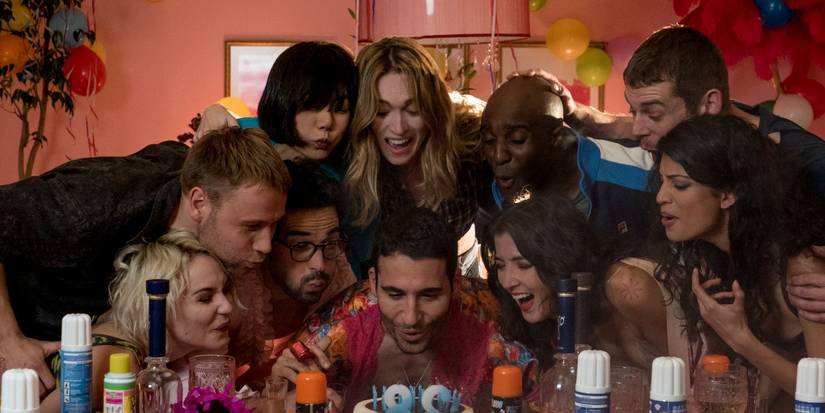
Sense8 is easily one of the most ambitious sci-fi shows Netflix has ever produced. The show follows eight strangers across the world, who suddenly realize they are mentally and emotionally linked. These people can communicate across continents, step into each other’s lives, and even borrow each other’s skills when they need to. However, Sense8 is much more than just a story about psychic connection. The show is a masterclass in representation and does absolute justice to its characters, who are radically different in culture, class, gender, and sexuality.
Every storyline holds equal weight, and the entire narrative revolves around how these eight people slowly become one another’s safe place. As these sensates try to understand what is happening to them, they are also being hunted by forces that see their existence as dangerous. That gives the story a constant urgency without ever sacrificing its character arcs. Sense8 was filmed across multiple countries, and that scale obviously gives it a distinct visual richness that no other Netflix series has been able to match. It feels like pure cinema in the form of television, which makes its untimely cancellation all the more unfortunate.
‘Firefly’ (2002–2003)

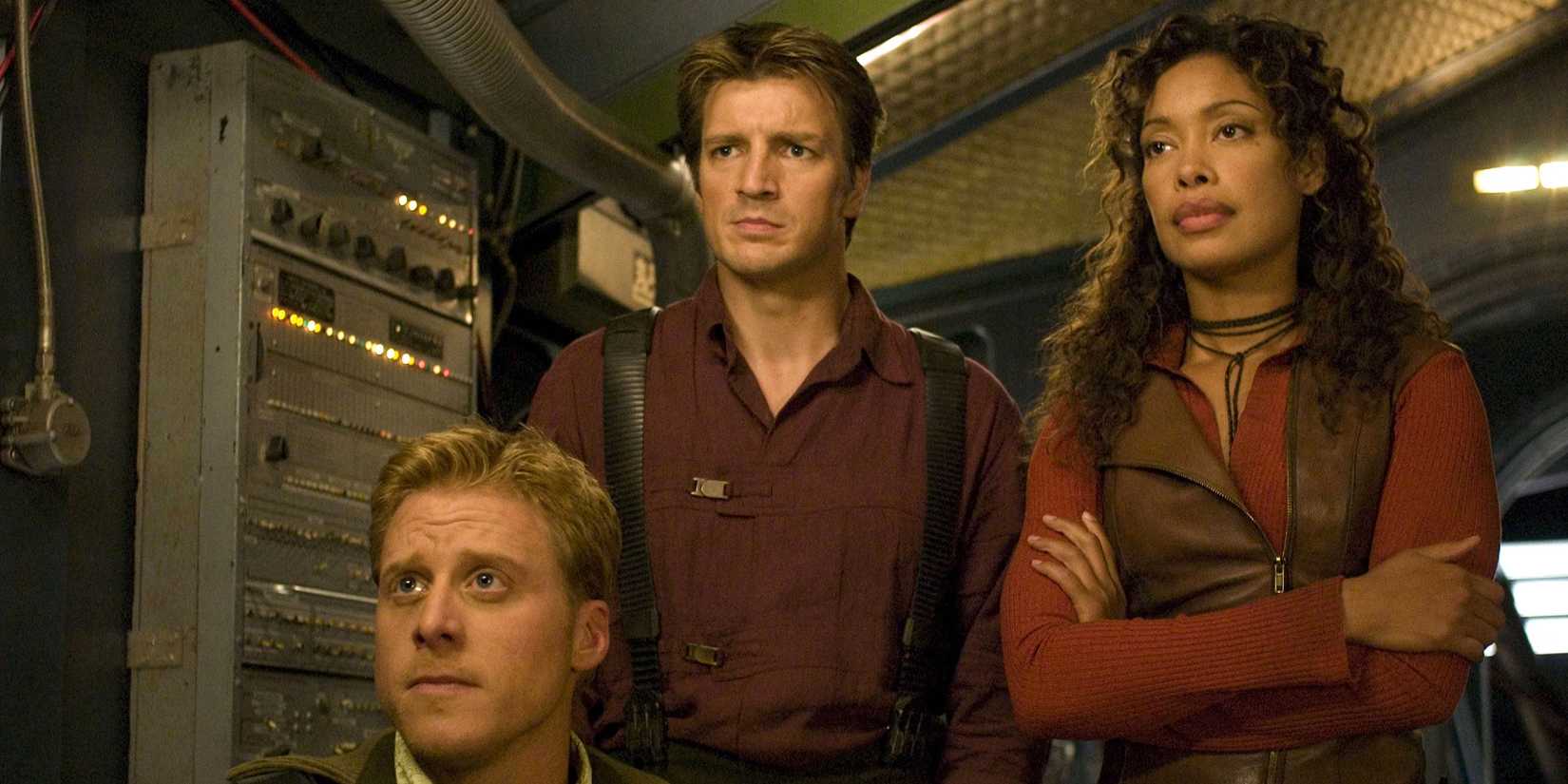
Another show that deserved a longer life than it got is Firefly. The sci-fi series takes place in the year 2517 and follows Captain Malcolm “Mal” Reynolds (Nathan Fillion), a former Browncoat soldier, and his small crew as they survive on the outer edges of the galaxy aboard their ship Serenity. The group takes on smuggling jobs, transporting gigs, and anything else that keeps the ship running. Each episode presents a new job or crisis, but as the story goes on, viewers learn that there is something much bigger simmering under the surface. Firefly gradually builds its overarching plot and hints at something far darker within the Alliance than meets the eye.
This balance between the crew’s episodic adventures and a larger narrative is the show’s greatest strength. Not to mention that Firefly unfolds with a sense of realism that sci-fi rarely ever aims for. The series doesn’t present the future as polished or without flaws. In this world, ships break down, planets are underdeveloped, and technology can’t magically fix all problems. This is exactly why the world in Firefly feels so relatable. Add in the show’s documentary-style storytelling and visuals, and the viewers get an experience that feels both expansive and intimate, even if it didn’t end on the perfect note.
‘Continuum’ (2012–2015)

Continuum was, hands down, one of the greatest and most underrated sci-fi shows of the 2010s. The story begins in 2077, with law enforcement officer Kiera Cameron (Rachel Nichols) accidentally traveling back in time to 2012 alongside a group of revolutionaries known as Liber8. The show initially plays out like a chase where a cop is trying to track down terrorists across time. However, this dynamic evolves pretty quickly to show that Liber8 is actually fighting against a future where corporations have replaced governments and taken total control of society.
Kiera is at the heart of this conflict, where she is trying to preserve this very future and return to her family while also slowly realizing that the world she is fighting for might not be worth saving at all. Each episode blends procedural storytelling with larger themes of power, freedom, and control. As the timeline begins to shift, even the smallest of decisions leads to devastating consequences. Continuum constantly operates in a grey area as the audience is forced to pick sides, but that’s what makes the experience all the more immersive. The show is futuristic yet still grounded in a struggle that feels all too real.


Continuum
- Release Date
-
2012 – 2015-00-00
- Network
-
showcase
- Directors
-
Pat Williams, David Frazee, William Waring, amanda tapping, Mike Rohl, Jon Cassar, Simon Barry, Paul Shapiro
- Writers
-
Sam Egan, Jeff King, Jonathan Walker, Jonathan Walker, Shelley Eriksen, Denis McGrath, Jeremy Smith, Matt Venables, Raul Sanchez Inglis, Sara B. Cooper
You must be logged in to post a comment Login