Entertainment
7 Greatest Spaghetti Western Heroes, Ranked

Spaghetti Westerns can best be defined as Westerns that were made in Europe, rather than America, often (but not exclusively) in Italy. So, the term was a bit of a derogatory one, since the sentiment at the time, according to some, was that Westerns made outside the U.S. just weren’t as good, or couldn’t be as good, even though some spaghetti Westerns genuinely could rival American classics like The Searchers, High Noon, and The Man Who Shot Liberty Valance in terms of quality. Actually, those ones aren’t ideal to bring up if you want to contrast American Westerns with spaghetti ones, since those three can be considered at least a little revisionist or subversive.
Maybe it’s accurate to say spaghetti Westerns just pushed things further, and got a little darker (and more realistic) than most American Westerns made around the middle of the 20th century. With that, you get fewer traditional heroes in spaghetti Westerns, so a ranking like the following does have to include some anti-heroes and at least a couple of characters who are kind of rogue-ish, but endearing – or sympathetic – compared to the villains they’re up against. There’s a limit of one character per movie, and also, only traditional spaghetti Westerns will be considered below (it was tempting to have Django Unchained here, since both the title character and Dr. King Schultz qualify as memorable heroes, but that’s more of a homage to spaghetti Westerns than an actual spaghetti Western).
7
Keoma
‘Keoma’ (1976)


Maybe Keoma is a little underrated, as far as spaghetti Westerns go, and there’s another starring Franco Nero, from a decade earlier, that’s certainly more popular (more on that one in a bit), but this one’s still quite good overall. It’s about the titular character coming home, after fighting in the Civil War, and finding his town is under the control of various nefarious people, so he has to go about resuming fighting, only it’s more personal and everything.
He also has some half-brothers on the other side of the conflict, which makes things a bit dicier and overall darker, befitting the spaghetti Western sub-genre… though they’re also not exactly good people, by any means. Keoma builds to an inevitably violent final act that is the highlight of the movie overall, though it’s still fairly good and generally reliable before then, too, and Nero was undeniably strong in this kind of role.
6
Tuco
‘The Good, the Bad and the Ugly’ (1966)


Just as you can recommend Singin’ in the Rain to people who hate musicals, or The Shawshank Redemption to people who usually stay away from prison movies, you can quite confidently recommend The Good, the Bad and the Ugly to those who usually swear off older Westerns. It’s not one that feels old, by any means, which helps, though 1966 was… (*checks notes*) oh, wow, 60 years ago now. At the time of writing. Could be even longer, depending on the time of reading.
There is a character played by Clint Eastwood who’s technically “the Good,” but he’s not all that good, or at least he’s not the easiest to root for. Also, he’s in the other two movies in the Dollars trilogy, so his time will come. It’s Tuco who’s getting a shout-out here. It might even be a stretch to call him an antihero, since he’s not a very good guy by most standards (his worst misdeeds are said to have happened before the events of the film), but it’s also hard not to like him in a weird sort of way. He’s the underdog, of the three characters referred to in the title, and gets played the most often during the whole chaotic race toward a hidden fortune, so yeah, he’s getting counted as a spaghetti Western sort of hero here. Deal with it.
5
Django
‘Django’ (1966)
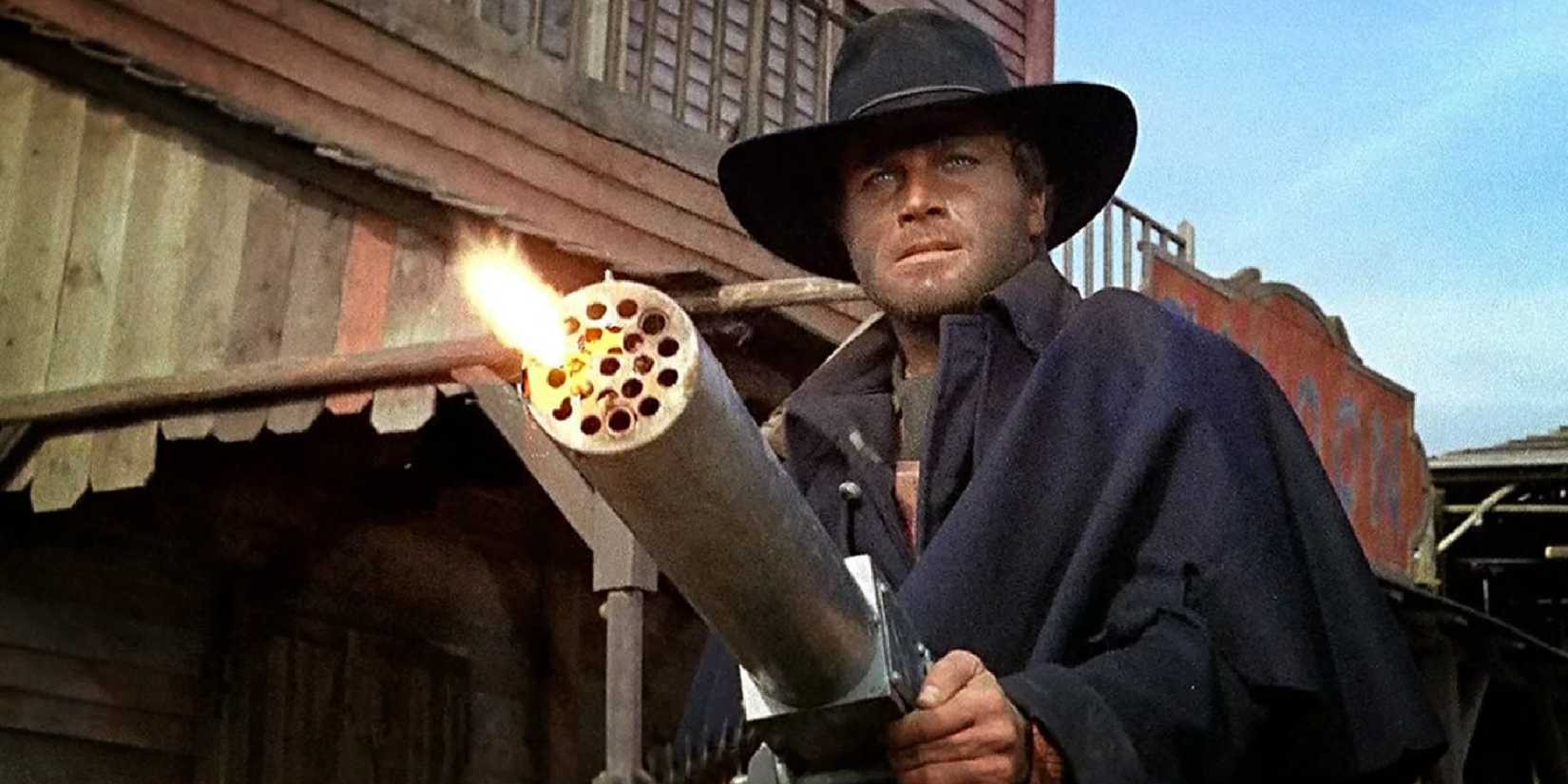
So, there’s a limit of one character per movie here, but Franco Nero is going to show up in this ranking twice, because 10 years before Keoma, he also played the titular character in Django. You can’t really go past Django, and not just because it was (obviously) a reference point for Django Unchained. The premise here is similar to another spaghetti Western made a couple of years earlier, and that’s also going to be mentioned right below.
Django might not seem like a real hero in a non-spaghetti Western, but he comes into a town with some pretty bad people in it, in this movie, and so he’s worthy of being considered a hero by comparison.
The titular Django might not seem like a real hero in a non-spaghetti Western, but he comes into a town with some pretty bad people in it, in this movie, and so he’s worthy of being considered a hero by comparison. That can be said about a fair few spaghetti Westerns when it comes to the main characters, though Django is admittedly closer to traditional hero territory than Tuco from The Good, the Bad and the Ugly.
4
The Man with No Name
‘A Fistful of Dollars’ (1964)
Hey, there he is. There’s Clint Eastwood. His first movie as the Man with No Name was A Fistful of Dollars, and it was also something of a star-making role for Eastwood, as far as big-screen appearances were concerned. A Fistful of Dollars was the first movie in the Dollars trilogy, and it’s the one that lets Eastwood be the most outwardly heroic, or at least he’s not kind of upstaged by someone like The Good, the Bad and the Ugly’s Tuco, nor the “real” hero of the second movie in the trilogy.
In A Fistful of Dollars, the Man with No Name comes into a town and cleans it up in his own distinct way, a little like Django in Django. Okay, he does clean up the town a little like the main character in Yojimbo, perhaps notoriously so, but judged as an unofficial remake, A Fistful of Dollars is about as good as they get. Eastwood was instantly iconic here, and it was essential in making him forever associated with the Western genre (well, that and his earlier role on the Western TV series, Rawhide).
3
Col. Mortimer
‘For a Few Dollars More’ (1965)

As previously alluded to, the Man with No Name is sort of outshone in the second of the Dollars trilogy movies, For a Few Dollars More. Eastwood’s character is going after a bandit, and then he crosses paths with someone else who’s after the same individual. His name is Col. Mortimer, and he’s played by Lee Van Cleef, who was also “the Bad” in The Good, the Bad and the Ugly, with the two characters being remarkably different.
Mortimer has more of a personal reason for pursuing the main villain in For a Few Dollars More, to say the least, and it’s revealed slowly, making the eventual showdown all the more enthralling. It’s also funny to think about how in Sergio Leone’s version of the Old West, there are two men stomping around who both look exactly the same, albeit with almost opposite personalities, and the Man with No Name rather nonchalantly gets involved with both of them.
2
Jill
‘Once Upon a Time in the West’ (1968)

Once Upon a Time in the West slowed things down a little, compared to the Westerns Sergio Leone directed before 1968. There’s still tons to like here if you also enjoyed the Dollars trilogy movies, but no Eastwood here, and things are probably a bit more somber than that trilogy ever got. That being said, you do get perhaps the most clear-cut hero of any Sergio Leone movie: Jill, who’s made a widow early on and finds herself targeted by the man responsible for (nearly) making her lose everything. His name’s Frank, and he wants her land.
Henry Fonda might well come the closest to stealing the show, as the villain here, but Claudia Cardinale is also amazing as Jill, and stands out for being a Western female protagonist; something that’s even rarer for spaghetti Westerns than Westerns generally. Also, an honorable mention does have to go out to Harmonica (Charles Bronson), who’s far more mysterious and perhaps ruthless enough to be more of an anti-hero, but he’s still heroic compared to Frank (who he’s targeting for his own vengeance-fueled reasons).
1
Silence
‘The Great Silence’ (1968)

Released the same year as Once Upon a Time in the West, The Great Silence is probably the best spaghetti Western not directed by Sergio Leone, instead being helmed by Sergio Corbucci, who was also behind the aforementioned Django. The main character of The Great Silence is mute, so he’s only really known as “Silence,” and he has a tragic past, not to mention a potentially tragic future, seeing as he goes up against remarkably cruel bounty hunters who are all targeting more sympathetic individuals.
There’s more that can be said about The Great Silence for sure, and to say too much would be undermining a good deal of what the film’s most famous for (if it counts as famous; The Great Silence still feels pretty underrated, even with people re-evaluating it decades on from its release). There’s a real savageness to this film that still hits quite hard, but its central character is undeniably heroic, even if you could see him as reckless for being so frequently outgunned.

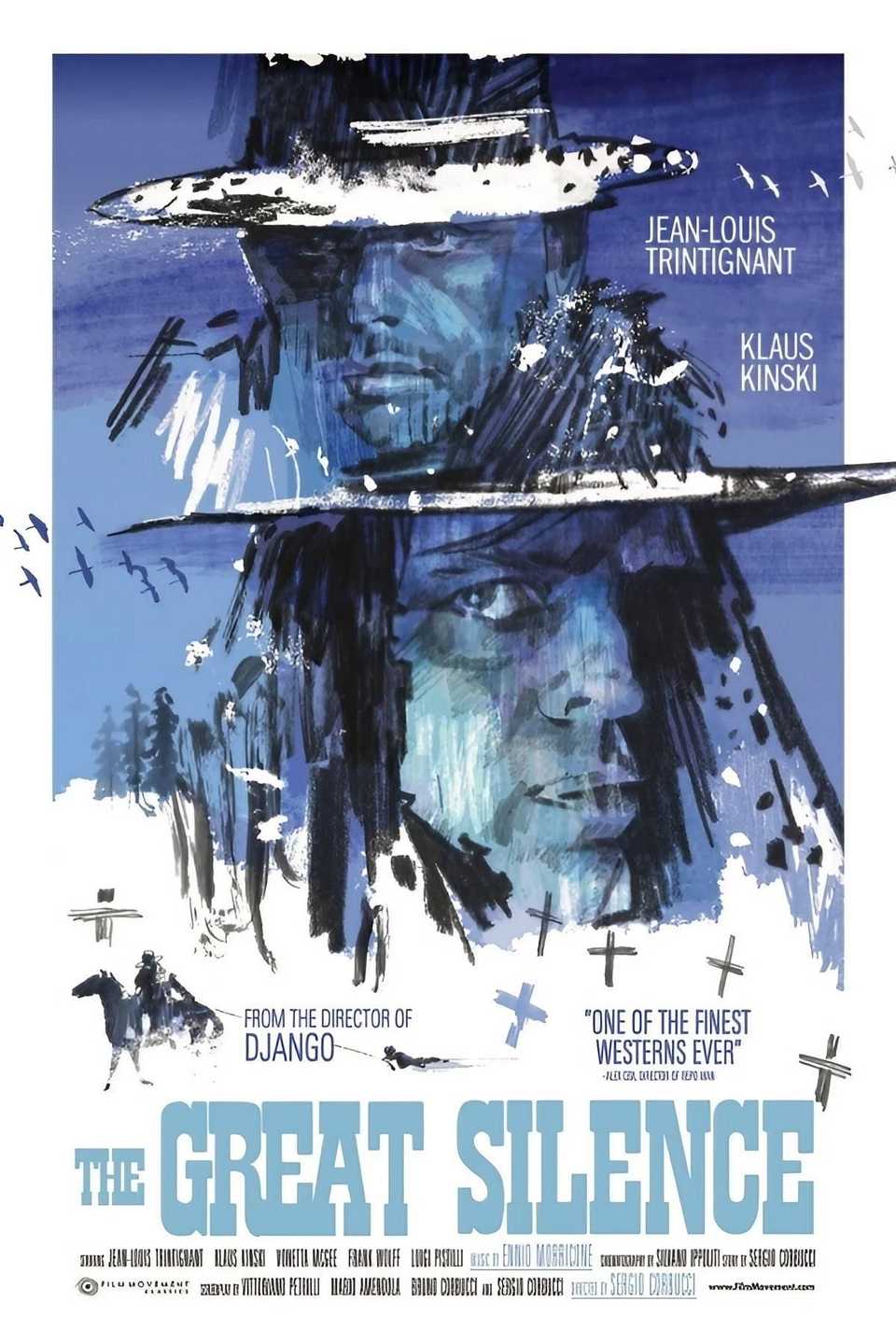
The Great Silence
- Release Date
-
January 27, 1969
- Runtime
-
105 Minutes
- Director
-
Sergio Corbucci
- Writers
-
Sergio Corbucci, Vittoriano Petrilli, Mario Amendola, Bruno Corbucci, John Davis Hart, Lewis E. Ciannelli
You must be logged in to post a comment Login