Entertainment
7 Low Fantasy TV Shows With Great Magic Systems

Low fantasy is a subgenre of fantasy that refers to monsters or aspects of magic that intersect with the real world. A good example of this is the Harry Potter series. The series is set in the British Isles, on the same planet we call Earth, albeit in a very different version of it where an entire magical world exists, yet is hidden from non-magical folk.
Most times, these shows feature magic systems, albeit they aren’t always heavily elaborated on. Or at least, not the same way that they would be if it were a high fantasy TV show. Still, these magic systems do exist in low fantasy shows, and they definitely deserve more attention. These are the best magic systems in the low fantasy subgenre.
‘Carnivàle’ (2003–2005)


Carnivàle is a TV show that is unapologetically weird, but it does it so well. The series is set in the U.S. Dust Bowl of the 1930s. As if the Great Depression weren’t making things hard enough, the Dust Bowl made it so that crops were having a hard time growing. The story follows a traveling carnival, and draws upon heavy inspiration from Christian folklore, especially the mystery surrounding the Knights Templar.
Magic can only be accessed by people known as Avatars, but it isn’t free. Each magical action must be supported by an equal and opposite reaction. For example, if an Avatar wanted to heal a mortal wound, they would need to kill somebody else in order to balance it out. This is true whether the Avatar serves the Light or the Darkness. This is such a great system because it has clearly established rules, and is based on actual laws of physics. It also means that each magical action has actual gravity and weight to it — magic can’t be used all willy-nilly like it can in other series.
‘Jonathan Strange & Mr Norrell’ (2015)


Jonathan Strange & Mr Norrell is a miniseries set in an alternate version of the Napoleonic Wars, which occurred at the beginning of the 19th century. In this alternate version of the world, magic isn’t just speculation — it’s an established reality that it does exist, yet its usage is highly discouraged by society and is rarely used in practical settings. So while it does exist, it’s still seen as taboo due to established religious customs.
While the details of the magic system aren’t elaborated upon too, too much, what is revealed is pretty interesting. It’s almost treated like a science. It’s documented in books, kept in archives, and experimented on by professionals, much like how labs would carry out scientific experiments on newly-discovered chemicals. All that is known about it to the audience is that it is tied to the English language, and to the land of England itself. This show presents a fascinating take on magic, as most fantasy shows will revere magic users, but in this one, they are shunned.
‘A Discovery of Witches’ (2018–2022)

A Discovery of Witches, believe it or not, is about witches. Naturally, this means a lot of magic is going to come into play here. The story is about a forbidden relationship between a witch and a vampire, who bond over a newly-rediscovered manuscript, one which could determine the fate of the world if it were to fall into the wrong hands.
There are two ways magic works in this series. The first concerns a group known as the Weavers. Weavers can create spells from scratch, pretty much at will, using the elements of air, fire, earth, and water. They twist and pull the elemental threads, tying them into knots to create a spell or conjure a familiar. On the other hand, traditional spell-casting relies on spells already established by Weavers, which can be cast by speaking an incantation. However, this has its limits, as if the threads degrade or another witch binds the magic, its effect will not be as powerful. This is such a great magic system because there are actual limitations, and there seems to be a clear-cut picture of how it actually works.
‘Talamasca: The Secret Order’ (2025)

Talamasca: The Secret Order is the third series in the newly-emerging multiverse of TV shows based on the works of Anne Rice. This one is about a psychic who is invited to join the secret order of Talamasca, an ancient covenant that monitors and controls immortal beings and the undead, including vampires, ghosts, and werewolves.
The magic in this show isn’t anything explosive or traditional. There are no spells to cast, no magical incantations, and no familiars to conjure. Instead, magic is performed via telepathy and psychic mind control, using the undead as tools to carry out deeds. It is also used in elaborate rituals, which are often multistep processes and difficult to execute. This one might not be clearly defined or rigid, but it’s cool because it shows that magic does have limitations. It can be used to control a ghost or communicate telepathically, but don’t expect to be able to turn anyone into a frog.
‘American Gods’ (2017–2021)
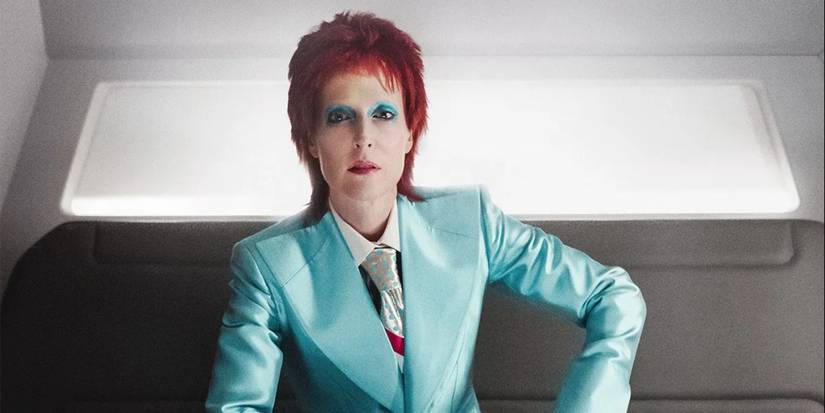
American Gods is about a group of magic users called Old Gods. The Old Gods are having a bit of an existential crisis, because they are quickly being replaced by New Gods, in the form of rapidly-advancing technology and mass media. Desperate to defend their existence, the Old Gods must band together, despite their differences and disagreements.
Magic in this show isn’t based on an inherent ability — that’s only part of it. While the Old Gods might be able to use magic, their inner strength is directly tied to their followers. Their power begins to wane if they lose followers, or don’t have people sacrificing things for them. This is the reason the whole plot happens: because people are stopping their worship of the Old Gods, their power is beginning to decrease, paving the way for the New Gods to come in. It’s an interesting concept, one that’s pretty unique, considering most magic systems are dependent either on external, inanimate sources like energy, or on one’s innate strength. It’s also great because it addresses a real-world theory that many people follow: that gods only have the power that their followers give them.
‘The Magicians’ (2015–2020)
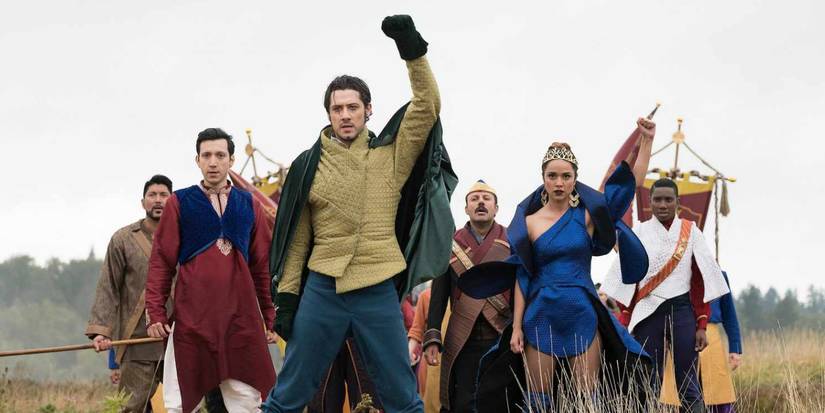
The Magicians is a forgotten fantasy series about a student who enrolls at a university with the intention of becoming a magician. Mind you, this is the realistic form of a magician, meaning he is basically there to learn how to do card tricks and pull rabbits out of hats. Once he gets there, though, he discovers that actual, proper magic is real, and that the magical world is in a precarious spot, with the fate of humanity hanging in the balance.
The magic system in this show is another classic one that isn’t particularly unique. Spells are cast by speaking the incantation in a dead language, usually Old Slavonic or Latin, and then performing a specific hand gesture. Because of this, using magic doesn’t only require intellect; it requires physical dexterity and emotional fortitude, as well. The source of the magic comes from the Wellspring, a cosmic reservoir outside the known bounds of the universe. Magicians just act as catalysts for this Wellspring, tearing a hole in the fabric of reality itself to bring the power of the Wellspring forth. Like many low fantasy magic systems, it’s simple, and not particularly original, but there’s a reason they worked in the first place.
‘Merlin’ (2008–2012)
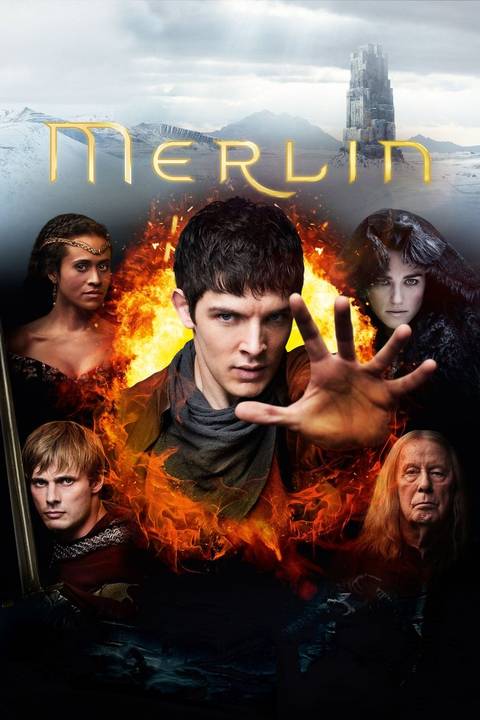
Merlin is about Arthurian legend, specifically about the eponymous wizard, played by Colin Morgan. Normally, movies or shows about Arthurian legend depict Merlin as a grouchy old fuddy-duddy with a long, silvery beard, blue robes adorned with stars and moons, and a matching tall, pointy hat. In this show, though, Merlin is a much younger individual, who is just discovering his magical prowess.
The magic system in this show is pretty classic. Spells can only be cast by sorcerers, who are born with their gift. To cast a spell, one must speak the incantation, which is in the language of the Old Religion, similar to Old English. In order to learn these spells, sorcerers must study grimoires extensively. Not everybody can use magic, however. Those who aren’t born with the ability will never be able to learn it, so it’s only a select few who can use it. It might be an old and not very unique magic system, but it’s a classic for a reason. It’s simple, but it feels arcane and ancient in all the right ways.

Merlin
- Release Date
-
2008 – 2012
- Network
-
BBC One
- Showrunner
-
Julian Jones
- Directors
-
Jeremy Webb, Alice Troughton, David Moore, Justin Molotnikov, Ashley Way, Alex Pillai, James Hawes, Metin Hüseyin, Ed Fraiman, Stuart Orme



You must be logged in to post a comment Login