The history of film dates back to 1888, although the supposed starting point of Louis Le Prince‘s Roundhay Garden Sceneis debated by some. Nevertheless, there is no debating how impressively extensive cinema’s 137-year catalog is, with technological advancements and improvements in film-specific storytelling helping to enhance its quality.
Among this long history of cinema are a select few gems that have done the unthinkable and proved universally popular. Given the rise of social media and the ability for any viewer to share their opinion with the world, for a film to avoid negativity and find its place in the hearts of audiences, regardless of age or taste, is an achievement that shouldn’t be underestimated. With that in mind, here’s a look at seven of the most universally loved movies of all time, ranked.
Advertisement
7
‘Back to the Future’ (1985)
BACK TO THE FUTURE, from left: Christopher Lloyd, Michael J. Fox, 1985Image via Universal Pictures / Courtesy Everett Collection
As the opening of a stage musical and the box office re-release this year prove, the universal love for Back to the Future has perhaps even increased over time. Directed by Robert Zemeckis and written by Zemeckis and Bob Gale, the movie follows the charismatic but insecure Marty McFly (Michael J. Fox) as he and his mad scientist friend Doc Emmett L. Brown (Christopher Lloyd) travel through time via a DeLorean to save the lives of those they love.
One of the biggest box office hits of 1985, Back to the Future was an enormous hit upon arrival, turning Fox into a global star almost overnight. Packed with memorable moments, the film is crucially just as funny as it is emotionally engaging and boasts a near-perfect 95% score from audiences on review aggregator Rotten Tomatoes. The film won an Academy Award for Sound Effects Editing back in 1986, losing out on a screenplay trophy to Witness in one of the worst snubs of that year.
Advertisement
6
‘Jurassic Park’ (1993)
Ellie Sattler (Laura Dern) looks off into the distance while lit from behind in Jurassic Park.Image via Universal Pictures
The summer blockbuster has lost its charm in recent years, as it was once the perfect box office slot for the biggest and best films. In 1993, that slot went to Jurassic Park, the story of paleontologist Dr. Alan Grant (Sam Neill), paleobotanist Ellie Sattler (Laura Dern), and chaos theorist Ian Malcolm (Jeff Goldblum), as they are invited to visit an island theme park populated by dinosaurs ahead of its public opening. However, little do they know the danger they are about to face.
As many of the most beloved films do, Jurassic Park spawned a dino-sized franchise and six sequels to date, with the most recent, Jurassic World Rebirth, becoming one of 2025’s biggest box office hits. However, none have ever matched the awe-inspiring vision of the original, with groundbreaking CGI and animatronics still dropping jaws to this day.
Advertisement
5
‘The Breakfast Club’ (1985)
Molly Ringwald and Emilio Estevez looking surprised in The Breakfast Club.Image via Universal Pictures
The teen movie has often proven universally popular, mainly for its ability to capture a moment in time for a generation of adolescents. Of all the best this genre has to offer, none are quite as beloved as The Breakfast Club. Following five high school students as they spend a Saturday in detention together, the film details their differences and finds their unlikely similarities as their lives are changed forever in just one day.
On its 40th anniversary, this 1985 John Hughes cult classic has been receiving plenty of love, proving popular in its limited box office re-release in September. A genius coming-of-age story that is both a visual time capsule of the mid-1980s and an enduring tale of acceptance and identity, teenage lives are still being changed with one viewing of The Breakfast Club.
Advertisement
Collider Exclusive · Oscar Best Picture Quiz Which Oscar Best Picture Is Your Perfect Movie? Parasite · Everything Everywhere · Oppenheimer · Birdman · No Country
Advertisement
Five Oscar Best Picture winners. Five completely different visions of what cinema can be — and what it can do to you. One of them is the film that was made for the way your mind works. Ten questions will figure out which one.
🪜Parasite
🌀Everything Everywhere
☢️Oppenheimer
🐦Birdman
Advertisement
🪙No Country for Old Men
Advertisement
01
What kind of film experience do you actually want? The best movies don’t just entertain — they leave something behind.
Advertisement
02
Which idea grabs you most in a film? Great films are driven by a central obsession. What’s yours?
Advertisement
03
How do you like your story told? Form is content. The way a story is shaped changes what it means.
Advertisement
04
What makes a truly great antagonist? The opposition defines the protagonist. What kind of opposition fascinates you?
Advertisement
05
What do you want from a film’s ending? The final note is the one that lingers. What do you want it to sound like?
Advertisement
06
Which setting pulls you in most? Where a film takes place shapes everything — mood, stakes, what’s even possible.
Advertisement
07
What cinematic craft impresses you most? Every great film has a signature — a technical or artistic element that makes it unmistakable.
Advertisement
08
What kind of main character do you root for? The protagonist is the lens. Who you choose to follow says something about you.
Advertisement
09
How do you feel about a film that takes its time? Pace is a choice. Some films sprint; others let tension accumulate slowly, deliberately.
Advertisement
10
What do you want to feel walking out of the cinema? The best films leave a mark. What kind of mark do you want?
Advertisement
The Academy Has Decided Your Perfect Film Is…
Your answers have pointed to one Oscar Best Picture winner above all others. This is the film that was made for the way your mind works.
Advertisement
Parasite
You are drawn to films that operate on multiple levels simultaneously — that begin in one genre and quietly, brilliantly migrate into another. Bong Joon-ho’s Parasite is a film about class, desire, and the architecture of inequality that manages to be darkly funny, deeply suspenseful, and genuinely shocking across a single extraordinary running time. Your instinct is for cinema that hides its true intentions until the moment it’s ready to reveal them. Parasite is exactly that — a film that rewards close attention and punishes assumptions, right up to its devastating final image.
Advertisement
Everything Everywhere All at Once
You want it all — and this film gives you all of it. The Daniels’ Everything Everywhere All at Once is one of the most maximalist films ever made: action comedy, multiverse sci-fi, family drama, existential crisis, and a genuinely earned emotional core that sneaks up on you amid the chaos. You are someone who responds to ambition, who doesn’t want cinema to choose between being entertaining and being meaningful. This film refuses that choice entirely. It is overwhelming by design, and its overwhelming nature is precisely the point — because the feeling of being crushed by infinite possibility is exactly what it’s about.
Advertisement
Oppenheimer
You are drawn to cinema on a grand scale — films that understand history not as a backdrop but as a force, and that place their characters inside that force and watch what happens. Christopher Nolan’s Oppenheimer is a film about the terrifying gap between what we can do and what we should do, told with the full weight of one of the most consequential moments in human history behind it. You want your films to feel important without feeling self-important — to earn their ambition through sheer craft and the gravity of their subject. Oppenheimer does exactly that. It is enormous, complicated, and refuses easy comfort.
Advertisement
Birdman
You are drawn to films that foreground their own construction — that make the how of the filmmaking part of the what it’s about. Alejandro González Iñárritu’s Birdman, shot to appear as a single continuous take, is cinema examining itself through the cracked mirror of a fading actor’s ego. You respond to formal daring, to the feeling that a film is doing something that probably shouldn’t be possible. Michael Keaton’s performance and Emmanuel Lubezki’s restless camera create something genuinely unlike anything else — a film that is simultaneously about creativity, relevance, self-destruction, and the impossibility of ever truly knowing if your work means anything at all.
Advertisement
No Country for Old Men
You are drawn to cinema that trusts silence, that refuses to explain itself, and that treats dread as a form of meaning. The Coen Brothers’ No Country for Old Men is a film about the arrival of a new kind of evil — implacable, arbitrary, and utterly indifferent to the moral frameworks we use to make sense of the world. It is one of the most formally controlled films ever made, and its controlled restraint is what makes it so terrifying. You want your films to haunt you, not comfort you. You are not interested in resolution if resolution would be dishonest. No Country for Old Men is honest in a way that most cinema never dares to be.
Advertisement
4
‘Alien’ (1979)
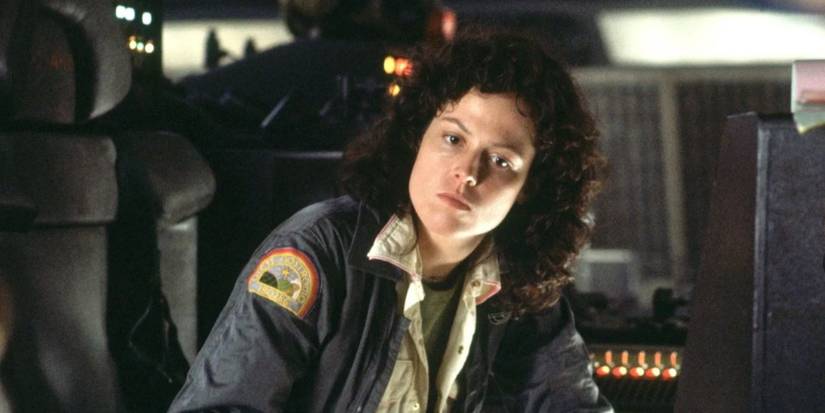
Sigourney Weaver as Lieut. Ellen Ripley aboard a spacecraft in the science-fiction–horror film Alien.Image via 20th Century Studios
Advertisement
To define a genre, like the previously mentioned The Breakfast Club, is impressive enough. Ridley Scott’s Alien managed to define two, becoming one of the flagship horror and sci-fi movies of not just the 1970s but of all time. The film follows the crew of the commercial space towing vessel Nostromo, who, after attending to what they thought was a distress call, soon find themselves under siege from a terrifying monster.
Everything from the movie’s central monster to its iconic tagline (“In space, no one can hear you scream”) has been cemented into popular culture ever since Alien debuted. Key to the movie’s universal popularity is Ellen Ripley (Sigourney Weaver), a defining female character who paved the way for many more badasses that followed. For many, this is the greatest horror or sci-fi film ever made, and for all, it’s certainly in the conversation.
3
‘The Shawshank Redemption’ (1994)
Image via Columbia Pictures
Advertisement
When it comes to movies that are beloved by both audiences and critics, few have managed to have the same impact as The Shawshank Redemption. The movie follows Andy Dufresne (Tim Robbins), a man sent to prison for the murder of his wife and her lover, despite being innocent. Having to navigate the harsh reality of life behind bars, the last thing Andy expects is to find hope and a best friend in the form of longtime inmate Red (Morgan Freeman).
From career-best performances to a pitch-perfect ending, The Shawshank Redemption was rightfully heralded as a masterpiece by critics and nominated for an impressive seven Academy Awards. However, it is the film’s life-affirming message, proving to be one of the best entries into the hopecore sub-genre, that likely helps it stay universally beloved after over three decades. Widely cited as one of the best movies of all time, Frank Darabont’s masterpiece is one everyone should watch at least once.
2
‘The Lion King’ (1994)
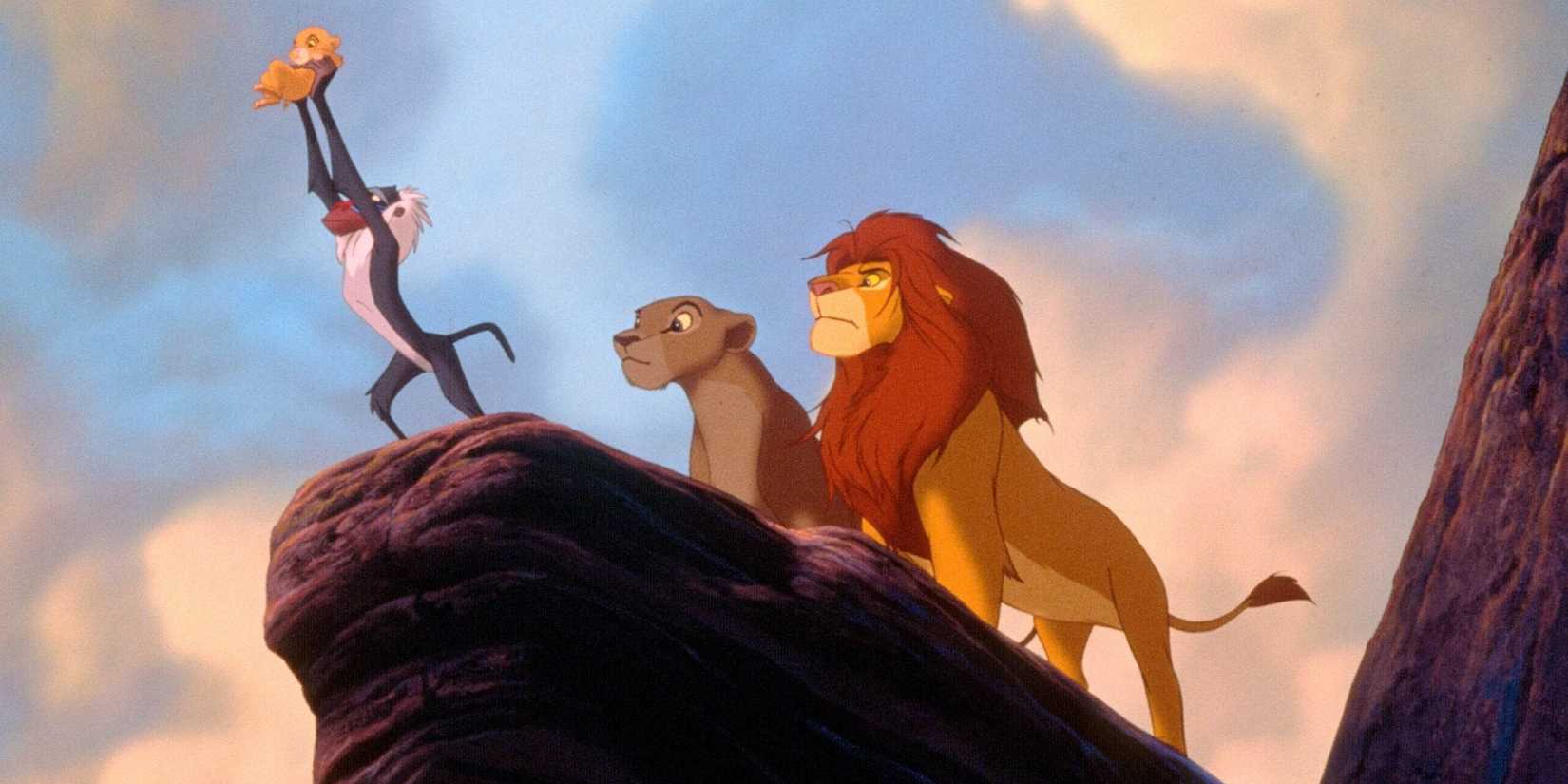
Rafiki holds baby Simba in the air from Pride Rock in The Lion KingImage via Walt Disney Studios Motion Pictures
Advertisement
It seems that animated movies don’t quite face much of the same scrutiny as live-action tales. To some extent, this is because of the ability to make animated creations perfectly infallible and universally endearing, with only the coldest of hearts unable to melt at the sight of a cute cartoon character. With that in mind, it should be no wonder that a film like The Lion King is on this list.
But rarely has an animated movie been quite so successful with both critics and audiences. Winning two Oscars from four nominations, The Lion King was also an enormous success at the box office, earning just shy of $1 billion worldwide on a budget of only $45 million. From an iconic soundtrack that inspired a stage musical to stunning animation and a story so timeless that it is loosely based on a Shakespeare play, few animated movies have ever quite had the impact of The Lion King.
1
‘Goodfellas’ (1990)
Michael Imperioli as Spider in Goodfellas (1990)Image via Warner Bros.
Advertisement
Martin Scorsese‘s filmography is bursting at the seams with masterpieces. From Taxi Driver to Killers of the Flower Moon, few directors can match the consistency, quality, and longevity of the Academy Award winner. Although some of his best remain divisive in smaller circles, there is perhaps none from his catalog to be quite as universally beloved as Goodfellas.
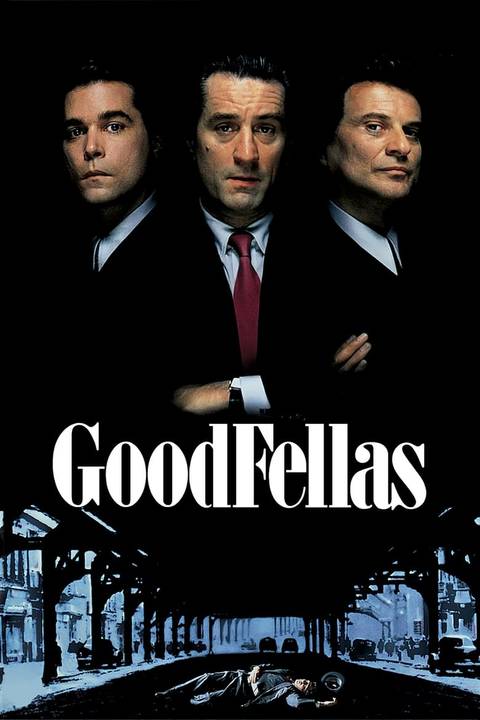
From the immortal opening line: “As far back as I can remember, I always wanted to be a gangster,” right through to the film’s captivating closing sequence, not a moment of Goodfellas isn’t touched by the artistry of a genius at the peak of his powers. Featuring the trio of Ray Liotta, Robert De Niro, and Joe Pesci, each at their very best, the film weaves between the hilarious, the emotionally poignant, and the shockingly violent, portraying the perfect picture of the highs, lows, and in-betweens in the life of Henry Hill (Liotta). As far as gangster flicks go, there isn’t one more universally loved than Goodfellas.






You must be logged in to post a comment Login