Entertainment
7 Netflix Shows Without a Single Flaw

With streaming services competing for viewers’ attention every single day, it can be hard to determine what to watch first. We often go with our preferences in genre, cast, directors, and writers and go from there; sometimes it’s a clear win, and sometimes, even a well-cast, greatly made show can be a miss. Netflix has the most original programs thus far in a wide variety of genres, from horror to comedy and even animation.
Picking out Netflix shows that have no flaws whatsoever is really hard, because perfection is rare and often in the eye of the beholder. But, regardless of the genre or year of release, there are some original series that Netflix decided to produce and invest in that have no mistakes; these are seven Netflix shows without a single flaw.
‘Love, Death & Robots’ (2019–2025)


The adult animated anthology series, Love, Death & Robots, is a breathtaking showcase of what happens when you give the world’s most visionary animators complete creative freedom. Love, Death & Robots presents a collection of short films, each running between five and twenty minutes, that span genres from sci-fi and horror to comedy and fantasy, all unified by stunning animation and bold, often provocative storytelling. The show’s executive producer is David Fincher, while the animation studios hail from countries like the U.S., Spain, the UK, South Korea, Russia, Hungary, and Japan.
The series’ anthology format is perfect for flawless storytelling: with no recurring characters or overarching plots, every episode stands entirely on its own. Some of the most celebrated entries include “Three Robots,” “Bad Travelling,” and the hauntingly beautiful “Jibaro.” The show has won 13 Emmy Awards and holds a 100% Rotten Tomatoes score for its Season 3 and 4. What makes Love, Death & Robots flawless is its consistency across four volumes—while individual episodes vary in tone, the overall quality remains remarkably high, with no weak entries dragging down the whole. It’s a dazzling, unpredictable, and endlessly inventive masterclass in short-form storytelling.
‘Kingdom’ (2019–2020)
Netflix’s first original K-drama, Kingdom, is also the first K-drama to use a highly popular historical setting and combine it with zombies. In Kingdom, though, zombies are more than just mindless monsters—they often serve as a mirror to the rot of a corrupt society. Set in Korea’s Joseon dynasty, the show follows Crown Prince Lee Chang (Ju Ji-hoon) as he investigates a mysterious plague that turns the dead into flesh-eating creatures. But the true horror hides more in the scheming nobles and the power-hungry queen, who would rather let the kingdom die completely than let go of their power.
Across twelve episodes and a special, Kingdom delivers breathtaking set pieces, including a frozen lake battle and a nighttime siege that ranks among the most thrilling action sequences on television. The show holds a steady 98% Certified Fresh rating on Rotten Tomatoes, but Season 2 holds a perfect 100% score. Beneath the gore and sword fights lies a razor-sharp critique of class inequality and political negligence; Ju anchors the chaos as a prince who evolves from naive idealist to hardened survivor, joined by a formidable cast in the form of Bae Doona and Ryu Seung-ryong. Tight, brutal, and politically sharp, Kingdom is a flawless genre triumph that has helped Netflix’s investment in K-dramas blossom.
‘The Chestnut Man’ (2021–Present)


The Danish crime thriller The Chestnut Man is one of the most perfectly constructed Nordic noir series ever made. Based on the bestselling novels by Søren Sveistrup, the creator of The Killing, the show follows detective Naia Thulin (Danica Curcic) and her Interpol-assigned partner Mark Hess (Mikkel Boe Følsgaard) as they investigate brutal murders in Copenhagen‘s bleak suburbs. The first season, released in 2021, adapted Sveistrup’s debut novel and was hailed as a flawless thriller (holding a 100% rating on RT). The six-episode run is tightly plotted, with every clue and red herring meticulously placed, building to a heavy, unexpected ending.
Five years later, Season 2, subtitled “Hide and Seek,” reunites Curcic and Følsgaard alongside The Killing‘s Sofie Gråbøl for a brand-new case. This six-episode sequel follows the detectives as they investigate the disappearance of a woman, uncovering a killer playing a disturbing game of hide and seek. While some critics found a controversial character’s death divisive, the season has been praised as “the pinnacle of the Nordic noir genre” and remains a cohesive thriller. Together, both seasons make The Chestnut Man a complete, gripping saga that can be rewatched over and over.
‘The Haunting of Hill House’ (2018)
.jpg?q=49&fit=crop&w=825&dpr=2)
Mike Flanagan‘s adaptation of Shirley Jackson‘s classic novel is far more than a ghost story; The Haunting of Hill House is a multi-generational family drama that uses horror as a vehicle to explore grief, trauma, and the ways our pasts haunt us. The series follows the Crain family, dividing its narrative between the past, when the five children and their parents moved into the abandoned Hill House, and the present, where the now-adult siblings reunite with their father to confront the terror that shaped their lives.
Flanagan’s direction is masterful, employing long, unbroken takes and a non-linear structure that rewards careful attention. The performances are uniformly excellent, with standout turns from Victoria Pedretti and Kate Siegel, while the show culminates in a tragic revelation that reframes the entire story; this is why the show also has a high rewatchability factor (well, that, and the 43 hidden ghosts across the series). It’s widely considered one of the greatest horror series of all time, with Forbes saying that it “may actually be Netflix’s best original show ever.” It’s a flawless, emotional work of art that shows that the trauma we carry in ourselves can become a formidable monster, haunting our every step.
‘BoJack Horseman’ (2014–2020)
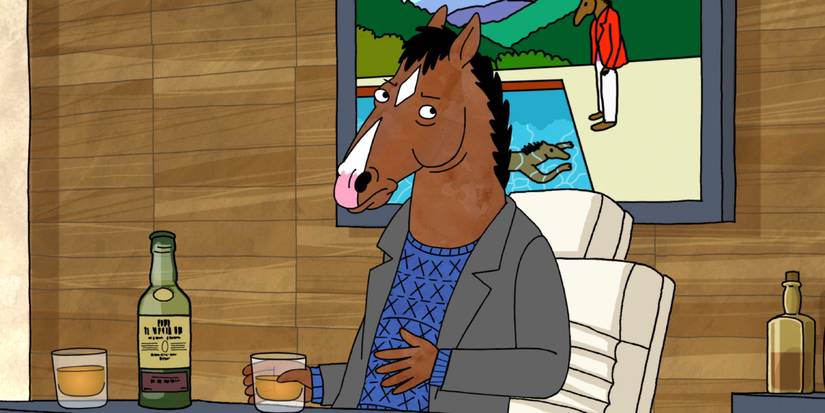
An animated comedy about a washed-up ’90s sitcom star who also happens to be a horse should not be as profound, but BoJack Horseman is one of the most emotionally devastating and psychologically insightful shows ever made. Across its six seasons, the series follows BoJack (voiced by Will Arnett) as he navigates the hollow pleasures of Hollywood, grapples with his own self-destructive behavior, and searches for meaning and redemption. It starts as a cynical showbiz satire, but it grows into an unflinching exploration of depression, addiction, trauma, and the possibility of change.
The genius of BoJack Horseman is the range it encompasses: it often pivots from absurdist animal puns to gut-wrenching emotional revelations in the space of a single scene. The show never overstays its welcome, and after six seasons, it ends ambiguously but honors the development of the characters. BoJack Horseman is a masterpiece that will make you laugh, cry, and question everything; there’s not a wasted episode in its 76-episode run, and the show’s ability to tackle the darkest aspects of (human) existence while remaining consistently hilarious is nothing short of miraculous. It is a flawless meditation on what it means to try, fail, and keep trying anyway.
‘Midnight Mass’ (2021)

Mike Flanagan’s (second) follow-up to Hill House is an even more ambitious and thematically rich work, this time getting the seal of approval from the king of horror himself, Stephen King. Midnight Mass is a seven-episode limited series set on a small, isolated island community called Crockett Island, where the arrival of a charismatic and mysterious young priest, Father Paul (Hamish Linklater), and the former convict and Crockett native, Riley (Zach Gilford), coincides with a series of inexplicable miracles and horrifying events. It’s a slow-burning meditation on faith, doubt, purpose, and community that slowly grows into something terrifying and mesmerizing.
While the entire ensemble is brilliant, Samantha Sloyan and Linklater deliver some of the most mesmerizing performances in television history; he is unnerving and charming, while she plays a believer filled with intense, often terrifying, devotion. Flanagan’s writing is at its peak, using the horror genre as a vehicle to explore questions of faith, mortality, and the danger of religious extremism. Midnight Mass is a flawless masterpiece of atmosphere and emotional depth, with extraordinary monologues, intense scares, and a finale that is a beautiful reckoning with mortality that lingers for a long time.
‘Mindhunter’ (2017–2019)

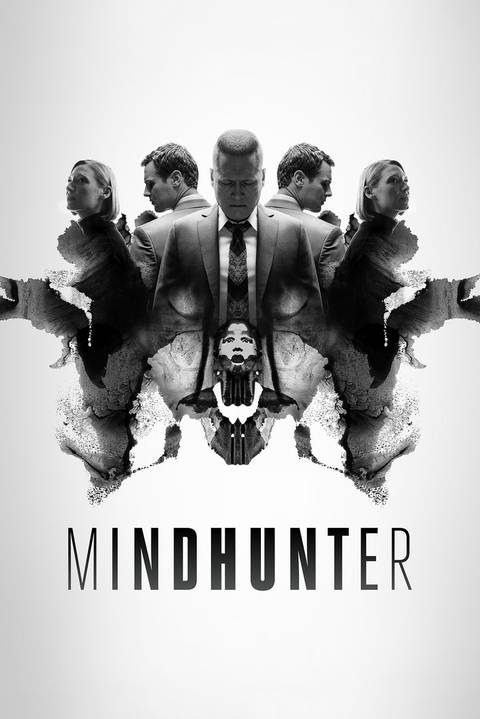
No other show in Netflix’s library deserves the title “flawless” like David Fincher’s Mindhunter does. The series chronicles the early days of the FBI’s Behavioral Science Unit, following agents Holden Ford (Jonathan Groff) and Bill Tench (Holt McCallany) as they interview locked up serial killers to develop criminal profiling techniques and educate police officers and detectives across the country to recognize killers early. Mindhunter is a detective show elevated by Fincher’s meticulous, clinical direction and a script that treats its subject matter with a razor-sharp intellect.
Mindhunter is mostly built around conversations—long, tense, psychologically grueling interrogations—and yet it is more gripping than most action thrillers. The performances are uniformly outstanding, particularly Cameron Britton‘s chilling turn as real-life killer Ed Kemper. Across 19 episodes, Mindhunter never dips in quality, maintaining a consistent atmosphere of dread and tension that stays unbearable at times. It is a masterpiece in all respects, so much so that we can easily call it the greatest show Netflix has ever produced. The cancellation after season two is tragic, but what remains is flawless, essential television that changed the way we think about crime drama.

Mindhunter
- Release Date
-
2017 – 2019
- Network
-
Netflix
- Showrunner
-
Joe Penhall
- Directors
-
David Fincher, Carl Franklin, Andrew Dominik, Andrew Douglas, Asif Kapadia, Tobias Lindholm
You must be logged in to post a comment Login