Entertainment
7 Reasons Why It’s Hard to Rewatch ‘Buffy the Vampire Slayer’s First Episode Today

Buffy the Vampire Slayer is an iconic pop culture landmark that continues to find new generations of fans today, nearly three decades after it first premiered. Starring Sarah Michelle Gellar as Buffy Summers, the titular Slayer, the show follows her attempts to balance battling the forces of darkness with leading a normal life in high school (and later college). The series premiered on The WB on March 10, 1997, over 29 years ago, with the two-part broadcast of the episodes “Welcome to Hellmouth” and “The Harvest.” In them, we see Buffy and her mom, Joyce (Kristine Sutherland), move from Los Angeles to Sunnydale, where she makes new friends, stumbles onto a vampiric conspiracy, and learns that the town is situated on a Hellmouth, a magical portal that’s the source of Sunnydale’s high concentration of supernatural occurrences.
While the show has become a bit controversial in recent years due to allegations of workplace harassment by creator Joss Whedon, Buffy the Vampire Slayer was a major critical and commercial success during its original run, and it remains a beloved favorite among fans around the world. That said, there’s no denying that the show hasn’t entirely aged well in the 29 years since its premiere, and as a result, any time you rewatch Buffy’s very first episode, you can’t help but notice some serious flaws. With that in mind, here’s a look at some of the harsh realities of rewatching Buffy the Vampire Slayer’s first episode, 29 years later.
1
The Actors Hadn’t Settled Into the Characters Yet


Buffy the Vampire Slayer’s biggest strength is its characters, particularly the supporting cast. “Welcome to Hellmouth” is where Buffy and the audience meet some of the key players: her friends Willow (Alyson Hannigan) and Xander (Nicholas Brendon), her Watcher, Giles (Anthony Stewart Head), and her eventual love interest, Angel (David Boreanaz).
Now, while their performances in these roles in the first episode are effective and successfully establish their characterizations and dynamics, they’re not quite as great as what we eventually see in later episodes. That extends to Sarah Michelle Gellar’s performance as Buffy as well, which, while charming, doesn’t feel very real in a lot of the scenes. This is at least partly to be blamed on the fact that it was very early days for the production, leading to an overreliance on archetypes that may have been right for its time, but are undeniably dated now. Speaking of which…
2
It’s Extremely ‘90s (And Not Always in a Good Way)


Buffy the Vampire Slayer’s seven-season run extended well into the early 2000s, but it is best known as an iconically ’90s show. Most of the time, that’s a good thing, as the series perfectly captures the culture, stylings, language, and sense of humor of its decade. However, as we mentioned above, the narrative and character dynamics that make those features come alive were still being set up in “Welcome to Hellmouth,” and the result is an episode with far too many flat ’90s stereotypes in place of characters.
This might not be a particularly big problem for fans who grew up in the ’90s and/or watched the series during its initial broadcast, but it can make it feel too dated for some younger viewers. For those audiences, scenes like Buffy’s first meeting with Xander and Cordelia Chase (Charisma Carpenter) bullying Willow would mostly seem far too tropey and possibly even offensive. It’s just the passage of time, really, but there’s no ignoring it.
3
The Effects Are Dated
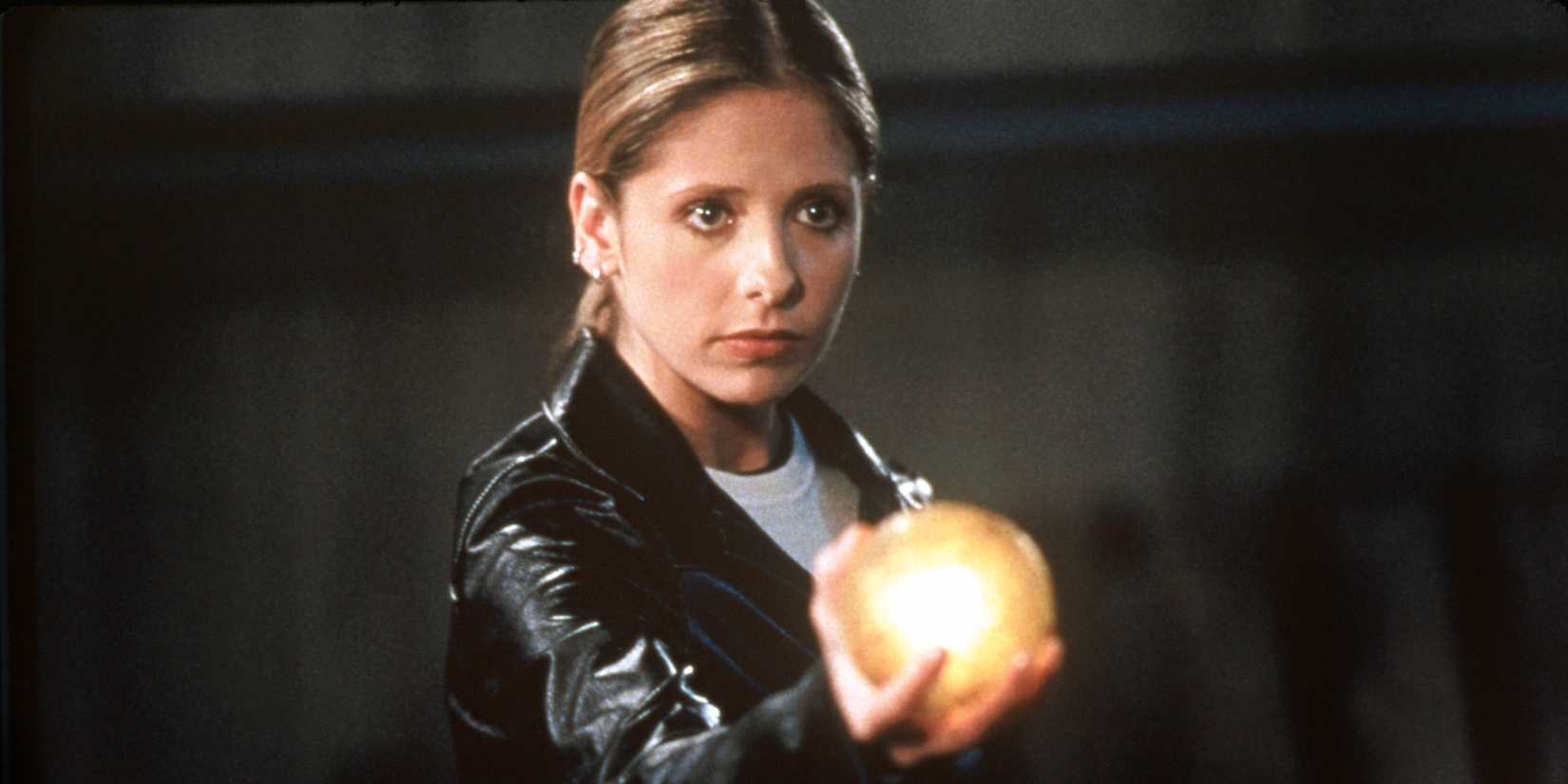
Another issue that you can chalk up to time, “Welcome to Hellmouth” uses pretty low-budget effects that feel visibly dated today. While that’s excusable to a certain extent, it’s not like the episode was exactly a VFX highlight when it first premiered. As the pilot episode, it was made with a very tight budget, and though the effects were seen as mostly adequate when it first came out in 1997, they weren’t particularly impressive back then either.
The show’s production quality did improve significantly starting with Season 2, but the first season’s effects are undeniably cheesy. What actually impressed critics of the time about the pilot episode, however, was the writing, which felt genuinely fresh and innovative for its time. That said…
4
The Writing Feels a Lot More Two-Dimensional Now

This ties back to the problem we mentioned earlier with the characterizations feeling too flat and stereotypical. In its later seasons, Buffy the Vampire Slayer was truly one of the best-written shows on television, with layered and well-thought-out character arcs. Compared to that, the first episode feels a lot more clunky.
Again, it’s not exactly bad for its time. The “High School as Hell” concept is brilliantly executed, and the first scene in particular, where we see a boy and a girl break into the school to fool around, only for the girl to be revealed as the vampire, was quite subversive in the ’90s. But again, that was the ’90s; in the 2020s, audiences have already seen scenes like that a million times over, to the point where it feels cliché.
5
The Action Isn’t as Polished

Like the visual effects, this is another aspect of Buffy the Vampire Slayer that improved with later seasons, but the first episode’s stage-fighting looks and feels like stage-fighting. This isn’t just because it’s dated; rather, once again, the low budget can largely be blamed. Buffy’s fight with Darla (Julie Benz), for example, looks quite cheesy, but thankfully, the camera cuts away before we see much of it.
The action in “Welcome to Hellmouth” is quite stilted, even for its time, but again, the fight choreography does get a lot more creative and polished as the show progresses. The early days of any series can involve some growing pains, and to be fair, the action isn’t even the biggest one.
6
Dialogue Was a Work in Progress

Looking back at Buffy the Vampire Slayer’s history, the dialogue is one of the best remembered aspects of the show, with tons of quotable lines that are still used by fans in everyday conversation. It’s honestly quite shocking that the first episode’s dialogue isn’t nearly as good as you may remember. The sense of humor is definitely there, sassy and sardonic, but a lot of the quips don’t land, and it clearly took some time for the writers to get it right.
It’s not just that the jokes aren’t great; far too much of the dialogue is wasted on signaling intelligence without actually being intelligent; others are too dependent on stereotypes, and still more feel forced rather than natural. It’s ironic considering Buffy the Vampire Slayer’s particular style of language, aka Buffy speak, went on to become commonly adopted slang among teens and younger adults. But the lines in the first episode are just not it.
7
Life in Sunnydale Sounds Terrifying

In the early days, Buffy the Vampire Slayer was firmly rooted in its light teen horror foundations, and it’s only much later that the show got into more mature and well-thought-out storytelling. That means there’s a lot of handwaving of plot holes, which fall apart on closer examination. For example, “Welcome to Hellmouth” and its second part, “The Harvest,” firmly establish that the people of Sunnydale are magically oblivious to the supernatural occurrences happening around them.
This is convenient for a show with a procedural format, but can you imagine how terrifying that would be? In the very first scene, we see a boy being killed, and his death barely makes a mark on the people around him. Even in later episodes and seasons, the regular people of Sunnydale are treated as NPCs who live and die with no real impact, which would be an existentially terrifying idea in anything but a ’90s teen show.
Everything said and done, however, these flaws don’t really ruin the experience of the series, and they definitely don’t take away from Buffy the Vampire Slayer’s enduring legacy. Sure, the show might have taken its time to become the iconic world we know and love, but most of those growing pains are just a product of its time. And as for the rest, they’re more than forgivable when you consider the overall entertainment, joy, and creativity that the series delivers over the course of its acclaimed run.

- Release Date
-
1997 – 2003
- Network
-
The WB
- Showrunner
-
Joss Whedon
- Directors
-
Joss Whedon
- Writers
-
Joss Whedon
You must be logged in to post a comment Login