Entertainment
7 Sci-Fi Shows Based on Books That Are True Masterpieces

The best sci-fi shows often come from the best sci-fi authors. The genre has no bounds, exploring whether technology could advance beyond imagination or how far humanity itself might evolve in the future. However, the greatest sci-fi works are usually the ones that ring closest to real-life issues. No matter how many years pass, what kinds of governments rise and fall, or how advanced science becomes, the human conflict between right and wrong remains timeless and universal.
Sci-fi only complicates this further with scientific logic, which is notoriously objective. But when that logic crashes into something as philosophical, intangible, and subjective as morality, things get messy fast. That tension is exactly what makes the genre so fascinating in the first place, and the authors below excel in that department. With that in mind, here are the sci-fi shows based on books that are true masterpieces.
‘The Expanse’ (2015–2022)


The Expanse, both the show and the novel series, is larger than life. The six-season series is based on James S. A. Corey’s nine novels, as well as additional source material from their short stories and novellas. It is the reason why The Expanse, true to its name, continues to stretch across the universe. Set in the 23rd century, humans have colonized the Solar System. Earth is governed by the United Nations, while Mars has become an independent military power.
As for ordinary working-class people, they are the Belters — those who live and work in the asteroid belt — who make ends meet by supplying essential resources like water to the inner planets. Although technology has advanced and space colonization is now the norm, war remains much the same, as Earth and Mars constantly watch each other’s backs, wary that the other might strike first. But if there is one thing about war, it is that there is always a third party lurking in the shadows of the universe, looking to profit from the chaos.
‘Altered Carbon’ (2018–2020)
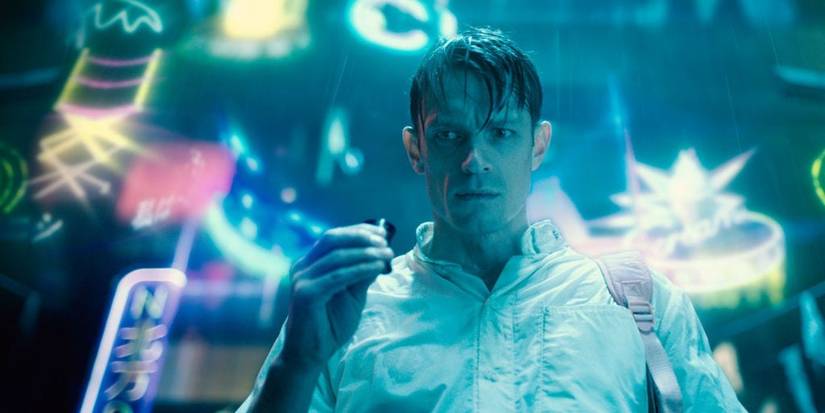
Immortality is no longer an impossibility in Altered Carbon. In a future society (about 360 years ahead in the show’s adaptation), humans have developed a form of digital immortality using cortical stacks implanted in the spine, allowing them to store a person’s consciousness. When the physical body dies, the stack is preserved and transferred into a new body, or “sleeve.” In this way, the mind can potentially live forever.
Sci-fi often explores technologies that challenge the rules of nature, and Altered Carbon is no exception. However, this technology comes with deep moral implications, giving both the series and the novel strong nuance. For some, immortality is seen as playing God, which in the book is strongly opposed by religious groups such as the Roman Catholics, as it contradicts sacred teachings. Much like in real life, this kind of technology is also unequally distributed, reserved mainly for the wealthy, while the working class remains disposable.
‘The Man in the High Castle’ (2015–2019)

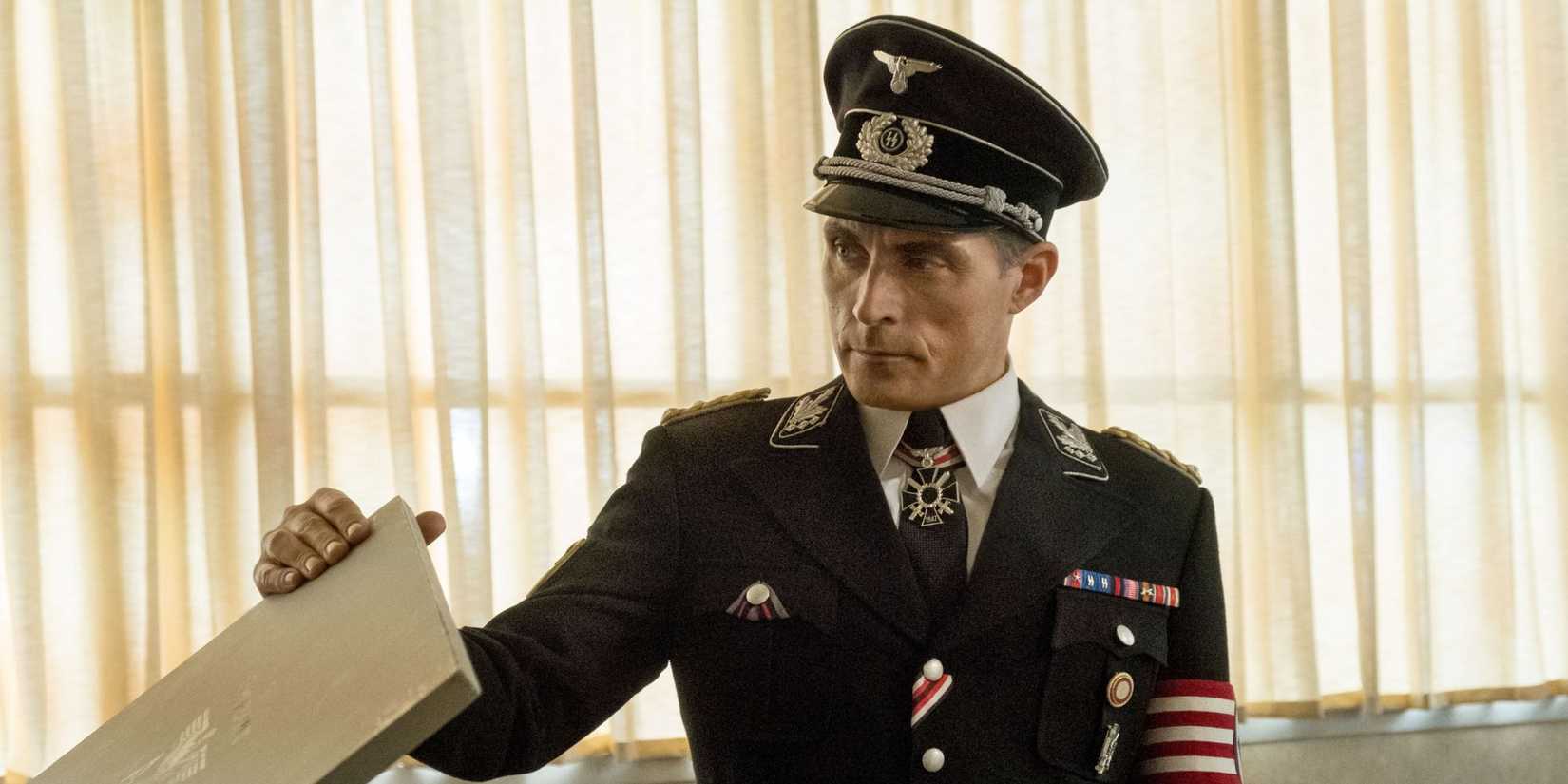
The Man in the High Castle imagines an alternate reality where Nazi Germany and Imperial Japan win World War II, dividing the United States between them. By 1962, the East Coast is controlled by the Nazis, the West Coast is occupied by Japan, and the middle of the country exists as unstable Neutral Zones filled with fugitives and resistance groups. When resistance fighters come across mysterious films depicting an alternate reality where the United States actually won the war, the fascist regimes launch a massive manhunt to destroy the films.
Without a doubt, fascist powers are inherently evil. However, The Man in the High Castle provocatively explores the individuals living under these regimes rather than focusing solely on the system itself. Characters like the American-born but Japanese-culture-assimilated resistance fighter Juliana Crain (Alexa Davalos) and the pacifist Japanese trade minister Nobusuke Tagomi (Cary-Hiroyuki Tagawa) reveal the nuances of living in this alternate universe.
‘The Handmaid’s Tale’ (2017–2025)

Set in the dystopian republic of Gilead, The Handmaid’s Tale follows June Osborne (Elisabeth Moss), a woman stripped of her freedom after a religious authoritarian regime seizes control of the United States. With fertility rates collapsing worldwide, fertile women are forced into servitude as “Handmaids,” assigned to bear children for powerful officials. Renamed Offred, June struggles to survive a brutal society that treats women as property while desperately holding onto hope of reuniting with her husband and daughter.
Reproductive rights remain a pressing issue worldwide, with lawmakers dictating deeply personal matters such as abortion and Planned Parenthood. The Handmaid’s Tale reimagines these anxieties to terrifying yet believable extremes, where women are only seen from their capacity to bear children rather than their minds. The series also shows how class determines how women are treated. High-ranking women married to commanders do not face the same repercussions as the Handmaids, proving that women’s rights are never experienced equally across different social classes.
‘Dark Matter’ (2024–Present)
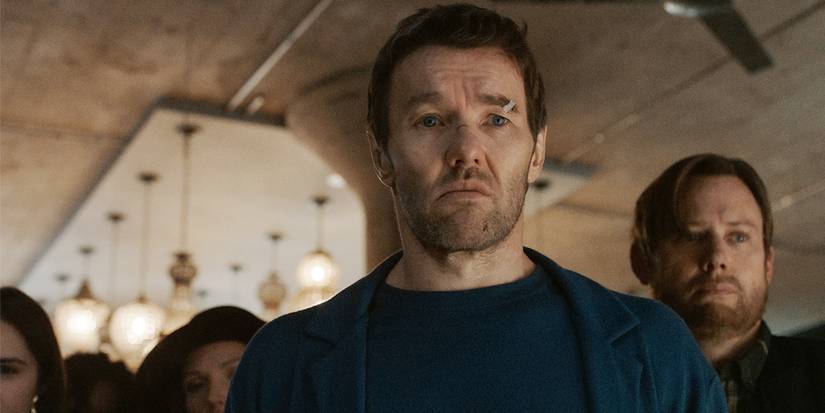
Rule number one of sci-fi: never mess with alternate realities. Dark Matter follows Jason Dessen (Joel Edgerton), a genius yet humble Chicago physics professor living a quiet family life with his wife and son. His world changes overnight when he is abducted and wakes up in an alternate reality where he chooses scientific ambition over family and becomes a celebrated scientist. There, he discovers that another version of himself created technology capable of traveling between parallel universes.
Dark Matter explores the theory of superposition through a parallel-universe story centered on “the Box,” a quantum gateway connecting countless alternate realities. While one version of Jason abandons the idea, his alternate counterpart successfully builds the machine, though at a moral cost. Sometimes, the pursuit of science is worth questioning, especially when it begins to cross ethical boundaries. Each jump across these realities destabilizes reality itself, threatening the potential collapse of the universe.
‘Silo’ (2023–Present)
In Silo, set on a desolate Earth where stepping outside could mean instant death, the last remnants of humanity have been herded into one massive underground silo. Nobody knows exactly when or why the silo was built, but questioning it is forbidden. To keep the silo functioning, its inhabitants are divided into three main classes: the Upper Levels are reserved for bureaucratic elites, the Middle Levels for ordinary workers and businesses, and the Down Deep for mechanics, engineers, and laborers.
Ironically, the people of the Down Deep are the literal heartbeat of the silo. Yet despite performing the most grueling work, they are often looked down upon and rarely given the chance to rise to higher levels — something that resonates with actual workers in real life. However, in this society, questioning authority leads to grave consequences. Anyone who dares challenge the system is sent outside to “clean” the exterior cameras — never to return alive.
‘3 Body Problem’ (2024–Present)

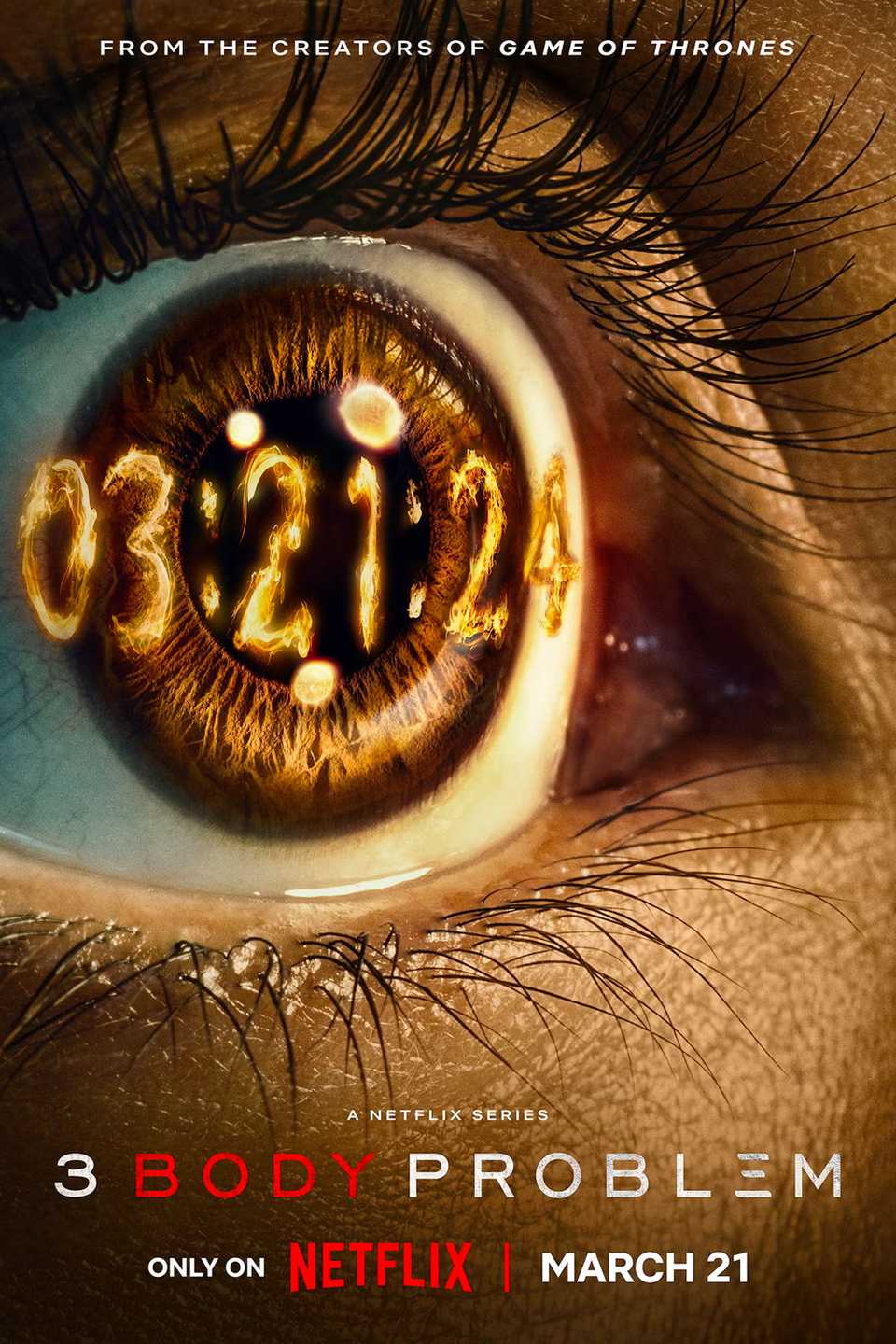
3 Body Problem is what happens when physics, aliens, and politics collide into the ultimate hard sci-fi experience. Spanning multiple timelines, the story begins during China’s Cultural Revolution, when a young astrophysicist branded a political dissident becomes involved in a secret military radio project. Decades later, scientists around the world begin mysteriously taking their own lives, while a nanotechnology expert starts seeing an unexplained countdown visible only to him.
The mystery behind the countdown drives the momentum of 3 Body Problem, but its scientific foundation is what makes the series especially compelling. The story draws inspiration from the real-life “three-body problem,” which explores how difficult it is to predict the movement of three massive celestial bodies, such as stars or planets. In the series, an alien civilization orbiting three suns faces extreme and unpredictable environmental disasters, turning their world into a cycle of apocalyptic destruction, forcing them to retreat to Earth.

You must be logged in to post a comment Login