Entertainment
7 War Shows We Thought Would Be the Next ‘Band of Brothers’

Television has always been drawn to war stories, especially those filled with action and drama. What makes them even more addictive is the reminder that these events were real and not so distant in history. Among these shows, Band of Brothers remains unbeatable in the list of war shows.
Created by Steven Spielberg and Tom Hanks, the series not only showed the reality of the army’s first paratrooper regiment, but also the clashing personalities involved. Still, Band of Brothers is only one example of many war dramas produced for television. With that in mind, here are the war shows we thought would be the next Band of Brothers.
‘The Pacific’ (2010)


No other miniseries is more similar to Band of Brothers than The Pacific. Another collaboration helmed by Hanks and Spielberg, with the addition of Gary Goetzman. The Pacific goes across the seas, following the United States Marine Corps in the Pacific Theater of Operations. Instead of focusing on just one regiment, The Pacific follows several members of the Marines of different regiments. From Iwo Jima to Guadalcanal, the war against Japanese forces literally transcends the oceans.
With many of the battles taking place on islands, audiences may be reminded of the visuals comparable to Saving Private Ryan. However, instead of the adrenaline of the first hit, The Pacific takes even more time for a more immersive experience, truly plunging audiences into the middle of nowhere, war-torn Pacific. The miniseries isn’t here to glorify war. In retrospect, it emphasizes the horrors of what these regular men had to endure. No matter what rank or regiment they are in, these men are molded by the bloodshed they’ve witnessed away from home.
‘Masters of the Air’ (2024)
Spielberg and Hanks have taken viewers everywhere with their war-related projects. From the ground to the sea, this time, they bring audiences high into the skies. Set during German-occupied Europe, Masters of the Air follows best friends and U.S. Army Air Forces bomber pilots, Majors Gale “Buck” Cleven (Austin Butler) and John “Bucky” Egan (Callum Turner), stationed with the 100th Bomb Group in England, flying B-17 bombers. Together, they take part in a death-defying offensive against German fighters.
Unlike the grounded camaraderies of foot soldiers or the collective disassociation from home at sea, serving in the air force is a truly isolating experience. True to its title, Masters of the Air presents the crème de la crème of aerial warfare. After all, they are masters of their B-17 planes. The risk is even greater since bomber crews face higher casualty rates. Although these men fly alongside their brothers in war, they remain alone in a metal contraption, waiting to attack or be attacked.
‘Birdsong’ (2012)

All’s not quite fair in love and war. Although not as deadly, romantic affairs can be just as tumultuous. Birdsong follows Stephen Wraysford (Eddie Redmayne), who’s caught up in both World War I and the memories of a pre-war affair with Isabelle Azaire (Clémence Poésy). As he tries to survive in the trench warfare alongside Royal Engineers tunnellers, he finds solace in his army companion. But nothing during this period is guaranteed. Soon enough, Stephen will learn that life after war isn’t the beacon of sunlight he had hoped for.
War is often associated with guns and explosions. Meanwhile, Birdsong presents a strikingly different reality of war. Those who have watched Peaky Blinders and are familiar with Tommy Shelby’s past as a tunneller will recognize the role. It is dark, claustrophobic, and, if they’re not careful, suffocating. Although the illicit romance plays a significant emotional role in the series, it is the surprising brotherhood forged during the Battle of the Somme that becomes the series’ true core.
‘Our World War’ (2014)

In war, soldiers don’t go hard — they go ham. Our World War is based on three true stories of British soldiers fighting in World War 1. From early clashes at Mons to the formation of a Pals battalion from Manchester, to the later use of tanks in battles like Amiens, Our World War captures the different stages of war. While the action is something straight out of a movie, the events are very real and mortifying.
Utilizing modern camera techniques like bodycams and overhead filming, Our World War has the aesthetic of a current action thriller. Top that off with an equally contemporary soundtrack from PJ Harvey, and the series carries a fictional, almost too brutal to be true, feel. But don’t be fooled by its style. At its core, it is a stylized documentary, much like Band of Brothers. The modern approach is meant to show that the World Wars are not as distant from today as they may seem.
‘Generation Kill’ (2008)
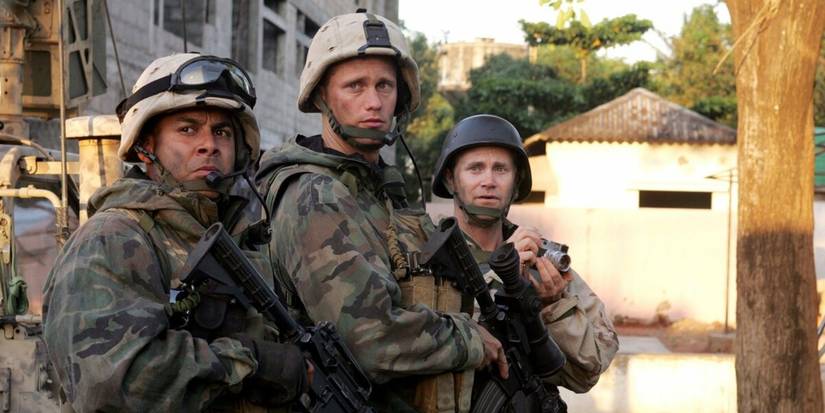
The war is the last place to find humor. But if it works as a coping mechanism, well, no harm to that. Generation Kill tracks a Rolling Stone reporter who is caught up with the 1st Recon Marines during the first wave of the American-led assault on Baghdad in 2003. Through his eyes, the series shows the Battalion’s role in the invasion of Iraq. The soldiers might have the guts to go into battle, but in actuality, they’re a ragtag team of self-deprecating misfits.
Audiences are familiar with war battles, but the day-to-day reality of military life is rarely portrayed. Generation Kill provides an authentic look into Marine Recon units when they’re out of uniform. Considering that war is a hypermasculine environment, the show portrays these aggressive personalities, which are a product of the harsh conditions that are merciless against them. More importantly, the boredom of waiting for a battle is the main theme in Generation Kill, which affects how a brotherhood is affected by bursts of violence and causing mental instability.
Gallipoli (2015)

While most war depictions focus on battles between major Axis and Allied powers, they rarely show the supporting units involved. In the cast of Gallipoli, the story follows the ANZAC (Australian and New Zealand Army Corps) in the Gallipoli Peninsula of Turkey. The miniseries follows 17-year-old Thomas “Tolly” Johnson (Kodi Smit-McPhee), who lies about his age to enlist alongside his brother Bevan (Harry Greenwood), ultimately finding himself on the front lines of Gallipoli.
On top of exploring an overlooked part of war history, Gallipoli delivers a brutal portrayal of army life that calls patriotism into question. At the end of the day, these are ordinary men assigned to do their duty. They’re not mythic heroes, just young soldiers leaving their families behind to serve their country, whatever that meant at the time. What’s even more gut-wrenching is the sense of institutional betrayal, as seen from the military mismanagement that marked the Gallipoli campaign as one of the most disastrous during World War I.
‘Home Fires’ (2015–2016)
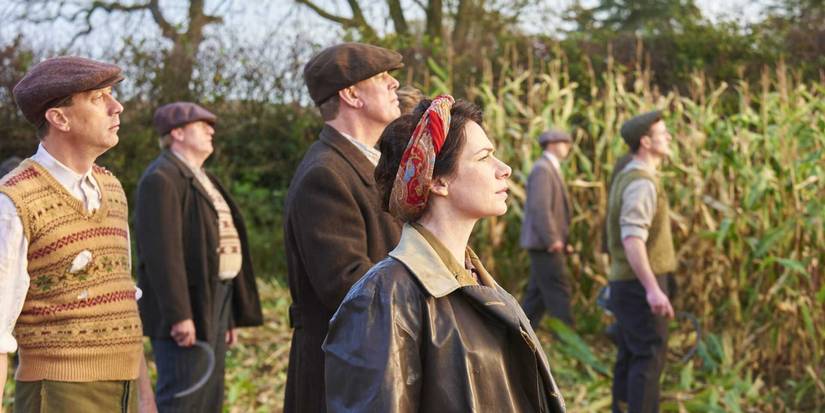
It’s always brotherhood in battle. But far away from enemy lines, the women of Home Fires find sisterhood in each other as they await their loved ones to return home. The series follows women in a rural Cheshire community as World War II changes their lives. Led by Frances Barden, the Women’s Institute becomes more egalitarian while supporting wartime efforts like food production and civil defense. As the war separates families, the women encounter abuse and losses of their own.
The message behind Home Fires is straightforward: behind every man is a woman, even in war. On a broader scale, the series shows women taking initiative, organizing community support efforts, and building air raid shelters. On a more personal level, they become the emotional backbone for their male counterparts, enduring hardship and protecting loved ones from the dangers of war. If that’s enough, they still have to find their own footing, including questions of identity and sexuality.
You must be logged in to post a comment Login