Entertainment
8 Drama Shows I Knew Would Be Masterpieces After the First 10 Minutes

Since television is a way to tell an ongoing story across dozens – or even hundreds – of episodes, and across multiple years, it’s possible to find certain shows that ended up being great, but took some time to find their footing. You could argue Better Call Saul started off good, but took a while to become great, and if you go into sitcom territory, you can find tons of shows where the first season was one of the weaker – or even weakest – ones (like Seinfeld, The Office, and arguably The Simpsons).
But to stick to the drama side of things, here are some shows that inspired confidence right out of the gate. Even more specifically than great pilots, these shows all had great opening scenes, which means that some opening episodes that end with a bang – like The Shield’s – might not necessarily be mentioned here. If a show had an instantly great hook, though, or opened in a way that, in hindsight, feels like a summation of the entire series, then it might well be mentioned below.
‘The Wire’ (2002–2008)


Admittedly, The Wire is one of those shows that gets better as it goes along, mostly since it takes a while to get the hang of what the whole show’s going for. So it’s less that The Wire took some time to find its footing, and more that it might take you some time to find your footing, because Season 1 throws you into the deep end, and some catch-up is required before things start truly hitting and resonating.
But the opening episode is still strong, and it begins with a conversation that really sets the tone going forward, with McNulty (Dominic West) talking to someone who witnessed a murder, but in a very different way to most crime/police procedurals. It instantly feels grounded, the acting is great straight away, and the dialogue is immediately compelling and easy to appreciate, so you feel confident early on that you’re in good hands (and, given how great the rest of the show is, it turns out you really were).
‘Game of Thrones’ (2011–2019)

Say what you want about the final season, but for a while, Game of Thrones was a masterful drama series that also functioned as a fantasy/action/adventure series, albeit being all those things in a very dark way. When it had source material to rely on, it was a great adaptation, and problems started to emerge when Game of Thrones overtook most of the material found in the Song of Ice and Fire series.
But to focus on the good, the opening scene of Game of Thrones sets the stage well, since viewers are introduced to one of the main threats going forward (the White Walkers), and the tone is set by having some characters who feel like they could be important to die straight away. It’s also a brutal and eerie prologue, cluing you in to the idea, early on, that this isn’t exactly going to be a pleasant or “fun for the whole family” sort of fantasy story, by any means.
‘Six Feet Under’ (2001–2005)

Death is constant throughout Six Feet Under, occasionally for the main characters, but often for side/one-off characters. A death is seen at the start of almost every episode, which is fitting, considering the show’s setting is mostly around a funeral home, and the first episode is no exception. Here, though, it’s the death of the patriarch of the family who runs the funeral home who dies quite suddenly: Nathaniel Fisher Sr. (Richard Jenkins).
So, everyone else is thrown into chaos, and things shift, and continue to do so throughout Six Feet Under‘s five largely great seasons. There’s stuff here about the absurdity of life and death, a great deal of tragedy, and some dark comedy, too, all of it established right in the opening moments of the show, and the events here really do reverberate and echo for dozens of episodes to come.
‘Succession’ (2018–2023)

Some people will say that Succession starts off a little wonky, but some people are wrong. Right from the jump, the characters here are flawed, pitiful, cringe-inducing, and yet still compelling all at once. The show’s unique style of humor is found very early on; it establishes its visual style straight away; the writing (though it perhaps got even better) is already strong; and the impressive music is here, too (albeit a little pervasive; they used it slightly more sparingly later on).
As for the opening of the series premiere? “Celebration” sees Logan (Brian Cox) peeing on a carpet in the middle of the night, and then the next scene is Kendall (Jeremy Strong) being as embarrassing as ever, trying to hype himself up for a meeting by rapping along to music in the back of a car. It’s chaotic, strange, uncomfortable, and kind of funny straight away, and these are all constants throughout the rest of Succession.
‘Lost’ (2004–2010)
Without a doubt, the pilot episode of Lost is one of the all-time greatest. It’s cinematic in a way that no network drama had ever really been before then, and honestly, the scope here trumps most of the HBO-level shows that were airing around this time, too. It’s a show that’s initially about a plane crash on a very strange island, and it kicks off right in the thick of it, with the aftermath of the crash itself.
The opening sequence follows Jack (Matthew Fox), who’s the closest thing Lost has to a main character, as he realizes what’s happened and does what he can – in typical Jack fashion – to take charge and save people from the wreckage. You get small insights into various other important characters, all before the pilot episode jumps back to cover a little more by way of events leading up to the crash. It’s immediately engrossing and intense stuff, and makes Lost exciting straight away. Also, one of the very first shots being mirrored at the very end of the series is neat (if you know, you know).
‘Buffy the Vampire Slayer’ (1997–2003)

Okay, Buffy the Vampire Slayer is a bit of a strange example to include here, since “Welcome to the Hellmouth” is a good opening episode, but maybe not a great one. It does what it needs to when it comes to introducing all the main characters, and you get the kind of humor, campy horror, and character interactions here you can expect going forward… but it’s the start of the episode that hints at the greatness to come.
Buffy the Vampire Slayer is a show that’s all about subversion and playing with conventions, and so opening with a scene that seems to put a young woman in danger, only to have her actually be the “monster”, so to speak, transforming into a vampire and killing her male accomplice? It’s Buffy the Vampire Slayer in a nutshell, even if it doesn’t feature the titular character straight away (though Darla, played by Julie Benz, is ultimately fairly important for Buffy the Vampire Slayer, and then an even more vital piece of Angel later on).
‘The Sopranos’ (1999–2007)


Unlike some of the other shows mentioned here, The Sopranos doesn’t have an episode that entirely sets up the show going forward. There are some oddities here with the soundtrack, for example, and the voiceover/narration, which isn’t really a thing going forward. But thematically, The Sopranos lays its cards on the table straight away, and the ever-important dynamic between Tony (James Gandolfini) and his therapist, Dr. Melfi (Lorraine Bracco) is also instantly there.
The opening scene of The Sopranos also feels a little odd with its pacing, making viewers sit in silence with Tony as he waits for his first appointment, and then things bounce around more emotionally when he starts to talk about his fairly strange life, and even stranger personal problems. The Sopranos changes a bit after this, and finds its voice to some extent later on in an even stronger way, but the first episode is still fantastic, and establishes enough – with sufficient confidence – to make you feel like you’re in for something pretty great.
‘Breaking Bad’ (2008–2013)
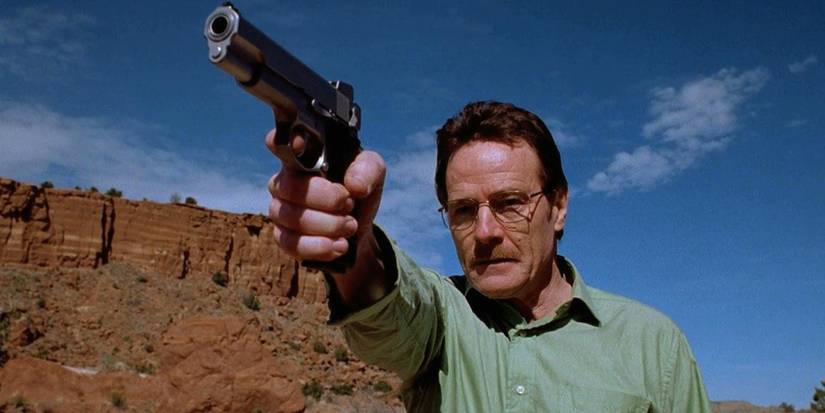
The pilot for Lost might be better overall, but if you’re talking about the first 5 or 10 minutes of a TV show, then nothing trumps Breaking Bad. It’s instantly chaotic, with Walter White (Bryan Cranston) in a wild situation that one expects the whole first season to build up to. But no, Breaking Bad is fast-paced enough that once it does flash back, it really doesn’t take long to cover how things got to where they were.
And the chaos here is controlled, and in hindsight, Walt’s whole character – and some of his flaws – are evident immediately. It’s impossible to watch the opening scene here without instantly wanting to know what happened before everything went to hell, and doing that on top of setting up a complex main character, establishing a pace, and also introducing a bold visual style, all in minutes? Yep, Breaking Bad starts with the “bangiest” of bangs, and it’s remarkable that the show itself somehow gets even better from here.

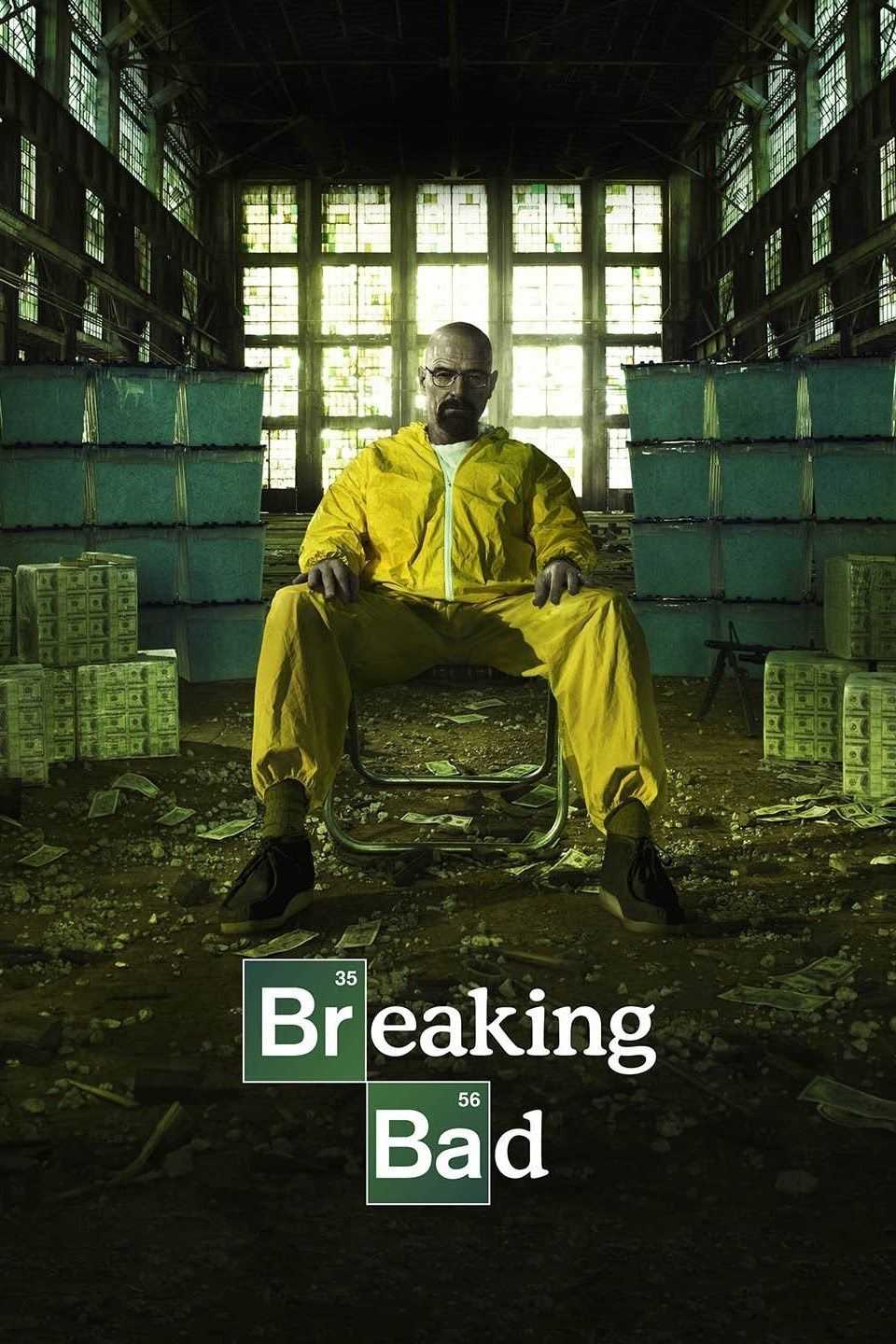
Breaking Bad
- Release Date
-
2008 – 2013-00-00
- Network
-
AMC
- Showrunner
-
Vince Gilligan
- Directors
-
Vince Gilligan, Michelle Maclaren
You must be logged in to post a comment Login