Entertainment
8 Great Books Where Every Chapter Is Perfect

Since books have been a thing for so long, and many books themselves are also so long, it can be hard to fully “catch up” with the art form overall the way you might almost be able to do with movies or video games. Okay, emphasis on the “almost” there, because there remain overwhelming numbers of those things, too, and they’re still getting pumped out constantly, so falling behind further and further is inevitable.
Returning to books, though, you’ve got absolute must-read classics that were published centuries ago, and people do still read, and so great books are still being published. What follows is a rundown of some arguably perfect books, selected here because they’re incredibly consistent and really don’t have any downtime, even for just a chapter or so. They’re not automatically the very best books ever written, since trying to decide on that is overwhelming, but they’re a great selection, and all definitely hold up as worthy of one’s time and attention.
8
‘The Shining’ (1977)


The thing about The Shining is that it might not be the absolute greatest Stephen King novel, since there is something to be said about how remarkable his epics are, but the length of books like IT, The Stand, and Under the Dome does lead to some (usually minor) flaws alongside all the good stuff. So, here’s The Shining, and it’s here because it’s consistently great to, like, a greater extent than some of his impressively lengthy works.
There aren’t many characters in this one, and the setting is also decently confined, because The Shining famously involves a family of three staying at a hotel during the off-season, and it is quite the odd and/or haunted hotel. The father already had personal demons that become harder to control as more time is spent in the hotel, and there’s equally unsettling psychological horror, as a result, alongside all the supernatural occurrences. It’s pretty much perfect horror, and one of the hardest-to-fault (or even nitpick) Stephen King books.
7
‘The Curious Incident of the Dog in the Night-Time’ (2003)


Thanks to it not being too long (unlike some of the books that’ll be mentioned in a bit), and also being incredibly engaging, it’s pretty easy to blast through The Curious Incident of the Dog in the Night-Time in just a couple of sittings. Narratively, it’s about a teenage boy who has a distinctive outlook on the world, and he sets his sights on trying to find out the truth behind the death of a neighborhood dog.
There’s some other stuff alongside that, and then the side of The Curious Incident of the Dog in the Night-Time that’s a bit harder to explain and praise is what it does stylistically. It’s a creatively presented and narrated story, and then the story on its own is still fairly interesting. But the execution really makes it stand out as one of the best mystery novels of the century so far.
6
‘Say Nothing: A True Story of Murder and Memory in Northern Ireland’ (2018)

Like The Curious Incident of the Dog in the Night-Time, Say Nothing: A True Story of Murder and Memory in Northern Ireland has a long title that does a pretty good job of letting you know what you’re in for. The “True Story” part also lays out how this is a work of non-fiction, but it’s paced and written in a way that makes it honestly feel more gripping than a good many actual thrillers out there.
Say Nothing explains the whole wider conflict of the Troubles extremely well, and with great clarity, all the while keeping things interesting on a more personal level.
The central thing that the whole book’s built around is the disappearance of a woman named Jean McConville in 1972, with the fallout and lead-up to that event explored, and then it’s all a way to explore more things regarding the Troubles. Say Nothing explains the whole wider conflict of the Troubles extremely well, and with great clarity, all the while keeping things interesting on a more personal level, with the central figures explored/depicted. It does a lot rather effortlessly, in other words, and doesn’t lose its way at any point, not even for a page.
5
‘Dune’ (1965)

Some might take issue with Dune being here, owing to some of the epic novel’s earlier chapters being slow, compared to how the book eventually feels, yet that world-building early on is excellent, and just as engrossing if you’re okay with reading something that’s not 100% plot 100% of the time. In any event, all the things that the novel spends time on early on do prove important, if not by the end of Dune (1965), then at some point in one of the several sequel books it got (those written by Frank Herbert, which are largely worth exploring, too).
There are a fair few factions/groups of characters here, but broadly, Dune involves conflict being fought over a dangerous but valuable planet in the far future. That’s really simplifying things a bit too much, with Dune being so monumental a classic, and deservedly so, for all the reasons that so many people have already said at this point, 60+ years on from the book’s publication.
4
‘Libra’ (1988)

It doesn’t sound like much of a compliment to call a book confounding and stressful, and those being the main emotions that Libra inspires could understandably influence someone to stay pretty darn far away from it. The way it’s stressful and perplexing, though, makes it something special, and it feels like a lot more than just a book about a conspiracy because of how it explores the nature of conspiracies and beliefs in them.
And then it also tackles uncertainty within history, and the overwhelming sensation of trying to stay alive – and keep up with things – in the second half of the 20th century, and reading Libra now, in the 21st century, so many of those fears are more intense. It was written nearly 40 years ago, and was mostly focused on a historical event that happened a quarter of a century before its publication, yet Libra feels undeniably timeless.
3
‘War and Peace’ (1869)

War and Peace is famously long, to the point where that’s all that’s known about it sometimes. And there, the length has just been mentioned. So maybe that supports the idea or perpetuates it, which was a careless thing to do on this writer’s part. Then again, it’s hard to convince someone to read something that’s like 1500 pages long in about 150 words, and then if you also have to summarize what the novel’s about… eh, forget it.
All that can be said is that War and Peace is so much more than “just” a famously (or notoriously?) long book. It is genuinely absorbing for all those many, many pages, and while it’s hard to commit to something like this initially, dedicating oneself to the whole epic starts to feel rewarding much earlier than one might expect. This book really does have a bit of everything, and it’s hard to accurately convey/describe just how perfectly written it is throughout.
2
‘The Lord of the Rings’ (1954–1955)
Well, you know. The Lord of the Rings. It’s one huge novel, not quite as long as War and Peace, admittedly, but also not far off. And The Lord of the Rings is more than just the core novel, since it’s connected to The Hobbit, The Silmarillion, and other stories within J.R.R. Tolkien’s legendarium, so quite a bit of time is needed, on your part, if you want to fully explore and understand Middle-earth.
But with this one huge novel, you still get so much. The Lord of the Rings is incredibly rewarding, starting out amazing and then getting better and better (or at least more emotionally engrossing) as it goes along. Like Dune, it has its slower chapters early on, but thankfully, the world-building here is also about as good as world-building gets. Further, if you’re worried about sitting down to read about 1000 pages of text, there is at least one fantastic audiobook recording of the entirety of The Lord of the Rings, which is another great way to experience the entire epic.
1
‘Different Seasons’ (1982)

To go back to the Stephen King well, Different Seasons stands out from The Shining and some of the other honorably mentioned King books because it’s actually a collection of novellas. There are four here, and they’re all fantastic, so the book is enormously consistent. Sure, “The Breathing Method” doesn’t have quite the same impact as the first three, but it is nonetheless a great novella to close the whole collection on, and then the fact it’s the shortest might also make it stand out.
As for the others, “Apt Pupil” is surprisingly great, and then with the other two, the greatness is less surprising, since “Rita Hayworth and Shawshank Redemption” is best-known for being the source material for The Shawshank Redemption, and “The Body” served the same purpose for Stand by Me. Great movies, obviously, and great original stories, too. This whole collection showcases King at his best, and then it stands out further for being (compared to his other early novels, novellas, and short stories) less horror-heavy, albeit some stories here still have some creepy moments.

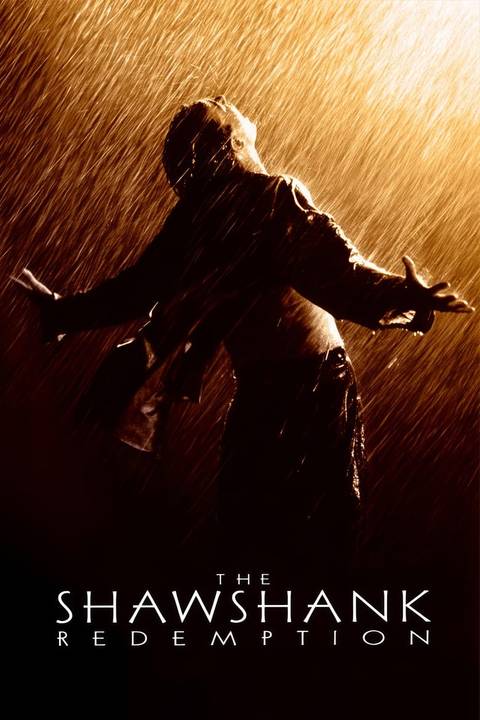
The Shawshank Redemption
- Release Date
-
September 23, 1994
- Runtime
-
142 minutes
- Director
-
Frank Darabont
- Writers
-
Frank Darabont
You must be logged in to post a comment Login