Entertainment
8 Greatest Remakes of Classic Horror Movies

Audiences have ubiquitously become suspicious of “remakes” of classic films. This is generally because the motivation for remaking an iconic moving picture seems solely financial in nature. Studios are aware that “name recognition” of a film or franchise equals guaranteed revenue, which puts large Cheshire Cat grins on the faces of the execs. But then, every once in a while, a remake of a classic comes along that is equal to, or, heaven forfend, even exceeds the original.
While some resplendent remakes didn’t make this list, like Alexandre Aja‘s The Hills Have Eyes (a remake of the same name) and both Werner Herzog’s Nosferatu the Vampyre and Robert Eggers’ Nosferatu (new renditions of the 1922 German hit Nosferatu), the films detailed here are the crème of the horror crop. The winners include zesty entries like The Blob and genuinely terrifying additions such as Evil Dead. All in all, these eight films deviously demonstrate that classics can sometimes use a jaunty, haunting update — when, of course, the material is placed within capable hands.
8
‘Evil Dead’ (2013)


Sam Raimi’s original 1981 cult favorite film, The Evil Dead, was quite ground-(and cabin floorboard)-breaking. Featuring Bruce Campbell in his truly career-defining role of Ashley “Ash” J. Williams, this horror-comedy was innovative in just about every department; scary sequences, gross-out gore, campy humor, and a uniquely intimate vibe all around. The remake, Evil Dead, released in 2013, eschewed the majority of the first film’s lauded attributes and focused almost solely on one thing: pure terror. The result, which many viewers agreed on, is one of the scarier movies of the 21st century.
This film focuses on Mia (Jane Levy), a girl who has had a nearly lifelong struggle with addiction. She assembles her brother, David (Shiloh Fernandez), and friends at a very remote cabin with the goal of finally kicking her narcotics habit and getting clean. The only problem is that a demonic entity is released there as well, and everyone’s life and soul are in mortal, eternal jeopardy. Huge applause to the committed cast for bringing this to life, but perhaps an even bigger ovation goes out to director/co-writer Fede Alvarez and the FX team, who created some of the most chilling, and flat-out evil, visuals to come around in a long time.
7
‘The Blob’ (1988)

For a film reliant on special effects, the 1958 original version of The Blob was pretty good. Yes, when viewed through a modern lens, the titular goo is fairly laughable now, but for back then, it actually scared people. So, when Chuck Russell tackled this film in 1988, the expectations were naturally a lot higher, in terms of what this amorphous thing was going to look like and just how frightening it could potentially be. As audiences soon found out, The Blob exceeded expectations and produced some of the most memorable (and revolting) body horror sequences of the 80s.
The tale is centered on the inhabitants of a small town where a “meteor” crashes and releases a little jelly-like organism. The thing is voracious though, and quickly begins snacking on the locals. The genius aspect of this (the same as in the original) is that the blob doesn’t seem to have a limit to its size. The more it consumes, the larger it gets (like the national debt). This concept, when applied to the 80s, could be a metaphor for rampant consumerism and greed (and the duplicity of the government). Nevertheless, this film succeeds because of the FX team’s stellar depiction of not only the gross blob, but in how it ingests its victims. The cast is great too, with future Entourage louche Kevin Dillon, as the bad boy Brian Flagg, and future Saw star Shawnee Smith, as the prim and proper cheerleader Meg Penny. They are forced to team up and figure out a way to defeat this vile thing, when the “adults” don’t seem to have a clue. The Blob is a great 80s horror flick, and definitely a new classic.
6
‘Invasion of the Body Snatchers’ (1978)

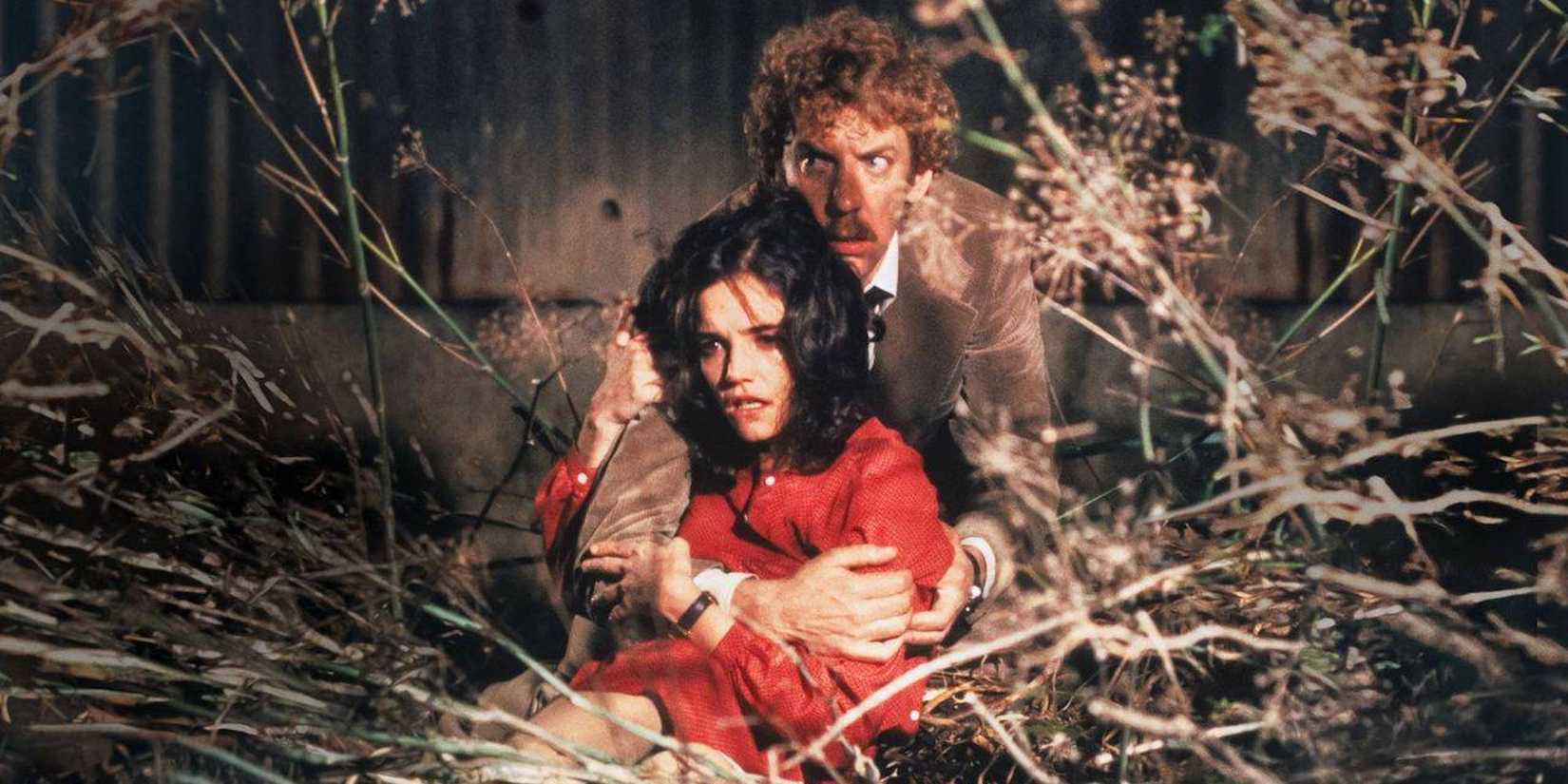
Invasion of the Body Snatchers has gone through a variety of mediums and intriguing incarnations. It originated in literary form, as a novel by Jack Finney, called The Body Snatchers. It then made the leap to the silver screen in 1956, in a film adaptation by Don Siegel. This movie is nothing to thumb one’s nose at; it was very well-done, capturing the stark paranoia of the Cold War/McCarthyism period in the U.S. And then, 22 years later, Philip Kaufman took a stab at the sci-fi-horror material and delivered one of the absolute best alien movies of all time.
The eerily prescient tale follows a San Francisco health inspector, Matthew Bennell (Donald Sutherland, who will forever be remembered for the face he makes at the end of this movie), and his co-worker, Elizabeth Driscoll (Brooke Adams, who is on the receiving end of Donny’s scream-face). They both notice that people in their inner circle and beyond are acting rather…odd. This may be because alien pods came down from space, gestated, grew into replicas of the people in town, and now are on a lethal quest to eliminate the unassimilated. Cashing in on the widespread isolation and governmental distrust that many people felt during this time in America, Snatchers really made the most of the moment. Indeed, the filmmakers truly had their thumbs on the pulse of the national movie-going audience; it’s almost as if they were in their heads…and bodies…
5
‘Suspiria’ (2018)

There is absolutely no argument that the original 1977 Dario Argento film Suspiria is a true horror classic. It’s visually sumptuous, thematically striking, and laden with great performances (it’s arguably Argento’s finest film). However, the spin that Luca Guadagnino (also Italian, believe it or not) put on this story is truly dynamic; he imbued the core tale with even more depth and metaphorical magnitude. 2018’s Suspiria is a film ostensibly about witches and dance, but it’s also a beautifully grotesque ballet in its own right, brimming with superbly choreographed sequences and horrifying revelations.
Susie (Dakota Johnson) is an American dancer who has just enrolled in a Berlin dance school. The year is 1977 (the same year as Argento’s masterpiece) and the country of Germany is still struggling with post-War anxieties and its sense of international identity. Guadagnino draws parallels between the coven of witches that run the dance academy (headed by the always intriguingly sinewy Tilda Swinton as Madame Blanc — she’s also cast as an old man and an old witch) and the Nazi regime. The socio-political commentary of the film is extremely well-thought-out, but its sinister sequences of savage sadism and wanton witchcraft are what make it shine (even if the color palette is much more drab than Argento’s bodaciously bold one).
4
‘Bram Stoker’s Dracula’ (1992)

1931’s Dracula certainly set the gold standard for vampire films. As the first licensed rendition of the Bram Stoker novel, it went above and beyond what viewers had seen before in terms of mood, setting, and overall horror. Ergo, when a fresh retelling of the actual book was announced, audiences knew that if it was going to truly succeed, it would need someone quite mighty at the helm. Enter Francis Ford Coppola — a director who knows a thing or two about “family” bonds.
As in the original iteration, the story focuses on a real estate deal, a subsequently obsessed count, a rollicking boat ride, a bizarre British courtship, and finally, an epically cinematic, Romanian finale that will last several lifetimes. Aside from the poor, miscast Keanu Reeves as Jonathan Harker, the rest of the ensemble here delivers sensational performances all around. Winona Ryder as Mina is inspired, as she vacillates from doe-eyed ingénue to hot-blooded temptress. Sir Anthony Hopkins as Van Helsing is fantastic, too, as he brings both gravitas and humor to this storied role. Finally, Gary Oldman as the titular Dracula is a marvel to behold. He’s over the top and somehow subtle at the same time. He’s simultaneously magnetic and repulsive, too. He simply IS Dracula — a very polarizing figure. Ford’s treatment of this Gothic tale is magnificent, as he absolutely does the novel justice, and provides a brilliantly bloody good time.
3
‘The Ring’ (2002)

Never has a week (7 days) been more terrifying. The first film, 1998’s Ringu, directed by Hideo Nakata, is definitely one of the superlative, most terrifying films to come out of Japan. The sheer ingenuity of the plot and simplicity of the ghost (all sans gore) are what make it so impactful. The 2002 remake, directed by Gore Verbinkski, not only maintained the elements that made the original so delicious, but also added a creepy collection of other motifs and shockingly severe visuals that elevate this film to one of the scarier entries in the American horror collection.
The tale, as in the Japanese original, is of a journalist, Rachel Keller (Naomi Watts), whose niece, Katie (Amber Tamblyn), dies in a very odd manner. Rachel not only wants to find out what happened to her deceased relative, but she also really wants to crack this juicy scoop. She eventually uncovers the dark truth that Katie’s death is linked to a videotape that depicts a weird tableau of preterite, folk horror images — including, most importantly, a well (and a devious little girl, Samara — exquisitely played by Daveigh Chase). Well, there you have it. Themes of evolving tech and the horrors that it brings are rife in this lurid work, yet it still always feels quite analog, in the very best, creepiest way. The color palette that Verbinksi employs is one of the most memorable aspects of the film too, as the rich, fecund undertones of the Pacific Northwest are truly felt and absorbed. The bone-chilling images, intense performances, and overall dark beauty of this movie all coalesce to render one of the best film remakes of all time.
2
‘The Thing’ (1982)

Here’s the thing about The Thing. The first “thing,” the monster from another world in the 1951 movie… The Thing from Another World, was a pretty cool achievement in mid-century special effects. The, uh, creature, in the remake is one of the most spectacular displays of practical effects in cinema. John Carpenter’s handling of the material will forever go down in the annals of film history as one of the most creative re-imaginings of a previous (quality) film.
The story follows a team of scientists who were sent to the frosty Antarctic wilds to conduct research and do science things. Soon they encounter a shape-shifting entity that mystifies and confuses as much as it terrifies and kills. No one is safe from this master of facial, body, and vocal disguise, as it assumes all different human features like a charm (and even those of other species, woof woof). It really is a thing of beauty. Carpenter worked with SFX makeup specialist Rob Bottin (who was only 22 at the time) to bring the otherworldly creature to life, and boy, does this thing pop. The mind-blowing effects mixed with a truly complex and layered story — and a phenomenal cast (with Kurt Russell in the lead as R.J. MacReady) — all synchronize to make The Thing a can’t-miss sci-fi horror remake. Similar to Snatchers, themes of eroded identity, surreptitious subterfuge, and a world where no one is actually what they appear are in full (amazing special) effect.
1
‘The Fly’ (1986)

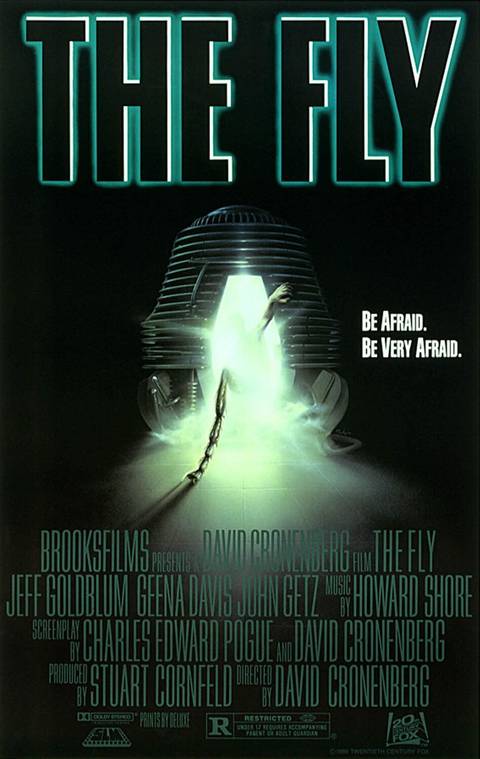
David Cronenberg’s sci-fi body horror/tragic love story, The Fly, is pretty much the epitome of a remake that blows its predecessor out of the water. Essentially every aspect of this film is perfect, from the knockout performances by the two leads, Jeff Goldblum and Geena Davis (and even a great supporting turn by a monkey), to the cleverly designed story, to the unprecedented, out of-this-world practical effects and monstrous makeup.
The original Kurt Neumann 1958 flick followed the same general premise as the updated film: a brilliant, yet overly ambitious scientist devises a way to teleport physical material. Eager to use living subjects (and too impatient to wait for proper clearance/willing human test subjects), Seth Brundle (Goldblum) opts to turn himself into a modern-day Magellan. A little bugger of a bug gets stuck in the portal and voilà: the bilious BrundleFly is born. The fused creature of a housefly and a human being initially looks just like the same old Seth, but eventually the insect DNA begins to manifest, and this really puts a fly in the ointment. What Seth morphs into is a revolting display of what unchecked pride and impetuousness can sadly create. As Seth’s (pre-mutated) love interest, the science journalist Veronica Quaife (Davis), witnesses her new beau’s transformation into the horrific hybrid, she does her best to keep it together — but, jeez, there’s a limit, people. Overall, this film is a terrifying critique of unregulated technology (A.I. developers, we’re looking in your direction). When it comes to remaking classics and then exceeding them, yes, filmmakers of the past, you should “be afraid, be very afraid.”

You must be logged in to post a comment Login