Entertainment
8 Heaviest Movie Trilogies of All Time, Ranked

Certain trilogies might well only get kind of heavy for one movie out of three, often the second… see the original Star Wars trilogy as well as The Dark Knight within its trilogy. It’s naturally a downer to have people get invested in three movies’ worth of story, only to have to all end up feeling quite hopeless, so that’s why the second movie being the heaviest is a little more expected, if you’re even going to have a bleak chapter in the first place.
But it’s not the only way to tackle a movie trilogy, because some feel heavy throughout, or have, at a minimum, two out of three movies being intense and/or heavy-going. The following trilogies can all count themselves among the heaviest in cinema history, with the bunch of them being depressing for different reasons, and depressing within different genres, too.
8
‘Pusher’ (1996–2005)


Nicholas Winding Refn might be more well-known for his 2010s English-language movies, with Drive especially being something of a modern cult classic, but his Pusher trilogy shouldn’t be overlooked. These films are incredibly gritty and down-and-dirty, with 1996’s Pusher feeling particularly grimy and low-budget. That goes some way to helping things feel more realistic, and then narratively, it’s also intense, since it’s about a drug dealer losing a great deal of money, and needing to find a way to get it in time, as he’s otherwise in rather hot water.
Things kept going with each subsequent movie focusing on a different protagonist, as a side character played by Mads Mikkelsen in the first movie was the central character in the second, and then the drug lord behind much of the first movie’s conflict/drama was the central character in the third film. They’re all brutal and downbeat in their own ways, but also quite engaging if you don’t mind movies that make you feel like you need a shower right after finishing them.
7
‘Three Colours’ (1993–1994)


This is a slightly tricky example, since Three Colours is a thematic trilogy, and each one does go for something a bit different tonally, and even different genre-wise. In terms of heaviness, Three Colours: Blue (the first one released) is the most full-on, as it’s an exploration of grief and accompanying feelings of depression, being about a woman navigating life after losing both her husband and daughter very suddenly, in a car accident.
Three Colours: White isn’t as despair-filled, being a bit more comedic, but it’s still something of a psychological drama alongside being a comedy, and not without a dark sense of humor, either. Three Colours: Red is moody again, and maybe a little more mysterious, but ultimately not as heavy-going as Three Colours: Blue. That first film does the heavy-lifting here, though the two movies that follow it (or don’t really follow it, given this trilogy being a thematic one) do still have some darker moments.
6
‘Terrifier’ (2016–2024)

Terrifier probably won’t be a trilogy for long, but for now, it is made up of three movies, and they’re three immensely gory movies, too. That’s kind of Terrifier’s thing, as a series so far: there’s a pretty much unstoppable villain at the center of things, and his whole thing is that he really likes to inflict maximum pain on his victims before killing them, so that’s where all the blood and gore inevitably come in.
There’s also a good deal of emotional and psychological distress he wants to cause certain victims, toying with them in that way before he actually hurts them, and so Terrifier 2 and Terrifier 3 get kind of heavy in that way, on top of all the violence. They are admittedly tongue-in-cheek at times, and not serious or heavy-going dramas in the way most of these other trilogies here are, but there’s a good bit of distress to be found throughout these three movies if you’re not really on board with what they have to offer.
5
‘X’ (2022–2024)

Okay, sorry, it was hard to find heavy-going drama-focused trilogies, so here’s one more trio of horror movies: those belonging to the X trilogy. X (2022) is the first of them, and beyond being pretty savage as far as the violence is concerned, it’s also an oddly sad movie about how miserable it is to get old… once you do get past the kills. It’s not exactly thought-provoking, but it is something.
Pearl (also a 2022 release) is a bit more of a drama and less of a horror movie, and it’s a prequel, laying out the rather somber backstory of the main villain of X, showing who she was when she was younger. Then MaXXXine… well, MaXXXine sort of goes off the deep end, and calling it heavy beyond having some distressingly violent moments would be too much of a stretch, but two out of three ain’t bad and all that.
4
‘The Apu Trilogy’ (1955–1959)
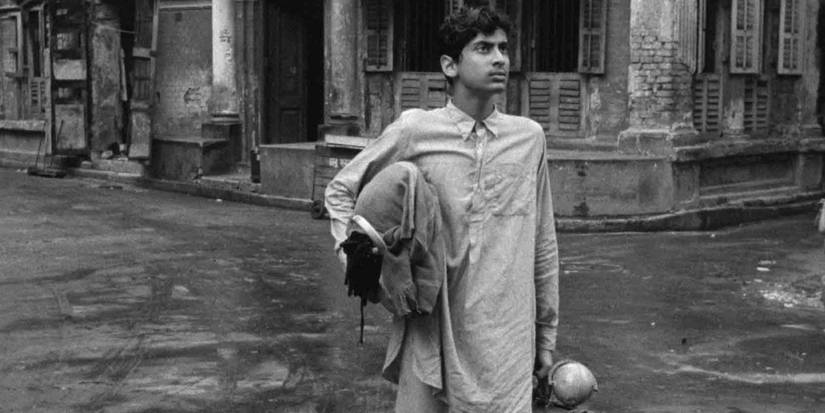
Across three movies, The Apu Trilogy does something that might sound a little similar to what Boyhood did in one movie, but that 2014 film was surprisingly light on drama and narrative, really just being a slice-of-life thing across 12 years. The films in this Indian trilogy, though, are incredibly heavy on drama, and also generally heavy-going, all the while mostly centering on a boy named Apu who grows into a young man by the third and final film, and is played by a total of four different actors across the trilogy.
The first movie, Pather Panchali (1955), has Apu as more of a passive character, since he’s so young, and much of that film is a very emotionally intense family drama. Further hardships happen in Aparajito (1956) and The World of Apu (1959), and while it’s not heavy-going or depressing 100% of the time, it is certainly downbeat stuff for a good chunk of the trilogy.
3
‘The Godfather’ (1972–1990)
Essentially, The Godfather is an epic tragedy in three parts, albeit with only two of those movies being essential to get the point across. The Godfather gets the ball rolling on depicting the downfall of the Corleone crime family, while The Godfather Part II showcases the truly messy and despairing stuff, and makes it feel heavier because much of it’s contrasted with a series of flashbacks that depict the rise of the Corleone empire.
It’s a rise and fall kind of thing, but not in a linear fashion, which sets it apart from other gangster movies about a character’s rise and fall. The Godfather Part III doesn’t mine a great deal of new ground thematically or narratively, but it does have further bleak events happen to the characters who are still standing at that point in the series, so for present purposes, it is still able to count itself as a heavy-going part 3.
2
‘Life of Crime’ (1989–2021)

While Life of Crime is a documentary trilogy, it’s still worth including here because of how immensely heavy-going it gets, and the fact that it’s all genuinely real does undoubtedly add to that feeling. 1989’s One Year in a Life of Crime began the trilogy, and is what you’d expect, based on that title. It got a follow-up almost a decade later (1998’s Life of Crime 2), and then 2021 saw everything get wrapped up in a distressingly definitive manner.
It’s something of an anti-true crime documentary series, since there’s nothing flashy or intentionally entertaining here.
That final film is called Life of Crime, 1984-2020, and can sort of be watched on its own, given that it summarizes what happened throughout that whole span of time, including the first two documentaries. It’s still worthwhile watching the entire thing, though, as something of an anti-true crime documentary, since there’s nothing flashy or intentionally entertaining here, and it’s just about downtrodden people stuck in a hopeless cycle. The Life of Crime documentaries are also a bit like a much darker spin on the Seven Up documentary series, which also checked in with a group of people over a span of several decades.
1
‘The Human Condition’ (1959–1961)
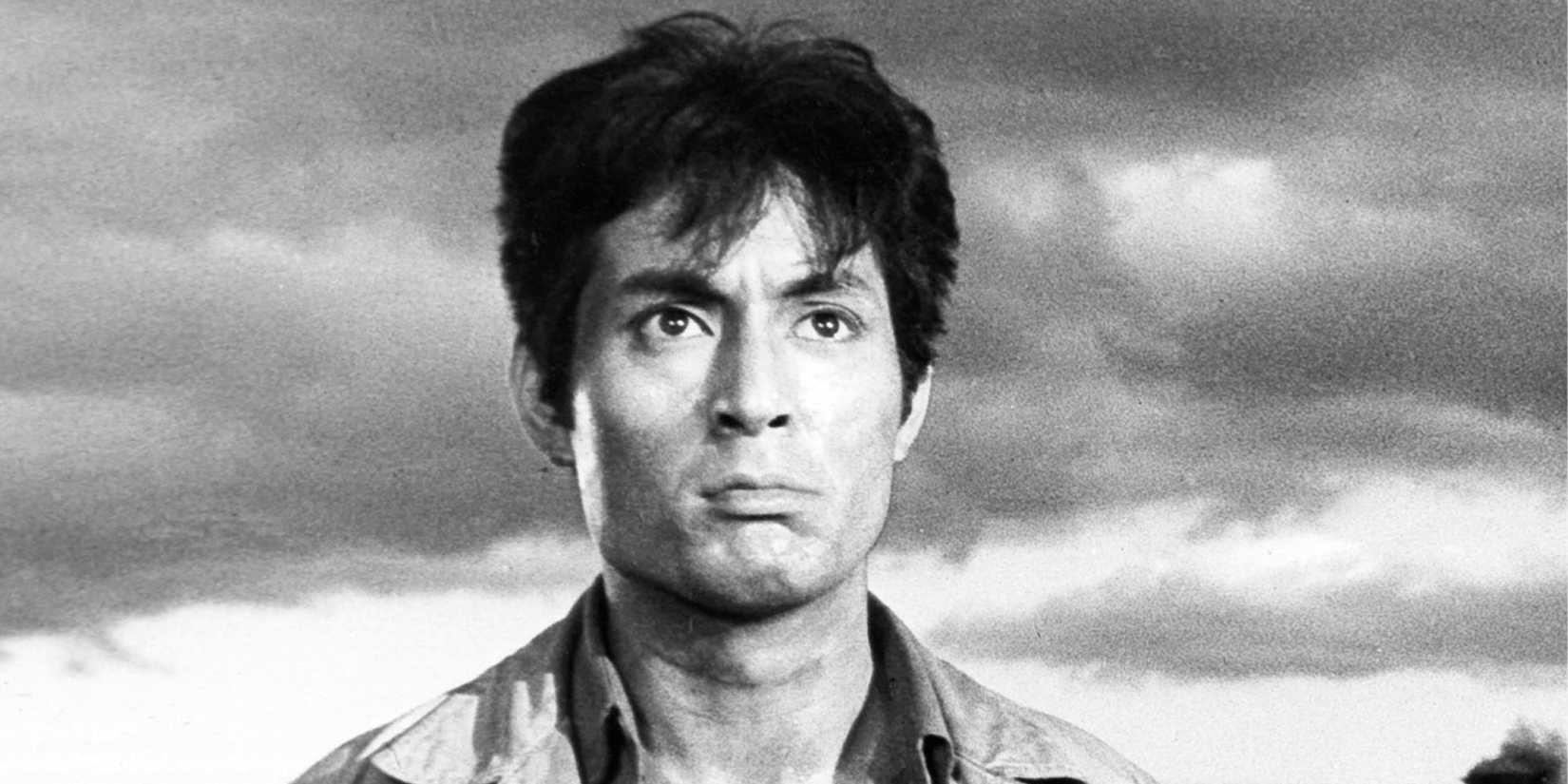
More than earning masterpiece status, The Human Condition is one huge film separated into three parts, with more coherence than a good many other trilogies, owing to how this three-part movie was made and then released (in an overall short span of time, by trilogy standards). You get a huge story told over all three movies, with the first part mostly being about the lead-up to World War II, the second part involving the main character having to fight in it, and the third part being about surviving the immediate aftermath of the conflict.
The protagonist changes a great deal throughout, since he’s put through so much and is initially a pacifist, yet can’t escape some kind of involvement in the war, at a certain point. The Human Condition might well be the best Japanese-made World War II movie, and is up there as a contender for the best World War II movie made anywhere, really. It’s also absolutely grueling, emotionally intense, and unapologetic with the violence it depicts, with all those things – plus its overall length of approximately 10 hours – making it an inevitably difficult (but worthwhile) watch.
You must be logged in to post a comment Login