Entertainment
8 Horror Books That Are 10/10 Masterpieces

Horror literature is not just about frightening stories; it serves as a mirror of humanity’s darkest sides and deepest fears: a fever dream, or a whispered warning from the beyond. The finest works in the genre go beyond mere fright, lingering in our minds and reshaping how we see morality, beauty, and even the safety of our own homes. So it’s no wonder that the masterpieces of horror across the centuries have reshaped literature, culture, and the way we imagine fear itself.
From primal blood thirst and macabre madness to spiritual and psychological collapse, every generation of horror literature has something to add to its explorations of the dark side of humanity. Some of these books are fundamentally connected to their respective time and era, while others are rare works of literature that achieve perfection in horror and have become timeless cultural landmarks, turning fear into pure art. Read on to discover our handpicked selection of horror books that are all 10/10 masterpieces.
1
‘Uzumaki’ (1998–1999)


A Japanese horror manga written and illustrated by Junji Ito, Uzumaki revolves around the people of Kurouzu‑cho, a fog‑shrouded coastal town cursed by spirals, where everyone is slowly consumed by the unseen force. Said to hold the secret of the world, the titular pattern infects every corner of life, twisting bodies, minds, and even the landscape itself. As the obsession deepens, ordinary citizens mutate into grotesque spiraling forms, while teenagers Kirie and Shuichi attempt to fight the spell and escape the nightmare.
Hailed as Ito’s magnum opus, Uzumaki redefined horror in manga and earned widespread acclaim when it was first published, landing an Eisner Award nomination for Best U.S. Edition of Foreign Material. The ’90s Japanese cult classic transforms a simple shape into a cosmic terror, weaving imagery so grotesque and hypnotic that readers feel trapped in its coils. Celebrated as a horror manga masterpiece, the nightmare of Uzumaki deepens in every chapter, blurring the line between body horror and existential dread.
2
‘The Shining’ (1977)

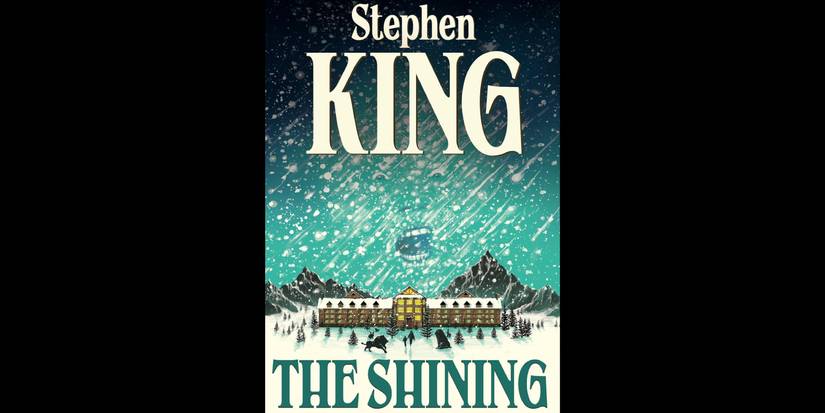
Stephen King’s third published novel, The Shining tells the story of Jack Torrance, a struggling writer and recovering alcoholic who accepts a job as a caretaker at a heritage hotel in the Colorado Rockies. He moves there in the off-season with his wife, Wendy, and son, Danny, who possesses a unique psychic ability, unbeknownst to his parents, that helps him see the unseen supernatural forces present in the hotel. When the family gets trapped inside during a snowstorm, Jack starts getting terrifying visions that take a toll on his sanity, leaving Wendy and Danny in danger.
The Shining was King’s first hardcover bestseller and went on to become a massive literary and cultural phenomenon. Drawing from his personal experiences, the author depicts the terrifying realities of abuse, addiction, and psychological collapse through the lens of the supernatural. Celebrated as one of King’s greatest horror masterpieces, The Shining was the first work that changed his status from a rising name to a master of the genre.
3
‘The Haunting of Hill House’ (1959)

A gothic horror novel by Shirley Jackson, The Haunting of Hill House is one of the most influential haunted house stories of modern literature. The story follows an occult scholar who invites a few people to the titular, isolated mansion to investigate supernatural occurrences. As eerie events begin unfolding at the mansion, it significantly impacts a fragile, traumatized woman in the group, pushing her down a psychological spiral. In 1960, the novel was a finalist for the National Book Award.
Since its first publication, The Haunting of Hill House has been celebrated as one of the greatest haunted house stories ever written and a high point in 20th-century psychological Gothic horror. The story’s real terror comes not from external elements but from within its characters, as the house turns into a dreadful entity in itself. The novel cemented Jackson’s reputation for chilling fiction and has since been adapted into films, plays, radio shows, and a loosely adapted streaming hit.
4
‘Strange Case of Dr. Jekyll and Mr. Hyde’ (1886)

Robert Louis Stevenson’s gothic horror novella Strange Case of Dr. Jekyll and Mr. Hyde is easily one of the most famous pieces of 19th-century English literature. A respected London doctor, Henry Jekyll, develops a formula that can split the morally opposed aspects of his personality into separate identities. His friend and lawyer, Gabriel Utterson, begins investigating a series of strange occurrences connecting Henry and a murderous criminal named Edward Hyde. Through Utterson’s investigation, the reader is exposed to the spine-chilling, horrifying mystery of the two men.
Strange Case of Dr. Jekyll and Mr. Hyde is a defining work of Gothic horror fiction that gave rise to the titular metaphor to symbolize contrasting identities and personalities. Narrated as a chilling Victorian mystery, the novel examines humanity’s perpetual struggle with the duality of our nature and is a masterpiece of psychological terror. The original story and the core concept have since been adapted into every possible medium and storytelling style, including parodies and spoofs, even though no major adaptation has been faithful to the original narrative.
5
‘The Picture of Dorian Gray’ (1890)

A Gothic horror and philosophical masterpiece by Oscar Wilde, The Picture of Dorian Gray is his first and only completed novel and revolves around the titular character, a wealthy young man in Victorian England and the muse of his artist friend, Basil Hallward, who pictures him as a flawless example of male beauty. After meeting Lord Henry Wotton, Dorian is quickly taken in by the aristocrat’s hedonistic outlook toward beauty and self-fulfillment, which pushes Dorian to make a deal with the Devil, resulting in gruesome consequences.
With themes of vanity, morality, and spiritual decay, the novel is hailed as a masterpiece of psychological and philosophical horror and one of Wilde’s finest works. When it was first published, The Picture of Dorian Gray attracted extensive controversy and criticism, and it was largely ignored until the 1980s. Now, however, it’s considered a classic of Gothic literature in particular and English literature in general. The Picture of Dorian Gray has since been adapted for film and stage, with the most notable example being the 2009 film starring Ben Barnes.
6
‘Dracula’ (1897)

A vampire novel that spawned a whole new generation of vampire horror literature, Bram Stoker’s Dracula is a literary landmark that has remained at the heights of its genre throughout the 20th and 21st centuries. The epistolary novel largely follows an English solicitor named Jonathan Harker, who visits the titular nobleman in Transylvania for business. Count Dracula soon reveals his true nature and moves to England, plaguing the coastal town of Whitby and terrorizing Harker’s fiancée, Mina. Harker then joins a group led by Dutch scholar Abraham Van Helsing to hunt and kill the Count.
With Dracula, Bram Stoker created a monster that has become an icon of vampire horror and remains a significant artifact of Victorian history studied for what it reveals about race, religion, gender, and sexuality in the context of that era. Drawing from ancient folklore and history, the novel drives terror not through violent actions but through the slow, invisible corruption that the dreaded monster instills in his victim’s mind. One of the most seminal works of Gothic horror fiction and an influential piece of British literature, Dracula has almost single-handedly defined the depiction of vampires in modern pop culture.
7
‘Frankenstein’ (1818)

Mary Shelley’s Frankenstein; or, The Modern Prometheus, better known as simply Frankenstein, is not just the first novel by an English novelist but is also considered the first true science fiction horror book. The story follows Dr. Victor Frankenstein, an obsessive young scientist who conducts an unconventional experiment and creates a sapient creature from various parts of dead bodies. Frankenstein’s ambitious endeavors lead to disturbing and shocking results, escalating into tragedy and revenge.
Ever since it was first published, Frankenstein; or, The Modern Prometheus has profoundly influenced horror storytelling in art, literature, theater, and later cinema, with the name “Frankenstein” becoming synonymous with freakish monsters. Thought-provoking and deeply unsettling in its exploration of unbridled ambition and the dangerous consequences of playing God, Frankenstein’s horror is deeply rooted in the social, political, and cultural anxieties of the era. With elements of Gothic fiction and the Romantic movement, the novel is one of the most iconic works in English literature and a foundational piece of the genre.
8
‘The Exorcist’ (1971)
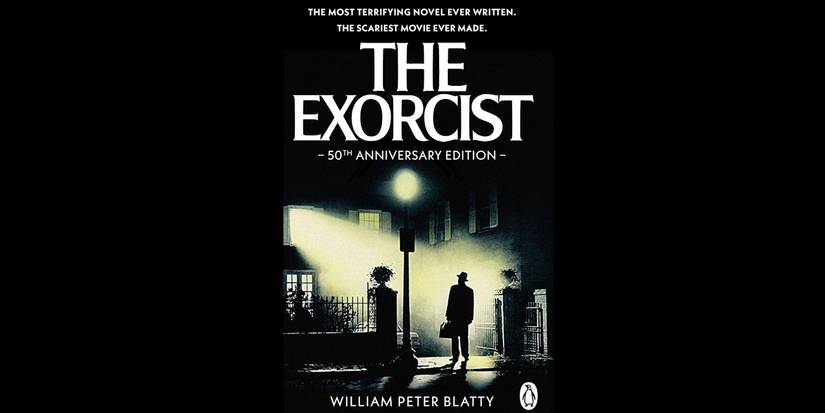
A novel better known for its film adaptation, The Exorcist is William Peter Blatty’s most acclaimed and successful novel and is inspired by a real-life incident that supposedly occurred in 1949. The story narrates how Regan, a 12-year-old girl and daughter of a famous actress, gets possessed by a demon, and two Roman Catholic priests attempt to exorcise it. In 1973, Blatty adapted the novel into a supernatural horror thriller directed by William Friedkin, which earned Blatty an Academy Award for Best Adapted Screenplay.
The Exorcist redefined supernatural horror in contemporary literature by combining deep psychological realism and grounded subjects like theological controversies and human grief with paranormal terror. It is not just frightening but also drives a deeply unsettling feeling that lingers beyond the final chapter. While the book was a bestseller, it only garnered widespread attention after the film’s release, which itself became a benchmark for horror cinema, turning The Exorcist into both a literary and cinematic franchise.

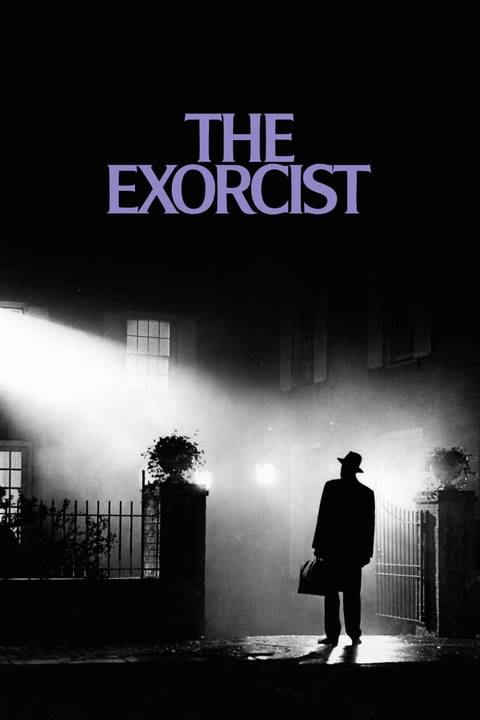
- Release Date
-
December 26, 1973
- Runtime
-
122 minutes
- Writers
-
William Peter Blatty
- Producers
-
Noel Marshall
You must be logged in to post a comment Login