Entertainment
8 Most Universally Acclaimed War Movies of All Time, Ranked

Trying to single out the best and most critically acclaimed war movies of all time is likely to lead to some conflict, with the inevitability of disagreements (of a potentially fiery nature) sort of inadvertently demonstrating why movies about such conflicts keep being made. People don’t stop fighting each other, and disagreements seem to be just a part of human nature, and disagreements done on a large and violent enough scale end up being wars.
So, you won’t likely agree that all the following deserve to be here, and maybe you would’ve preferred to see Oppenheimer (highly acclaimed, objectively so) or more than one David Lean movie, but that’s just how it is. These movies are here because they were particularly well-reviewed, drew in large audiences, won lots of awards for their respective year of release, or maybe even all of the above. They’re some of the most universally acclaimed war movies of all time, and as close to “objectively good” as you can imagine for this particular genre.
8
‘Paths of Glory’ (1957)

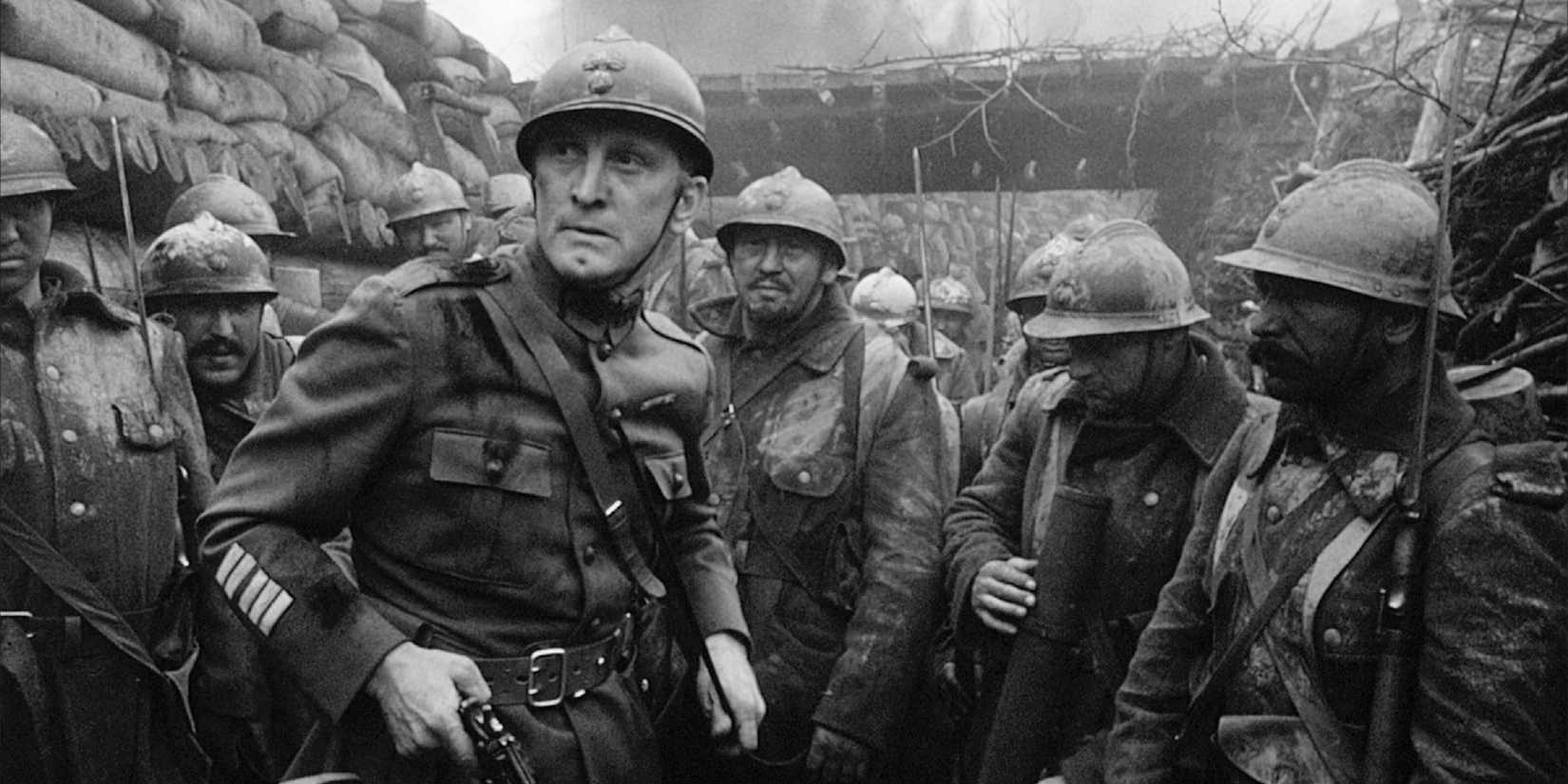
The first movie Stanley Kubrick made that was pretty much perfect was Paths of Glory, and it says something about how legendary a director he was that various films of his post-1957 were arguably even better. He went back to the war genre a few times, too, with Full Metal Jacket and Barry Lyndon (if the latter counts) also being phenomenal, but Paths of Glory is something special, and arguably the definitive World War I film, too.
It covers the aftermath of a failed offensive, with three soldiers being made scapegoats and put on trial, which leads to a commanding officer desperately defending them in a court-martial where their lives are on the line. For the opening, a more expected and frequently depicted war-related brutality is shown, but then after the battle sequence is over, there’s still a kind of violence and a battle with life and death stakes, just in a courtroom now. The idea of war being violent toward its participants even when they’re not in active combat was, of course, memorably explored further in Full Metal Jacket, mostly with the scenes in the first half that deal with boot camp training.
7
‘The Human Condition’ (1959–1961)

Just as you can sort of count The Lord of the Rings as one massive movie, owing to how it was helmed as a huge production and unfolds rather seamlessly if you watch all the parts relatively close together, so too can you argue The Human Condition is one massive movie… admittedly split into – and released in – parts. If you’re able to dedicate 10 hours in one day to just watching it, it’s certainly rewarding to do so, albeit it’s quite physically and emotionally exhausting to accomplish such a feat.
See, The Human Condition holds up as one of the most brutal and honest movies about war ever made, following a conscientious objector and pacifist being slowly made to take part in the Second World War more and more, as things go on. Each movie deals with a different stage of the overall conflict (a prelude to war, being in the thick of it, and surviving the aftermath, in effect), but you get a whole devastating story told across the entire thing, when it’s treated as one immense – and difficult to top, quality-wise – project/story.
6
‘Saving Private Ryan’ (1998)

It would feel a little strange to call Saving Private Ryan an outright crowd-pleaser, because parts of it are horrifying and sad, yet it’s crowd-pleasing by war movie standards because it does offer quite a lot of catharsis and moments of unambiguous heroism. It’s about a rescue mission to track down the titular Private Ryan, and the sacrifices made by a group of soldiers tasked with finding this one man, who’s purportedly behind enemy lines.
Whether you want to count the beach landing sequence as an opening scene or not, either way, it is one of the best-remembered sequences from any war movie pretty much ever made, and the similarly dramatic final combat set piece also leaves an impact. Saving Private Ryan is also very well-paced for something that’s as long as it is, and it’s earned a great deal of praise/acclaim on account of being so difficult to find fault with on a technical front.
5
‘Napoleon’ (1927)


Quite comfortably the oldest movie here, Napoleon (1927) definitely shouldn’t be mixed up with Napoleon (2023), though they’re unsurprisingly about the same figure. Napoleon Bonaparte is at the center of both biographical movies, but the 1927 version is noteworthy for really just being about his early life and some of his first successes as a military leader… but not a whole portrait of his life, as director Abel Gance originally wanted Napoleon (1927) to start a series.
With the earlier Napoleon, it’s so remarkably ahead of its time with how it’s shot, staged, and edited.
It wasn’t to be, but there’s still a huge amount to be impressed by, even if one might argue Napoleon (1927) technically feels incomplete. Still, as Napoleon (2023) showed, there are disadvantages to getting one man’s whole chaotic life crammed into just a single movie. Also, with the earlier Napoleon, it’s so remarkably ahead of its time with how it’s shot, staged, and edited, so if you’re interested in the history of cinema and how some of the all-time great silent movies evolved cinematic language, Napoleon (1927) is a must-watch (don’t let the length turn you off).
4
‘Pan’s Labyrinth’ (2006)
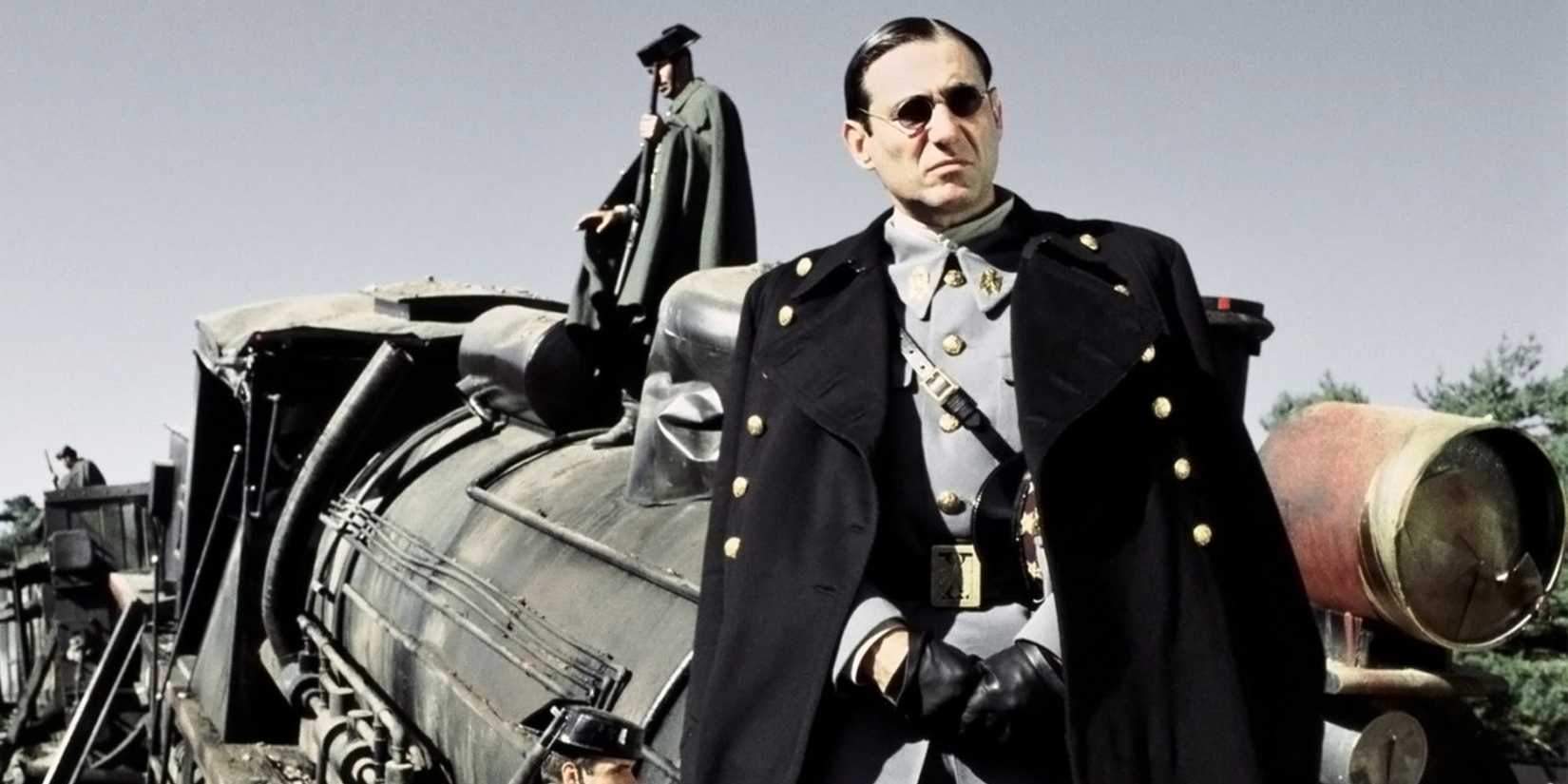
More of a fantasy movie, admittedly, but Pan’s Labyrinth makes the aftermath of the Spanish Civil War quite important for its overall narrative. There’s an imaginative young girl who’s made to live with an awful stepfather, with him treating her and her mother poorly while guerrilla warfare continues in the war’s aftermath, thanks to resistance fighters against the Armed Police Corps (said Corps being what the stepfather works for).
So, she retreats into a darkly fantastical world, and carries out a series of quests for the chance of bringing both her mother and soon-to-be-born baby brother into a better (and fantastical) world. Pan’s Labyrinth succeeds surprisingly well at being a fantasy and war hybrid, genre-wise, and it’s also the kind of film that feels like its own distinct (not to mention exceedingly admirable) thing.
3
‘Schindler’s List’ (1993)
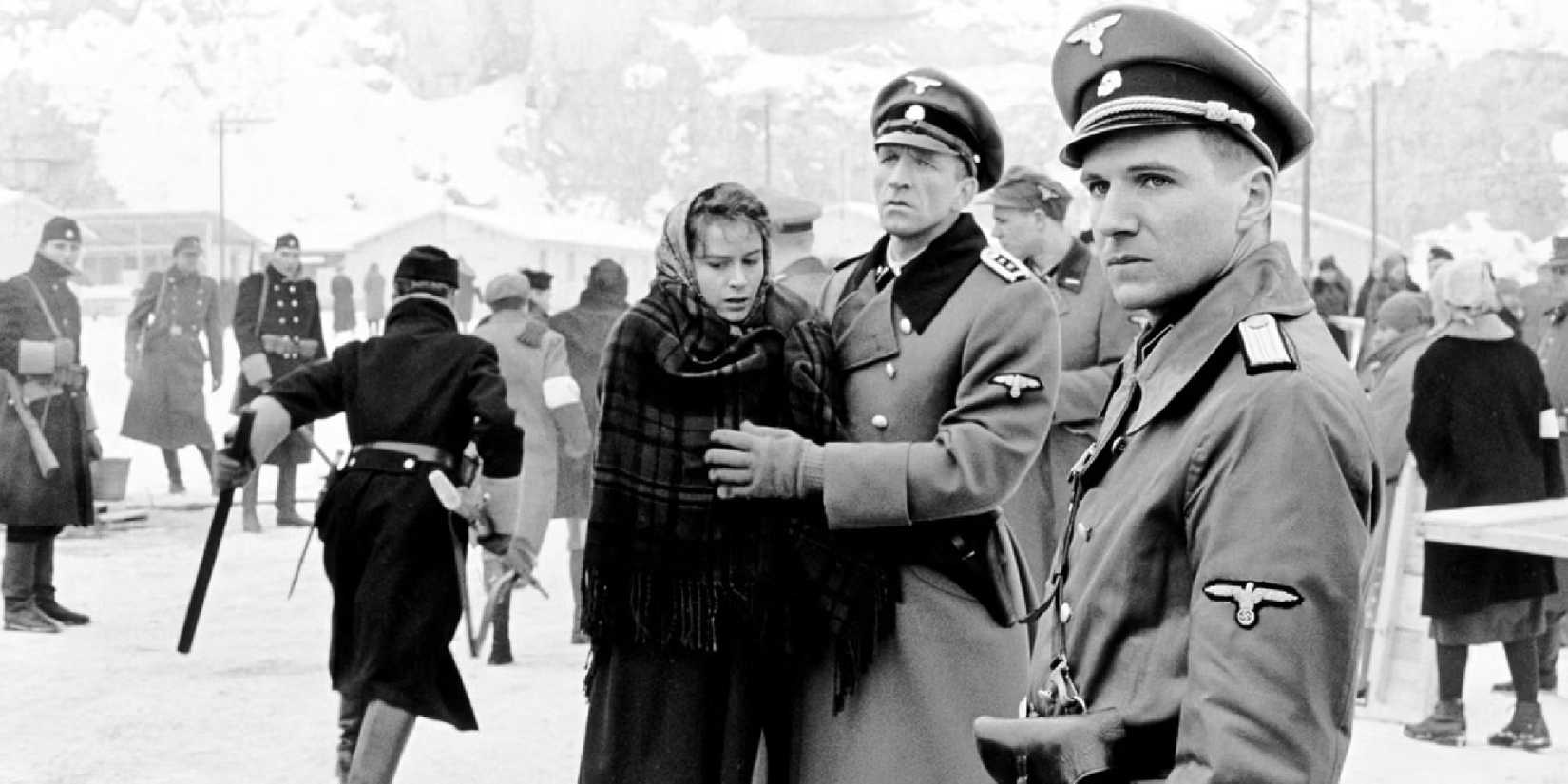
There was already a Steven Spielberg movie mentioned earlier, but Schindler’s List is a very different sort of war film, even if, like Saving Private Ryan, it was focused on World War II and came out in the 1990s. There’s less by way of combat showcased in Schindler’s List, since the focus is on the Holocaust, which took place during World War II, and there’s more of a true story being retold here (Saving Private Ryan did famously depict some conflict that actually happened, but the main characters were fictitious).
It’s a long and ambitious film, so difficult to summarize entirely with just a sentence or two, but most of Schindler’s List is about how Oskar Schindler used a personal fortune to save more than 1000 Jewish lives from being sent to concentration camps. That act of heroism is celebrated while the overwhelming nature of the Holocaust in every other regard is still acknowledged, and depicted in a way where you feel the overwhelmingly awful enormity of it all. As a tonal balancing act (and judged just about any other way, really), Schindler’s List is remarkable.
2
‘Apocalypse Now’ (1979)
You feel like you’re in a nightmare pretty much straight away, with Apocalypse Now, though things do inevitably get more horrific as the whole film marches on into darker territory, literally and figuratively. It takes place during the Vietnam War, and the main character is a disillusioned captain who’s assigned with tracking down – and then killing – a rogue Green Beret Colonel.
That might sound like the set-up for some kind of wartime adventure movie, but everything here is bleak and sometimes even a little surreal, so there’s very little fun or catharsis to be found in Apocalypse Now, but that’s by design. It’s extremely effective as an anti-war epic, and of all the acclaimed and well-recognized (by either nominations or wins) Vietnam War movies at the Academy Awards, Apocalypse Now might well be the very best.
1
‘Lawrence of Arabia’ (1962)
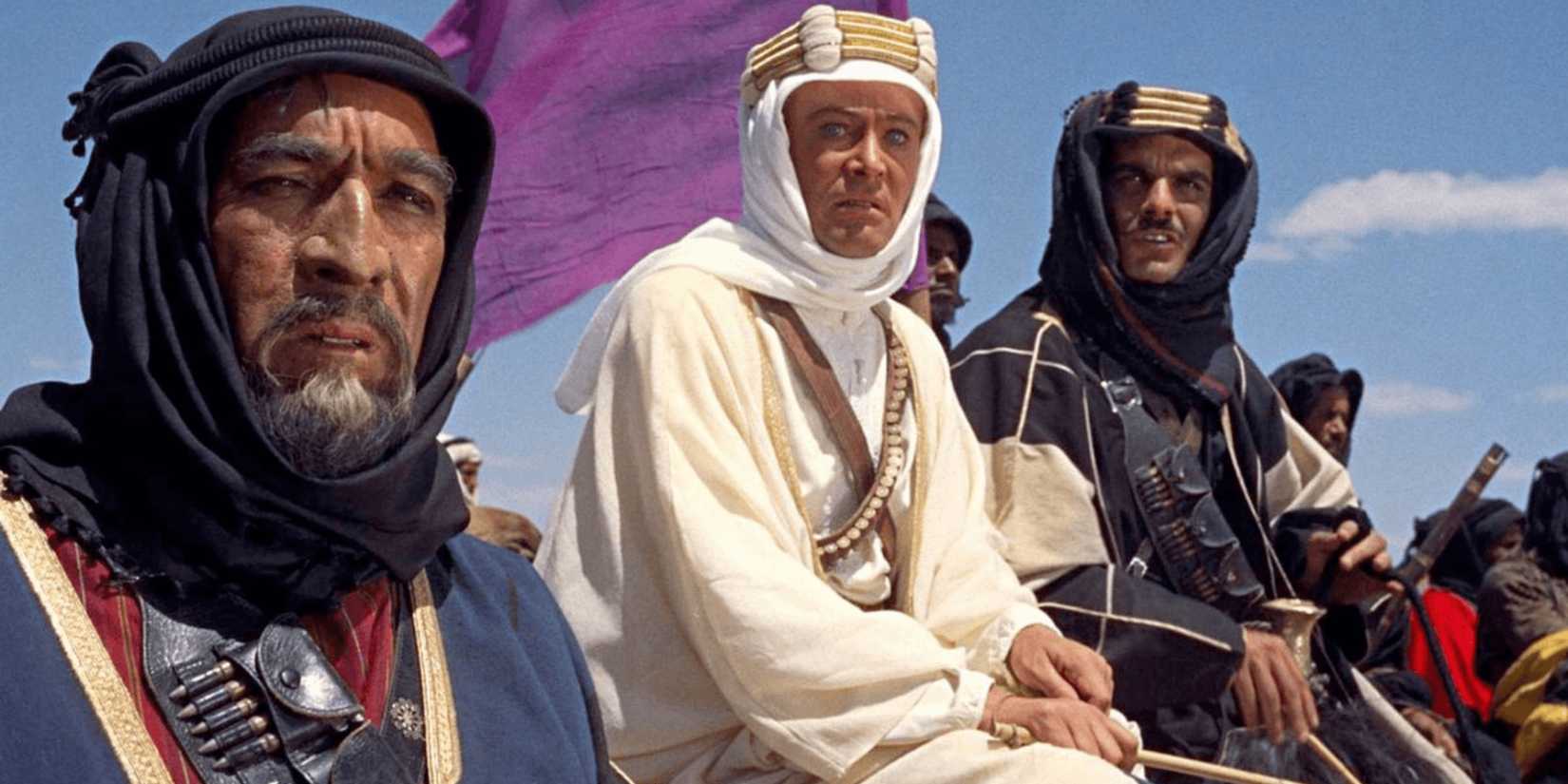
Lawrence of Arabia is the kind of beyond-untouchable masterpiece where you can, if you’re feeling brave, argue it isn’t the best thing of all time, but a lot is going for it to make it worthy of being considered if not the best thing of all time (of all the things ever), then maybe the best movie of all time. It’s got it all, with a memorable character arc, a lot to say about war and the human condition, plenty of spectacle, and an overall interesting story that’s told well – and rather effortlessly – over a lengthy runtime.
You do need almost four hours to watch Lawrence of Arabia, and then further chunks of the same amount of time if you want to revisit the film and appreciate it even further, but it’s worth all that time and energy. It’s about as good as epic war movies get, and the copious amount of praise hurled at this movie ever since 1962 has all been exceptionally well-earned.

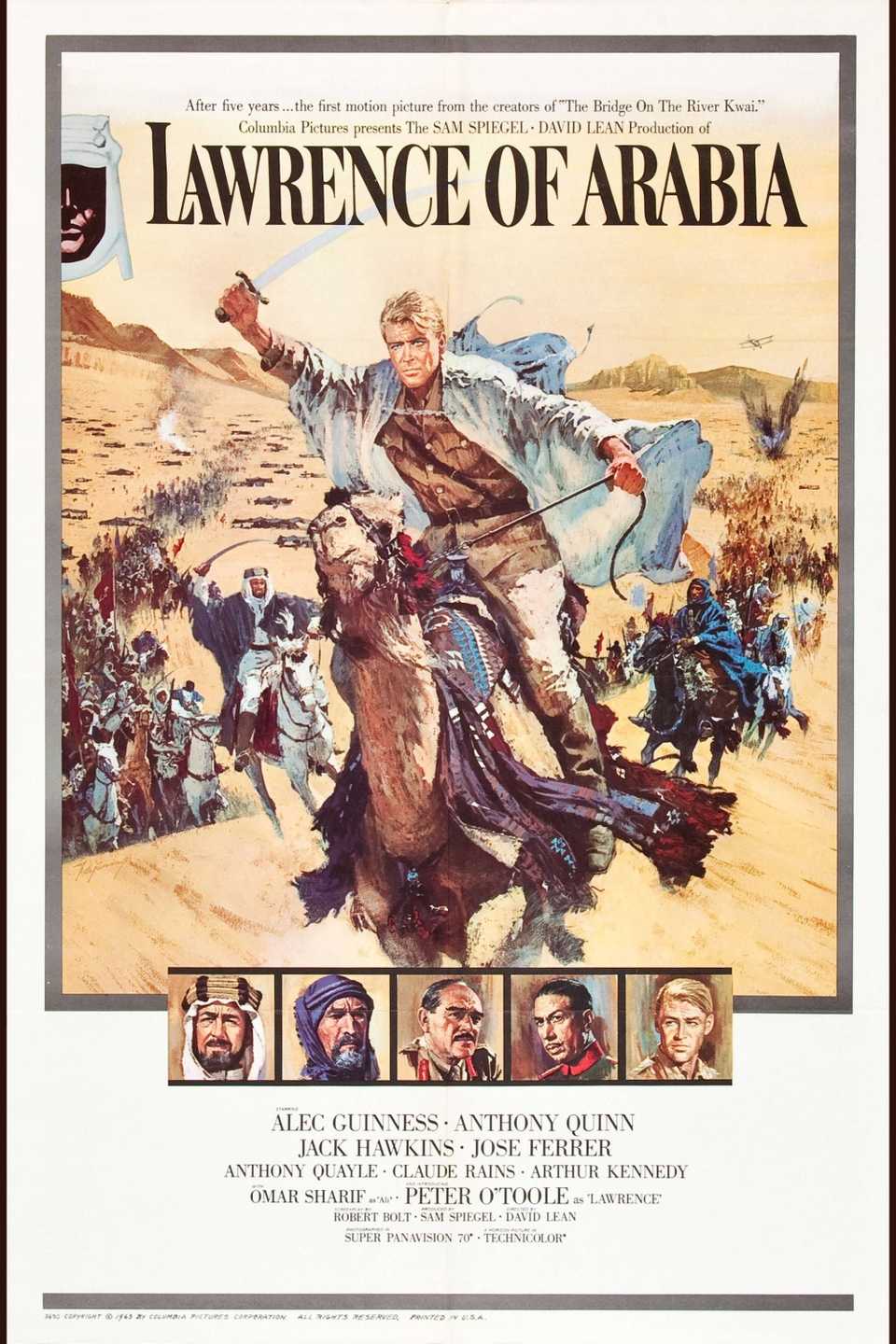
Lawrence of Arabia
- Release Date
-
December 11, 1962
- Runtime
-
228 minutes
- Director
-
David Lean
- Writers
-
Robert Bolt, Michael Wilson
You must be logged in to post a comment Login