Entertainment
8 Movie Trilogies That Peak With Their Middle Chapter

The middle installment of a movie trilogy is by far the hardest to get right. In the case of sequel follow-ups that aim to capitalize on smash-hit originals, they face the daunting task of being compared to what was likely a universally adored box office hit. When it comes to the mid-section of set, pre-determined trilogies that unfold with one narrative vision, the second film is forced to play a bridging role without the luxury of introducing viewers to the world nor delivering the grand conclusion of the story at large.
However, there have been a number of mid-trilogy movies that have thrived in their station. Many of them excel by doubling down on the defining qualities of their predecessors, but others recontextualize central themes, make bold tonal changes, or even shift genres entirely to rise to a new level. From classics of superhero cinema to invigorating horror gems, and even to one of the greatest movies ever made, these middle chapters mark triumphant high points of the trilogies they belong to.
8
‘The Godfather’ Trilogy (1972-1990)


Heralded by many as being the greatest movie sequel of all time and entrenched in the conversation of the finest picture ever made, The Godfather Part II is a dazzling crime epic defined by its ageless thematic resonance, astonishing cinematic craft, and its ability to build on its astonishing predecessor. Running as both a sequel and a prequel, the 1974 masterpiece switches between new Corleone crime family boss Michael (Al Pacino) as he seeks to expand his empire, and the rise to power of a young Vito Corleone (Robert De Niro) in the criminal underbelly of early 20th century New York.
Its dual narrative imbues it with an ambition and drive that not even its masterful 170-minute predecessor can match, but it also eclipses The Godfather with the depth of its thematic convictions. In many ways, The Godfather Part II is a two-pronged character study of gangland morality, the isolating corruption of power, and the sacrifice of aspiration. Granted, anyone who claims The Godfather is the greater film can certainly mount a compelling case, but The Godfather Part II weaves one of the most arresting visual experiences in cinematic history as well as a dark descent into the intricacies of the human condition that explores power, faith, and enterprise against the backdrop of the brutality of the American dream.
7
The ‘Blade’ Trilogy (1998-2004)


Released in 1998, Blade helped pioneer the wave of superhero cinema that audiences have enjoyed in the 21st century. Anchored by Wesley Snipes’s captivating performance, it successfully brought one of the most interesting and beloved comic book characters to life on the big screen with a ferocious marriage of action intensity and Gothic horror that embraced the grit of its R-rating. Endowed with Guillermo Del Toro’s impressionable visual style and penchant for Gothic allure, Blade II took those defining qualities and enhanced them.
When a mutation gives rise to a new form of savage and primitive vampires known as the “Reapers,” the titular vampire hunting superhero enters an uneasy alliance team of vampire warriors to eradicate their mutual enemy. The visceral action choreography blends beautifully with Del Toro’s trademark aesthetic to create an absorbing and deliciously dark action-horror propelled by its savvy integration of practical effects and CGI. With 2004’s Blade: Trinity dwindling as a calamitous misfire, Blade II has overcome its initially mixed critical reception to stand as the defining highlight of the trilogy, one that many today still regard as being one of the most visually striking and tonally captivating superhero movies ever made.
6
‘The Hobbit’ Trilogy (2012-2014)

The Lord of the Rings is the greatest film trilogy cinema has ever seen, an engrossing fantasy epic of ceaseless perfection that achieves the rare feat of having all three of its movies being classic masterpieces in their own right. Ten years later, audiences were taken back to the realm of Middle Earth with Peter Jackson returning to adapt J. R. R. Tolkien’s The Hobbit, though the decision to make it another monumental trilogy raised some eyebrows given its source material’s much smaller story. This issue became apparent in The Hobbit: The Battle of the Five Armies, with the finale’s strenuous efforts to fulfill its 144-minute runtime producing an underwhelming conclusion that saw many dismiss the trilogy as a whole.
However, while they’re not comparable to the brilliance of The Lord of the Rings, the first two installments in the trilogy do deliver a lively brand of wondrous adventure as they follow Bilbo Baggins (Martin Freeman) and the dwarves as the trek through Middle Earth to reclaim the kingdom of Erebor. The Hobbit: The Desolation of Smaug is particularly vibrant with its energetic pacing, effervescent set pieces, and its brilliant realization of the dragon, Smaug (Benedict Cumberbatch). While still flawed, it is the movie in the trilogy that best captures the story’s adventurous spirit and fantasy world-building while striking an invigorating marriage between inviting fantasy fun and mythic suspense.
5
Sam Raimi’s ‘Spider-Man’ Trilogy (2002-2007)
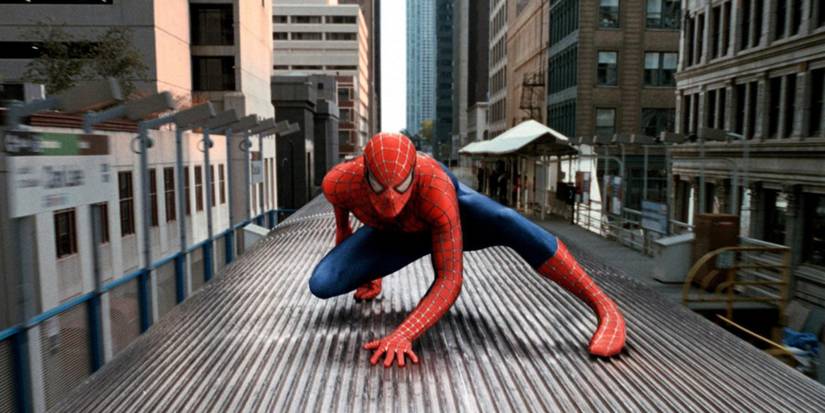
Another early triumph of the modern craze of superhero action, Sam Raimi’s Spider-Man trilogy excels at juggling the innate spectacle of the genre against the human drama of Peter Parker’s (Tobey Maguire) journey as Spider-Man. While 2002’s Spider-Man is a brilliant introduction to the character in this regard, it is Spider-Man 2 where these thematic ideas are truly fleshed out and dissected, with his battle against Doc Ock (Alfred Molina) combining beautifully with Peter Parker’s own internal struggles stemming from real-life hardships.
Perhaps better than any other film in the genre, let alone the Raimi trilogy, Spider-Man 2 illustrates the hope of superhero drama, particularly in how Spider-Man’s good-nature and unyielding endeavor to help people inspires heroism and resolve in others. It is a point beautifully emphasized by the film’s climactic train fight scene and even Doc Ock’s own villain arc of obsession, unwitting corruption, and tragedy rather than outright evil. Emotionally charged, perfectly paced, and flaunting timeless thematic points of responsibility, sacrifice, and the symbolism of a hero, Spider-Man 2 remains one of the greatest superhero movies of all time and the definitive highlight of Raimi’s groundbreaking trilogy.
4
The ‘Evil Dead’ Trilogy (1981-1992)

Marking another iconic trilogy directed by Sam Raimi, the Evil Dead trilogy is a fascinating procession of creativity, filmmaking resources, and tonal experimentation. Between the succinct demonic horror of the low-budget classic The Evil Dead and the gleefully absurdist entertainment of Army of Darkness, 1987’s Evil Dead 2 stands as something of a perfect middle ground within the trilogy’s bold evolution, an entrancing marriage of terrifying undead tension and comedic indulgence that makes for one of the most enjoyable horror movies ever made.
It sees Raimi’s hyperkinetic directing style and Bruce Campbell’s scene-chewing presence utilized not only as attention-grabbing qualities, but as perfect accessories to the story. Running as both a sequel and a partial remake of The Evil Dead, Evil Dead II follows Ash Williams (Campbell) as he and his girlfriend travel to a remote cabin for a holiday only to accidentally unleash a horde of undead, demonic entities when they discover an audio tape of recitations from a book of ancient texts. Thrilling, exciting, and delightfully chaotic in all its monster horror and slapstick brilliance, Evil Dead II is the best picture in the ongoing Evil Dead franchise at large and the clear high point of the original trilogy.
3
The ‘Mad Max’ Trilogy (1979-1985)

Not at all dissimilar to the Evil Dead trilogy, the original Mad Max movies began as a low-budget genre hit that rose in spectacle, ambition, and eccentricity over the course of the next two movies. 1981’s Mad Max 2: The Road Warrior finds the perfect marriage between the gritty wasteland intensity of its predecessor and the sheer stylistic bombast of Mad Max Beyond Thunderdome. The result is a frenzied hit of action carnage that follows Max Rokitansky (Mel Gibson) as he helps defend a peaceful, oil-rich settlement from a band of ruthless marauders led by the despicable Humungus (Kjell Nilsson).
With its far more substantial budget compared to Mad Max, the sequel sensation delivers an unrestrained descent into the desolate lawlessness of post-apocalyptic Australia armed with an insatiable appetite for eye-popping action given tremendous weight by its visceral practical effects and George Miller’s astute direction. In terms of tone, spectacle, and ferocity, it is the movie most akin to 2015’s blockbuster classic Mad Max: Fury Road, and while it’s debatable if The Road Warrior is the greatest movie in its wider franchise, it is irrefutably the best and most bombastic of the initial trilogy.
2
‘The Dark Knight’ Trilogy (2005-2012)

It turns out superhero trilogies have a happy knack for reaching their peak with their middle chapter, perhaps as a greater license is granted to pursue stylish flourishes and thematic depth after the world-building and character establishment of the first film. That is certainly the case with Sir Christopher Nolan’s iconic The Dark Knight trilogy. Wedged between two outstanding action-propelled blockbusters, the 2008 classic marks a defining triumph for 21st century cinema as it follows Batman’s (Christian Bale) efforts to protect Gotham City from the reign of anarchy and terror being imposed by the Joker (Heath Ledger).
While its thrilling and propulsive sense of narrative momentum and Ledger’s awe-inspiring performance are among the most impressionable qualities of the film, The Dark Knight also soars above Nolan’s other two Batman movies with its complex exploration of symbolism, sacrifice, morality, and the escalation of chaos in a terrified society. Only bolstered by the depth and tragedy of Harvey Dent’s (Aaron Eckhart) rise-and-fall subplot, The Dark Knight thrives as a gripping crime thriller, a superhero stunner that captivates with its dark maturity, and one of the greatest mid-trilogy movies of all time.
1
The Original ‘Star Wars’ Trilogy (1977-1983)

It is quite extraordinary how, despite mid-trilogy movies often marking a lull in an overarching story, several of the standout ones stand not only as great feats of filmmaking, but as some of the greatest, most culture-defining pictures of all time. Few would deny that is the case with Star Wars: Episode V – The Empire Strikes Back, with the sequel to the groundbreaking success of the first Star Wars movie elevating the spectacle and expanding the story world while taking a dark and subversive turn from the triumph of its predecessor.
From the opening battle sequence on Hoth, The Empire Strikes Back captures an air of operatic grandeur, one it maintains as it follows Luke Skywalker’s (Mark Hamill) Jedi training on Dagobah while seeing his friends fall into a trap orchestrated by Darth Vader (James Earl Jones). Flaunting one of the all-time great movie duels, cinema’s most iconic plot twist, and a brilliant ending that is as dark as it is compelling, The Empire Strikes Back builds on its predecessor while boldly shifting its tone to deliver what is an outstanding movie in its own right, but the crowning glory in the Star Wars franchise and the original trilogy as well.
You must be logged in to post a comment Login