Entertainment
8 Netflix Mystery Shows Where Every Episode Is a Masterpiece

What makes or breaks a mystery show is how much information it gives the audience. Most shows in the genre often expect viewers to sit through hours of setup for one big reveal. Obviously, that works well when the payoff is worth it, but for a series to genuinely sustain its momentum until the very end, that formula can get old pretty fast. For a mystery show, every episode should feel like it matters.
That is where pacing becomes everything, because even with the smartest premise in the world, if the story isn’t structured well, the audience has no reason to want more. Luckily, the Netflix shows on this list avoid that problem, keep the cases moving, and turn every chapter of their narrative into an important piece of the bigger picture.
‘Dark’ (2017–2020)


Dark is one of Netflix’s most brilliant shows. The streamer’s first-ever German-language series begins in the small town of Windern after the disappearance of a young boy, but that is only the beginning. Dark actually connects four families across multiple generations and reveals that the caves beneath the town are tied to a time-travel cycle stretching across decades, which is connected to the disappearance in question. Jonas Kahnwald (Louis Hofmann) becomes the closest thing the show has to a central protagonist, because Dark keeps widening its scope until practically every character, relationship, and detail becomes part of something much larger.
There’s no denying that the show is complex and hard to keep up with because of its interconnected timelines, but that’s also the fun part. Almost every episode keeps the audience on their toes and shifts the stakes. Nothing in the show feels disposable because almost every storyline feeds back to the central mystery. This kind of intentional storytelling makes watching Dark an extremely rewarding experience, despite the information overload. In fact, it gives the show rewatch value like no other, because when the rules of its world become clearer, the audience is practically compelled to go back and watch how everything falls into place so perfectly.
‘Dept. Q’ (2025–Present)
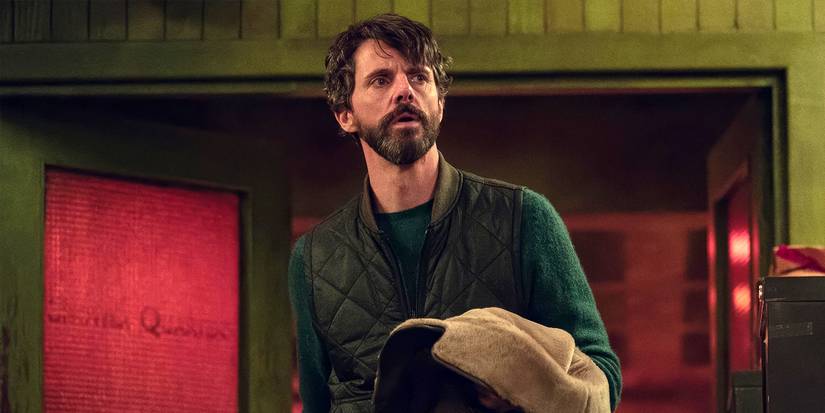
Dept. Q could have easily been another gloomy cold-case drama, but the series is way more interesting than that. The story follows Edinburgh detective Carl Morck (Matthew Goode), who is pushed into running a new cold-case unit after surviving a shooting that leaves his partner seriously injured and another officer dead. His first case centers on prosecutor Merritt Lingard (Chloe Pirrie), who disappeared years earlier and was presumed dead. The catch is that the audience learns that Merritt is still alive and being held captive somewhere, while the protagonist has no idea.
This completely changes the nature of the mystery that Carl and his team are trying to solve and gives every episode a sense of urgency. One storyline follows Carl, Akram (Alexej Manvelov), and Rose (Leah Byrne) as they dig into an investigation most people have already forgotten, while the other keeps returning to Merritt to fill in the gaps about what really happened to her. The show perfectly blends its strong character work with a brilliantly paced story, which is what makes it such an easy binge.
‘Dear Child’ (2023)

Dear Child is a six-episode German miniseries that follows a woman named Lena (Kim Riedle) who has been living in complete isolation with two children, Hannah (Naila Schuberth) and Jonathan (Sammy Schrein), under a terrifying set of rules imposed by their captor. The story actually begins with Lena escaping and ending up in a hospital after being hit by a car, which is an interesting creative choice for a mystery show, but it only makes things more confusing. Her appearance connects her to another woman named Lena Beck, who disappeared 13 years earlier.
This brings detective Gerd Bühling (Hans Löw) and the missing woman’s family back into the picture over a case they thought had gone cold. Dear Child’s backwards setup gives every episode an incredible amount of momentum because with every answer, her situation gets stranger. There is definitely a lot for the show to juggle between Hannah and Lena’s individual storylines, but the show never wastes a single minute. Every episode delivers important revelations without ever making the mystery feel boring. Dear Child is criminally underrated, especially for a narrative this tightly constructed.
‘The Chestnut Man’ (2021–Present)

The Chestnut Man is a compelling Danish mystery that begins with a dead woman being found in a Copenhagen playground along with a tiny figure made from chestnuts left beside her. Detectives Naia Thulin (Danica Curcic) and Mark Hess (Mikkel Boe Følsgaard) are assigned to the case, but things get much stranger when they discover evidence on the figure connected to Kristine Hartung, the young daughter of politician Rosa Hartung (Iben Dorner) who disappeared a year earlier and was presumed dead. Suddenly, one disturbing crime expands to reveal something much darker.
What The Chestnut Man does ridiculously well is make practically every episode change the shape of the investigation. The chestnut figures are essentially the killer’s calling card. They begin appearing at the scenes of other attacks, which keeps tying new victims back to the same investigation. It doesn’t take Thulin and Hess long to realize that they are dealing with someone extremely smart, who knows how to cover their tracks flawlessly. There is barely any room for all of this tension to sit still, but that sense of adrenaline makes it impossible for the audience to stop watching until the very end.
‘The Mire’ (2018–2024)

The Mire is a Polish series that begins in 1984, shortly after the end of martial law, when a sex worker and a local Communist official are found dead in the forest. The police quickly settle on an explanation, but journalists Witold Wanycz (Andrzej Seweryn) and Piotr Zarzycki (Dawid Ogrodnik) are not convinced at all. At the same time, two teenagers die under suspicious circumstances, which gives the reporters another reason to keep investigating. Soon enough, the seemingly disconnected tragedies start to converge and expose the town’s politics and crime.
That idea only grows stronger as the series moves forward. The Mire Season 2 jumps to 1997, when a devastating flood uncovers human remains in the forest, while Season 3 pushes the timeline into 1999 and drags even more buried history back to the surface. Each era adds another layer to the same mystery, which gives the show a density that most crime dramas can only dream of achieving. By the end, the audience has moved beyond just caring about individual cases because the town itself becomes the subject of the investigation. The show’s long-form approach makes every episode feel rewarding because The Mire believes in intentional storytelling, where the smallest of details matter.
‘The Snow Girl’ (2023–2025)

The Snow Girl is practically impossible to stop watching. The Spanish series begins during a Christmas parade in Málaga, where five-year-old Amaya disappears in the middle of a crowded street. Journalist Miren Rojo (Milena Smit) becomes obsessed with the case and starts investigating alongside detective Belén Millán (Aixa Villagrán), even as years pass without a clear answer. Then, six years later, a mysterious video suddenly proves that Miren’s obsession wasn’t unfounded. From there, the show moves between different points in time as new evidence appears, old suspects come back into focus, and the journalist’s own past starts affecting how far she is willing to go for the truth.
Every episode in The Snow Girl reveals something meaningful without slowing the story down. The stakes shift within seconds, and that relentless momentum is what makes the show so addictive. Once the case is back in the public eye, Miren’s hunt gets even more aggressive, and in turn, more reckless. The most interesting thing about the show is how it shifts perspectives at extremely crucial moments to let the audience see parts of Amaya’s disappearance from angles Miren cannot, without giving away the full picture too early. The Snow Girl knows exactly how much information to reveal before immersing the audience in the next episode, and that is a masterclass in pacing.
‘Bodies’ (2023)
Bodies has a premise that sounds completely ridiculous until one actually starts watching. The eight-episode Netflix miniseries begins when the exact same naked corpse appears on Longharvest Lane in London across 1890, 1941, 2023, and 2053. Each body is discovered by a different detective, including Alfred Hillinghead (Kyle Soller) in Victorian London, Charles Whiteman (Jacob Fortune-Lloyd) during World War II, Shahara Hasan (Amaka Okafor) in the present day, and Iris Maplewood (Shira Haas) in the future. Now, none of them initially knows that anyone else is investigating the same impossible crime. However, each case gradually starts pointing toward Elias Mannix (Stephen Graham) and a conspiracy stretching across more than 150 years.
The fun comes from watching those four timelines slowly come together. The idea could have gotten messy fast, but Bodies is extremely careful with the rules of its world. The same names, symbols, photographs, and pieces of evidence keep resurfacing across decades, so the audience is essentially solving four cases at once, but every answer narrows them toward the same thing. A lot of shows use time travel as a gimmick, but Bodies actually weaves the concept into its layered narrative. There is simply too much happening in the series for any episode to feel forgettable.
‘The Residence’ (2025)

The Residence breathes new life into the classic locked-room mystery, and the premise works because it’s set right inside the White House. The eight-episode series begins during a disastrous state dinner where White House chief usher A.B. Wynter (Giancarlo Esposito) is found dead. Detective Cordelia Cupp (Uzo Aduba) is assigned the case. The catch is that she is dealing with 132 rooms and 157 suspects, including politicians, staff members, guests, and employees who all seem to be hiding something. FBI agent Edwin Park (Randall Park) is assigned to work alongside her, who quickly realizes that Cordelia has absolutely no interest in investigating the case the conventional way.
She asks completely irrelevant questions and has a habit of comparing human behavior to birds, but beneath her quirks, it’s fascinating to watch her casually pointing out every inconsistency in the case. Now, the sheer size of the suspect pool could have made The Residence feel repetitive, but the show is smart with its structure and moves into a new corner of the White House with every episode. The series works as a screwball comedy, but the whodunit element is never overshadowed by the humor. Aduba holds all of it together and brings a unique charm to Cordelia in all her eccentricity without overdoing it. The result is a show that feels playful without sacrificing the mystery, and that is a treat to watch.


You must be logged in to post a comment Login