Entertainment
8 Sci-Fi Books That Can Be Called Masterpieces

Science fiction gets exciting when the big idea stops being the whole point. Aliens, artificial intelligence, time travel, genetic control, gender, empire, technology, and revolution can all grab attention. The books people keep returning to are the ones that connect those ideas to choices a real person has to make.
That is the standard here. Each book changes how the reader looks at something outside the story, whether that is faith in progress, the need to belong, political loyalty, race, power, love, or the stories societies tell to excuse cruelty. You can come for the concept and end up arguing with the book years later. Here are 8 sci-fi books that are masterpieces in my opinion.
8
‘The Three-Body Problem’ (2008)

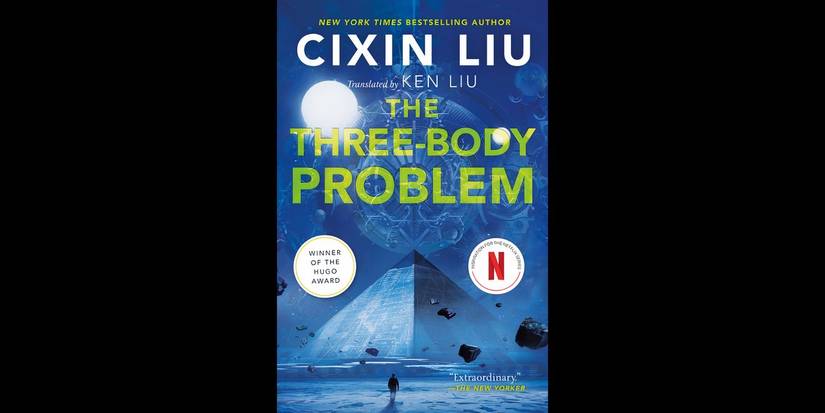
The Cultural Revolution is a brutal place to begin an alien-contact story, but it explains the decision that drives everything after it. Netflix’s adaptation wasn’t as good because it missed several nuances. Liu Cixin’s original 2008 novel follows Ye Wenjie watching her father die. She loses faith in humanity, and later sends a message into space that invites another civilization toward Earth. Her choice comes from experience rather than cartoon villainy. She has seen people destroy knowledge, family, and each other in the name of ideology. When an alien warning tells her to stay silent, she answers anyway.
The present-day mystery follows Wang Miao through scientific suicides, impossible countdowns, a strange virtual-reality game, and growing evidence that human science is being deliberately disrupted. The ideas are huge, yet the most disturbing one is simple. First contact may arrive through someone who has already decided humanity is beyond saving. The English translation appeared in 2014 and later won the Hugo Award, helping The Three-Body Problem reach a massive international audience. That success is understandable. Few books make physics, politics, and total existential panic this hard to put down.
7
‘Do Androids Dream of Electric Sheep?’ (1968)
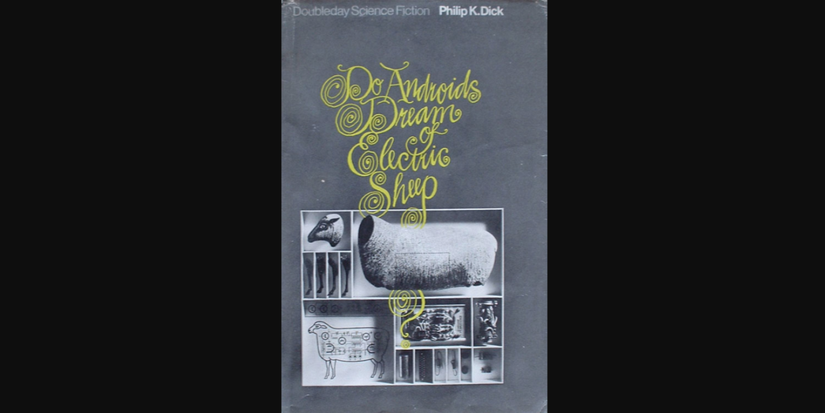
Do Androids Dream of Electric Sheep follows Rick Deckard who earns money by hunting androids and “retiring” them. The language is deliberately clean for a job that is obviously killing. Earth has been damaged by nuclear war, most healthy people have left for Mars, and owning a real animal has become a sign of empathy and social worth. Rick wants enough bounty money to replace his electric sheep with a living creature. That desire sounds harmless until the book starts questioning whether people have turned compassion into another status symbol.
The androids are supposed to lack empathy, yet the humans keep behaving in cold, selfish, and violent ways. Rick gradually loses confidence in the test that separates one group from the other. Rachael Rosen complicates the issue even further, both emotionally and morally. Philip K. Dick’s novel inspired Blade Runner, though the book spends far more time on religion, animals, Mercerism, and the uneasy business of proving humanity through approved behavior. Rick finishes his assignment with less certainty than he had at the start. That discomfort is exactly what stays with you.
6
‘Hyperion’ (1989)
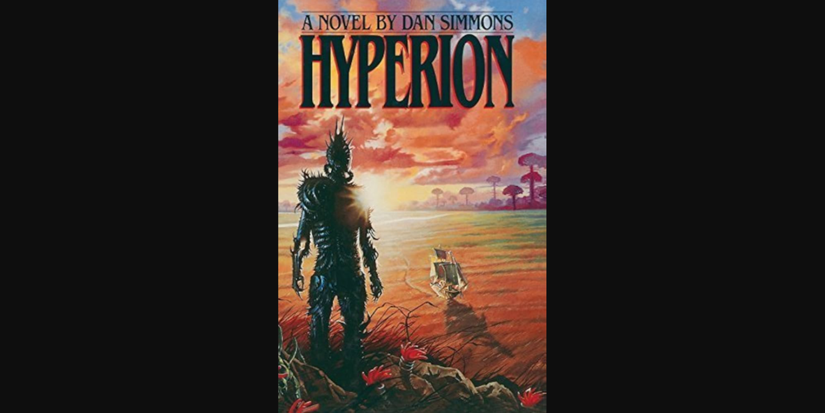
Seven pilgrims travel toward the Time Tombs, knowing the Shrike may kill them, ignore them, or grant one of them a request. Instead of rushing straight toward that confrontation, Dan Simmons’s Hyperion lets each traveller explain why they came. Those personal histories change the book’s genre again and again. One section reads like military science fiction, another becomes a detective story, another deals with religion, while Sol Weintraub’s account of his daughter Rachel is one of the most painful uses of time in the genre.
Rachel begins aging backward after visiting the Tombs. Each day removes part of her life and eventually part of her memory. Sol has to introduce himself to his own daughter every morning while deciding whether the Shrike truly wants her as a sacrifice. That story alone could support a complete novel. Around it, the Hegemony, the TechnoCore, farcasters, the Ousters, and an approaching war keep widening the picture. Hyperion won the Hugo Award, but its lasting strength comes from something less official. Every pilgrim reaches the same destination with a completely different reason to fear it.
5
‘Neuromancer’ (1984)
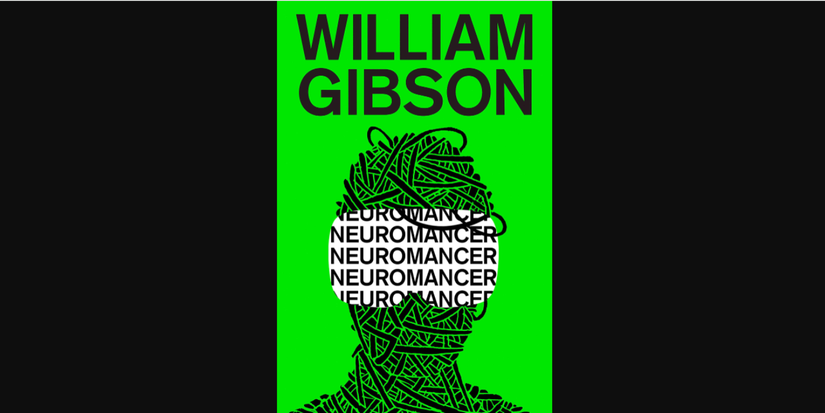
This is William Gibson’s finest work arguably. Case has lost access to cyberspace, and life outside it barely interests him. He used to be a gifted hacker until his employers damaged his nervous system after he stole from them. A mysterious employer offers to repair him in exchange for one more job. Molly, a mercenary with implanted lenses and retractable blades, keeps him alive while he tries to understand who hired them and what the real target is.
What shocks new readers is how much modern technology language seems to come after this book. Cyberspace, digital identity, corporate power, artificial intelligence, virtual environments, and bodies modified for work are all packed into a story published before the modern internet became part of daily life. Yet Neuromancer never reads like a tidy prediction exercise. Case is an addict, Molly has her own history, and the artificial intelligences Wintermute and Neuromancer are pursuing goals humans barely understand. The novel won the Hugo, Nebula, and Philip K. Dick Awards. Its influence is enormous, but the sweaty criminal energy keeps it from becoming a museum piece.
4
‘Kindred’ (1979)

Kindred hails from Octavia E. Butler and it follows Dana as she is celebrating her twenty-sixth birthday in 1976 when she is suddenly pulled into antebellum Maryland. A white boy named Rufus is drowning, and she saves him. The trips continue without warning, always placing her near Rufus whenever his life is threatened. Dana soon realizes that he is one of her ancestors. She needs him to survive long enough to father the child who will continue her family line.
That setup forces Dana into an unbearable position. Rufus grows from a frightened child into a slave owner who wants affection while using ownership, violence, and threats to get it. Dana knows what he becomes, yet her own existence depends on protecting him. Her white husband Kevin is also pulled into the past, though the world treats him with freedoms Dana can never access. The time travel has no technical explanation, and the book is stronger for leaving it alone. The real focus stays on how slavery changes relationships, language, safety, and moral choice. Dana returns home alive, but history has taken something physical from her. Nobody walks through that system untouched.
3
‘The Left Hand of Darkness’ (1969)
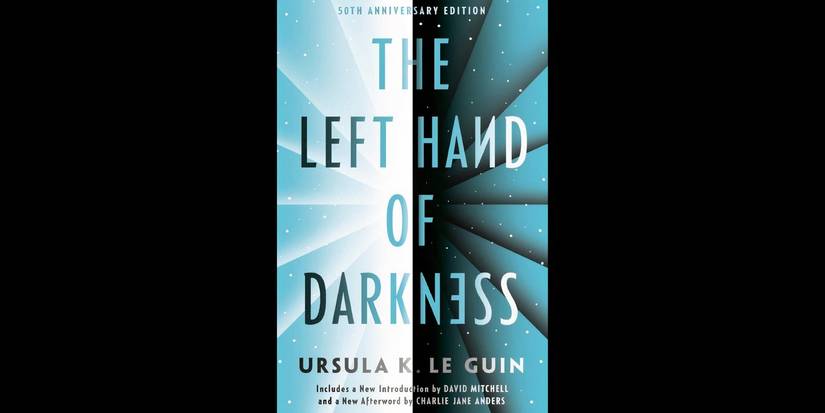
The Left Hand of Darkness comes from Ursula K. Le Guin. Genly Ai arrives on the planet Gethen as an envoy from the Ekumen, hoping to persuade its nations to join a wider alliance of worlds. Gethenians are ambisexual and usually have no fixed sex. Genly understands the biology before he understands the people. His own assumptions about gender keep interfering with his political judgment, especially in his relationship with Estraven, the official who has done more than anyone to support his mission.
Politics pushes them apart before survival forces them together. Their journey across the Gobrin Ice takes up a large part of the novel, and the slow pace is essential. Genly finally has to trust the person he repeatedly misread. The cold, hunger, isolation, and daily work remove the distance created by diplomacy. The book earned both the Hugo and Nebula Awards and became a landmark discussion of gender in science fiction. Its ideas remain debated, which is a sign of how much it opened rather than how neatly it solved the subject. Genly arrives hoping to change a planet and leaves with a painful understanding of how much the planet changed him.
2
‘The Dispossessed’ (1974)

This one also comes from Ursula K. Le Guin. The novel circles Shevek, a physicist from Anarres, a moon settled by anarchists who rejected the capitalism and hierarchy of the planet Urras. He grows up believing his society has escaped ownership and oppression. Daily life slowly exposes another problem. A culture built around equality can still punish disagreement, protect informal power, and treat individual ambition as betrayal.
His journey to Urras offers comfort, resources, and scientific freedom, but the wealth depends on class division and state violence. Neither world gets presented as the easy answer. Anarres has solidarity and shared responsibility, along with conformity and scarcity. Urras has abundance, beauty, and academic opportunity, along with exploitation hidden beneath polished institutions. Shevek wants his theory of time to belong to everyone, so he refuses to let either society claim it. The subtitle calls The Dispossessed “an ambiguous utopia,” and that description is exact. It asks readers to keep questioning any political system that declares itself finished. Revolution here is a habit of criticism, not a flag planted once and admired forever.
1
‘Dune’ (1965)
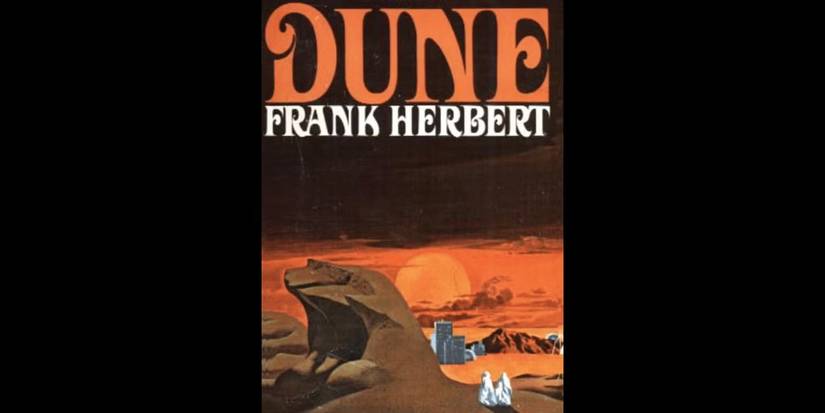
Frank Herbert’s Dune takes the lead on this list and it follows the story of Paul Atreides arriving on Arrakis as the heir to a powerful family and the product of generations of political and genetic planning. His father has been ordered to govern the planet that supplies spice, the resource supporting interstellar travel and imperial power. Everyone knows House Atreides is walking into a trap. The tension comes from watching each person prepare for it while still underestimating how complete the betrayal will be.
After the family falls, Paul and Jessica take refuge with the Fremen. Paul learns their culture, gains power, and begins using a prophecy that the Bene Gesserit planted long before his birth. This is where Dune becomes much more than a revenge story. Paul sees a future filled with war carried out in his name, yet every victory moves him closer to it. Ecology, religion, colonialism, economics, and political myth are built into the same conflict. The novel won both the Hugo and the inaugural Nebula Award for Best Novel. Its greatest achievement is less comfortable. The hero can understand the danger of becoming a messiah and still choose the path that puts millions under his banner.
You must be logged in to post a comment Login