Entertainment
8 Stephen King Books Only Die-Hard Fans Know

Plenty of Stephen King stories are ubiquitous, and not just if you’re a reader, and find yourself strolling past a good many horror sections at any number of book stores, but also if you watch a lot of movies and/or TV. So many books of the author’s have been popular, and then some of them have reached further popularity thanks to TV productions or movies (or, as was the case with IT, both, since that one had a miniseries adaptation and then a two-part movie adaptation much later).
And there are Stephen King stories that are more popular in their adapted form than their written one, because you might still be able to find people you can surprise by telling them Stand by Me and The Shawshank Redemption were based on works written by King. Still, with him being so prolific, there are a few books he’s written that only the truly die-hard Stephen King fans will probably know about, including the ones below. And hey, if you’ve heard of them all, and read each and every one, then congrats: you’re probably a big fan and stuff. Join the club.
8
‘Elevation’ (2018)


There have been good Stephen King books written in the 21st century for sure, and a few are even quite popular and worthy of being compared to his classics (like 11/22/63 for sure, and probably Revival and Under the Dome, too). Then you’ve also got Elevation, which is a bit too odd and slight to really leave much of a mark, and it’s most interesting if you approach it as something of a spiritual sequel to Thinner.
Now, Thinner is lesser King, by his early standards, so is probably on the less-known side of things as far as his 1980s books go. But it’s still had more of an impact than Elevation, with weight loss being played for horror in Thinner, and then a man losing mass somehow (to the point where he begins to reckon with the idea that he might eventually float away) being played for… it’s hard to tell. Played for emotion? Played for tears? Elevation is quite sappy and almost silly, but any die-hard (well, semi-die-hard) fans who’ve not read it yet might still get a little out of it.
7
‘Danse Macabre’ (1981)

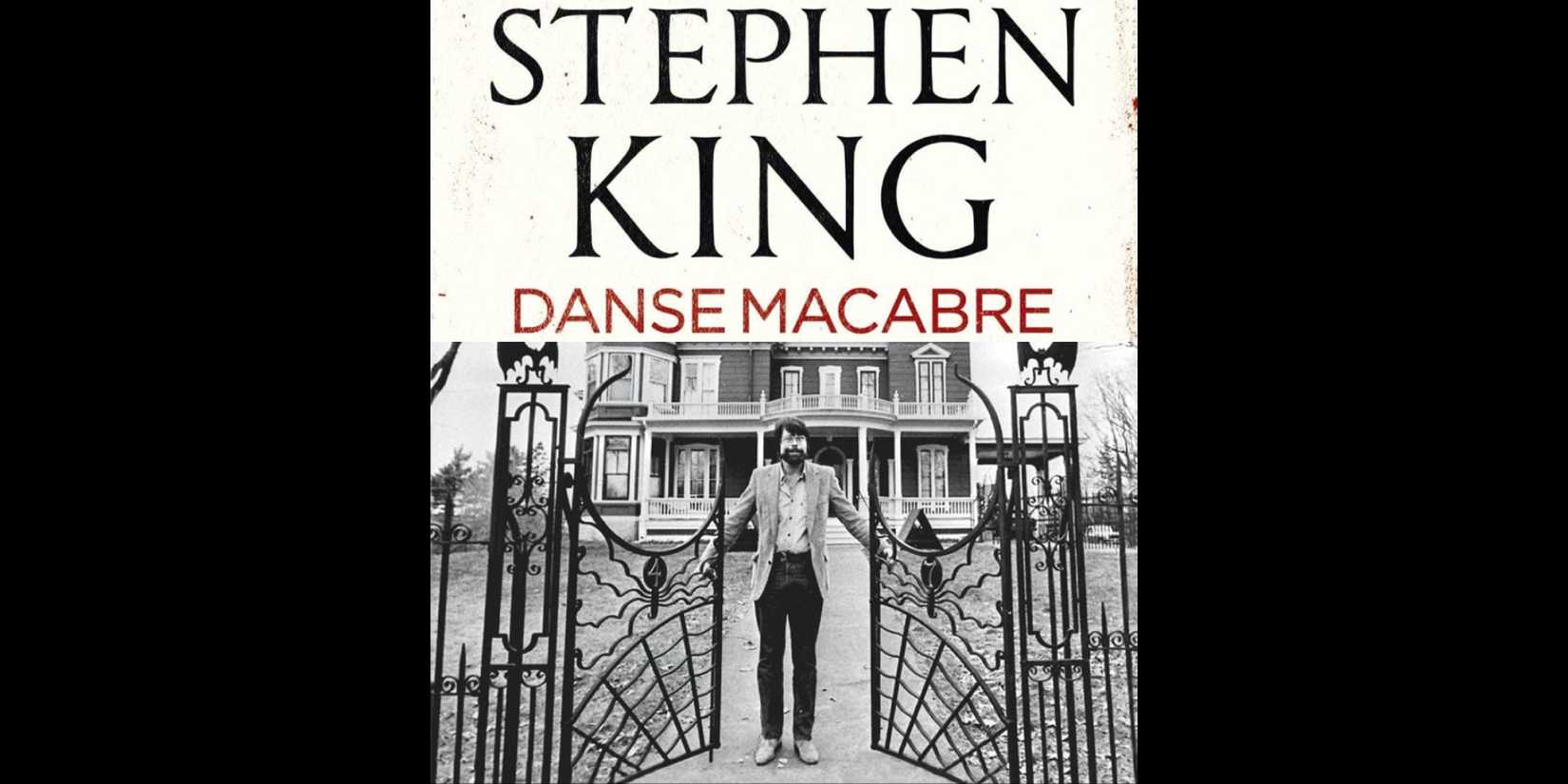
In Danse Macabre, Stephen King spends a lot of time writing about horror books that other people have written. Some are classics that inspired him, while others were written by his contemporaries, and were relatively recent at the time Danse Macabre was published. King also spends parts of the book talking about horror on television, and cinematic horror, exploring – and commenting on – the genre in a few other ways, too.
Yes, it’s a non-fiction book, and so it’s one that’s lacking genuine horror elements (supernatural or otherwise), instead being concerned with talking about horror. It’s one of the least scary Stephen King books, for that reason, though it’s not quite as strong a work of non-fiction as his more personal On Writing, which is justifiably a little more well-known – and held in higher regard critically – than Danse Macabre. But if you like the way King writes non-fiction, and you’re particularly interested in reading his quite conversational run-through of the horror genre and some of its history, it can make for a fairly fun read.
6
‘Rage’ (1977)
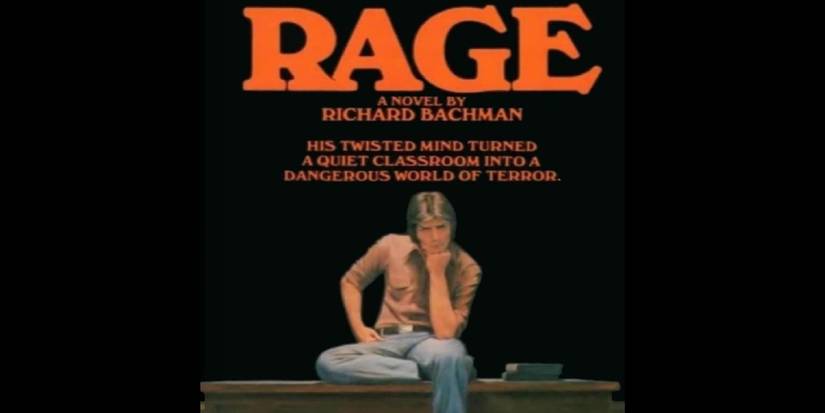
It’s easy to put Rage here on the basis that it’s been pulled from publication, so you have to look outside traditional bookstores if you really want to read it, and if you need a physical copy, it’s going to have to be a second-hand one, basically. Rage is about a young boy who brings a gun to school, using it to shoot one of his teachers before holding some of his classmates at gunpoint, which kicks off a tense hostage situation.
All that’s why Rage is easy to put here. It’s simply not as accessible as King’s other books.
King wrote it early on in his writing career, and it was one of his Richard Bachman books (as was the previously-mentioned Thinner), but he’s soured on it more recently, and doesn’t feel it’s responsible to continue selling it with the rise in school incidents comparable to the one in Rage, in the years since Rage first came out. All that’s why Rage is easy to put here. It’s simply not as accessible as King’s other books, and there’s an extra level of dedication required on the part of a reader to get one’s hands on it.
5
‘Black House’ (2001)

There’s a world of horror books out there not written by Stephen King, and Black House is almost one of them. Okay, he co-wrote it, so there is King to be found here, but it’s definitely got some differences from his usual style, thanks to Peter Straub being a tremendously interesting co-author, as was also the case with The Talisman. Black House, published nearly two decades later, continues the story that kicked off in that epic-length novel.
Black House is a little more abstract, though, with things being a bit less recognizably Stephen King, compared to The Talisman, until you get to the parts of Black House that go all-in with The Dark Tower references. That’s where Black House starts to feel surprisingly important for Stephen King’s whole multiverse, a little like how Insomnia also is, despite not being an official entry in The Dark Tower series. Still, there are some barriers to overcome if you want to get into Black House, including the need to have read (and remember) The Talisman, an appreciation (or at least tolerance) for Peter Straub’s style, and some knowledge of The Dark Tower, so you know the significance of the bits of Black House that cross over.
4
‘Rose Madder’ (1995)

The subject matter of Rose Madder is certainly heavy-going, since it’s about a woman going on the run from her abusive husband. While she is the central character, her husband does remain in the story fairly often as he chases her, which does a lot in keeping things tense, and like they are continually moving somewhere, but Stephen King does not hold back at all when it comes to making this man truly evil… occasionally even cartoonishly so.
And then Rose Madder dips into fantasy and mild supernatural horror in its final act, all in ways that are messy, but still fairly interesting. It’s more the intensity of the fairly realistic horror before the truly fantastical stuff that makes Rose Madder a bit of a hard sell. It’s also not had any movie or TV adaptation to date, and it’s not one you hear a ton of people talking about or really loving (for what it’s worth, it’s not nearly mishandled enough to rank anywhere near the bottom if you’re talking about King’s worst books to date).
3
‘The Eyes of the Dragon’ (1984)

It’s a possibly bold claim, but The Eyes of the Dragon is a genuinely strong fantasy novel, and one of King’s better attempts at writing something firmly within that genre. And he has tackled fantasy fairly often, blending it with Western and sci-fi conventions in The Dark Tower, most noticeably, though The Eyes of the Dragon has him doing what might still be called dark fantasy, but not as dark as usual.
The thing’s probably suitable for young adult audiences, or kids who’ve read and enjoyed/appreciated something on the level of His Dark Materials. The Eyes of the Dragon continues to feel a bit underappreciated, though, or maybe just overshadowed by various other iconic Stephen King novels from the 1980s. If a big fan of the author’s hasn’t read it, telling them it’s one of the more significant Stephen King stories featuring Randall Flagg will probably pique their interest, seeing as he’s a prominent villain here just as he is in The Stand and throughout a decent chunk of The Dark Tower series, too.
2
‘Cycle of the Werewolf’ (1983)

Cycle of the Werewolf has a bit of a gimmick, but it’s a cool one. The book’s probably more of a novella than a novel, which could also be said about Elevation, though this is a good deal more compelling. It has one chapter per month, spanning a year, and some of the chapters feel like short stories about a town dealing with possible werewolf attacks, but there is still enough by way of continuity to eventually tie things together.
It’s an easy read, because there aren’t many pages all up, and then there are a high number of illustrations spread out across quite a few of those pages, done by Bernie Wrightson. They add a lot to the simple but engaging story, and Cycle of the Werewolf does indeed do the werewolf sub-genre justice… perhaps not to the same extent that Stephen King did vampires justice in ‘Salem’s Lot, or anything, but he did werewolves here better than he did zombies in Cell, for whatever that might be worth.
1
‘Faithful’ (2004)

Imagine someone writing about Stephen King almost constantly, and then bragging about having read all his novels, novellas, and short stories, only to have one white whale out there that remains unconquered. It’s called Faithful. It is a bridge too far for this die-hard Stephen King you were just told to imagine. Imagine further that this person cannot bring themselves to read Faithful, even if some others might argue you have to read Faithful if you want to “truly” complete King’s body of work.
But this imagined person would find that too arduous. Assume this person does not care for baseball, and found that one Stephen King baseball-related story (more of a non-fiction essay) in Nightmares and Dreamscapes, called “Head Down,” exceptionally hard to get through. This hypothetical person cannot subject themselves to a book that’s just Stephen King talking about the 2004 Boston Red Sox season. This feels like the most niche thing ever. And also, it was co-written with novelist Stewart O’Nan, so technically, you can be a completionist while just sticking to the books that only King wrote (you’d be missing out on The Talisman and Black House then, of course, but still).


- Birthdate
-
September 21, 1947
Stephen Edwin King was born the second son of Donald and Nellie Ruth Pillsbury King. After his father left them when Stephen was two, he and his older brother, David, were raised by his mother. Parts of his childhood were spent in Fort Wayne, Indiana, where his father’s family was at the time, and in Stratford, Connecticut. When Stephen was eleven, his mother brought her children back to Durham, Maine, for good. Her parents, Guy and Nellie Pillsbury, had become incapacitated with old age, and Ruth King was persuaded by her sisters to take over the physical care of them. Other family members provided a small house in Durham and financial support.(Biographical information from Goodreads)
You must be logged in to post a comment Login