Entertainment
8 War Movies From the ’90s That Are Perfect From Start to Finish

The 1990s represented a new peak for war filmmaking. The era saw a myriad of filmmakers masterfully balancing a sweeping sense of scale with some of the grittiest, most realistic portrayals of military combat that the genre had ever seen. Add to that shifting moral complexities, added philosophical depth, and even the occasional dramedy that satirized the concept of war in ways that not many movies ever had before, and you get one of the best-ever decades for war cinema.
It takes something truly special in order for a film to be truly perfect from start to finish, however; and as such, only a precious handful of ’90s war movie masterpieces can genuinely be praised as flawless. Of course “flawlessness” as it relates to movie analysis is a highly subjective thing, but there’s no denying that these eight ’90s gems are about as close as cinema can ever possibly come to perfection.
8
‘Pretty Village, Pretty Flame’ (1996)


The ’90s didn’t just see an increase in the quality of war films from Hollywood, but also in war films from the rest of the world. However, as often happens with smaller international productions, many of those masterpieces have faded into oblivion as the years have passed. That’s a particularly egregious crime when it comes to the Yugoslav masterpiece Pretty Village, Pretty Flame. Directed by Serbian filmmaker Srđan Dragojević, it’s a drama set during the Bosnian War, telling the story of two childhood friends who were forced to become enemies by the tragic circumstances of the conflict.
It was understandably a film festival sensation back in 1996.
It’s one of the most near-perfect 20th-century war movies nobody remembers, and it was understandably a film festival sensation back in 1996. It’s one of the most powerful anti-war movies of the ’90s, incredibly bold in its dark humor and political satire, as well as absolutely harrowing in its emotional core. Its complex exploration of its deeply nuanced characters is paired with an almost hallucinatory sense of surrealism, a perfect way of highlighting the madness and irrationality of war and violence.
7
‘Bullet in the Head’ (1990)


John Woo is best remembered as the father of gun fu and one of the greatest action filmmakers in history, which makes Bullet in the Head stand out all the more in his already stacked filmography. Another one of the most tragically forgotten war masterpieces of the ’90s, this one is a Hong Kong action epic and melodrama about three close friends who escape from Hong Kong to wartime Saigon in order to start living a criminal life. Soon, though, they all go through a harrowing experience which shatters their friendship forever.
It’s one of the best Vietnam War epics ever made, anchored by an exceptional cast and a transcendental understanding of the action genre, blending Woo’s signature explosive gunplay with the devastating psychological horror inherent to Vietnam War movies. Far more than just a tale of brotherhood and camaraderie, it’s a harrowing descent into greed, nihilism, and moral corruption the likes of which the genre hasn’t seen since.
6
‘Ulysses’ Gaze’ (1995)

Theo Angelopoulos was not only the greatest Greek filmmaker in history, but also one of the most important and hugely influential European filmmakers of his generation. He made several masterpieces over the course of his career, one of the most notorious being Ulysses’ Gaze, one of the most essential Harvey Keitel movies. It’s a psychological drama following an exiled filmmaker, who returns to his home country where former mysteries and afflictions come back to haunt him.
It’s one of the film’s with the most astonishing difference between critics’ and audiences’ ratings on Rotten Tomatoes, with a 27% from critics and an 89% from audiences. Couple that with the film’s 7.6/10 rating on IMDb and 4.2/5 on Letterboxd, and you get an undeniable case of critics being wrong on a movie. Poetic, hypnotic, and full of the same kind of patient long takes that Angelopoulos is known for, it’s a deeply moving and thought-provoking reflection on 20th-century Balkan history, the nature of political borders, and the power of cinema as cultural memory.
5
‘To Live’ (1994)

As further proof that the ’90s produced some of the greatest international war movies in history, ones which have mostly become tragically forgotten as the years have passed, there’s also the Chinese masterpiece To Live. Directed by Zhang Yimou, it’s one of those must-watch forgotten romantic movies, tracing the Xu family’s survival through the Chinese Civil War, Great Leap Forward, and Cultural Revolution between the ’40s and ’70s.
It’s everything that a historical epic should aim to be: Sweeping in scale, yet wonderfully intimate and profoundly human in scope, celebrating the heroism inherent in survival. Though the film spans four decades with just a little over two hours of runtime, it never feels overly dense or ambitious. Instead, it comes remarkably close to absolute perfection, with some flawless performances and a subtle humanist focus instead of overt political critique.
4
‘Underground’ (1995)

There are plenty of great movies from countries that no longer exist, and Yugoslavia is a former nation with a particularly strong filmography. Directed by Emir Kusturica, perhaps the greatest Yugoslav filmmaker in history, Underground is yet another of the ’90s’ most awfully underappreciated masterpieces, following two underground black marketers selling weapons to the Communist resistance in wartime Belgrade.
Part absurdist dark comedy, part three-hour-long war epic, Underground is the crowning achievement of Kusturica’s illustrious career and the peak of what ’90s European war cinema had to offer. Blending a surreal sense of humor with a devastating political tragedy, the film captures the soul of former Yugoslavia in a way that earned it the Cannes Film Festival’s 1995 Palme d’Or. It’s also a masterful work of magical realism, however, a universally timeless gem full of thought-provoking sociopolitical satire.
3
‘The Thin Red Line’ (1998)
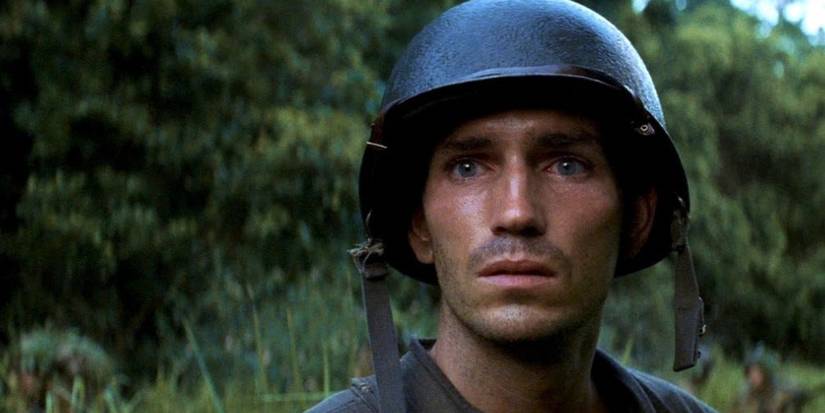
Terrence Malick is one of Hollywood’s most divisive filmmakers, with an arthouse-coded style that favors abstract spiritual experiences over conventionally plot-driven storytelling. Those who don’t enjoy that kind of film aren’t likely to love The Thin Red Line, but arthouse cinema fans should consider it essential viewing. It’s one of the most perfect war movies of the last 40 years, an epic about the contrast between the horrors of human conflict and the transcendental beauty of nature.
It’s one of the most effective and powerful anti-war statements that cinema has ever delivered, an essential ’90s classic of the genre of unparalleled emotional impact. Not everyone will consider it perfect, but patient cinephiles will find its profound philosophical meditation and absolutely drop-dead gorgeous cinematography irresistibly moving. Highly existential and boosted by one of Hans Zimmer‘s richest, most haunting scores, it’s a war film fully worthy of its fame.
2
‘Saving Private Ryan’ (1998)

Steven Spielberg is the father and king of blockbusters, and as such, he has repeatedly proven his versatility by making box office hits belonging to every genre under the Sun. Case in point: the war action epic Saving Private Ryan, perhaps the Spielberg film that was most infamously robbed of the Best Picture Oscar. It’s perhaps best-known for having one of the greatest opening sequences in film history, Spielberg’s recreation of the D-Day landings in Normandy, but everything that follows is every bit as great.
It’s one of the most tremendous cinematic masterpieces of the 1990s, regardless of genre. Its action sequences, for one, proved absolutely revolutionary for the genre, adding unprecedented technical realism and brutality to war movie action. Then there’s the exceptional cinematography, the star-studded ensemble cast, the stunning sound design, and the riveting-yet-harrowing third act. What else could the combination of such elements be if not one of the biggest war movie masterpieces ever?
1
‘Schindler’s List’ (1993)
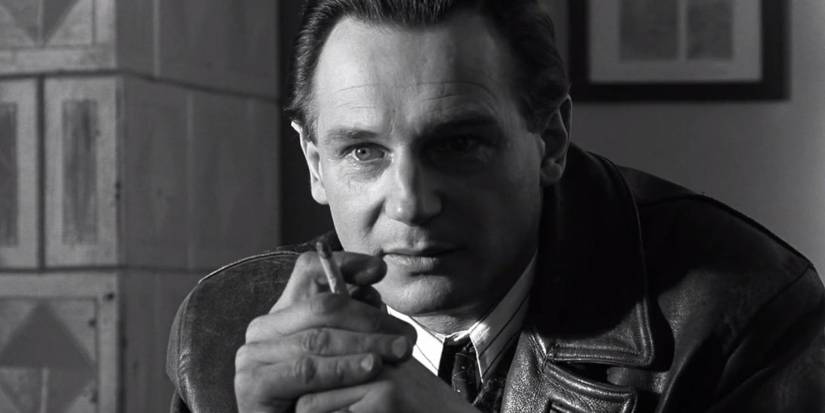
Spielberg hasn’t really been the same throughout most of the 21st century, but he was at the very top of his game during the ’90s. Surprisingly, however, it just so happens that the best film he’s ever made is not a spectacular popcorn blockbuster at all, but rather one of the most serious and emotionally devastating war epics of the era: Schindler’s List, which is also one of the best biopics of all time.
It’s a sprawling, profoundly compelling depiction of the work of Oskar Schindler during World War II, celebrating his heroic acts without ever shying away from his many moral layers and darker bits of nuance. Supported by an exceptional cast led by Liam Neeson and Ralph Fiennes, one of John Williams‘ most emotionally stirring scores, and some of the most striking black-and-white cinematography of the 1990s, Schindler’s List is undoubtedly the most perfect war movie of the decade, and one of the most perfect of all time.


You must be logged in to post a comment Login