The 1970s introduced many things into pop culture that lived and died over the decade: pet rocks, mood rings, lawn darts that injured thousands, and disco (which has an actual death date). It also launched the disreputable “jiggle TV” genre, a phrase coined by NBC executive Paul Klein, who defined it as “when you have a young, attractive television personality running at top speed wearing a limited amount of underwear.” Any show that met the criteria’s low bar, like The Love Boat and Three’s Company, were eternally saddled with the term, and dismissed outright.
The term itself largely stayed in the 1970s, even if the genre itself was kept alive with the likes of Baywatch. While there were true offenders, series like Wonder Woman offered more than the disdainful association, but “jiggle TV” was a difficult label to emerge from. But in what can only be called heavenly, one series’ long association with the term, Charlie’s Angels, has been given redemption 50 years later by earning Top 10 status on the Apple TV store. The question, however, is this: Should Charlie’s Angels be forgiven for its sins?
Advertisement
ABC Is Shocked by the Success of ‘Charlie’s Angels’
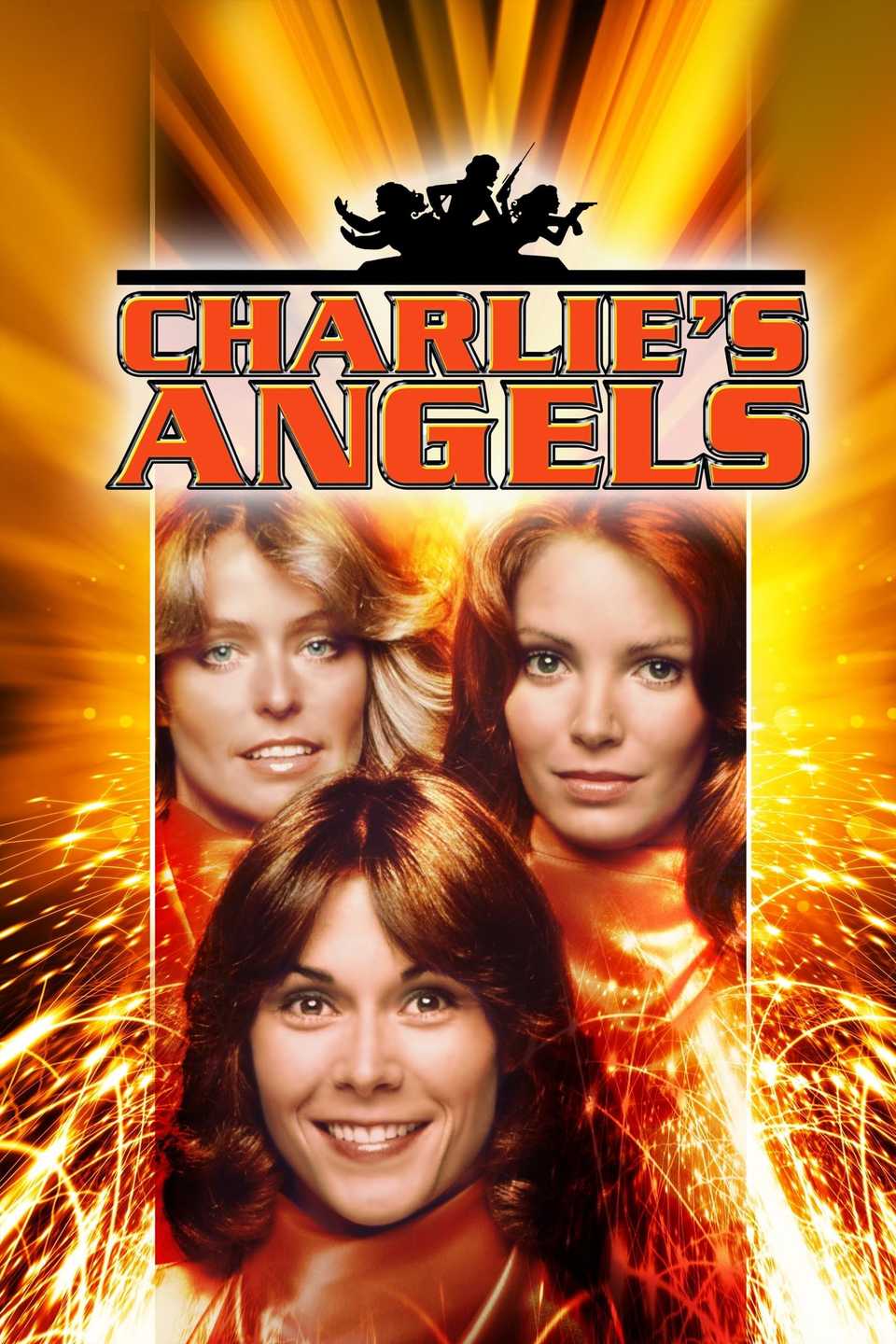
The series was the vision of producer Leonard Goldberg, who wanted to combine the British espionage series The Avengers with the female detective series Honey West. The series evolved into one about three strong women, whose assignments are given by an unknown man over a speakerphone. Actress Kate Jackson was the first cast as the series’ lead, and she offered development ideas, including the name “Angels.”Farrah Fawcett was then cast as “Athletic Angel” Jill Monroe, followed up by Jaclyn Smith, who played “Streetwise Angel” Kelly Garrett. With Jackson as “Smart Angel” Sabrina Duncan, the three formed the trio most closely associated with the series, despite Fawcett leaving after one season and being replaced by Cheryl Ladd, aka Kris Munroe, who stayed on for the rest of the show.
Advertisement
Collider Exclusive · Action Hero Quiz Which Action Hero Would Be Your Perfect Partner? Rambo · James Bond · Indiana Jones · John McClane · Ethan Hunt
Five legends. Five completely different ways of getting out alive — with style, with muscle, with charm, with luck, or with a plan so intricate it probably shouldn’t work. Ten questions will reveal which action hero was built to have your back.
🎖️Rambo
🍸James Bond
Advertisement
🏺Indiana Jones
🔧John McClane
🎭Ethan Hunt
Advertisement
01
You’re dropped into a dangerous situation with no warning. What do you need most from a partner? The first few seconds tell you everything about who belongs beside you.
Advertisement
02
You have to get somewhere dangerous, fast. How do you travel? How you get there is half the mission.
Advertisement
03
You’re pinned down and outnumbered. What does your ideal partner do? This is when you find out what someone is really made of.
Advertisement
04
The mission is paused. You have one evening to decompress. What does your partner suggest? Who someone is when the pressure drops is who they actually are.
Advertisement
05
How do you prefer your partner to communicate mid-mission? Good communication is the difference between partners and a liability.
Advertisement
06
Your enemy is powerful, well-resourced, and has the upper hand. How should your partner approach them? The approach to the enemy defines the partnership.
Advertisement
07
Things go badly wrong and you’re captured. What do you trust your partner to do? Who someone is when you need them most is the only thing that matters.
Advertisement
08
What does your ideal partner bring to the table that you couldn’t replace? A great partner fills the gap you didn’t know you had.
Advertisement
09
Every partnership has a cost. Which of these can you live with? No one comes without baggage. The question is whether you can carry it together.
Advertisement
10
It’s the final moment. Everything is on the line. What do you need from your partner right now? The last question is the most honest one.
Advertisement
Your Partner Has Been Assigned Your Perfect Partner Is…
Your answers have pointed to one action hero above all others. This is the person built to have your back — for better or considerably, spectacularly worse.
Advertisement
Rambo
Your partner doesn’t talk much, doesn’t need to, and will have assessed every threat in your immediate environment before you’ve finished your first sentence. John Rambo is not a man of plans or politics — he is a force of nature shaped by survival, loyalty, and a capacity for endurance that goes beyond anything training can produce. He will not leave you behind. He has never left anyone behind who deserved to come home. What you get with Rambo is the most capable, most quietly ferocious partner imaginable — one who has been through things that would have broken anyone else, and who chose to keep going anyway. You’ll never need to ask if he has your back. You’ll just know.
Advertisement
James Bond
Your partner will arrive perfectly dressed, perfectly briefed, and with a cover story so convincing it’ll take you a moment to remember what’s actually true. James Bond is the most professionally dangerous person in any room he enters — and the most disarmingly charming, which is the point. He operates in a world of layers, where nothing is what it appears and every advantage is used without apology. You’ll never be bored. You’ll occasionally be furious. But when it matters — when the mission is genuinely on the line and the margin for error has collapsed to nothing — Bond is exactly the partner you want. He has survived things that have no business being survivable. He does it with style. That is not nothing.
Indiana Jones
Advertisement
Your partner will know the history, the language, the cultural context, and exactly why the thing everyone else is ignoring is actually the most important thing in the room. Indiana Jones is brilliant, reckless, and occasionally impossible — but he is also one of the most resourceful, most genuinely knowledgeable partners you could find yourself beside. He approaches every situation with a scholar’s eye and a brawler’s instinct, which is an unusual combination and a remarkably effective one. He hates snakes and gets personally attached to objects of historical significance, both of which will slow you down at least once. It doesn’t matter. What Indy brings is irreplaceable — and the adventures you’ll have together will be the kind people write books about. Assuming you survive them.
John McClane
Your partner was not supposed to be here. He does not have the right equipment, the right information, or anything approaching the right odds. He has a sarcastic remark and an absolute refusal to accept that the situation is as bad as it looks. John McClane is the greatest accidental hero in the history of action cinema — a man whose superpower is stubbornness, whose contingency plan is improvisation, and whose capacity to absorb punishment and keep moving would be alarming if it weren’t so useful. He will complain the entire time. He will make it significantly more chaotic than it needed to be. And he will absolutely, unconditionally, without question come through when it counts. Yippee-ki-yay.
Advertisement
Ethan Hunt
Your partner has already run seventeen scenarios by the time you’ve finished reading the briefing, and the plan he’s settled on involves at least two things that should be physically impossible. Ethan Hunt operates at the absolute edge of human capability — technically, physically, and intellectually — and he brings the same relentless precision to protecting his partners that he brings to dismantling organisations that shouldn’t exist. He is not easy to know and he will never fully tell you everything. But he will carry the weight of the mission so completely, so absolutely, that your job is simply to trust him — and the remarkable thing is that trusting him always turns out to be the right call. The mission will be impossible. He will complete it anyway.
Advertisement
It’s highly unlikely that Jackson pushed for the series to herald “jiggle television,” but that’s exactly what happened, with stories and situations that “justified” their skimpy attire (producer Aaron Spelling reportedly wanted someone in a bikini in every scene). To add insult to injury, Jackson’s Sabrina was typically left to work behind the scenes on cases: attractive, but not as attractive as Smith and Fawcett in bra-less T-shirts and tight dresses. Nevertheless, ABC premiered the series as a pilot film in March 1976, despite believing it was one of the worst ideas for a TV series ever (per The Sunday Post). Instead, Charlie’s Angels was a huge hit, which so shocked the network that they re-ran the pilot the next week, where it repeated its success.
Advertisement
Critics loathed the show, but ABC had stumbled into a pop-culture sensation in spite of the criticism, with the Angel’s faces on magazines and merchandise everywhere, including the famed Fawcett “Red Swimsuit” poster. Fawcett herself knew exactly why the series found success, saying (per The Sunday Post): “When the show was No 3, I figured it was our acting. When it got to No 1, I decided it could only be because none of us wears a bra.” The series lasted for 5 seasons, never escaping the stigma of being little more than “jiggle television.”
‘Charlie’s Angels’ Deserves Its Redemption
Until recently, that is, with its success on streaming as it climbs the charts on Apple TV Store, with today’s savvier audiences appreciating it for its empowerment of women, and its definition of “jiggle” having been long surpassed in graphic detail. The show was exploitative beyond a shadow of a doubt, but it also empowered women. Smith, for one, called the series “groundbreaking” and “inspirational” in an interview with People, claiming she received letters of gratitude for the show’s establishment-challenging influence.
Charlie’s Angels stands as an example of a “deal with the Devil,” if you will, given the prevailing attitude at the time that women couldn’t headline an action series. The Mary Tyler Moore Show had a strong, empowering lead without resorting to “jiggling,” but action dramas weren’t even close. The series status as “jiggle TV” was, in essence, a Trojan Horse that allowed three strong, attractive women to tout the message of female liberation while hiding it in plain view. It opened the door for the likes of Xena: Warrior Princess and Buffy the Vampire Slayer, series that turned the notion that women couldn’t lead action upside-down, with a knowing wink. So yes, Charlie’s Angels redemption via streaming, 50 years after its debut, is earned, and well past due. But rest assured that Three’s Company is highly, highly unlikely to follow suit.


You must be logged in to post a comment Login