Entertainment
Alfred Hitchcock’s 10 Most Suspenseful Masterpieces, Ranked

Alfred Hitchcock transformed cinema with his unparalleled ability to manipulate tension, fear, and suspense, and is hailed as one of the most prolific filmmakers of Hollywood’s Golden Age. Known as the Master of Suspense, Hitchcock transcended the traditional thriller with innovative storytelling, stunning cinematography, and his signature techniques, earning him an unfailing reputation for luring audiences into a world where tension is an art form, and a familiar farce becomes a game of psychological warfare.
With a career spanning over six decades, Hitchcock produced a collection of classics, but notable titles, such as Psycho, The Birds, and Rear Window, are among the filmmaker’s most suspenseful masterpieces that make every moment of intensity feel deeply personal and unforgettable. These particular Hitchcock films, including Shadow of a Doubt, Strangers on a Train, and Vertigo, are not merely thrillers; they are carefully constructed experiences that continue to captivate audiences, drawing them into worlds where danger lurks beneath the ordinary, and evil hides around every corner.
10
‘Rope’ (1948)


The psychological crime thriller, Rope, was the second installment in Hitchcock’s limited-setting films and stars Farley Granger and John Dall as friends, Phillip Morgan and Brandon Shaw, who carry out a twisted intellectual exercise by murdering a former classmate before hosting a dinner party. Rope stands out for its bold, experimental approach to storytelling and its intense psychological focus, both heightened by the film’s apparent single-take style, which traps viewers in real time inside a confined apartment and creates an almost unbearable sense of immediacy.
Rather than relying on action, Hitchcock showcases one of his trademarks by building tension through dramatic irony: the audience knows the truth while the guests do not, turning ordinary conversation into something deeply disturbing. The film’s psychological depth, particularly through the intellectual arrogance of the killers and the probing presence of their former teacher, played by James Stewart, creates a slow-burning tension that escalates toward exposure and a climactic revelation.
9
‘The Birds’ (1963)

The Birds is a thrilling testament to Hitchcock’s ability to transform the familiar into relentless terror, making it one of his most suspenseful masterpieces. Tippi Hedren makes her feature film debut as Melanie Daniels, a young socialite who becomes intrigued by a lawyer, Mitch Brenner (Rod Taylor), after meeting at a local pet shop. When Daniels travels to Brenner’s family farm on Bodega Bay, sparks begin to fly between them, but their newfound bliss is interrupted by a series of brutal bird attacks, sending everyone in the area into a state of pure hysteria and fear.
The overall suspense in The Birds stems from its lack of answers, which removes any sense of control or logic, effectively keeping audiences on a constant edge. Like the characters, viewers are left to try to make sense of a threat that could strike at any moment, which is a defining quality in Hitchcock’s work. Instead of a traditional musical score to heighten the intensity, Hitchcock’s choice to use natural sounds and silence to build tension makes each attack feel more sudden and jarring, creating a deeply unsettling and enduring form of suspense that only he could pull off with such precision.
8
‘The 39 Steps’ (1935)
The 39 Steps is one of Hitchcock’s best espionage films that helped define the classic thriller and laid the foundation for modern spy movies. Loosely based on John Buchan‘s 1915 novel of the same name, The 39 Steps stars Robert Donat as Richard Hannay, a Canadian tourist in London who accidentally uncovers an underground ring of spies who are planning to steal vital military secrets. When Hannay is framed for murder, he must elude local authorities long enough to not only clear his name but also hopefully stop the spies’ nefarious plot before it’s too late.
The 39 Steps was one of Hitchcock’s earliest successes and is known for its “innocent man” trope, which became one of the director’s story trademarks, and was also the first film to feature Hitchcock’s infamous MacGuffin, a plot device that drives the story’s action and the character’s motivation while never being fully explained to the audience. The film established many conventions of the espionage thriller, such as wrongful accusations, cross-country chases, and mysterious organizations, that Hitchcock would go on to refine in his later films, like Saboteur and North by Northwest, which continue to shape the genre today.
7
‘Rebecca’ (1940)


Hitchcock made his American debut with his Oscar-winning romantic thriller, Rebecca, which is based on Daphne du Maurier’s 1938 novel of the same name. The movie stars Joan Fontaine as an unnamed woman who is swept off her feet by a wealthy widower, Maxim de Winter (Laurence Olivier), leading to a whirlwind marriage. When the newlyweds return to de Winter’s seaside manor, the new Mrs. de Winter becomes curious about her husband’s first wife, Rebecca, who had died under mysterious circumstances. As Mrs. de Winter starts to search for answers, she starts to suspect that her husband may have been more involved in Rebecca’s demise than he initially led on.
Rebecca is a chilling Hitchcock classic that builds tension through a hauntingly beautiful atmosphere, unavoidable memories, and psychological manipulation instead of over-the-top action and physical drama. The majority of the film’s intensity comes from the psychological pressure placed on Fontaine’s character, who is constantly compared to Rebecca and made to feel inadequate, especially by the sinister housekeeper, Mrs. Danvers, played by Agnes Moorehead. Hitchcock uses this dynamic to create a suffocating ambiance of insecurity and dread, where the protagonist begins to question her place, her marriage, and even her sanity, ultimately making Rebecca one of the director’s most suspenseful masterpieces.
6
‘Shadow of a Doubt’ (1943)

Hitchcock brings terror to the surface in small-town America with Shadow of a Doubt, and stars Joseph Cotten as a charismatic bachelor, Charles Oakley, whose niece and namesake, Charlie (Teresa Wright), begins to suspect that her beloved uncle is secretly a serial killer known as the Merry Widow Killer. The premise of an unsuspecting evil hiding in plain sight is one of the film’s greatest strengths and a signature theme in many of Hitchcock’s most suspenseful masterpieces.
The meticulous use of shadows, lighting, and recurring motifs subtly signals danger, while the slow-burning psychological game of wit and tact between Charlie and Oakley allows suspicion and fear to grow until it becomes almost unbearable. Hitchcock’s choice to cast Cotten, who was known for his heroic, good ole’ boy roles, as the murderous Oakley is another notable element that makes Shadow of a Doubt such an ingenious thriller. Cotten’s on-screen reputation throws the audience off; his contagious charm and dashing good looks effortlessly conceal his character’s true nature, emphasizing how easy it is for a killer to blend into everyday society.
5
‘Strangers on a Train’ (1951)
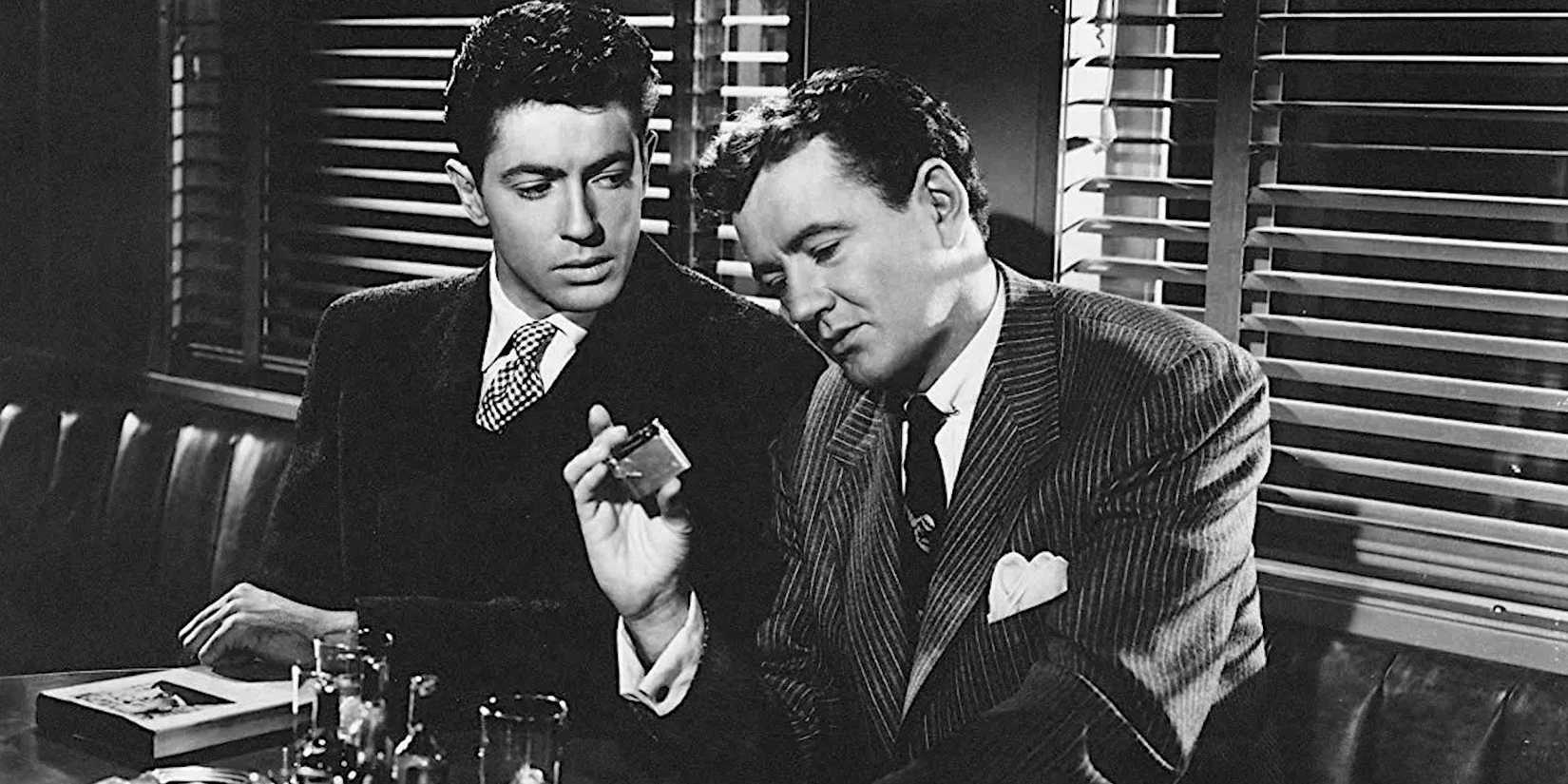
Strangers on a Train is an essential Hitchcock classic starring Farley Granger as a professional tennis player, Guy Haines, who meets an unusually charismatic young man, Bruno Antony (Robert Walker), while on board a train headed to his hometown. When Haines confides in Antony about his unfaithful wife and his attempt to get a divorce, Antony shares his theory of how to get away with committing the perfect murder by having two strangers kill someone for each other. While Haines brushes Antony’s idea off as nonsense, he’s unaware that Antony is a sophisticated psychopath who decides to go ahead with the plan.
The crisscross murder plot in Strangers on a Train may seem outlandish, but between Hitchcock’s groundbreaking film techniques and iconic scenes elevating the premise, it does incite an unwavering sense of tension that is impossible to deny. Even though Haines never truly agrees to the plot, Antony’s choice to carry it out inevitably binds Haines into a nightmare where guilt and innocence blur, ultimately forcing viewers to question how complicit Haines really is. Walker’s performance as the diabolical Antony is one for the ages as he effectively conveys a man whose spoiled tendencies, well-to-do social status, and unpredictability make him one of Hitchcock’s most intimidating villains of all time.
4
‘Vertigo’ (1958)

Image via Paramount Pictures
James Stewart stars in Vertigo as a retired San Francisco detective, John ‘Scottie’ Ferguson, who suffers from a debilitating fear of heights, is hired by a college friend to follow his wife, Madeline Elster (Kim Novak), whose recently strange behavior has caused him to become concerned about her well-being. Shortly after meeting, Ferguson and Elster become romantically involved, but when Elster takes her own life, Ferguson is overcome by guilt, spiraling into a deep depression. When he meets a woman (Novak) who has a striking resemblance to his lost love, Ferguson’s grief grows into an all-consuming obsession that eventually leads to a point of no return.
Vertigo is often considered to be Hitchcock’s magnum opus and is hands down one of his most suspenseful masterpieces that transforms a psychological obsession into an intensely immersive and unsettling experience. Hitchcock builds suspense not just from plot twists, but from Ferguson’s unraveling mind, making the audience feel his disorientation and dread as almost their own. The film is also celebrated for its groundbreaking visuals and film techniques, notably the disorienting dolly zoom and the use of color palettes, which uniquely mirror Scottie’s mental state and elevate the film’s dreamlike atmosphere.
3
‘North by Northwest’ (1959)
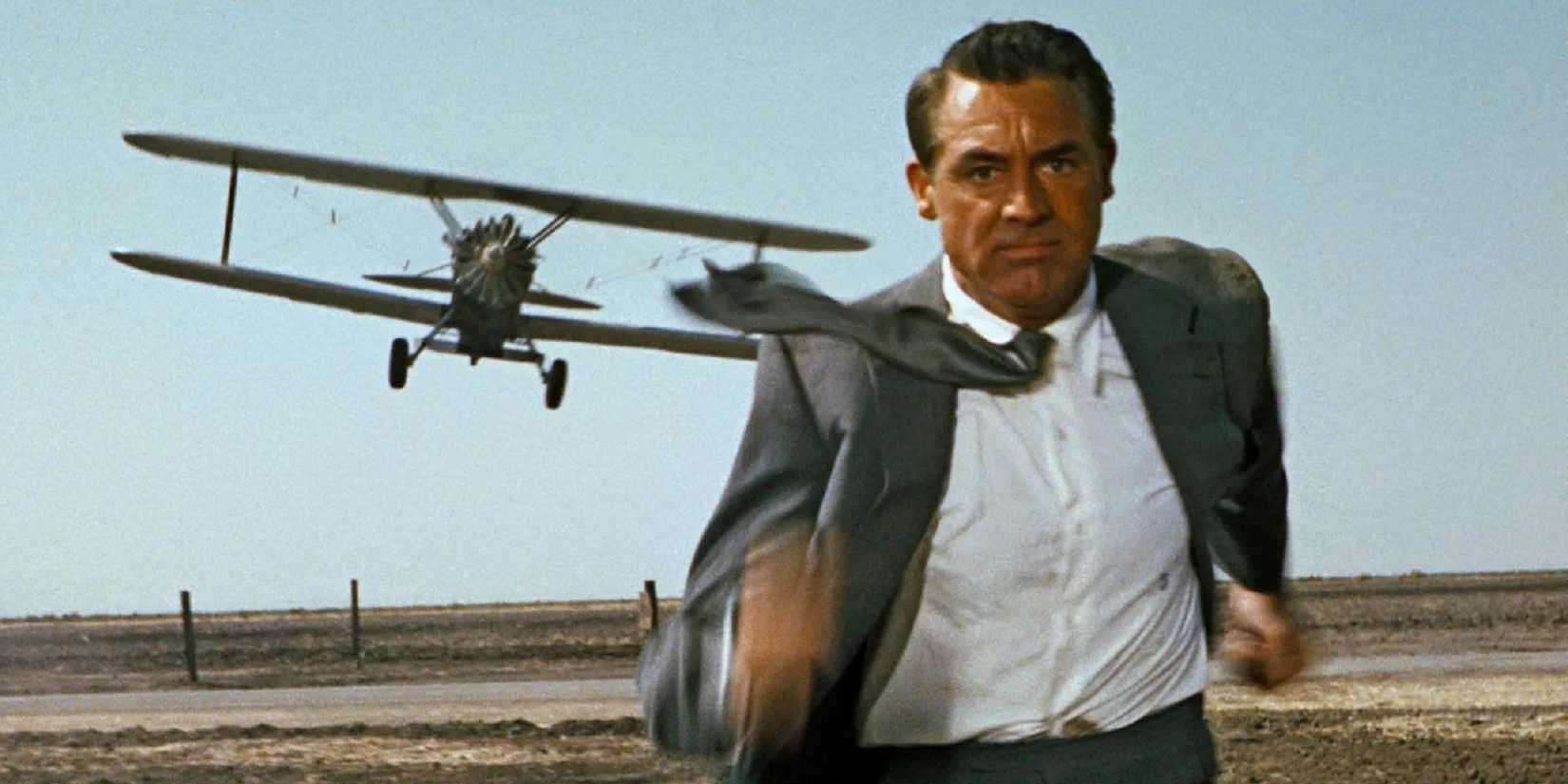
Hitchcock perfects his “wrong man” formula in North by Northwest while also blending relentless tension with entertainment, scale, and wit, and is regarded as one of the greatest movies ever made. Cary Grant stars as a New York advertising executive, Roger Thornhill, who is mistaken for a government agent and pursued across the country by a group of men who believe he is trying to prevent them from smuggling out microfilm that contains top-secret information. North by Northwest was a monumental success and went on to influence future action thrillers and spy flicks, such as the James Bond films, and hit TV shows, including The Man From U.N.C.L.E. and The Fugitive.
Hitchcock builds a level of distressing suspense in North by Northwest by constantly stripping Thornhill of having any control over the situation he’s found himself in and never allowing him to fully understand the forces pursuing him until the end. The film is packed with iconic sequences, such as the crop duster scene and the climactic chase across Mount Rushmore, which showcase Hitchcock’s genius for visual storytelling and his impeccable talent for merging spectacle with high-stakes suspense. North by Northwest captures Hitchcock at the height of his brilliance, and its sharp pacing, unforgettable performances, and imaginative visual effects undoubtedly cement it as one of the director’s finest films.
2
‘Rear Window’ (1954)

Similar to the setting of Rope, Hitchcock’s Rear Window turns a single confined setting into an intense psychological thriller driven entirely by observation, uncertainty, and anticipation. The movie centers around a photojournalist, L.B. ‘Jeff’ Jefferies (James Stewart), who starts to secretly watch his neighbors as a way to pass the time while he’s recovering from a broken leg. One night, Jefferies witnesses a heated argument between Lars Thorwald (Raymond Burr), and when Mrs. Thorwald is nowhere to be found the next day, Jefferies begins to suspect that her husband is behind her sudden disappearance.
The brilliance of Rear Window lies in Hitchcock’s frequent point-of-view shots and intimate close-ups, which allow the audience to not only share Jeffries’ gaze, but also his doubts: are we witnessing a crime or projecting meaning onto ordinary events? This uncertainty keeps the suspense constantly simmering, as every small detail could be either innocent or incriminating. Instead of fast-paced chases, Hitchcock relies on timing, silence, and carefully staged visual clues, such as watching Thorwald’s movements across the courtyard or waiting for a signal that confirms guilt, stretching tension to its limit.
1
‘Psycho’ (1960)

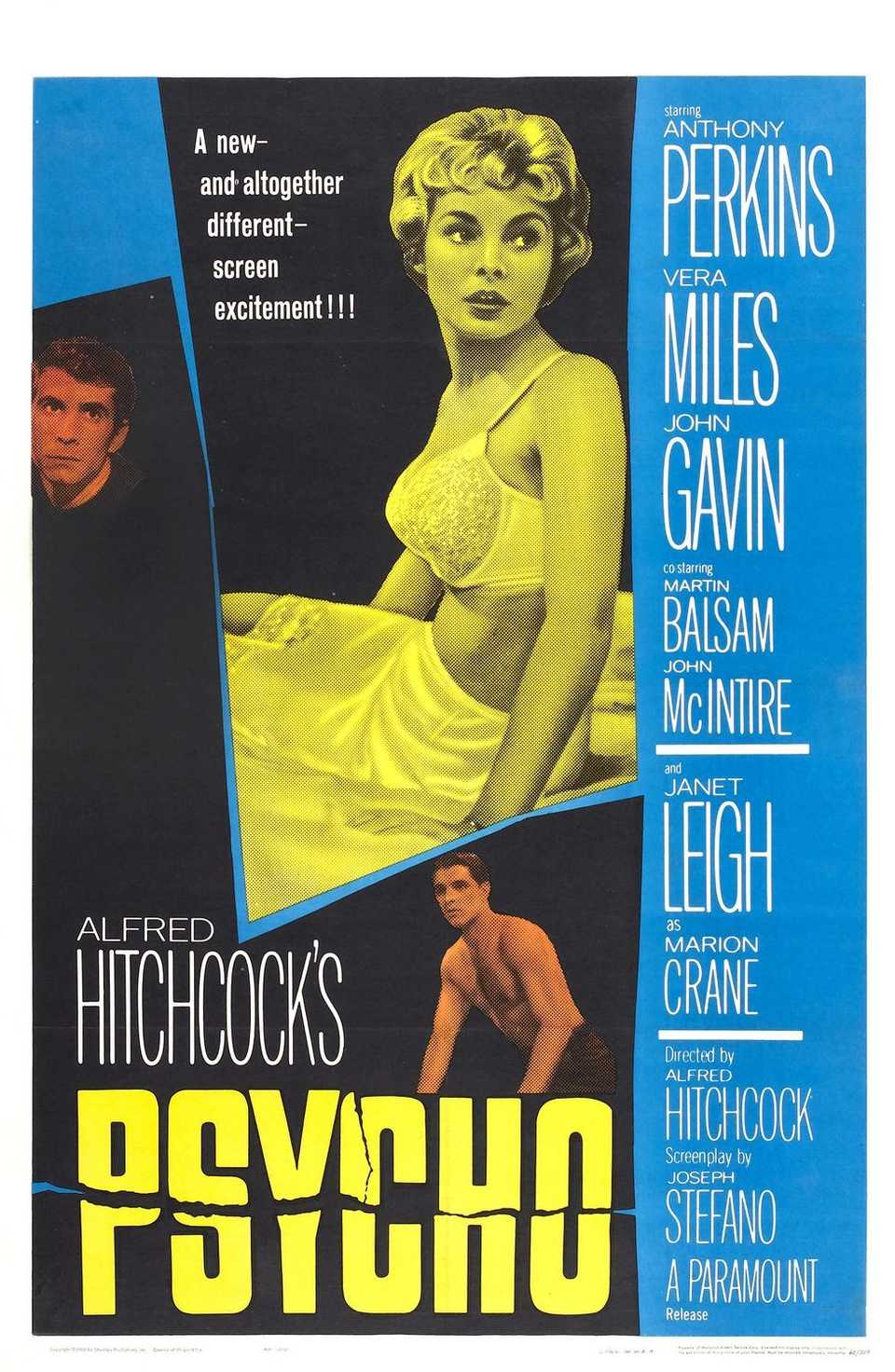
Hitchcock’s adaptation of Robert Bloch‘s 1959 novel, Psycho, is the director’s most suspenseful masterpiece that radically redefined the rules of the traditional thriller and how tension and fear could thrive through a psychological lens. Janet Leigh stars as Marion Crane, who, after stealing thousands of dollars from her employers, skips town and plans to meet up with her boyfriend to start a new life together. When Crane becomes overwhelmed by exhaustion and caught in a severe thunderstorm, she checks into the Bates Motel, where she meets the owner’s son, Norman Bates (Anthony Perkins), who is odd but kind, unaware that he harbors a dark and sinister secret.
Hitchcock’s unconventional storytelling and use of cinematic technique in Psycho is crucial to the film’s ominous atmosphere and suspenseful tone. For example, the now-legendary shower scene uses rapid editing, suggestive imagery, and, along with Bernard Herrmann’s piercing score, strikes an unimaginable terror in the audience without the use of explicit violence. Throughout the film, Hitchcock carefully controls what the audience sees and knows, often revealing just enough to provoke dread while withholding key information, knowing that what the audience imagines is often more horrifying than anything he could depict on the silver screen.

You must be logged in to post a comment Login