Entertainment
All 5 Hayao Miyazaki Movies From the 21st Century, Ranked

Hayao Miyazaki is the guy, if you’re talking Japanese filmmakers who work within the animation field. There are significant directors who are – or have been – his contemporaries, like Isao Takahata (best known for Grave of the Fireflies, who co-founded Studio Ghibli alongside Miyazaki and producer Toshio Suzuki), and some animators/directors who worked before Miyazaki are also noteworthy. There’s Osamu Tezuka, and though he’s best known for being the godfather of manga, he did also direct some works, and had his manga be adapted on a great many other occasions, too. For what it’s worth, Hayao Miyazaki has also worked as a manga artist, with one of his first movies, Nausicaä of the Valley of the Wind, being an adaptation of his manga series of the same name (the manga technically ending some years after the movie came out).
Alongside Nausicaä of the Valley of the Wind, there were some other great movies Miyazaki directed in the 20th century, including what was technically his first feature film, 1979’s Lupin III: The Castle of Cagliostro, and Princess Mononoke (1997), which could well be his masterpiece. No, okay, there are lots of movies that Miyazaki made that can compete for that top spot, since he’s so consistent and, of his 12 feature films, not one comes anywhere remotely close to being bad. He’s made five movies in the 21st century so far, and though he has talked about retiring at multiple points, no retirement plans have ever stuck, so the possibility of there being a 13th Hayao Miyazaki movie technically isn’t impossible. Still, his most recent one is a great swansong, and the oldest movie here is also considered a magnum opus for Miyazaki in the eyes of many. It has to be stressed, again, that ranking Hayao Miyazaki’s 21st-century movies is hard, since the “worst” one is still very good (and then the best ones are outright masterpieces).
5
‘Ponyo’ (2008)


Ponyo would make for a nice double feature with My Neighbor Totoro. That one was probably the gentlest movie Miyazaki directed in the 20th century, and then Ponyo’s the calmest and most peaceful he’s done in the 21st century. Put another way, it’s particularly family-friendly, perhaps being the most suitable movie for all ages that Miyazaki has directed, with that target audience maybe reflected by the fact that the protagonist here – a five-year-old boy – is especially young.
The story concerns him finding a creature named Ponyo who looks a bit like a goldfish, but she also yearns to be a human. Further, she has a magical father who doesn’t want her to remain on land, and that’s about as intense as things get, conflict-wise. Ponyo is just a nice and fairly relaxing movie, albeit one that might be a little more enjoyable for younger viewers than those who are teens or older. There’s still a lot to like and appreciate, even if you’re an adult, but debatably a little less than what you might find in some of Hayao Miyazaki’s (even better) films.
4
‘Howl’s Moving Castle’ (2004)


Even vaguely having to suggest Ponyo was the “worst” of Miyazaki’s 21st century movies didn’t feel as awful as putting a classic like Howl’s Moving Castle here, as the “second-worst.” Again, it’s still great. It is another excellently made fantasy movie directed by Miyazaki, and contains more by way of imaginative sights and ideas than you’ll find in some directors’ entire filmographies. And that he did this one only a few years after what many consider to be his best and most complete film is all the more impressive.
Though there is a sense of comparing it to that one, and feeling like Howl’s Moving Castle just isn’t as great, and that it’s possibly the closest Miyazaki came to giving the people what they wanted (not selling out, mind you, nor anything even close). If you watched Howl’s Moving Castle before all the other fantasy movies Miyazaki did that preceded it, it’d probably feel more surprising and grand, but still, Miyazaki doing his Miyazaki thing remains worth celebrating regardless. Nothing here rings of being an outright retread in any sense, either, so maybe that’s the main thing. Howl’s Moving Castle remains a vital part of a fantastic filmography, make no mistake, even if there are a few Hayao Miyazaki movies that are even stronger.
3
‘The Wind Rises’ (2013)

The Wind Rises is unusual, as far as Hayao Miyazaki movies go, because there isn’t anything by way of fantastical or sci-fi elements here. You can say that about Lupin III: The Castle of Cagliostro, though that film is still heightened, and certainly contains strong adventure and comedic elements. The Wind Rises, though, is a more grounded affair, and sees Miyazaki doing a biopic of sorts. Well, it is about Jiro Horikoshi, who really existed, but some liberties are taken with certain parts of the real-life story. Horikoshi was an aeronautical engineer who did design planes that ended up being used by Japan during World War II, though the focus of The Wind Rises isn’t really on the war, with most of it taking place in the 1920s and 1930s (some things regarding the war are touched upon near the end).
It would’ve made for an interesting and quite fitting swansong, but stands now as his penultimate film.
It’s hard to recommend in the same way you might be able to recommend other Hayao Miyazaki movies, since The Wind Rises isn’t technically as conventionally fun/entertaining. No one goes on an adventure, and there aren’t any creatures or examples of sci-fi technology that stand in for other things, but the film still proves compelling as a historical drama and a romance film. It’s Miyazaki doing something a bit different and unexpected, and doing it really well. It would’ve made for an interesting and quite fitting swansong, but stands now as his penultimate film… and then might slip back further if Miyazaki’s “current” swansong doesn’t actually end up being his last movie.
2
‘The Boy and the Heron’ (2023)
That swansong, for now, is The Boy and the Heron. This one is all about legacy, and a fair bit of it thematically deals with growing old, so reading into it that way, as a particularly personal film on Hayao Miyazaki’s part, does prove enriching. It’s also something that visually seems willing to reference every past Miyazaki film in one way or another, but not really in a greatest hits sort of way, since it’s not literally revisiting old characters or settings directly. You more just feel like Miyazaki is thinking back on all the art he has created, and then reckoning with what might happen in the future, when that work exists but he no longer does.
If that sounds a bit emotionally intense, that’s because The Boy and the Heron kind of is. It’s the darkest Miyazaki film that isn’t Princess Mononoke, and it honestly gives that one a run for its money, in any event. Technically, The Boy and the Heron does astound, looking especially visually grand and creative with all the sights it depicts throughout. The core story, about a young person discovering some sort of strange world, might seem familiar at first, but it’s where The Boy and the Heron goes thematically that ends up making it not just compelling, but genuinely up there as one of the very best Hayao Miyazaki films (time will likely be kind to it, too).
1
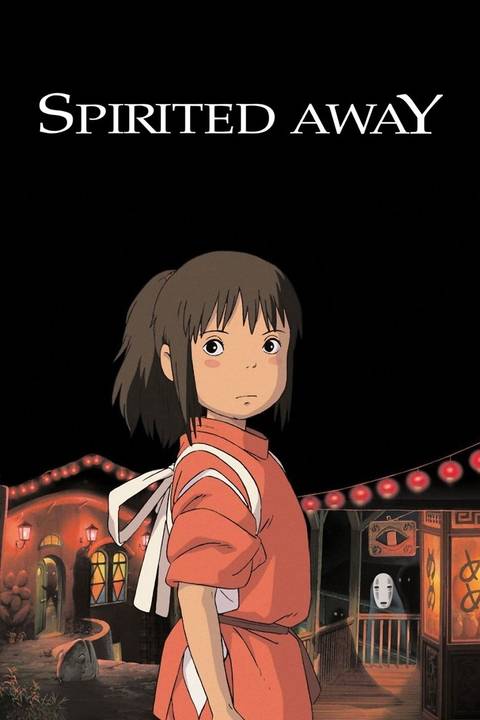
‘Spirited Away’ (2001)

So, Spirited Away has the reputation it does for good reason. It’s a perfect entry point into Japanese animation, if you’ve not already watched something kid-friendly that’s a series (the way a lot of people growing up over the last couple of decades seem to have done). Spirited Away is also mostly kid-friendly, for what it’s worth, but not to the extent of My Neighbor Totoro or Ponyo. It’s a bit darker, and definitely creepy at times, even if most of it can probably be handled by younger viewers. It’s about how the world is vast, confusing, and overwhelming, especially when you’re young, which is what the fantasy world here represents (and then some). And it is all animated and executed in a way that proves sometimes frightening and confounding if you’re an older viewer, too.
Maybe that’s the thing about Spirited Away resonating and being suitable for all ages without necessarily feeling like a kid’s movie. Anyone can relate to feeling lost in some way, and having to scrape by with the help of others, or just make the best of a bad situation. The specific bad situation in Spirited Away is getting stuck in an otherworldly realm and having your parents turn into pigs, which isn’t literally relatable, but the emotions are still there, and what the whole journey stands in for is what counts. It’s a bit like not being able to relate to being a witch, like the titular character in Kiki’s Delivery Service, but still being able to relate to having to go somewhere and effectively be an independent adult for the very first time. All these are obvious observations, but Spirited Away is about as discussed as animated movies get, so what else can you do? Oh, you can technically do one other thing: gush about how good it looks. Even by the high standards of Studio Ghibli, Spirited Away really does look absolutely phenomenal.



You must be logged in to post a comment Login