Entertainment
All 5 Stephen King Novella Collections, Ranked

You can read every single novel Stephen King has written and still find yourself far off from completing his body of work, so to speak, since he’s also been prolific as a writer of novellas and short stories on top of his nearly 70 (to date) novels. Most of these are compiled in collections, of which there are a dozen official ones. Seven are more short story-focused than novella-focused, as in they’re mostly made up of short stories, rather than novellas. Skeleton Crew is one, because while it kicks off with The Mist, which is a novella (and a pretty great one), most of the tales in that 1985 collection are of the short story variety.
So, there are five works by Stephen King that can be labeled novella collections, and all of them are ranked below. Four of them only have novellas and, funnily enough, all four of those are made up of four novellas each. There’s one other here that’s made up of three novellas and two short stories, but still, more than half are novellas, and in any event, the majority of your time spent reading that one will be on novellas rather than the short stories. These are spread out quite neatly through King’s bibliography (one from the 1980s, two from the 1990s, one from the 2010s, and one from the 2020s), and they range from decent to pretty great in quality, with the best novella collection written by King being up there among his most essential works to date.
5
‘Full Dark, No Stars’ (2010)

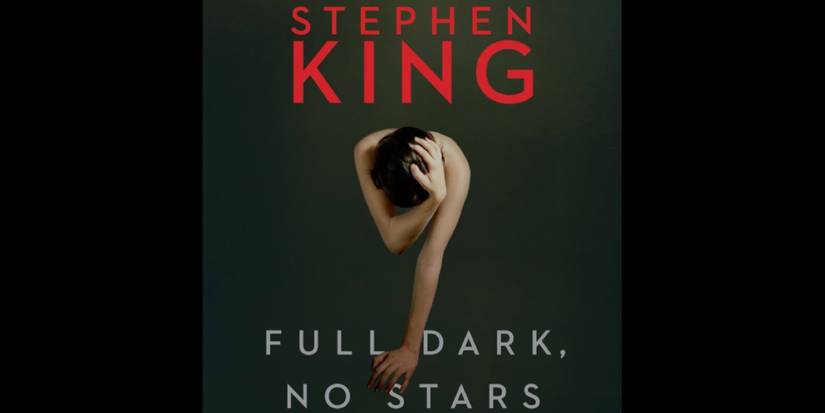
While Full Dark, No Stars might be the least interesting of all the novella collections here, it’s still not bad, and there are definitely things here that King’s constant readers will be able to appreciate. Also, people do seem to like this one a little more than some of the collections that’ll be ranked ahead of it, and maybe the stories here finding success with getting movie adaptations showcase that, to some extent. Granted, the movie adaptations haven’t been great, and were the sorts that were viewed as weaker than the source material, but still, they tried. There was interest in attempts being made.
There are also some references here to other Stephen King stories, which is always fun if you are someone very invested in everything he’s written (the guy has pretty much made his own multiverse, at this point). If you want more of a hot take than putting Full Dark, No Stars in last place, then how about this: “Fair Extension,” the shortest of the stories, is also the best one. It doesn’t waste any time and feels like vintage King. Every other novella here overstays its welcome, to some extent. “1922” doesn’t do so as drastically as the painfully drawn-out “A Good Marriage,” but both of them (and maybe “Big Driver,” too) could well have been made a little more impactful with a few words trimmed out here and there.
4
‘Hearts in Atlantis’ (1999)

Hearts in Atlantis is the one title that was a little tricky to add here, since it’s made up of three novellas and two short stories. But, you know, more of a novella collection than a short story collection. But wait! Things get more complicated, because Hearts in Atlantis has some continuity between the five stories it contains, with some recurring characters and similar themes explored across all the stories, so it almost feels like a novel, or it at least comes closest to feeling like one coherent story out of all the Stephen King collections. It’s further ambitious because it tackles the Vietnam War and its aftermath, really diving into a specific historical event to a pretty dramatic extent, by King’s standards.
There are some fantastical elements, especially in the first (and best) story of the bunch, “Low Men in Yellow Coats,” which has some surprisingly direct ties to The Dark Tower series, too.
He does so decently well, even if he lays it on a bit thick at times, and does seem insecure, as a writer, about his readers not “getting” certain things. So he really goes on and on, when you’re like, “No, I get it,” but then he keeps explaining things, it can feel frustrating. When Hearts in Atlantis is working, though, it’s pretty darn good. There are some fantastical elements, especially in the first (and best) story of the bunch, “Low Men in Yellow Coats,” which has some surprisingly direct ties to The Dark Tower series, too. That novella, plus the final story here, “Heavenly Shades of Night Are Falling,” were adapted into Hearts in Atlantis, a 2001 movie, but with all the references to The Dark Tower and most of the fantastical elements pretty much taken out, which was disappointing. Oh well.
3
‘If It Bleeds’ (2020)

While If It Bleeds is the most recent Stephen King novella collection, it’s not his most recent collection of stories, since You Like It Darker came out in 2024. That one was mostly short stories, but it speaks to King’s productivity that they both came out in the 2020s, and so too did six other novels (and counting). The man cannot be stopped. Anyway, If It Bleeds is pretty good. None of the novellas here are 10/10-worthy, necessarily, but none entirely miss the mark, either, and they are all indeed pretty good.
“Mr. Harrigan’s Phone” is a better phone-related story than Cell, while “The Life of Chuck” is structurally interesting and perhaps a little sappy, but it works better than the (still fairly good) movie adaptation of the same name from 2024. The titular story here is the longest, and is one of many about Holly Gibney, who was introduced in the Bill Hodges trilogy, and got two novels as the protagonist post-If It Bleeds (Holly and Never Flinch). Then there’s “Rat,” which closes out the collection, and is one of many Stephen King stories about the struggles of writing. Also, like a fair few Stephen King stories, it doesn’t end ideally, but the ride before that point is engaging enough. If It Bleeds is just all-around solid. Nothing here represents King at his very best, and nothing here showcases him at his worst. It’s just pretty good. Pretty, pretty, pretty good.
2
‘Four Past Midnight’ (1990)
Before getting to the first of Stephen King’s novella collections, here’s Four Past Midnight, which was his second overall, not to mention his second best, and his first novella collection to be generally horror-focused. Also, some of these novellas are really quite long, as some paperback editions of Four Past Midnight hover around the 1000-page mark. Take the first story, for instance: “The Langoliers.” This one is actually longer than some of Stephen King’s novels. Page counts can vary, depending on the formatting, but the audiobook version of “The Langoliers” is almost nine hours long, and the audiobook for Carrie will take you just under 7.5 hours to listen to. So…
Also, “The Langoliers” might be the highlight here, or it’s neck-and-neck with “The Library Policeman,” which is harder to read, admittedly, but incredibly effective as a work of horror. It’s the reason that Four Past Midnight can be considered up there among the most disturbing of all of King’s novels, short story collections, novella collections, you name it. “Secret Window, Secret Garden” is also good, albeit maybe a little too similar narratively to King’s novel The Dark Half, and then the final story, “Sun Dog,” is an engaging read, being one of a fair few Stephen King stories set in Castle Rock. Four Past Midnight is a strong collection overall, with all four stories ranging in quality from pretty good to pretty great.
1
‘Different Seasons’ (1982)

It’s easy to single out Different Seasons as the best of Stephen King’s novella collections because of two stories here: “Rita Hayworth and Shawshank Redemption” and “The Body.” They both inspired two all-time great film adaptations (The Shawshank Redemption and Stand by Me), and are phenomenal in their original forms, too. “Apt Pupil” is another story here, and not quite a work of horror, but one that leans more into psychological thriller territory than those other two. It also got a movie adaptation, albeit not a great one.
Things conclude with “The Breathing Method,” which is the only adaptation-less story here, and probably the closest to the horror genre of the bunch, though Different Seasons overall was something meant to showcase King’s knack for writing non-horror stories. He’d largely been known for horror up until that point, and while nowadays, the idea of a Stephen King book not belonging to the horror genre doesn’t sound too wild, it was surprising back in 1982. So, Different Seasons was instrumental in demonstrating King’s range, and has endured because it houses some of his best writing, and two of the stories here went on to be adapted into two pretty-much-perfect movies. If you only ever have time to read one Stephen King novella collection, for whatever reason, then you’re best off making it this one.

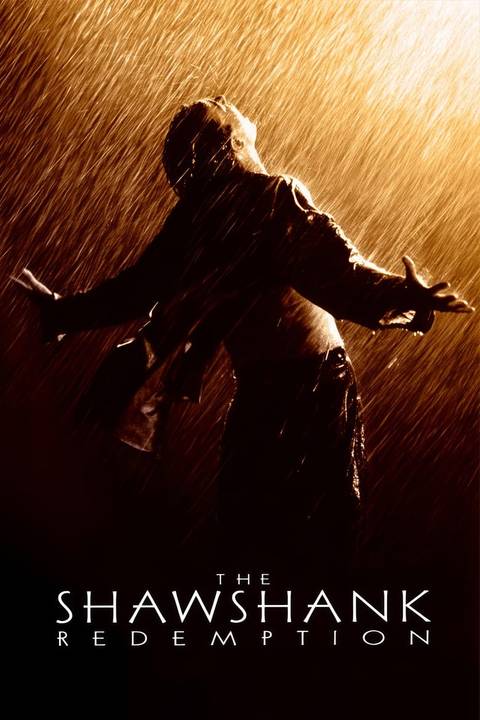
The Shawshank Redemption
- Release Date
-
September 23, 1994
- Runtime
-
142 minutes
- Director
-
Frank Darabont
- Writers
-
Frank Darabont
You must be logged in to post a comment Login