Entertainment
Apple TV’s Longest-Running Sci-Fi Only Needed 1 Season To Become a Masterpiece

A good first season can often make or break many TV series, but rarely do we get to see one that is, by itself, a masterpiece. When For All Mankind first came out, there was a lot riding on its success. Nowadays, Apple TV is widely known to be the home of prestige sci-fi programming, but it all started when the streamer decided to bet on TV veteran Ronald D. Moore‘s latest co-creation, an alt-history sci-fi series that completely reimagined what would happen if the Space Race’s most important moment had gone differently.
‘For All Mankind’s Premise Makes It One of Sci-Fi’s Boldest Stories
In the early years of the Space Race, the USSR dominated most of the important milestones, but everything changed when, in July 1969, Neil Armstrong took his “one small step” on the Moon. For All Mankind, however, poses the question of what the world could have looked like if the Soviets had been able to claim that honor first. In the series’ very first scene, cosmonaut Alexei Leonov plants the Soviet flag on the Moon as the whole world watches.
This premise is simple, yet also wildly imaginative, resulting in a world that follows a surprisingly different trajectory from our own. While, in reality, the Moon landing confirmed the U.S. as the dominating power in the space race and the USSR proved incapable of keeping up, in For All Mankind, NASA and the U.S. government devote all of their efforts to catching up with the Soviets. Priorities shift all over as the U.S. refuses to acknowledge defeat, determined to achieve milestones that, in the real world, are still decades away.
Real history is still the story’s anchor, so some events and characters remain the same, as do some of society’s struggles. The scientific research and development that follows the Soviet Moon landing also results in technological innovation and social milestones that would otherwise also take decades to emerge (or, in some cases, still haven’t). In this sense, For All Mankind isn’t about picturing a different future, but how humanity might have evolved if a single defining moment in history had unfolded differently.
‘For All Mankind’s Character-Driven Story Adds Weight to Humanity’s Achievements

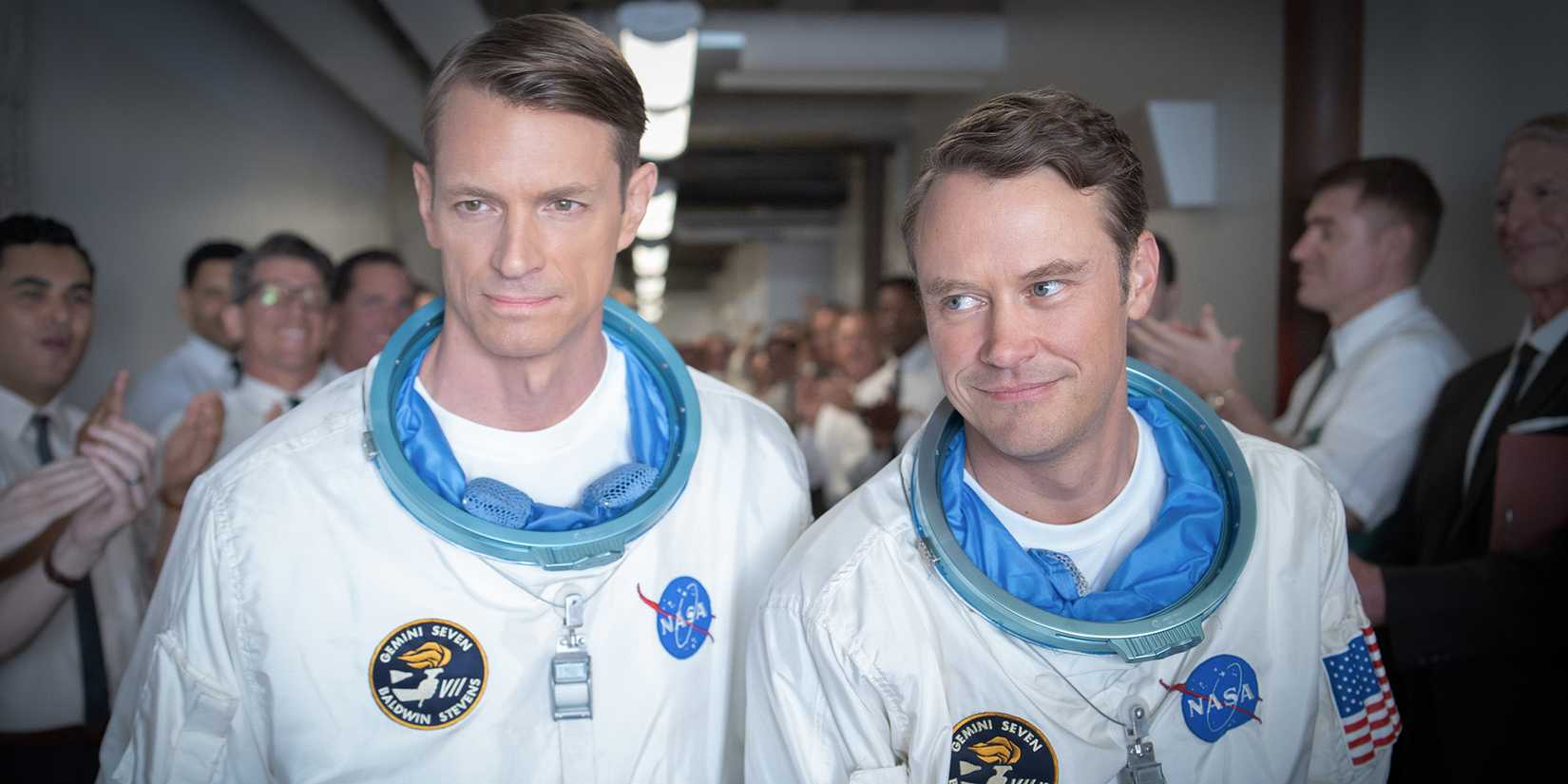
As the story continues over subsequent seasons, For All Mankind introduces new characters, making the series more of a generational saga about space exploration. The characters introduced in Season 1, however, linger with viewers even after they’re long gone, which, in a way, makes them the most important people in the series. Characters are all fighting for their place in the history books as astronauts, engineers, scientists, and even government officials.
The series may have an ensemble cast, but its undeniable protagonist is Ed Baldwin (Joel Kinnaman), an astronaut who is deeply impacted by the Soviet Moon landing and what he perceives as NASA’s inability to take risks. His family and colleagues quickly become key characters themselves, including fellow astronaut Gordon “Gordo” Stevens (Michael Dorman), NASA engineer Margo Madison (Wrenn Schmidt), and even Gordo’s wife, Tracy (Sarah Jones), who later becomes an astronaut herself and faces their own challenges, especially as women claim more space in male-dominated environments. Young Aleida Rosales (Olivia Trujillo) witnesses all they accomplish and is herself inspired to reach for the stars, leading to her having even more of an impact on the story when she later joins NASA herself. Major space events may be what effectively changes the world of For All Mankind, but characters like Ed and Margo are who give the series its strongest emotional impact.
‘For All Mankind’ Opened the Doors for Science Fiction on Apple TV
Now, For All Mankind might now be Apple TV’s most talked-about series, but the fact that it’s currently gearing up for its sixth and final season and has a highly praised spin-off like Star City is proof of its legacy. For All Mankind did a lot to define the streamer’s identity over the years, which then allowed for series like Severance, Silo, Foundation, and Pluribus to come along and become hits in their own right.
Saying that Apple TV has the best sci-fi programming currently on streaming isn’t news, but how it got to this point is just as exciting as the types of shows it offers in its catalog. What they all have in common is how thoughtful and ambitious they are, but back in 2019, when For All Mankind first premiered, few could have predicted that it would lead to the revival of one of the best genres on streaming.
You must be logged in to post a comment Login