For decades, no one has perfected the art of horror in a small town quite like Stephen King. The king of horror for a reason, the renowned author explores the brutality beneath the surface of seemingly banal locations. Salem’s Lot was the first to show how even the most innocuous places can have a seedy underbelly — and that’s before the vampires arrive. Stories like It and Pet Sematary also demonstrate how small communities in Maine harbor dark secrets, and now a new 10-part horror Apple TV series has ambitiously taken on that mantle.
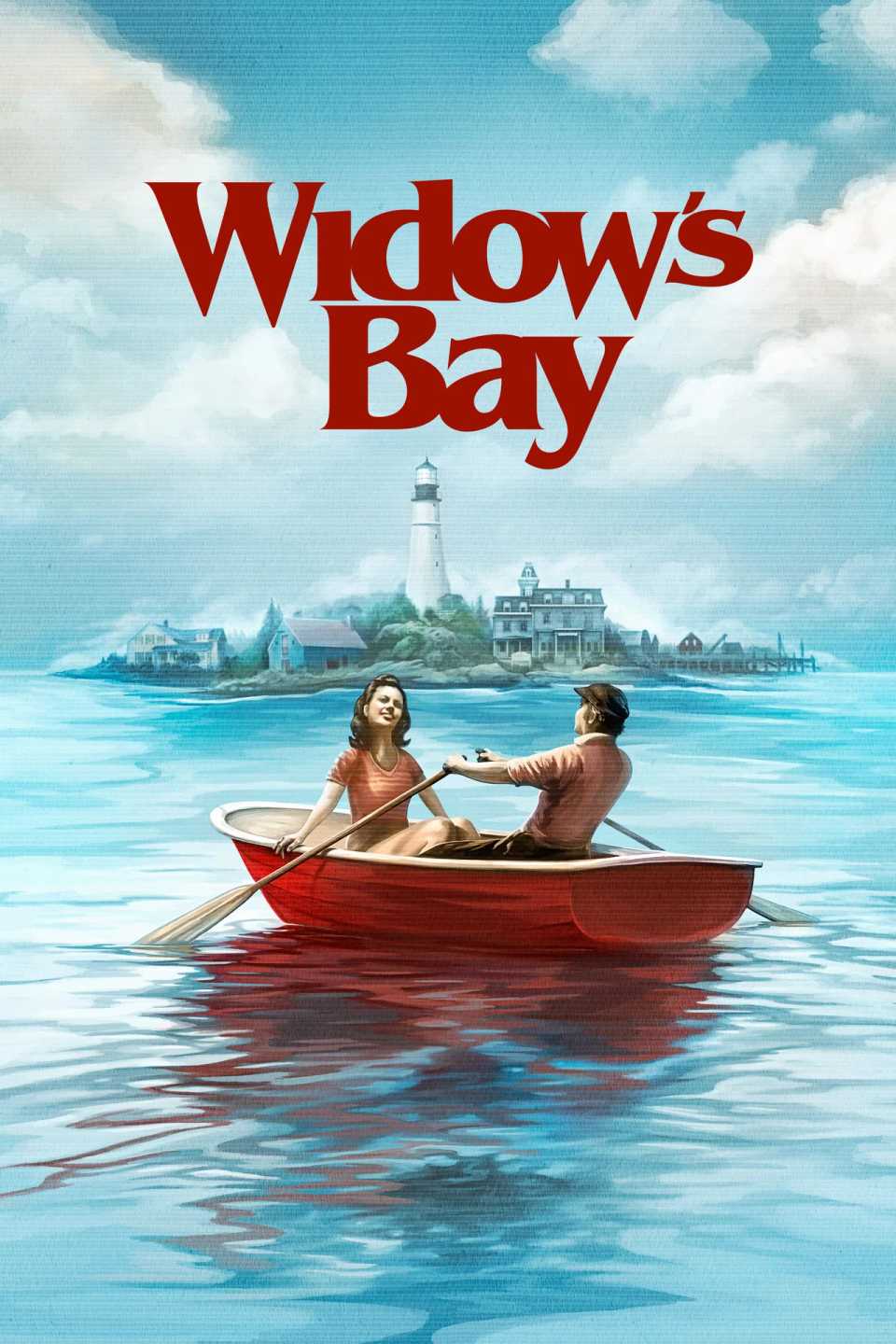
Currently in its debut season, Widow’s Bay is a delightful homage to the best parts of King’s work. Also set in a remote community in Maine, the series follows Mayor Tom Loftis (Matthew Rhys), who is intent on making his local island town the next Martha’s Vineyard. Things go awry when the titular town falters under a mysterious curse. During Tom’s mad dash to make his town relevant, he and the rest of the citizens endure spooky happenings that could only come from a King novel.
Advertisement
‘Widow’s Bay’ Perfectly Melds Humor and Horror
Stephen King may have perfected the spooky town with a ragtag but unified group of citizens, but Widow’s Bay makes the concept its own. Every episode, Tom encounters a different aspect of the cursed town while butting heads with local character, Wyck (Stephen Root). The townspeople of Widow’s Bay are a superstitious bunch because of how their town was founded, but there is a thin line between superstition and belief.
Advertisement
Collider Exclusive · Horror Survival Quiz Which Horror Villain Do You Have the Best Chance of Surviving? Jason Voorhees · Michael Myers · Freddy Krueger · Pennywise · Chucky
Five killers. Five completely different ways to die — if you’re not smart enough, fast enough, or self-aware enough to avoid it. Only one of them is the villain your particular set of instincts gives you a fighting chance against. Eight questions will figure out which one.
🏕️Jason
🔪Michael
Advertisement
💤Freddy
🎈Pennywise
🪆Chucky
Advertisement
01
Something feels wrong. You can’t explain it — you just know. What do you do? First instincts are the difference between the survivor and the first act casualty.
Advertisement
02
Where are you most likely to find yourself when things go wrong? Setting is everything in horror. Where you are determines which rules apply.
Advertisement
03
What is your most reliable survival asset? Every survivor has a quality the villain didn’t account for. What’s yours?
Advertisement
04
What kind of fear is hardest for you to fight through? Knowing your weakness is the first step to not dying because of it.
Advertisement
05
You’re with a group when things start going wrong. What’s your role? Horror movies are brutally clear about who survives group situations and who doesn’t.
Advertisement
06
What’s the horror movie mistake you’re most likely to make? Honest self-assessment is a survival skill. Denial is not.
Advertisement
07
What’s your best weapon against something that can’t be stopped by conventional means? Every horror villain has a weakness. The survivors are always the ones who find it.
Advertisement
08
It’s the final scene. You’re the last one standing. How did you make it? The final survivor always has a reason. What’s yours?
Advertisement
Your Survival Odds Have Been Calculated Your Best Chance Is Against…
Your instincts, your strengths, and your particular way of thinking under pressure point to one villain you actually have a fighting chance against. Everyone else — good luck.
Advertisement
Camp Crystal Lake · Friday the 13th
Jason Voorhees
Advertisement
Jason is relentless, but he is also predictable — and that is the gap you would exploit.
He moves in straight lines toward his target. He doesn’t strategise, doesn’t adapt, doesn’t outsmart. He simply pursues.
Your ability to keep moving, use the environment, and resist the panic that freezes most victims gives you a genuine edge.
The Crystal Lake survivors were always the ones who stopped running in circles and started thinking about terrain, water, and distance.
You think like that. Which means Jason, for all his indestructibility, would face someone who simply refused to be where he expected.
Haddonfield, Illinois · Halloween
Michael Myers
Advertisement
Michael watches before he moves. He is patient, methodical, and almost impossible to detect — until it’s too late for anyone who isn’t paying close enough attention.
But you are paying attention. You notice the shape in the window, the car parked slightly wrong, the silence where there should be sound.
Michael’s power lies in the invisibility of ordinary suburbia — the fact that nothing ever looks wrong until it already is.
Your spatial awareness and instinct to map every room, every exit, and every shadow before you need them is precisely the quality Laurie Strode had.
You are not a victim waiting to happen. You are someone who already suspects something is wrong — and acts on it.
Elm Street · A Nightmare on Elm Street
Freddy Krueger
Advertisement
Freddy wins by getting inside your head — using your own fears, your own memories, your own subconscious as weapons against you. That strategy requires a target who can be destabilised.
You are harder to destabilise than most. You’ve faced uncomfortable truths about yourself and you haven’t looked away.
The survivors on Elm Street were always the ones who understood what was happening and chose to face it rather than flee from it.
Freddy’s greatest weakness is that his power evaporates in the presence of someone who refuses to give him the fear he feeds on.
Your psychological resilience — the ability to stay grounded when reality itself becomes unreliable — is exactly the quality that keeps you alive here.
Derry, Maine · It
Pennywise
Advertisement
Pennywise is ancient, shapeshifting, and feeds on terror — but it has one critical vulnerability: it cannot function against someone who genuinely stops being afraid of it.
The Losers Club didn’t survive because they were braver than everyone else. They survived because they faced their fears together, and faced them honestly.
You ask the questions others avoid. You look directly at what frightens you rather than turning away.
That directness — the refusal to let fear fester in the dark — is Pennywise’s worst nightmare.
It chose the wrong target when it chose you. You are exactly the kind of person whose fear tastes like nothing at all.
Chicago · Child’s Play
Chucky
Advertisement
Chucky’s greatest advantage is that nobody takes him seriously until it’s already too late. He exploits the gap between how something looks and what it actually is.
You don’t have that gap. You take threats seriously regardless of how they present — and you never make the mistake of underestimating something because of its size or appearance.
Chucky relies on surprise, on the delay between recognition and response. You close that delay faster than almost anyone.
Your instinct to treat every unfamiliar thing with appropriate scepticism — rather than dismissing it because it seems absurd — is the exact quality that keeps you breathing.
Against Chucky, not laughing is already winning. You are very good at not laughing.
Advertisement
Most of the citizens don’t believe the town is truly cursed until they start sharing terrifying experiences. What sets Widow’s Bay apart is the humor interspersed with genuine scares. Tom and the rest of the characters are quirky and idiosyncratic, making for laugh-out-loud moments. Just as Severance finds humor in the strange, Widow’s Bay does this too, while sticking to horror tropes.
Wyck fills the role of the colorful local character who insists that everything is real, while Tom is the typical everyman who is dragged through the weirdness, kicking and screaming. Slowly but surely, Tom starts to accept that this town isn’t like the others. He and Wyck finally agree to find out how the town has become cursed, all the while dealing with personal foibles and trauma.
The tongue-in-cheek humor is incredibly self-aware but doesn’t make its characters a joke. As quick as the series is to wink at the audience, it also does a 180 and shows the painful past of the townspeople. Each episode brings characters closer to the truth as they have to acknowledge that something has been strange about this place for a very long time. The episodes fly by, making for an engaging viewing experience.
Widow’s Bay doesn’t try to be anything other than it is, and episodes are as long as they need to be. This means easily digestible arcs in episodes that typically don’t go over 40 minutes. It doesn’t tip its hand too early, as viewers follow Tom as he tries to figure out what’s going on. While the season has yet to conclude, viewers will want to binge all the episodes at once. Widow’s Bay is slated for 10 episodes, with the finale set to debut on June 17. Viewers should make sure to catch this unique take on familiar archetypes before it comes to a close.


You must be logged in to post a comment Login