Entertainment
Best Original Screenplay Nominees at the 2026 Oscars, Ranked

The Original Screenplay category at the Oscars has always been an intriguing category. It used to be a category where films that were a bit too daring and unique for the Best Picture race could get their accolades for their originality and ambition. For example, a young Christopher Nolan and Wes Anderson were able to earn their first Oscar nominations in this category, or a film like Eternal Sunshine of the Spotless Mind might not get a Best Picture nom, but it could earn Charlie Kaufman an Oscar.
This year’s nominees include everything from Iranian and Norwegian films, a Southern vampire movie, a biographical dramedy, and the story of an up-and-coming table tennis player. As the Oscars have embraced their strange side in recent years, the Original Screenplay category remains as diverse as it always has been. With that in mind, here is our ranking of the five nominees in the Original Screenplay category at this year’s Oscars.
5
‘Blue Moon’ – Written by Robert Kaplow

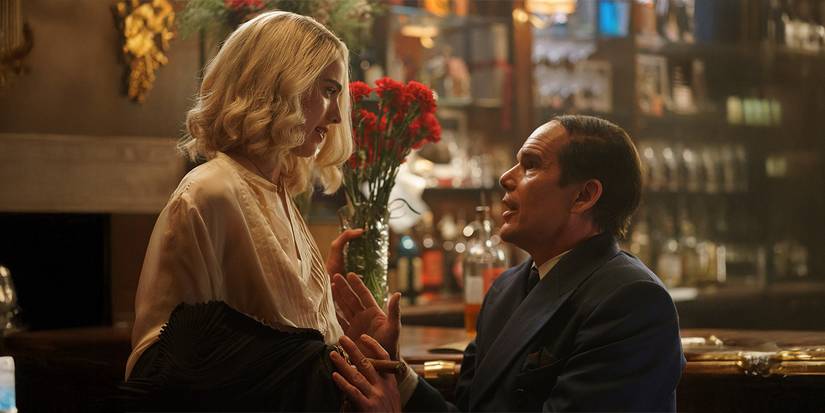
In his first screenplay for Richard Linklater’s Blue Moon, writer Robert Kaplow has to walk a precarious fine line. In crafting this story of Lorenz Hart, on what might be the most difficult night of his life, he has to focus on a character that is overly verbose, pretentious, and ultimately tragic, but also ensure that he never becomes too overwhelming or exhausting, which he is to several characters within this film. For the most part, he’s able to handle this balance, but it’s not always entirely effective, as Hart can become far too much here and there in this film.
This screenplay also shows just how much Ethan Hawke’s performance as Hart brings to this story, as we can see the heartbreak, exhaustion, and loneliness on his face. Hawke is subtly showing us the interiority of Hart, even as he waxes poetic about song lyrics and name-dropping. On the page, you don’t quite get that, even though the woe is always there. For a first screenplay, Kaplow’s work here is impressive, but it’s still the weakest screenplay of the nominees this year.
4
‘It Was Just an Accident’ – Written by Jafar Panahi. Script collaborators – Nader Saïvar, Shadmehr Rastin, Mehdi Mahmoudian

It Was Just an Accident marks Jafar Panahi’s first narrative feature in quite some time, and it’s been a bit since a Panahi film hasn’t been a docufiction starring Panahi himself. Yet It Was Just an Accident proves that Panahi has only gotten better as a screenwriter with his latest, which he has stated is in honor of the Iranian political prisoners that he became friends with during his time of imprisonment. Through It Was Just an Accident, Panahi asks questions about revenge, how societies are supposed to move forward after particularly dark times, and the lengths people will go to when pushed to the brink. But maybe most impressive is how Panahi does this in a film that’s also surprisingly funny in its own dark way.
More than any other nominee on this list — and quite frankly, most of the nominees that have ever been in this category — It Was Just an Accident is a film that feels like it could’ve only been written by Panahi. The filmmaker has always excelled at presenting Iranian culture, and considering his time in the prison system for making his great films, it’s hard to imagine anyone having as much empathy, passion, and humor about this situation as Panahi does. It’s absurd, but also based on horrifying circumstances that have very real consequences, and Panahi handles all of that beautifully. If anything, It Was Just an Accident deserved far more than just two nominations at this year’s Oscars.
3
‘Sinners’ – Written by Ryan Coogler
As a piece of writing, Ryan Coogler’s Sinners screenplay is most brilliant in how it constantly shifts and changes in ways that are both surprising and yet make total sense. What begins as a story of two twin brothers trying to open a juke joint is captivating enough as it is, but then it morphs into a fantastic vampire story, all of which delves into discussions of music, history, and race seamlessly. It’s the kind of writing that Coogler has done so well since he started as a filmmaker, writing that entertains, but manages to hit on a deeper, more meaningful level, without ever sacrificing the fun of it all.
As one might expect, however, even though Sinners’ script is great, Coogler’s story just doesn’t have the same magic on the page. For example, the bravura “I Lied to You” segment was clearly put together more cohesively in the editing room, capturing several scenes from throughout the film, and it’s much easier to appreciate the beauty of this vampire tale with Coogler’s direction and Autumn Durald Arkapaw’s stunning cinematography. Yet, Coogler’s screenplay is easily his best so far, and it’s a testament to his greatness in how much beauty and how many layers he can bring to a type of story we’ve seen countless times.
2
‘Marty Supreme’ – Written by Ronald Bronstein & Josh Safdie

Having worked together on films like Heaven Knows What, Good Time, and Uncut Gems, Ronald Bronstein and Josh Safdie know how to write a propulsive script that hits the gas and rarely lets go. That’s absolutely what they do on their latest collaboration, Marty Supreme, as we follow Marty Mauser (Timothée Chalamet), an ambitious yet frustrating table tennis player trying to get enough money to compete in a massive tournament. Marty doesn’t know how he’ll make this money, and Bronstein and Safdie ensure we feel every bump and twist on Marty’s journey.
Marty Supreme’s screenplay is a dense 168 pages, but like the film itself, this script flies by, whipping us around New York City, as though we’re trying to keep up with Marty. Even an action script can fail to make you feel its excitement, but Bronstein and Safdie have no problem keeping readers on the edge of their seats. That’s especially true near the end, when Marty has his big culminating table tennis match, which reads like a great sports story unfolding. At this point, Bronstein and Safdie know how to write this type of screenplay that doesn’t let up, and Marty Supreme is a great example of how fantastic these two are when they work together.
1
‘Sentimental Value’ – Written by Eskil Vogt, Joachim Trier

With Sentimental Value, writers Eskil Vogt and Joachim Trier aren’t just telling the story of a filmmaker Gustav (Stellan Skarsgård) and his two daughters, Nora and Agnes (Renate Reinsve and Inga Ibsdotter Lileaas), as he tries to make a film about his life. It’s also very much the story of a house and its century of existence, the people who have lived in it, and how this place has become a home to so many. In Trier’s film, it is all intertwined beautifully, and in reading the screenplay, this approach becomes more pronounced, almost like a better version of Robert Zemeckis’ Here.
On the page, Sentimental Value is also a great example of how a film can change in small but integral ways. Trier and Vogt’s script has several moments that don’t exist in the final film, and it makes a big difference. For example, early on in the film, we originally follow Nora after the night of her big freak-out before she went on stage, and she finds out that her mother had died that same night, which seems like a strange, unnecessary coincidence. Or there’s a strange moment where Agnes’ son makes an AI-generated short film influenced by his grandfather’s films. It’s fascinating to see how this story existed in this script and how Trier was able to improve upon it as it came to the screen.
Sentimental Value is the most complex script in this list of nominees, an amalgamation of a filmmaker exploring his own life through his film, his daughters, the actress (Elle Fanning) who wants to do justice to this story, the previous films that he’s made, how these films present what he’s feeling, as well as the story of a home. It’s a lot to handle, but Vogt and Trier’s screenplay handled it tremendously well, giving us a fuller picture of the Borg family, rather than feeling overstuffed with unnecessary details and tangents. Vogt and Trier want us to understand how past generations can impact current ones and how the past bleeds into the present in ways we might not even feel. Sentimental Value is a script that’s trying to juggle quite a bit, but it’s the best screenplay in this category because Vogt and Trier know how to present it all in a captivating and impactful way.