Entertainment
Brad Bird Confirms ‘Incredibles 3’ Role Despite Stepping Down as Director

Summary
- Collider’s Steven Weintraub moderates “Brad Bird: My Cinematic Journey” panel at SDCC 2026.
- Brad Bird discusses his career over the years, working with Disney legends and sharing stories from past projects.
- He also discusses his newest upcoming movie on Netflix, Ray Gunn.
Brad Bird doesn’t make movies very often, which makes every new project feel like an event. Over the last three decades, Bird has built one of the most remarkable careers in Hollywood, directing classics like The Iron Giant, The Incredibles, Ratatouille, and Mission: Impossible – Ghost Protocol. Now, after years of false starts and development hurdles, he’s finally bringing one of his longest-gestating passion projects to the screen with Ray Gunn, a retro-futuristic sci-fi noir that premieres on Netflix later this year.
During Collider’s live panel at San Diego Comic-Con, Steve Weintraub sat down with Bird for a conversation where the two shared in discussing the amazing history of Bird’s achievements in cinema. Bird reflected on the advice Disney animation legend Milt Kahl gave him that still shapes every project he tackles, explained why The Iron Giant found its audience years after its theatrical release, shared the surprising way Syndrome emerged as the villain of The Incredibles, and looked back on taking over Ratatouille after Pixar asked him to step in midway through production.
Of course, Ray Gunn was never far from the conversation. Bird opened up about why the movie spent decades waiting for the right opportunity, how he and composer Michael Giacchino developed its emotional and musical identity, and why audiences should expect a world packed with enough visual detail to reward repeat viewings. He also offered updates on Incredibles 3, discussed the passion project he’s carried with him for decades, reflected on making the leap to live action with Mission: Impossible – Ghost Protocol, and teased what could be next after Ray Gunn.
Brad Bird Explains the Advice That Shaped His Career
“If you’re approaching something, explore the possibilities.”


COLLIDER: I have a million questions for you. I wish this panel could go three hours. Before we get started, thanks to my friend Jeff, who is an amazing editor, we have a little sizzle reel celebrating Brad’s career. I don’t think you’ve seen this, so let’s play it.
[Clips from Bird’s movies, including Tomorrowland, The Iron Giant, The Incredibles, Mission: Impossible – Ghost Protocol, Ratatouille, and other projects.]
I’m making sure you’re okay with that.
BRAD BIRD: Oh yeah. I’ve been… sizzled.
You were mentored by Disney Legend Milt Kahl. What’s one piece of advice from him that you still hear in your head whenever you’re working?
BIRD: He had this very intense kind of stammer that would happen, and he swore a little more than you’d probably expect from someone at Disney. He’d say, “Well… you didn’t even explore the possibilities.” That’s what it is. If you’re approaching something, explore the possibilities.
Family Dog felt radically different from a lot of the television animation being made at the time. What were you trying to prove with that project?
BIRD: Just that it wouldn’t be insane to let me make a film. That would’ve been nice. No, really, I always felt great sympathy for dogs because they don’t choose their family. They’re just kind of plopped down in the middle of one. I thought, “What if you had a family that was kind of a nightmare, and the dog was just wide open to all of it?” It seemed like a funny thing to do.
I’m sure a lot of you know this already, but Brad worked on The Simpsons early on. What did working on The Simpsons teach you about making a scene funny visually instead of relying entirely on dialogue?
BIRD: Well, it was interesting because the writers were the best. But sometimes they’d write things that made perfect sense on the page and were really difficult to convey visually. That became a real challenge. And in order to meet the schedule The Simpsons had, which was incredibly intense, you were always working on the next thing, and the next thing, and the next thing. You had to make decisions fast. If I hadn’t gone through that experience, I wouldn’t have been able to make the movies I eventually made, many of which were produced under a lot of pressure. Television doesn’t let you stop because there’s always another episode coming. It’s like that famous I Love Lucy scene with the conveyor belt full of candy. If you hesitate on one decision, a million more decisions start piling up behind it.
Why ‘The Iron Giant’ Became a Cult Classic Years After Release
“What if a gun had a soul… and didn’t want to be a gun?”
Let’s jump into something called The Iron Giant. The Iron Giant has become more beloved every single year. Why do you think it initially took audiences some time to discover it?
BIRD: I think there’s this thing called marketing that if you don’t do it… it really hurts your film. So I was very happy that my next project, The Incredibles, actually got marketed. It made a difference. But I can’t really complain because people eventually caught up with The Iron Giant. For a couple of years, they ran it on television all day around Thanksgiving, almost 24 hours straight, over and over again. And I think that that was the thing that kind of broke through is that people ran into it that hadn’t seen it before.
How difficult was it to persuade a studio that an animated movie could deal seriously with fear, death, weapons, and personal choice?
BIRD: Well, I would love to say, “They just didn’t get it, man.” But they did get the pitch when I came in there. I had read the book, which I thought was really poetic, but about halfway through the book, it becomes a contest between the Iron Giant and this space pack the size of Australia. And they fly back and forth into the sun, essentially.
I felt the real story was between the boy and the Giant. But when I came back and said, “I like this a lot, but I want to do something different.” I said, “What if a gun had a soul… and didn’t want to be a gun?” To their credit, the people running the studio at the time, that got them and they reacted to it and they were taken by it. That’s not exactly the usual subject matter for an animated film.
Brad Bird Reveals How Syndrome Changed ‘The Incredibles’ Forever
“That’s a good angle for a villain, to be kind of spurned at being a sidekick.”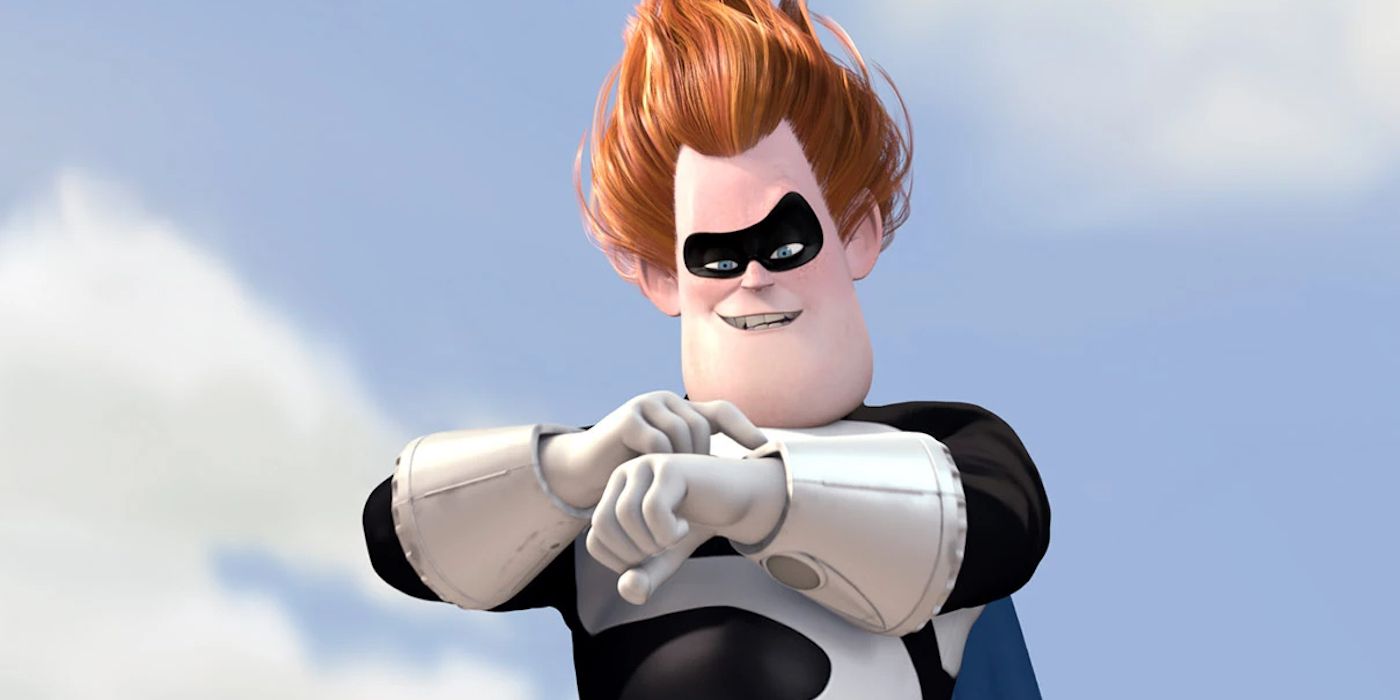

Jumping into The Incredibles… Pixar’s early films leaned on cute characters. The Incredibles was your first attempt at photorealistic human characters in CG. How much resistance did you get to making that pivot?
BIRD: Well, I wouldn’t call them photorealistic because Bob’s hands are the size of trees and his feet are tiny. They’re very caricatured. But there weren’t many successful examples of human characters in computer animation back then. There were a lot of… disturbing versions. Pixar even did a short called Tin Toy that had this nightmare baby in it. Everybody who worked on it agrees the baby was kind of terrifying. There was really only one great example at the time, and that was Jan Pinkava’s short Geri’s Game, which won the Academy Award.
I was convinced you could create compelling, stylized human characters and still make them very believable. His old man that plays chess against himself later showed up in Toy Story 2, and really worked well. So it made me feel assured that we weren’t insane to try to make a movie that only had humans in it.
When you think back on making The Incredibles, how radically did anything change in that film? Because I know that with animation and at Pixar, things can go through huge changes. Did the film go through any massive changes?
BIRD: Not massive. One thing that was an exercise that yielded good results was the studio asked, “What would happen if the audience met the family first in their civilian identities and only later discovered they were superheroes?” And I kind of argued with this a little bit. I said, “Look, you’re going to have ads at that point. Everyone knows that the characters are going to be superheroes. So what are we doing?” And they said, “No, it’s a good exercise. Try it.”
So I wrote an opening that had them just going underground. Violet was still a baby, and they were just going underground under the witness protection program. Then they’re discovered, and villains start tracking them down in their civilian lives to get revenge. And part of the thing is, villains were coming trying to find them in civilian, to wreak revenge on them. So I had this villain show up that was Syndrome, and he died in the opening sequence. Everyone, including me, liked him better than the villain I had. And so they went back to my original pitch, which was to show them in the golden era, and then jump 15 years and show them an unfulfilled child, but with that character driving the villain plot.
There was this autobiography of Burt Ward, who played Robin in the TV 60s version of Batman. And he kind of said, “I got more chicks than Adam West.” And I sensed some kind of dark resentment from the Boy Wonder, and I thought, “That’s a good angle for a villain, to be kind of spurned at being a sidekick.” So, even though I didn’t use that opening, I got the villain, and I got a good reason for the villain out of it. Everything else kind of stayed much the same. But the villain changed and he was a much better villain.
Coming from traditional animation and a feature like The Iron Giant, how did you adapt your directing style to Pixar’s more collaborative, Braintrust driven process?
BIRD: Well, you know… If you argue against notes all the time, you get a reputation as being difficult. And the thing is, they were shocked when I took notes. They were like, “He took the notes! He didn’t mind the notes!” I don’t mind notes if they’re not stupid. If you want me to do something that I think is stupid, I’m going to speak up. So, the notes that came out of the Braintrust. A lot of them were really smart notes by people who have been in my position or are writers or something and problem-solving in that arena. And so it was good to go through that process. And when I moved up to Pixar after Iron Giant, a lot of people on the crew were like, “Man, you’re selling out to computer animation,” and I said, “I’m not going up there to be part of computer animation. I’m going up there because they protect stories. They make an environment where you can grow a good story and they poke at it. They demand something out of it, but it’s good and healthy.”
Taking Over ‘Ratatouille’ and Rewriting Pixar History
“Is daddy going to lose his job?”
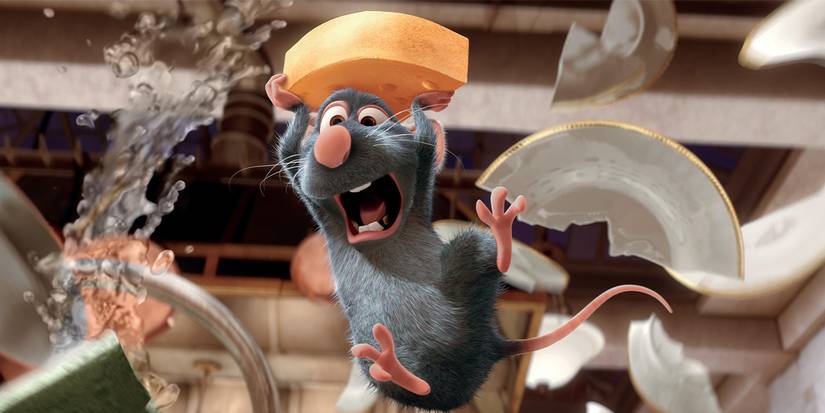
Now I want to bring up one of my all-time favorite films… Ratatouille. I heard a story from another reporter that after finishing The Incredibles, you were finally on vacation when Pixar asked you to come back and take over Ratatouille. Supposedly, they wanted you because you’d given the best notes during one of the story screenings. Is that true?
BIRD: Somewhat. I can’t say they were the best notes or not, but here’s what happened from my perspective. I’d gone to all of the Ratatouille Braintrust meetings while I was making The Incredibles. Then in the last six months to a year, they let you kind of step back from those meetings in order to finish a film. And so I stopped going to the Brain. I made my last notes on Ratatouille, and I stopped going to the Braintrust meetings to finish the film. And so you do the film, you get that released, then it’s award season. You do that whole thing and then it was a big deal back then to do the Blu-ray release. And so it was one thing after another. And you’re promoting, promoting, promoting, promoting. And I hadn’t seen the film in a while, so I came back into it, to my first note session, and I’ve been away from it for a year. So my mind was frozen in time for the solutions that were given at that thing.
And John was doing Cars, and right at the intense finishing point of Cars, and Andrew Stanton was doing the first boards for Wall-E. So they were both completely absorbed in that. So they were kind of a little more easygoing on it, and I was a fresh horse. So if something was not where I thought it was headed, I’d say, “Well, what happened to this and what happened to that?” And so I was a little more aggressive about what needed to happen. And, the next day, this film got screened within Pixar for the executive team, which was like Steve Jobs and some other people and their problems were the problems that I had enumerated the day before. So I think they felt like I was on some common ground with them.
And they did get me on vacation, and I really wanted that vacation. Steve called and we talked for a bit, and I had worked with them a couple of weeks on tweaking the story. And he said, “How’d it go? And I said, “I think it went kind of well, I think they’re in good shape.” And then the next day I got a call from Ed Catmull, and we were driving around with the family, and they said, “You can pull over.” And so we pulled over, the family gets out of the car. And apparently, my youngest son said, “Is daddy going to lose his job?” And my wife said, “I think it’s the opposite.” And so that’s what happened. They invited me on board and there it is.
What state was the movie actually in when you came aboard? How much of it had already been completed?
BIRD: Two complete versions, meaning the whole story beginning to end with storyboards and recorded sound.They had gone out to some actors and a lot of the choices that they had made, I agreed with. Ian Holm was in there, and I thought Ian Holm was perfect. Brian Dennehy was in there, and I thought Brian Dennehy was perfect. They used Lou Romano, he was a scratch voice that they all liked, and he was the art director on Incredibles. He played Linguini, and Pete Sohn did the voice of Emile, and he’s directing Incredibles 3, so… Anyway, those I agreed with.
They didn’t have a voice for Remy. They had another actor, I won’t say who it is, but they had recorded some stuff with him and I didn’t connect with that. And I pitched Patton, and I felt like Patton was perfect. And the other one was they had signed an actor that I think is very good, but he wasn’t what I pictured for Ego. When it became my problem to make the film, I heard Peter O’Toole, and it was just like nobody else. It’s got to be Peter O’Toole. And thankfully he said yes.
Bird’s Dream Project That Still Hasn’t Happened
“I’d buy popcorn to watch that.”

I think we actually have a video question that’s been sent in from a fan.
Patton Oswalt: I have a question for you, Brad. Have you ever thought of doing episodic TV, maybe even a mini series? Your worlds are so rich and so detailed, I would love to see how your storytelling would evolve and adapt to multi-episode form. That would be something to see. Is that in our future? And also… Ratatouille 2.
BIRD: Actually, yeah. I have a project that, it’s kind of it’s hard to explain, but it would lend itself to multiple episodes, and it has to do with the 1906 earthquake in San Francisco.
You’ve been talking about 1906 for a long time.
BIRD: Yeah. And there’s a lot of B.S. on that on the internet about the reasons it didn’t happen. They said that it was because the budget went out of control or something like that. We never got that far. I mean, the problem with it is the more you research that time, the more amazing it is. And the stories that are happening are insane. And the deeper I dug, the more stuff I was like, “This has to be in it.” And it has to be big, like a movie. It can’t just be this little thing. So, it was kind of like, you’re packing up stuff for a balloon, and you’ve got everything you want in the balloon, right? You now you got everything there, and you go, “Okay, let’s go.” And it doesn’t lift off. So you start chucking stuff out of the balloon and, “Oh. I love that. Oh no.”
And pretty soon you’re starting to get lift off. And now you’re getting lift off, but all the stuff that you love is on the ground. It’s not you’re going away from it you know. So that’s what it was like. And I still am very interested in that story, but it has to be in a way that simultaneously exploits the detail of successive episodes and the size of a giant movie.
If you were to make this on television, do you envision this as a limited series that’s six episodes, eight episodes? Or is this a few season type of story?
BIRD: It’s probably like eight episodes. It’s got the greatest build ever. I mean, it’s not just the earthquake, it’s the fire after the earthquake. People remember the earthquake, but the fire that followed was every bit as devastating. History books describe literal tornadoes of fire. The heat generated winds so powerful they reached gale force. I’d buy popcorn to watch that.
Anton Ego’s final review is one of Pixar’s most memorable scenes. How difficult was that speech to write, and when did you realize people absolutely loved that moment?
BIRD: Well, it was a really bizarre thing. I got to that point in the movie and we had to go. I mean, I didn’t even record that early on. I didn’t even go scratch. I just would write a line and give it to the actors, and we did it. I mean, there was no hesitation because it was so far behind. But when I got to that part of the movie, they had some stuff planned in earlier versions where all the critics of Paris are at this table and they’re all toasting Remy. And even though the movie is not remotely realistic, I didn’t believe that for a second. It seemed like, “No, he would ask to see the chef and they wouldn’t want to show him the chef, so maybe make everybody leave.” When I had the idea of the review, it was anti everything a summer movie is supposed to do and especially animation, you’re supposed to get faster and louder and I got slower and quieter. And when I pitched the idea to the powers that be, I said, “I don’t know why, but I think this should be the ending when he reads this review and it’s kind of soul searching.”
Again, it’s against everything that you’re supposed to do from the standard playbook. But they kind of went, “Yeah, that feels right.” And I had, really great secret weapon. And that’s when Michael was doing the music. He wrote a suite and he wrote it for the orchestra just to do one take so that he could hear it. It wasn’t the version that was going to be in the film. It was soaring, you know, dah dah dah dah dah dah dah dah dah, you know, and he did it. And it was big and it’s romantic. And he kind of goes, “It’s too romantic, you know what you need? We’ll do it, but we’ll play with it and tone it down a little bit.” But I had that on a recording. One take of that super romantic version, and I put on my voice with a bad British accent reading that scene and the secret weapon was his romantic music.
The romantic version of it was perfect, and it ended up being the thing. I think that helped sell the idea. And, I was rewriting it all the way up until the time recorded. I rewrote it on the plane like three times on the plane. Then I landed, went to the hotel and wrote it two more times. just trying to get it to be right. And, I couldn’t have asked for a better person to enact it than Peter O’Toole. I mean, you know, that was like fantasy stuff.
That scene is literally perfect.
BIRD: Oh, thanks.
Why Tom Cruise Convinced Brad Bird to Direct ‘Mission: Impossible – Ghost Protocol’
The fourth Mission: Impossible movie was Brad Bird’s live-action debut.
By the way, I’m not alone on this. That scene is amazing. So then you jumped into this, something called Mission Impossible: Ghost Protocol. What made Mission Impossible the right project for you for your live action debut?
BIRD: Well, again, I was trying to do 1906, and it just was… The more I tried to do it, the more it became too big. And finally I realized that I don’t want my headstone to be “He tried to make 1906,” so I looked around for things to do that were already ready to go. Tom Cruise had seen Incredibles and invited me over to his house, and we had this amazing two-hour, three-hour talk just about movies. And his knowledge is extensive, and we had a very good time. And he said, “Look, if you ever want to do live action, I’d love to do something with you.” So that popped up. And of all the things, you know, I love spy movies. And that was a chance to do a spy movie with Tom Cruise. So how do you say no to that?
What was your reaction when you’re filming, and Tom is doing the stunts? I mean, they’re insane. What was it like for you, though, when he’s doing some of that stuff? Because it has to be scary.
BIRD: Yeah. I mean, we were doing it, and we were prepping it, and he was practicing being on the building with this climbing expert who was out there. And we were just kind of hanging around and talking while he’s out there. And suddenly I hear, “Woo!” And I see him go outside the window swinging past, and then I hear a crash, and I’m like, “No, he’s dead. The star is dead.” And then I hear him laughing like, “I screwed that one up!”
So we were filming that stuff, and we were originally thinking we might only get a few shots in IMax, like maybe two or three, and we’d just do the rest with special effects. So we had to bash out these giant windows in double pane windows, and they were like, “Okay, but only three. And you got to put them back exactly like they were.” And we’re like, “Okay, we’ll do it.” So we start doing it, and we go, “Yeah, we could probably get that shot over here.” And pretty soon it’s 37 windows we’re shattering, and we shot everything on the building. The only ones we didn’t do on the buildings were ones that were looking up, because you can do that on a piece of anything, but anything that’s wide or looking down or anything like that. All that stuff is real.
There was one time when we were filming it, and I was dead asleep in my hotel, and it was like four in the morning, and suddenly I realized my star is swinging around on this little wire a mile up into the air. And what am I doing? This is insane. But, he’s the producer, so you can’t tell him no.
Brad Bird Explains Why ‘Ray Gunn’ Took More Than 30 Years to Reach the Screen
“I’ve been waiting for it for 30 years.”


Jumping into your newest project, Ray Gunn. For people who are just hearing about Ray Gunn for the first time here at Comic-Con, what do you want to tell people about the movie?
BIRD: Well, the elevator pitch would be it’s Buck Rogers meets the Maltese Falcon. So it’s desperate characters and sort of an alternate future. And it’s kind of hard to explain, especially because it’s a mystery. You don’t want to give anything up. Why don’t we just show the first seven minutes?
Yeah, okay! You’re the director, I guess. Let’s show the first seven minutes.
[Ray Gunn footage shows]
So, what do you want to tell more of about this scene or what? What else would you like to tell people about it? Because you’ve been working on this for, like, 30 years.
BIRD: Well, I haven’t been working on it for 30 years. I’ve been waiting for it for 30 years. There’s a difference. I would have happily made it a long time ago, but you have to have someone pay for it. So, this one was a hard one to get from being planned to actually being made. And, it sat for a long time. We joke that it’s kind of like the end of Raiders of the Lost Ark, where it’s like, “Where did projects go to?” Right? So it was in the filing cabinet. There wasn’t that much work done on it. There was a lot of artwork and stuff, but, you know, it sat for a long time, but I always liked the idea and always felt like it would be a really good movie. And I was able to get it out of the studio that had it and shop it around a bit.
How can I word this carefully? If hypothetically I’d seen this movie, and I don’t want to say too much more, I would just say that I wanted to push pause like, 30 times during it because of the level of detail. Hypothetically.
BIRD: Hypothetically?
Yeah. The level of detail that is on some of these shots is just, like, staggering. And I know how difficult it is on some of these wide city shots where everything is just so… I just want to see everything in the background. And that takes time and money. So how the f*** did you pull off what’s in some of this movie? Because it’s really unbelievable.
BIRD: One of the nicest things about making movies is you get to work with a lot of creative people. So when you had this premise, there were a lot of ideas about how to flesh out the city and the environment, because the whole movie pretty much takes place in the city. It’s an urban movie, even though it’s a sci-fi fantasy thing, it’s also urban. And, so, there were a lot of thoughts, and the amount of real estate you have in a movie is like this, but the world is like that. So you end up being able to populate all kinds of ideas. I think that you can look at the characters and where we want you to look, but you can also let your eye drift, and there’s going to be something for it.
Michael Giacchino and Brad Bird Break Down Their ‘Ray Gunn’ Collaboration
“And then I saw Jungle Book, and I realized people are being paid to figure out how a panther moves — a stuffy panther.”
-
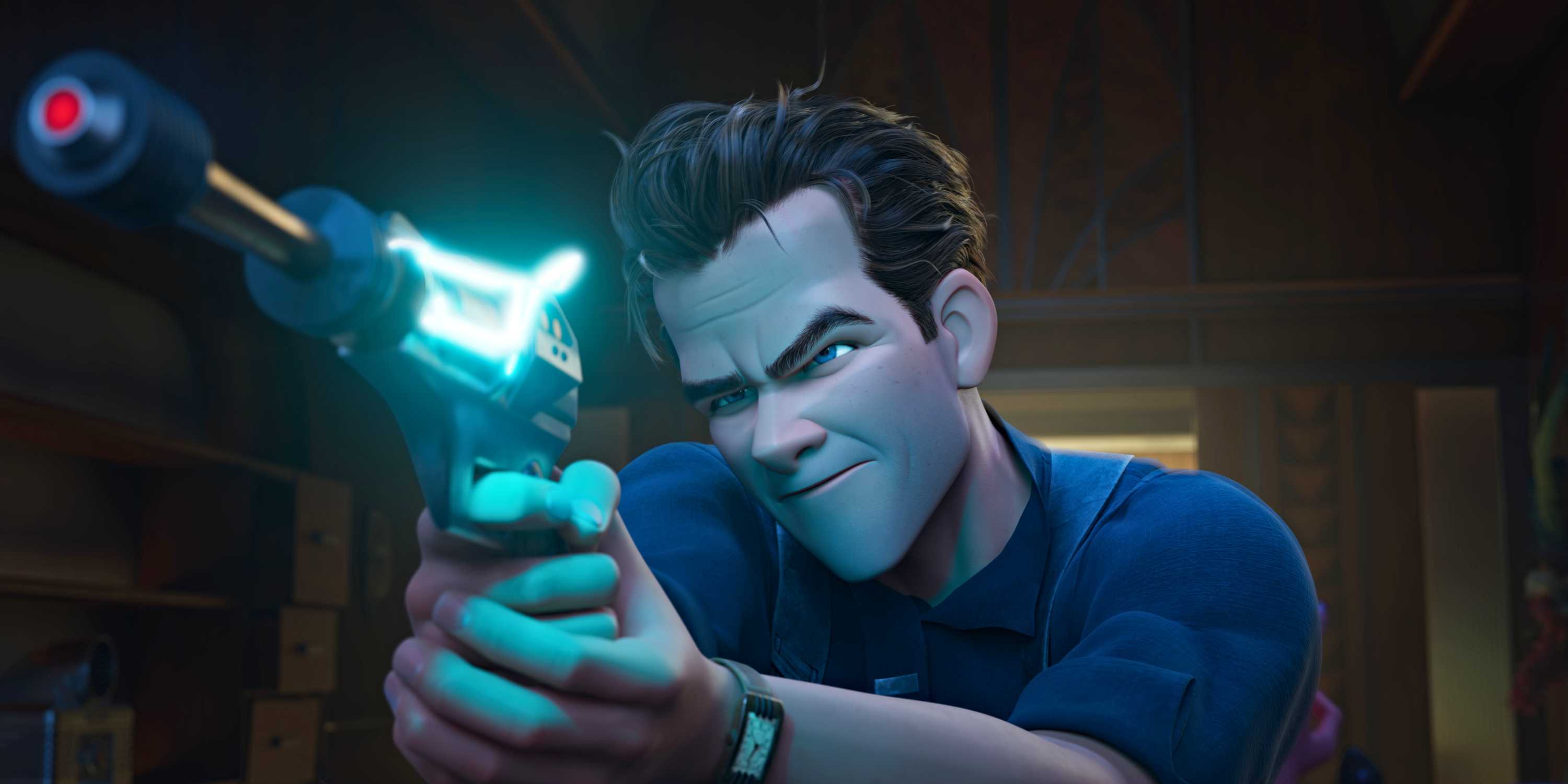
Sam Rockwell in Ray Gunn Image via Netflix -
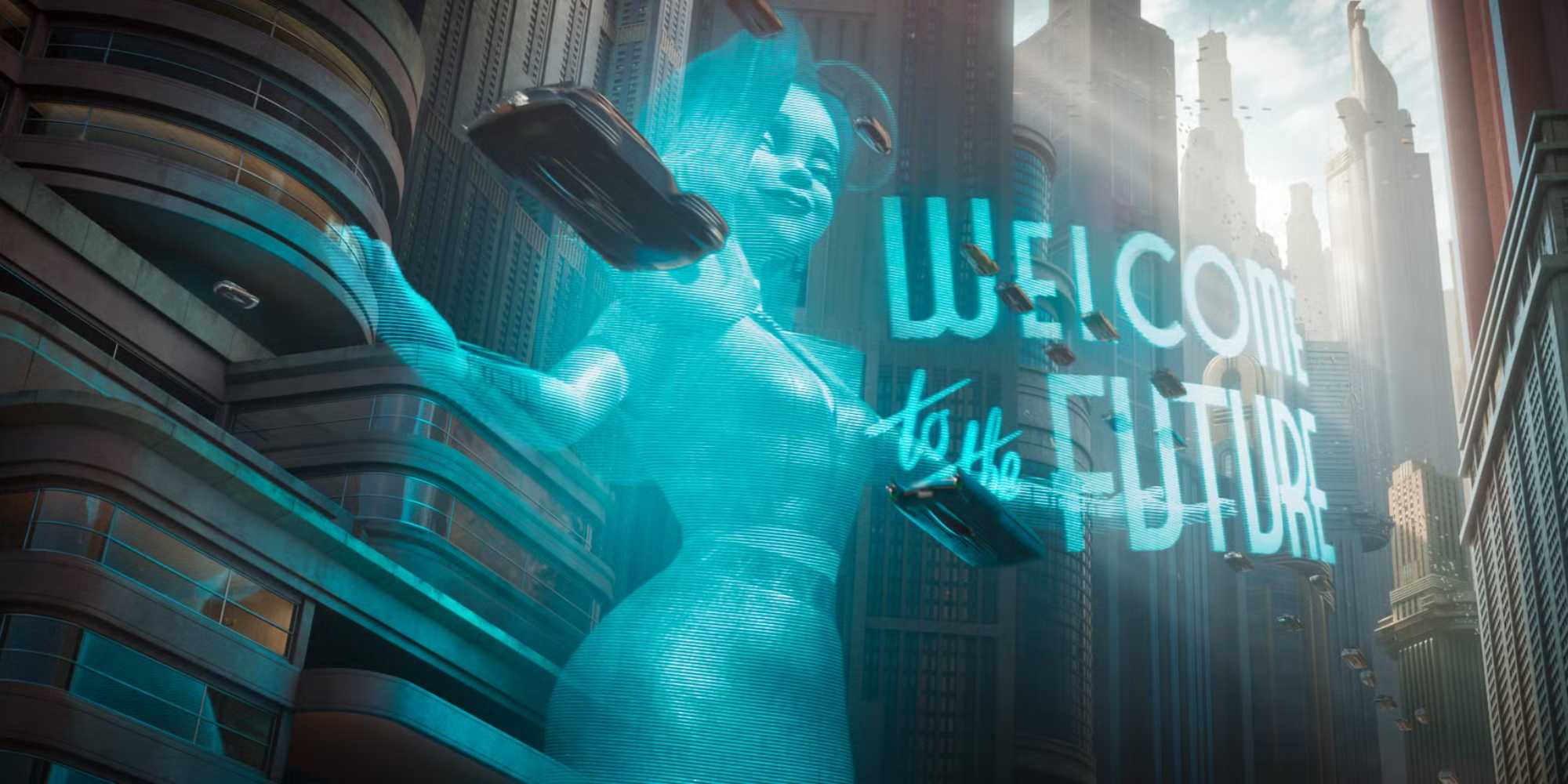
‘Ray Gunn’ Image via Netflix -
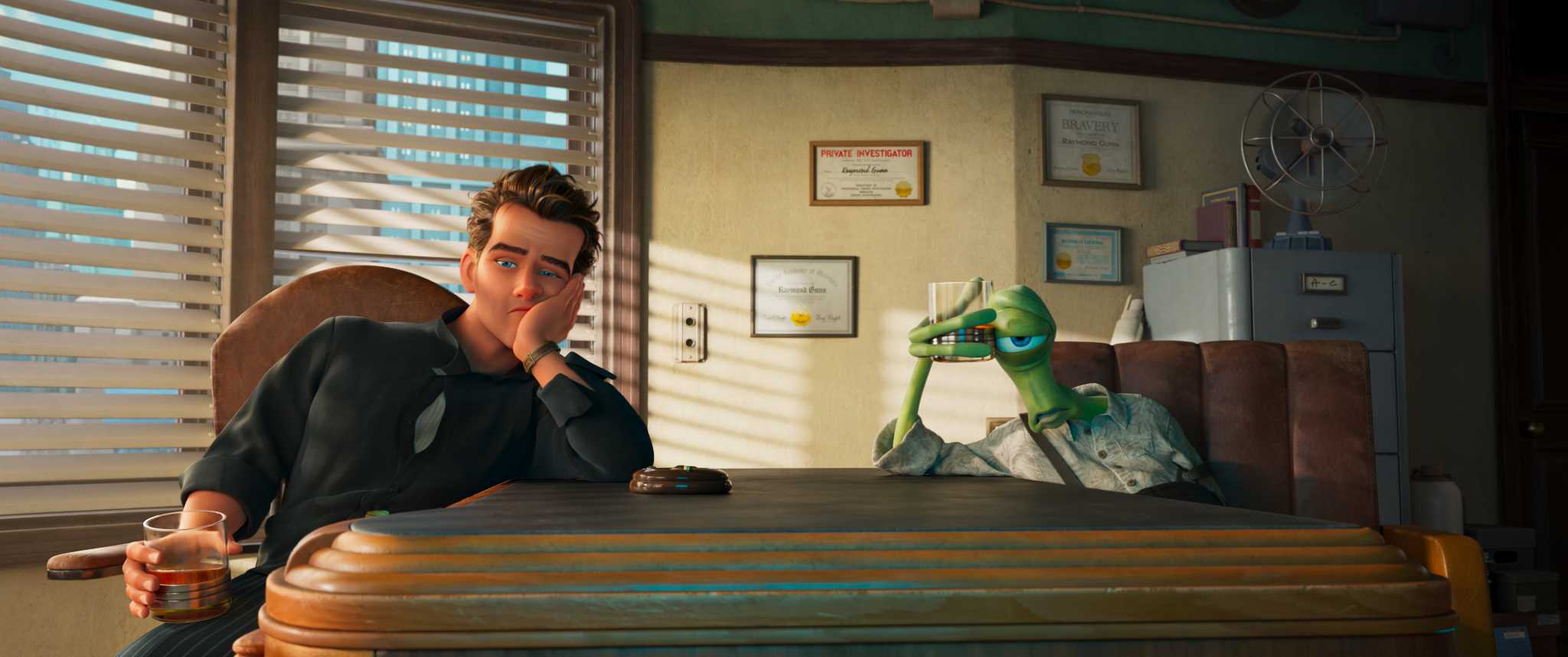
Ray Gunn and an alien in Ray Gunn. Image via Netflix


We do have another video question. It’s from, I believe, someone named Michael.
MICHAEL GIACCHINO: Hey, Brad, this is Michael Giacchino, first-time caller, but long-time listener. Big fan. And I had a couple of questions I wanted to ask you. Mainly, I wanted to know what was the first movie you saw that made you actually say to yourself that “I want to do that”? And how old were you when you first saw it, and did you have any idea even as to how you would do that? So that’s one question. The second question is, can you tell me what Incredibles 3 is about? Because apparently I hear you’re going to be making an Incredibles 3, which is very exciting. So let’s talk about that. What do you think?
BIRD: Oh boy. Well, the first one is, I think from the very beginning I was trying to make movies. I didn’t figure this out until much later, but…
Giacchino comes out and surprises the audience
GIACCHINO: Excuse me. I want to hear it from your mouth. I want to hear it right from your mouth. Hey, everyone.
BIRD: So the very first drawings I did were very crude, but they were meant to be viewed in order. And so I figured out much later that I was trying to make movies really early, and I just didn’t have the equipment or ability to do it, and, but my family was a movie going family. They like to go to movies and discuss movies afterwards. And I remember my parents talking about Hitchcock like, “Why were Hitchcock’s films better?” So that was the first time I’d heard a director discussed and… So, so anyway, we were a movie family. We saw movies, and I loved movies always.
GIACCHINO: So those drawings you did, where were they, like, storyboards, or was it actually an animated sequence?
BIRD: They were the crudest. They were not anything special drawing-wise. Circle for the head, line for my thoughts, for eyes. But the thing that was unique about them was they were meant to be seen in a certain order. And I would tell the story and I would pull the pages like that, you know, you go in that.
GIACCHINO: And it seems like, though the most important thing is that your parents encouraged you. Were you there was something you wanted.
BIRD: They took me to see the movie more than once, which my grandparents thought was really indulgent. But, my mom was like, “He’s getting something out of it.” And, when I was 11, I saw The Jungle Book here in San Diego, actually. And, that made me go, “How do I do that?” Because my parents would have parties, and I remember the forest of legs and people kind of going broader or bigger. It’s like I don’t want to become one of those lumbering things, you know? And then, I heard a comedy album, which was Jonathan Winters being funny, and here was an adult who was being completely bonkers and being accepted. And then I saw Jungle Book, and I realized people are being paid to figure out how a panther moves — a stuffy panther. And I went, “Wow, growing up is actually going to be really great. Let me at it.”
Bird Shares Details On ‘Incredibles 3’
Both Bird and Giacchino tease what’s next.

GIACCHINO: So now tell us about Incredibles 3.
Thank you for asking that.
BIRD: It’s directed by the guy who did the voice of Emile in Ratatouille, and he’s a super talented guy named Pete Sohn. And he’s going to do an amazing job, and I’m writing it, with a co-writer, and I’m also co-producing it. So I’m involved and I’m excited about it.
GIACCHINO: Who’s doing the music?
BIRD: It’s actually the ghost of Jerry Goldsmith.
GIACCHINO: We are in much better hands on that.
BIRD: Yeah, I don’t know. What are you doing?
GIACCHINO: I’m open. All right.
BIRD: Well, we’ll talk about it.
I am so curious about what your shorthand is between the two of you in terms of writing music and or in terms of music for a movie. So maybe you could talk about what it was like doing Ray Gunn. How early on did you hear about this project? How early on were you thinking about the score and what is that collaboration like?
GIACCHINO: Oh, man. I heard about this in 2003. So we were working on The Incredibles, and we were just talking about, “Oh, what are the things you want to work on? What do you got coming up?” this and that. And he ran down a litany of things, and one of them was Ray Gunn. I heard the story about how he tried to make it and it couldn’t get done. I just hoped one day that’s a movie that we’re going to be able to make.
And, so that’s been living in my head since then. So, so when you do that, your head is sort of like your brain just sort of slowly works on it in the background. But for me, when I come into a movie, and especially with Brad, what I love to do is just find out, okay, who are these characters? Who are these people? What do they need? What do they want? I don’t ever, for instance, for this movie, it wasn’t about sitting down and writing a detective score. It was about writing a score for Ray. Like, who’s Ray and what does he need? And what does he want? What does he not get? You know, he’s got this really kind of messed up life in a lot of ways. And how do we then reflect that? And then that’s how I begin writing music, understanding that. Because if I can get into the emotional space of a character and feel what it is that they’re feeling, then I can. I can do.
BIRD: Something. Yeah. And that’s how we talk about it. We talk about story. I want to talk about music, per se. I mean, I usually collect a bunch of things that that seem kind of like what I’m looking for, but it’s a variety of things, and I just kind of put the pile at him and he listens to it, and then he puts it away and, whatever residue sticks, sticks, and he goes into it and creates the soundscape, but we end up talking about story a lot. And and, his notes on story are always good notes. They’re they’re smart. so, I like talking to him about things early.
One of the things when I was looking through the credits of the film, I noticed Ben Burt’s name, which if anyone’s familiar with Star Wars, look him up. You have an all star lineup of people that worked on this movie. Can you sort of mention the various people that you pulled in to do this? It’s almost like they wanted to work with you.
BIRD: Well, a lot of them have worked on the other films. So, you know, when you when you do this stuff, you, you end up being really impressed by a lot of people, and those are the people you want to keep close and kind of keep adding to their numbers. So Pete Sohn, who, worked on his first film that he worked on was Iron Giant. And, he did a lot of storyboarding and animation and Incredibles. He did storyboarding and animation and, Incredibles two, he boarded the sequence with Jack-Jack chasing the raccoon. he did the kiss in Incredibles, where, Bob and Helen kissed, which was, believe it or not, technically really complicated at the time and made it this beautiful, emotional scene. So he’s a talent. He is one of the people, I had Tony Fusilli, who is who worked on everything, and design, ran animation in Iron Giant, Incredibles, blah, blah, blah. He’s involved in Ray and he’s involved in Incredibles three. And, you know, this guy and, we it’s a lot of people that have worked on other things and done amazing work.
And we had an amazing group of storyboard artist, some of which were now directing, but they wanted to do a sequence or something in the film. So they were constantly coming in, and I had this murderer’s row of storyboard artists doing this amazing work. Yeah. So it was really gratifying.
That’s what I’m trying to point out. It’s like I said, I think everyone wanted to work with you, because it’s been a little while since you’ve made a film. Too long.
GIACCHINO: Yeah, but whenever Brad makes a movie, there’s a line of people that want to make it with him. He is one of the best sort of leaders, one of the best creative leaders that I know that I’ve worked with. And there’s nobody like him, nobody I know that can just get an entire room full of people just like this, that charge up the hill right behind him without even. They just trust, okay? If that’s where he wants to go, we go. And that’s that’s everything. Let’s go. Everybody. Let’s go. Do it. We’re marching up the hill. What hill is this? I don’t know. Oh, okay. Turkey hill ice cream. I think.
Noir has such a specific musical vocabulary. How much did you want to honor that versus subvert it for a world with aliens and multimedia stars in it?
BIRD: I think we did both, didn’t we?
GIACCHINO: Yes, it’s it’s really mixed. It’s got everything. It’s got like 50 sci fi in it. It’s got very like 30s, 40s noir in it. It’s got, some slight jazz. And yet, you know, my biggest concern was like, I did not want it to feel like The Incredibles. I wanted it to be different, stand apart. That’s very important for me, working on things and again, why I love working with Brad because everything he does is like a hard left turn into some other area that he hasn’t explored yet. So that’s exciting for anyone who gets to work on the film, because then you’re trying out your new muscles. So I think that this film is really at its core, very emotional score, but it’s got a lot of action, a lot of fun, and hopefully it feels like its own thing.
One of the things that I’m so impressed by is your camera moves and just the way you direct, but especially the camera moves and the way you stage sequences in animation. Can you talk about that and the way it is behind the scenes, and how you figure out what it’s going to look like?
BIRD: Well, animation was sort of my gateway drug to live action. And once I had to make decisions for an animated film that I was making when I was 11. You have to decide you’re drawing it, but you still have to decide. Is this in a close up or a medium shot or whatever? And so you start to learn the language of film. And once you start to see it, you start to recognize it in other people’s work, and it becomes really inspiring. And you start heading towards certain filmmakers and, so I think that that’s one of the things, the weird thing was, is when I started doing animation, people kept saying, you know, you’ve kind of staged things like live action, and then I go and do a live action movie and they go, you kind of stage things like animation, and it’s like… It’s all film, man. It’s just film, you know? So it’s the same language. It’s just how you get there is a little different.
What technology did you use on this that perhaps you hadn’t used before, or is it the same software? How did you actually physically make it versus some of the others?
BIRD: Well, I mean, you know, Pixar was pretty cutting edge. So I can’t say that I’m using stuff that I’ve never used before. But the problems are always new. And so it’s the film itself. This had a much narrower range where you could be… I mean, it was really easy to do too little, and it was really easy to do too much. And the thing is, you want the characters to be hardy enough to go through action scenes and comedic scenes and get all the juice out of them. You don’t want them to be stiff, but at the same time, if the scene turns emotional, you want that to work too, so you can’t be so goofy that you become not believable.
And what you’re going for is creating. Whether it’s live action or animation, you want the audience to feel like there’s a whole life here and you’re only seeing a slice of it. But there’s stuff that happened to this character before, and there’s stuff that’s going to happen to him or her later. And it’s about making that believable.
You have a great voice cast in this, for people that don’t realize, maybe you can talk about them. But I’m always curious, did you do any sort of test where you were laying Sam Rockwell’s voice over something and just hearing it?
BIRD: Yeah, this is kind of true of all animated films. But if you have a voice that you think might work, you get clips of it from various things, and then you put it to images of the character, you have the character, and it’s not animation, it’s just still images. But you’re seeing how the voice plays with that face. And when I was pitching Paton for Ratatouille, he had this very funny thing where he goes to Outback Steakhouse and he was so completely emotional about food. And we had all these things of Remy gesturing and making faces from various storyboards, and we kind of cut them to generally fit the attitude that he had in the bit. So you were hearing him, you were seeing Remy and saying, “Does that voice sound good coming out of that body?” And it was perfect. So that’s what you do. And we had clips of Sam. I mean, we all loved Sam’s work. It’s not like he’s unknown. But the same with Scarlett. And it was just perfect.
When you finally saw the finished version of this, how did it compare to that thing that you’d been imagining for so long?
BIRD: Well, it was different, because for the longest time, I wanted to do it as a hand-drawn feature, and I still think it would have been great that way. But, I have no objection. I love working in CG as well, and there are things that you can do in CG that are more difficult in hand-drawn animation. But we had an aggressive schedule, the studio that was originally going to do it in Spain, but wasn’t able to do it because of pipeline issues. So we went to a studio in Montreal called Cinecitta. And we really put the bar pretty high and they were not intimidated by it. They did a great job, so I’m happy that it’s a big movie. It’s got size to it. A lot of choices had to be made and they had to be made pretty quickly, and it doesn’t look like we cut any corners. We worked our butts off to get it on the screen, but I’m really happy that it is big. And it’s unusual for animation, I think.
Could you talk about how you established the visual aesthetic that you wanted with the camera and the lighting choices, like the actual design?
BIRD: Well, I love the syntax of movies. It’s kind of a dream language. Moving the camera is one of the things I love best about CG. It was being able to move the camera rather than kind of look like you’re moving the camera, which is what it was in hand-drawn, but being able to follow things through a shot and have the equivalent of lens selection and all that, made it much easier for me to go, from incredible or rather twee and ghost protocol than it would have been if I went from Iron Giant to Ghost Protocol, because it was like working with real lenses and and being able to move the camera in space.
We’re basically at the end of the panel, so I have to ask. I’ll just ask both of you. Besides Incredibles 3, which you’re writing, do you know what the next thing you’re going to do is? And when are you directing again?
GIACCHINO: I will be. Thank you. Yes, there’s a few things. And one big thing that keeps getting closer and closer to that start line. It takes a long time to get these things up on their feet and going, but it keeps inching closer, and it’s getting so close. So hopefully very, very soon, hopefully very soon. But in the meantime you can go and see Spider-Man: Brand New Day, coming out soon.
BIRD: Yeah I know what I want to do, but I’m not ready to talk about it. And it’s a thing that we’ve talked about doing before and, it’s live action, but there’s animation in it.
This is the thing you’re writing right now?
BIRD: Yes.
GIACCHINO: Look at Steve’s putting it together.
We did an interview before, and he said to me he was writing something, and I’m just trying to figure out where that’s at, but…
BIRD: But I’m also working on Incredibles 3, so.
Ray Gunn will premiere on Netflix on December 18. Stay tuned to Collider for more updates.


- Release Date
-
December 18, 2026
- Director
-
Brad Bird
- Writers
-
Brad Bird, Matthew Robbins
- Producers
-
John Lasseter, Brad Bird, Lisa Beroud, David Ellison, Dana Goldberg
You must be logged in to post a comment Login