We were entering a new era, my mother said. An era of freedom. No longer trapped on a forgotten rock, no longer imprisoned by an oppressive galactic empire, no longer living in a preserve like endangered but fearsome predators. An era of possibility, where we would become what humankind was always meant to be.
A new era in which there was money to be made, because if we didn’t capitalize on the Defiant Defense Force’s new need for interstellar trade infrastructure, someone else surely would. So it only made sense that my family’s starfighters were moved up to a docking platform in the rubble belt around Detritus, the planet we called home, to support our quest to secure intergalactic trade agreements, profiting off humankind’s new galactic freedom.
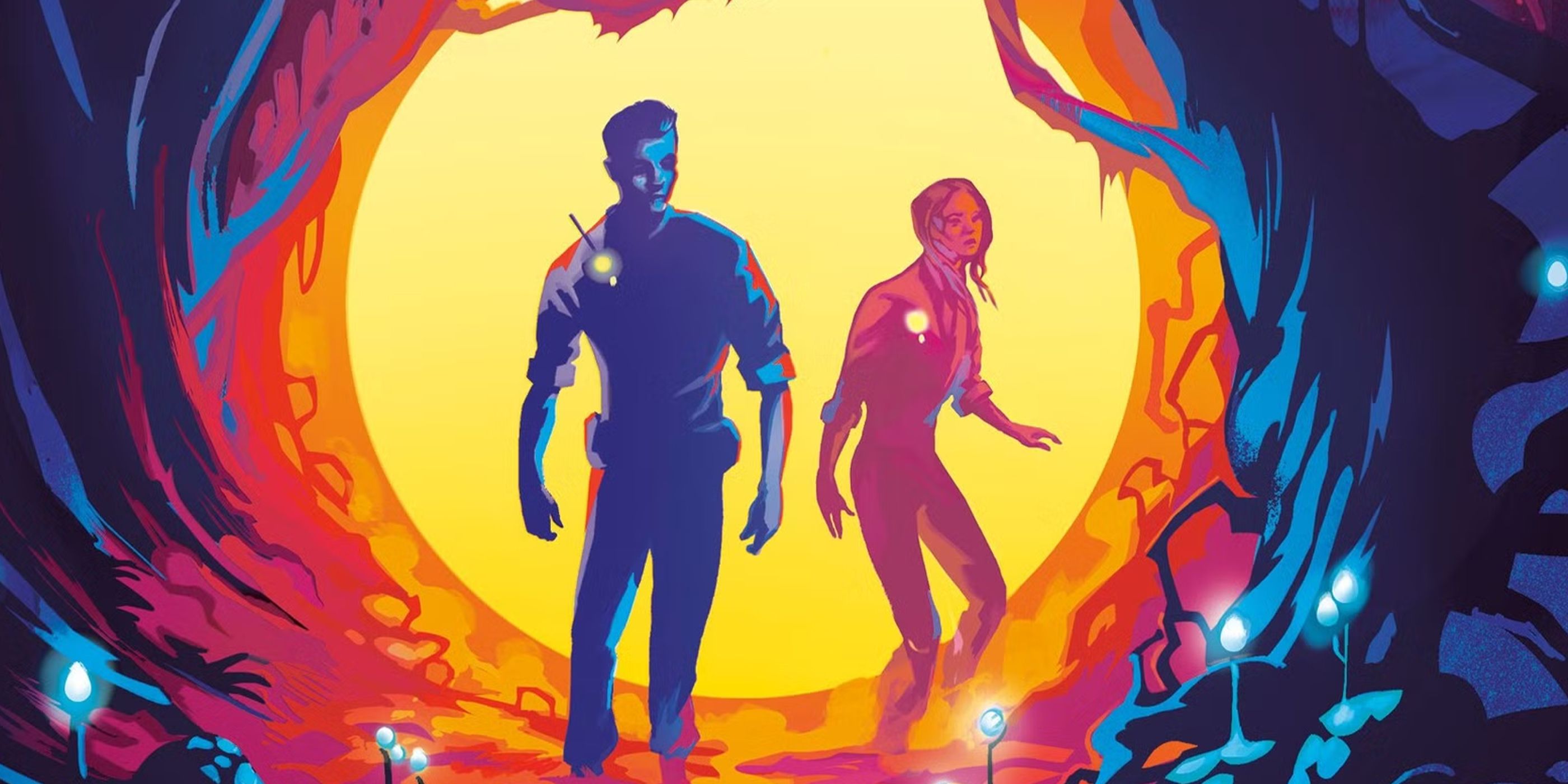
“Your mom is going to kill you,” Nedd said, peering around me through the doorway of the private hangar. We’d snuck past the ground crew huddled around a screen in the breakroom, watching clips from last night’s digball championship.
“Kill you!” added the yellow-and-blue slug peeking out of my backpack. She was the length of my forearm and twice as thick, with long rows of flexible spines that waved along her back.
“Thanks for your concern, Naga,” I said, scritching behind her first plume of spines.
“Hey, I was also concerned,” Nedd said. He curled the fingers of his prosthetic arm. On his shoulder perched another slug, this one entirely black with an iridescent blue shimmer. The slugs, also known as taynix, had powerful cytonic abilities. This one could send out a concussion blast that stunned anyone nearby, which had earned him the name Wham.
Wham watched the movement of the prosthetic with interest as Nedd bent the fingers one at a time. Nedd was shot down during the war for our freedom just weeks ago, and the crash left him with a limb ending just above his elbow. The prosthetic’s joints could bend, and its fingers could clench and relax. He manipulated the motion with electrodes tied to the remaining nerves in his upper arm, and he had been practicing in a flight simulator every day, trying to improve his control. The prosthetic was steady as he moved, his finger motions smooth.
But our holographic mockpits weren’t the same as flying actual starfighters. Nedd’s biological hand was shaking.
“You’re only concerned about me?” I asked. “Of course,” Nedd said, though we both knew he was bluffing. His pale skin was even paler than usual. “Your mom won’t stay mad at me. I’m a delight.”
I was her son, but that only meant she’d be twice as angry at me for taking this risk with our family assets. I was supposed to be better than that.
Yet when I found out Nedd and I both had the afternoon off, I commissioned Naga to hyperjump us into my family’s hangar without a second thought. Under the new Defiant Defense Force hyperjumping regulations, I had to put in a request for a jump and wait for approval, but even my mother’s status as an assembly leader didn’t grant her access to the hyperjump logs, so she was none the wiser.
“These ships don’t see enough flight time,” I said. “In a way, we’re doing my mother a favor by taking them for a spin.”
“Totally,” Nedd said. “I’m sure your mother will see it that way.”
“Your mother will see it that way!” Wham added. Ah, taynix. Ever the optimists.
“Looks clear,” I said. “Let’s go.”
Nedd and I ran for the two ships farthest from the door. These were Fresa-class starships—single-pilot fighters known for their speed and sleek design. We each climbed into a ship and ran system checks. My family’s ground team kept the ships well maintained and ready to fly at a moment’s notice, so we only had to do a few routine scans before takeoff.
I engaged the airlock, and the door between the maintenance rooms closed, cutting the crew off from the hangar. Above us, the ceiling rolled back to reveal the layers of platforms in the belt that filled the sky over Detritus, huge chunks of metal blocking out the stars.
“Ready when you are,” Nedd said over the radio.
“We are a go,” I told him, and we both engaged our acclivity rings, allowing our ships to lift vertically off the landing pad and float toward the open airlock door.
“Hey!” a voice shouted over my radio. “What the scud do you think you’re doing?”
“Doing!” Naga sang cheerfully, sliding out of my pack to rest along the side of my seat.
“Oh hi!” I replied over the radio. “Sorry, didn’t want to bother you. You all seemed busy! Arturo Mendez, taking the family ships for a routine flight. I’ll have them back inside of an hour.”
“Copy, Amphisbaena,” the voice said, using my callsign, as was customary over the radio. “But you’re not scheduled to take the ships today. Your parents’ orders are clear: If you want to take the ships, you’ll have to—”
“No need to bother my parents!” I said. “We’ll be back before you reach them anyway.” I hoped that was true. To avoid further argument, I changed my radio channel.
The hangar door finished rolling open, then started in the opposite direction as the ground crew overrode my commands. Nedd and I squeezed our ships through before the door closed, and we hovered side by side above the hangar platform, our acclivity rings keeping us aloft.
“Engage boosters,” I said. I shot off parallel to the hangar, flying through the wide space between the layers of the debris belt that orbited Detritus, like vat-grown meat between two slices of algae bread. Nedd followed at my wing, slow but steady.
“This is going well,” I said.
“Yes,” Nedd said, though his voice was strained. “I can take off in a straight line. Throw me a party.”
Flying took a surprisingly light touch, so using the prosthetic couldn’t be easy. As both Nedd’s friend and his flight-leader, I had to encourage him, to push him. Nedd and I had flown together since the day we entered flight school. Since then, so many pilots had left us—for the diplomatic corps, for the new DDF space exploration forces. Jorgen Weight, our last flightleader, was our scudding admiral now—despite being only eighteen, like the rest of us—and many of our fellow cadets had died during the war. Nedd and I were the only remaining pilots from the original Skyward Flight, and I wasn’t leaving my buddy behind. Not if I could help it.
To make a case for a full return, we’d have to prove he could fly in combat. Dodging through the debris belt was a good first step—the metal platforms that orbited Detritus moved slowly and predictably, providing steady obstacles to navigate without the danger of being shot out of the sky.
“Ready for some maneuvering?” I asked.
“Not really,” Nedd said. It hurt to hear him so defeated. I’d been hounding engineering for weeks to design a ship specifically to fly one-handed, but so far it hadn’t been a priority. I was just the leader of one flight, even if we had recently been reclassified as “special forces.”
Not special enough to get accommodations, apparently. “Here we go,” I said. “Try to tag me.” I switched my ship’s destructors to their laser function, which we used for target practice. This way, we’d be able to “hit” each other without doing damage. Nedd didn’t say anything, but a second later my ship’s monitor flashed green, meaning I’d taken a hit to my shields. When the light turned blue, my theoretical shields would be gone, and when it turned red, I was dead.
“I think I paid what you’re worth.”
“Fine.” I spun into a barrel roll away from Nedd and then shot up at a sharp angle between two platforms in the next layer.
I tracked Nedd on my proximity monitors. He lagged behind, the nose of his ship bobbing erratically as he tried to ascend. We were high enough in the debris belt that there wasn’t enough atmosphere to experience drag, but he was still struggling with control. I didn’t want him to accuse me of going easy on him. I wouldn’t be doing him any favors—if he couldn’t fully control a ship with the prosthetic, he didn’t belong in combat. If I helped him cheat, I’d only get him killed.
I flipped an Ahlstrom loop, pointing the nose of my ship up and cutting over my own flight path in a vertical dive. I took the loop a bit fast and my GravCaps engaged, soaking up the g-forces to lessen the impact on my body. If they engaged for too long, the GravCaps could overload and I’d feel the full effects of the g-forces—which could result in temporary blindness, blackouts, or even death.
In this case, I only felt the press of my own momentum briefly before pulling out of the loop and heading back toward Nedd. It wasn’t hard to get him in my sights, and I wasn’t the best shot on the team. Nedd cut his boosters and spun with his nose pointed toward me, the rear of his ship skidding behind him. If he shot at me, he missed.
I got Nedd in my sights and slammed on my destructors. My dash light flashed yellow. Hit.
Nedd fired his boosters, soaring over me and away. His reaction time was sluggish, his flight path jagged. It was honestly impressive he could maneuver this well, new to the prosthetic as he was, but if he went into combat like this, he’d be dead.
He needed more practice. That was all. I followed him between two large metal facilities, each big enough to house a small city within it. And maybe they did house cities once. Centuries before our people crash-landed here, a lot of this space junk had been inhabited by humans bent on conquering the galaxy.
I didn’t try to tag Nedd again. I shot forward, sailing past him to forge a path through the highest layers of debris until empty space came into view, speckled with millions of stars. The sun was behind us, golden light shining across the rows of rotating platforms.
So much blackness, so much nothing. Before we were confined to this planet, our ancestors roamed the ocean of space, flying ever onward without a shore to return to. I used to wonder if they did so by choice, or if they simply had nowhere else to go. We’d lost Earth in the Third Human War—not to invasion, it had simply disappeared—the same war that destroyed much of our species. After our defeat, most surviving humans had been confined to “preserve” planets by the victors, an alien alliance known as the Superiority.
Still, we’d survived to fight back. I knew that other groups of humans had found other worlds to live on too. When I was a child, the idea of traveling the stars terrified me.
Now it wasn’t the wide universe that scared me. It was the thought of being left behind.
An alert flashed on my monitor. We’d risen through the debris close to one of Detritus’s weapons platforms—autonomous guns that shot down unidentified objects, protecting the planet from bombardment. I leveled out, staying below its firing range.
Nedd’s ship shot past mine, continuing to climb. “Nedder, pitch down!” I said.
“Pitch down!” Naga agreed.
“I’ve got it,” Nedd said. His ship wavered, nose bobbing as he scrambled for control. He slid closer to the range of the autonomous gun.
I wanted to let him handle it, but couldn’t take the chance. I pulled up, accelerating. Nedd got his nose down, but the angle wasn’t low enough to be sure he’d clear the danger zone without clipping it.
I tagged Nedd’s ship with my light-lance—a beam of hard light that tethered my ship to his—and dove, pulling him to safety.
“Amphi, look out!” Nedd shouted.
A large chunk of damaged platform fell into my path, rap- idly becoming larger as I barreled toward it. Nedd banked to the right, pulling me free of the debris before it scored the hull of my ship. His motion wasn’t elegant, but if he hadn’t, my ship could have sustained damage, maybe even lost a wing.
Nedd straightened his flight path, getting full control again.
“I am,” Nedd said. “Are you?”
“Yeah,” I said. “Thanks.”
I could hear the grin in Nedd’s voice. “Might want to keep your eyes on your own paper, flightleader.” It felt good to hear him joke like that. “Sorry. I was worried you were going to—”
“I know,” Nedd said. “Scud, I’m more of a liability than anything.”
That was not the message I’d wanted to send. “It’s okay. You just need—”
“More practice, I know. But I’m not sure I’ll ever be able to dogfight. Can we stop?”
“Stop flying?” I asked. “Or stop talking?” “Definitely the second one.”
An alert flashed on my instrument panel—someone trying to call me over a private channel. My private family channel. Scud.
“Hey, Amphi?” Nedd said. “I think your mother’s calling.”
“I see it.” I could ignore her, but she’d keep trying, and if I didn’t answer, she might get one of the pilots from our family’s shipping business to chase us down.
“Amphisbaena,” my mother said. She managed to utter my callsign in the same tone she used to call me by my full name when I was a kid. “What are you doing with two of our family starships outside the debris belt?”
If I was already in trouble, I might as well double down.
“Just going for a joyride.”
“Is that Nedder with you?”
“Is he flying our starfighter with a prosthetic arm?”
“Yes, ma’am,” Nedd said again, though I heard the tightness in his voice. My mother didn’t have to say that she didn’t think he was fit to fly—and she wouldn’t, not with Nedd on the line. She’d save that lecture for later, when she caught me alone. I would do my best to ensure that didn’t happen anytime soon.
“There are procedures for use of the family ships,” Mom said. “Procedures to which you did not adhere.”
Silence followed. Silence in which my mom was no doubt deciding if she was going to chew me out for my recklessness with Nedd listening.
“Turn those ships around and return to the hangar,” she said.
“Copy, Minerva,” I said, using her old callsign from her days in the DDF.
I didn’t turn my ship around, and neither did Nedd. “Amphi?” Mom said. “I don’t see those ships returning.”
“I’m looking for the safest place to turn around. Wouldn’t want to put the ships at risk.”
I waited for my mother to call my bluff, but instead she said, “I have a meeting with Admiral Weight this evening. I intend to inquire about your advancement.”
I gritted my teeth. Advancement in the DDF would inevitably mean joining Command and giving up my wings. I didn’t want to advance to the point where I could no longer fly.
Removing me from a ship was, of course, my mother’s primary objective for my life, mostly because she loved me and didn’t want me to die. “I’m happy where I am. The flight needs me.”
“Your flight has been separated,” my mother said. “Al- most all of your contemporaries have been promoted.” “And I was promoted to flightleader,” I said. “Skyward Flight has new members, and I’m proud to lead them.” “Alien members,” my mother said.
I bristled at the judgment in her voice. Officially, she couldn’t object to me flying with aliens; my new flightmates were part of the larger galactic alliance of species that had helped us break free of the Superiority. But old prejudices died hard. If my mother couldn’t accept me flying with aliens, she wasn’t ready to know how close I wished to be with one of them.
“Sorry, Mom, you’re breaking up,” I said, even though she wasn’t. “Must be interference from one of the platforms. We’ll bring these ships back right a—” I switched the channel mid-word. My mother would know exactly what I’d done, but at least this way I had plausible deniability.
“You ready to turn around?” Nedd asked. “No.” That conversation with my mother made me want to keep flying and never return. “Do you want to go back?” “No.” Nedd was quiet for a moment. “Jorgen offered me a job.”
That didn’t surprise me, much as I hated it. Nedd was an excellent pilot and a better person. As admiral, Jorgen would want to find someplace Nedd could be of use. “You already have a job.”
“A job on the ground,” Nedd said. “With Command.” It made sense, but if he took it, this might be the last time Nedd flew. “What did he offer?”
“Flight liaison,” Nedd said. “I’d be in charge of finding out what the pilots need to do their jobs better and relaying that to Command.”
Huh. In the past, the DDF was too consumed with ensuring the survival of humanity to care much about the needs of individual pilots.
Now that we’d leveled out into a consistent flight path, Nedd’s ship flew steady and smooth. “You’d be good at that,” I said. Nedd had a way of putting people at ease. He played dumb, always pretending to be too stupid to understand anything serious or painful. In school, I was always the smart one. I’d sure thought I knew a lot as a cadet, and Nedd had fallen into step beside me, filling the role I left him. People took him at face value.
I used to feel bad about that. Then I realized Nedd played dumb to avoid responsibility, proving he was the smart one after all. “Did you take it?”
The platforms ticked by beneath us like tiles on a hallway floor. “Not yet. Do you think I should?”
“It’s a good opportunity.” “Would you take it?” he asked.
And give up flying? “No,” I admitted. “Not if I had a choice.”
“You’d stay with the flight?” Nedd asked. “Even if you could only be a copilot?”
“I don’t think I could let the flight go on without me,” I said. “Stay back while my friends kept fighting? Watch the next time you all flew into danger?”
“Theoretically,” Nedd said, “the fighting and danger are past now. The Superiority’s gone. There’s no one left for us to fight.”
I should be happy about that. I was happy that we were free, that we could make our own destiny in the galaxy now, that we no longer had to fly into battle, losing more people we loved. But it also meant that the kind of flying I loved—the rush of a well-executed turn, the thrill of the perfect destructor shot—was obsolete. As pilots, we used to be the most revered members of our society’s finely tuned war machine, but what use were we in times of peace? So many people I’d flown with had gone on to build things, discover things, lead our people into the future. My skills used to be the most essential to humanity’s survival, but we now faced a future where they’d be essentially useless.
Nedd angled his ship upward, shooting out ahead of me. We climbed higher, toward the glittering masses of stars. I wondered how many of them had planets with people just like us, trying to figure out where they fit in the universe.
“I’d stay with the flight,” I said. “Even as a copilot. You can keep practicing, and eventually we’ll get you reinstated as a pilot.” Maybe practice would be enough. If not, maybe we could eventually alter a ship to fly one-handed. Maybe some planet in the galaxy had better prosthetic technology. We knew a lot of things now we didn’t know before, and there was still more to discover. “I’d keep flying as long as I could. What about you? Would you rather stay behind?”
Nedd fell silent, because I knew the answer.
Detritus grew smaller below us, the individual platforms fading into a sliding mass of debris. “If I do stay with the flight,” Nedd said, “you need to appoint a new assistant flightleader. I can’t lead if I can’t fly.”
“That’s not true,” I said. “There’s no regulation saying a copilot can’t outrank the pilot of his ship. It could be an asset, even. Having someone else do the flying will free you up to pay more attention to the battlefield.”
“Good point,” Nedd said. “Maybe you should fly co-pilot too.”
I shut my mouth. I’d walked into that one, and I sure as hell wasn’t going to ride side-seat if I could help it.
We continued to angle up into the black, the sun at our backs. The higher we went, the less anchored I felt—we were just two small dots in a great sea of nothing, while the world below went on without us.
“I’ll think about replacing you,” I said. “Until then, you’re staying on as assistant flightleader, copilot or not.” “Okay,” Nedd said. “I’ll stay.”
I rocked my head back against the headrest. I hadn’t meant to push him into turning down the liaison job. “You sure?” “Yeah,” Nedd said. “You’re right. Next time Jorgen finds something that needs to be shot at, I don’t want to stay home.” He sounded confident that would happen, that our people couldn’t be at peace forever. That was the peril of growing up under constant barrage, knowing that the enemy could destroy your entire civilization at any minute.
We were born with one eye to the sky, watching for danger. “That’s the decision I’d make,” I said. “I hope it’s the right one.”
Nedd was silent for a moment. “Amphi?”
“Do you think your mom would be any angrier if we flew a while longer?”
“Maybe,” I said. “But I don’t care. We can fly as long as you want.”
“Thanks.” Nedd shot off above the platforms, not following them too closely, but edging along the curvature of the planet.
We were running from the inevitable. We were entering a new era—one where, sooner or later, we’d both end up grounded.
So I would keep running as long as I could.


You must be logged in to post a comment Login