Entertainment
Celebrating The 40th Anniversary Of The Greatest Batman Ever Made
By Chris Snellgrove
| Published


For better or for worse, we are currently living through the age of superhero cinema, with movies like Avengers: Endgame and Superman (2025) dominating the box office. But would you believe that this entire genre owes its existence to a single comic? A comic that also managed to inspire some of the greatest TV shows the world has ever known?
That comic is Frank Miller’s Dark Knight Returns, the seminal Batman comic that recently celebrated its 40th anniversary. Miller’s comic is very nearly perfect, and it helped usher in a modern age of darker and grittier superhero stories. That much is well known, but today, I’d like to focus on a lesser-known fact: that the modern superhero genre of movies simply wouldn’t exist without The Dark Knight Returns.
You’ll Believe A Batman Can Fly

The success of the 1978 Superman movie proved that tights-and-flights films had the potential to be critical and commercial hits. Accordingly, that film got three sequels, but the franchise did not keep going “up, up, and away.” Eventually, Superman IV: The Quest For Peace proved to be such a critical and commercial disaster that we didn’t get another Superman movie for nearly two decades.
Following the success of the first Superman movie, a new Batman film went into development at Warner Bros. in 1980. After he wowed everyone with Pee-Wee’s Big Adventure (his first feature film), young Tim Burton was hired in 1985 to direct this new Batman film. He immediately wanted a darker, less campy script.


Conveniently enough, The Dark Knight Returns came out one year later, and the success of Frank Miller’s comic made the public hungry for a serious take on the Caped Crusader even as it made Warner Bros. keener on bringing this Darker Knight to the big screen.
Obviously, the 1989 Batman film went through many rewrites over the years, including several lighter-hearted drafts that included Robin, the Boy Wonder. But Burton really wanted his film to have the grim and gritty atmosphere of Miller’s comic, so he insisted on a story with the same basic beats as The Dark Knight Returns: Batman is obsessive, the Joker is deadly, and Gotham City is a cesspool. Burton’s film ended up being a smash hit, launching a Batman film franchise that continues to this day.
When Cartoons Got Dark
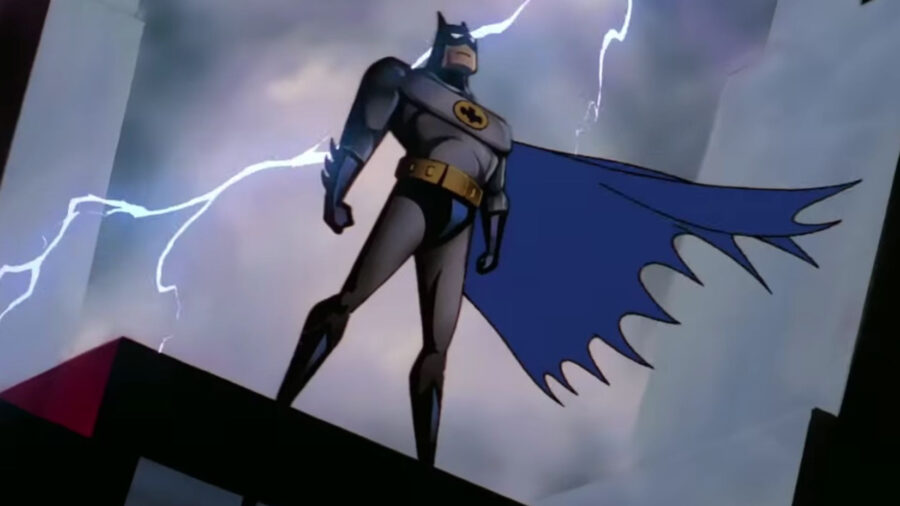
Tim Burton’s Batman made the character more popular than ever before, and Warner Bros. quickly began developing a new cartoon featuring the Caped Crusader. The result was Batman: The Animated Series, a show that modeled Gotham City after the one scene in the 1989 film. There were some different design flourishes (mostly, the abundant Art Deco style of the buildings), but Gotham retained the dark and broody atmosphere that electrified fans of the live-action film.
Batman: The Animated Series won multiple Emmy awards, so you may be shocked to hear that Warner Bros. executives were nervous about the new show. They feared that executive producer Bruce Timm was making everything way too violent for children.

Warners wanted to cancel the series before a single episode was animated, but the success of Burton’s movie kept that from happening. Eventually, Timm was able to create the pilot episode “On Leatherwings,” which was so impressive that it helped his controversial series (complete with music from and inspired by Danny Elfman, the composer of Burton’s Batman) get the green light.
Batman: The Animated Series quickly became one of the most popular cartoons ever made, and the release of various sequel series (including Superman: The Animated Series and Justice League) established the fan-favorite DC Animated Universe. The DCAU was the first truly viable superhero cinematic universe, one that helped pave the way for the MCU. Before that happened, though, The Dark Knight Returns helped inspire Earth’s mightiest mutants.
Rise Of The Mutants

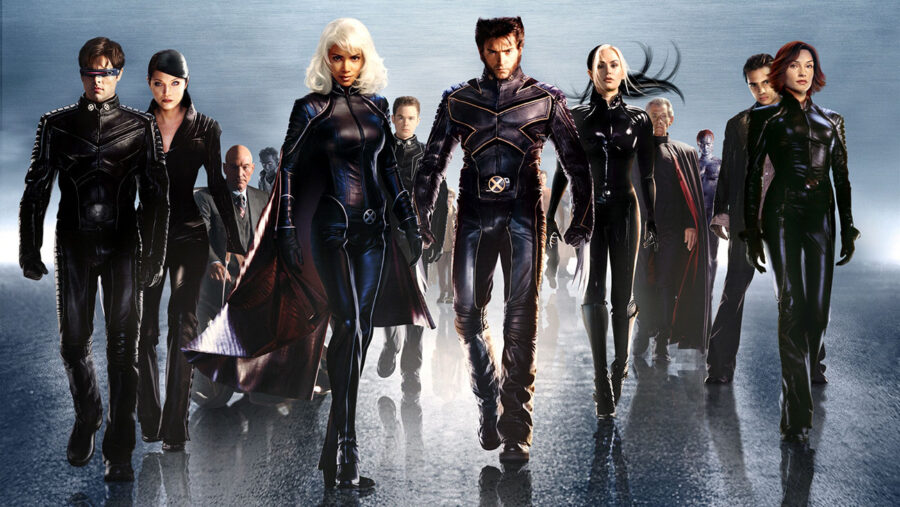
Tim Burton’s Batman would not have existed (or at least, wouldn’t have been worth watching) without the influence of Frank Miller’s The Dark Knight Returns. But after Burton left, the franchise was in the hands of Lost Boys director Joel Schumacher. He made the franchise over-the-top with Batman Forever and downright silly with Batman & Robin. After audiences rejected that campy crapfest and Blade proved to be a big hit, 20th Century Fox made a decision: they’d swoop in and take the comic book movie crown away from DC with an X-Men movie.
That film came out in 2000, eventually getting two sequels, four prequels, and three spin-offs featuring Hugh Jackman’s Wolverine. The success of Fox’s X-Men spurred Sony to create a Spider-Man movie in 2002, and Sam Raimi eventually delivered an entire trilogy of webslinging goodness.
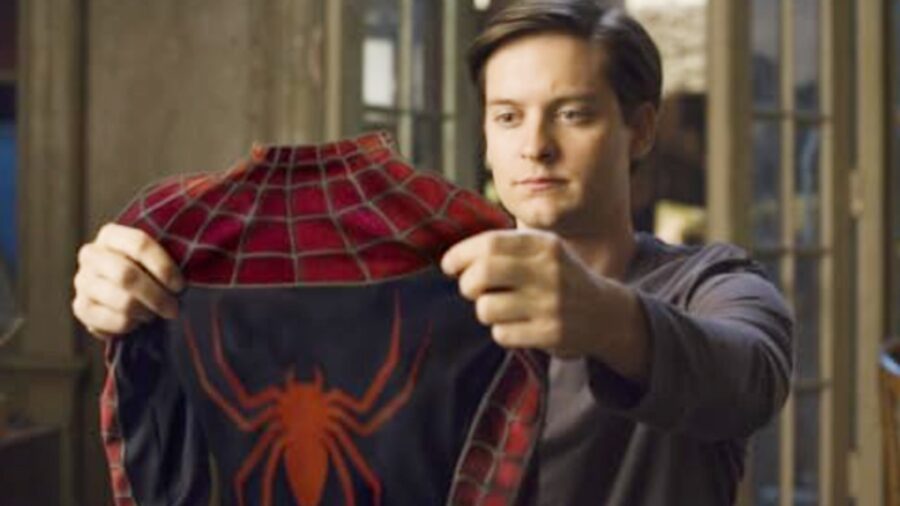
Ironically, these characters were only available to the studios because Marvel had to sell the movie rights back in the late 90s to avoid bankruptcy. After seeing how successful Fox and Sony were, though, Marvel decided to create its own films and television projects, all of which would later be known as the Marvel Cinematic Universe.
Obviously, the MCU proved to be a huge hit with audiences, spawning nearly 20 years of movies. Eventually, this inspired Warner Bros. to try its own hand at a superhero cinematic universe, and they created the DCEU as a direct competitor to the MCU. The second film in this new cinematic universe was Batman v. Superman: Dawn of Justice, and (for better or for worse), returning director Zack Snyder based his slightly older, much darker version of the Caped Crusader on Frank Miller’s The Dark Knight Returns.
It’s All Connected


Miller’s The Dark Knight Returns has had an outsized impact on movies and television, serving as the foundation of modern geek culture. Without the success of this comic, we don’t get successful Batman movies; without the later failure of Batman & Robin (which veered away from Miller’s dark tone), we don’t get the X-Men movies. Without those films and Raimi’s Spider-Man trilogy, we wouldn’t have the MCU, and without that, we wouldn’t have the DCEU or (more recently) the DCU.
It’s all connected, and comic nerds everywhere owe it to themselves to re-read this comic. Considering that it may be years before we see Batman properly appear in the DCU, re-reading it is currently the best way to experience the most iconic and fully formed version of the Caped Crusader ever made. Just be careful when handling this old comic; after all, you’ve got a genuine piece of pop culture history in your hands!